Why Does It Sting So Much?

Explore the felt texture of Invalidation Ache, related tarot cards, and tarot reading insights from sessions that carry this feeling.

Invalidation Ache
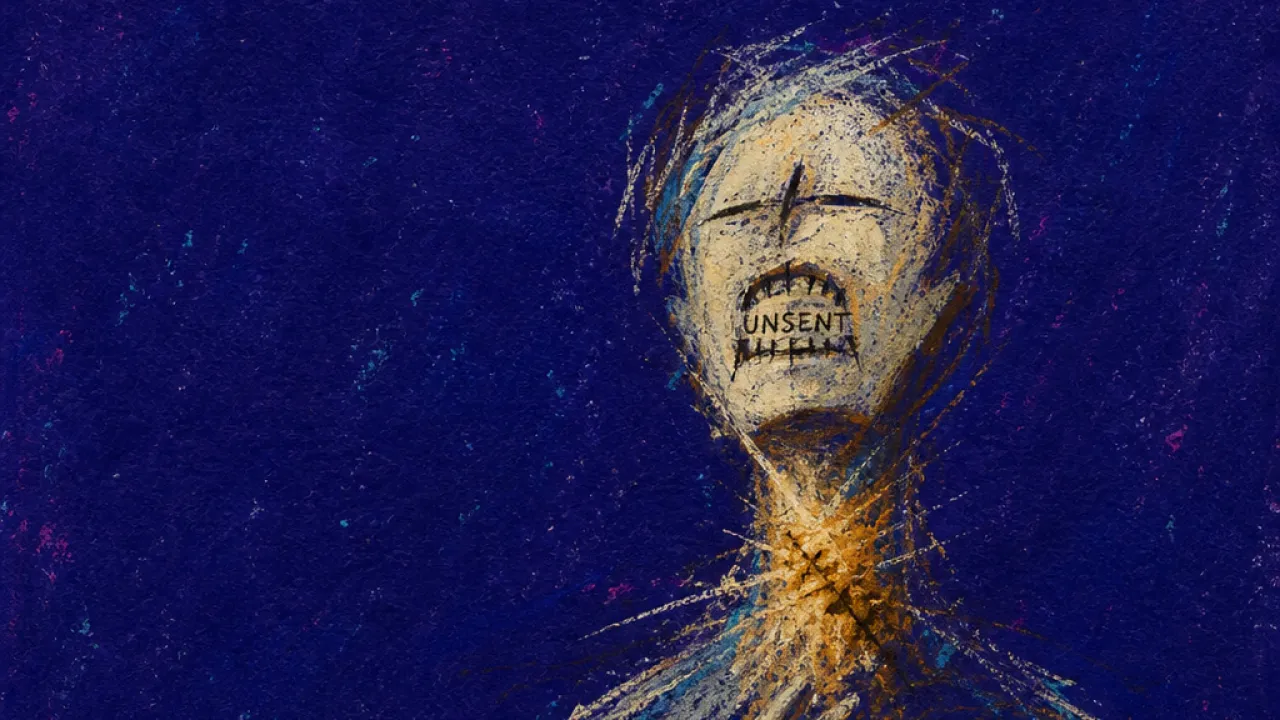
A solitary figure with muted chest and throat, amber tension behind the ribs fading into grey rain and deep indigo space

What does this feel like?

Invalidation Ache — it starts as a small sting in your chest or throat, the kind that appears right after you try to say something and feel it slide off the surface of the room. Your body stays still, but inside there is a flinch: a hot pinch behind the ribs, a tightness under the tongue, a sense that your own experience has been placed on mute before it even finished speaking. You may replay the moment again and again, not with dramatic thoughts, but with tiny edits: maybe you said it wrong, maybe it was too much, maybe the feeling only matters if it can be explained perfectly. The ache spreads quietly into ordinary things — replying to texts, joining a conversation, deciding whether to speak up — because some part of you is already bracing for the soft thud of not landing. It can make you shrink your sentences, smooth your tone, laugh before you mean it, or keep the most honest part of what you feel tucked behind your teeth. What hurts most is not always the disagreement; it is the strange loneliness of holding something vivid inside you while the outside world feels flat and unresponsive, much like the heart on the Three of Swords, suspended under grey rain with sharp blades crossing through the place that should have felt whole.

Why you're feeling this?

Invalidation Ache makes sense because a feeling does not stop being real just because it was not received cleanly. There is a quiet strain in carrying an inner truth while also questioning whether you are allowed to trust it. You are not making too much of the ache; the ache is your system noticing where something important went unheard.

Invalidation Ache in Tarot Cards

Invalidation Ache has a physical edge: that small sting in your chest when your words seem to fall flat before they are fully heard. It can feel like holding a sentence in your mouth until it turns heavy, then wondering whether the ache is allowed to exist at all. This is a universal emotional experience, one where the body registers what the mind keeps trying to tidy up. Here are the Tarot Cards that mirror the outline of Invalidation Ache.

Four of Cups
Upright
The cloud extends a cup toward a closed and downward-looking figure, turning non-reception into the central event of the image. In a family setting, this resembles offering an honest account only to encounter familiar disengagement, minimization, or a quick return to the family's preferred emotional script. The upright card keeps the offering visible even though it was not accepted. You can preserve the reality of what you attempted to communicate while examining the family's capacity to receive it, rather than allowing the closed response to decide whether the feeling deserved expression.
Five of Pentacles
Upright
The injured and cloaked figures pass through snow while a luminous window remains above them, making shelter visible but unavailable. In the family system, this resembles being materially included or physically present while emotional acknowledgment remains outside the family's accepted language. The upright movement gives that contradiction a clear setting. You can recognize the ache as a response to unavailable emotional shelter within the home, separating gratitude for what the family does provide from silence about what its structure repeatedly fails to receive.
Two of Swords
Upright
The blindfolded figure holds two swords across her chest while rocks break the water behind her, creating a guarded stillness between competing directions. When choosing between external options, this resembles the moment your own preference no longer feels admissible because it has been dismissed, questioned, or treated as insufficient evidence. The upright balance contains the conflict long enough for its structure to become visible. You can distinguish uncertainty about the options from the separate ache of believing that your felt response does not count, restoring the emotional information that invalidation removed from the decision.
Three of Swords
Upright
The isolated heart, fixed blades, and continuous rain show what happens when a painful exchange remains active inside long after the room has gone quiet. Your mind may return to the scene through tiny edits, searching for the perfect sentence that would have made your feeling undeniable and therefore safe from dismissal. The upright heart places the original pain in view before the self-audit begins. You can witness the ache as a response to not being received, which helps distinguish the emotional event itself from the secondary habit of invalidating yourself on the other person's behalf.
Five of Swords
Upright
The sword-holder's dominance, the withdrawing figures, and the turbulent clouds resemble a family dispute in which authority wins by defining everyone else's reality. Your experience may be dismissed through ridicule, seniority, selective memory, or a demand that family harmony matter more than accurate acknowledgment. The upright scene reveals the cost beneath the appearance of a settled conflict. You can identify how voice, rank, and belonging interact in the family system, keeping the ache connected to the power dynamic that produced it rather than turning it into evidence against yourself.
Eight of Swords
Upright
The blindfold, bindings, and apparently enclosing swords show how a learned rule can masquerade as the limit of your identity. When growth requires a more self-authored perspective, old dismissal may make each emerging preference feel unqualified, embarrassing, or too difficult to explain. The upright scene turns that cognitive limit into something that can be inspected. You can identify which constraints belong to current reality and which belong to an invalidation script that demands external permission before inner knowledge is allowed to guide action.
Nine of Wands
Upright
The bandaged figure watches for a threat beside a row of upright wands, holding the body's memory of prior impact in full view. Internally, this is the moment when an invalidating exchange becomes a standing prediction, so even imagined conversations produce tightened breath, rehearsal, and defensive editing. The upright scene organizes that anticipation into a visible sequence rather than an endless atmosphere. You can trace the guard back to specific failures of reception, allowing the original ache, the protective expectation, and the present situation to be experienced as connected but distinct.

Invalidation Ache in Tarot Card Reading Insights

Invalidation Ache often shows up in readings as that chest-level sting of not feeling fully received, even when you can still function on the outside. Others have brought this same ache into their readings, sitting with the cards while trying to name what would not settle. Tarot Reading Insights for Invalidation Ache.

Ghosting After Intimacy: A Boundary Without One More Message

Ghosting After Intimacy: A Boundary Without One More Message

Topic:Love Tarot Reading

Struggle:Memory-Loyalty Bind

Context:Ghosting After Intimacy

Family-Role Regression: Saying

Family-Role Regression: Saying "I Want to Finish This Thought"

Topic:Family Tarot Reading

Struggle:Belonging-Authenticity Split

Context:Designated Peacekeeper Role

A Group Chat Became a Breakup Jury; One Boundary Changed the Question

A Group Chat Became a Breakup Jury; One Boundary Changed the Question

Topic:Friendship Tarot Reading

Struggle:Triangulated Belonging

Context:Friendship Loyalty Test
Family-Role Regression: From Asking Permission to Leaving at Six

Family-Role Regression: From Asking Permission to Leaving at Six

Topic:Family Tarot Reading

Struggle:Inherited Role Lock

Context:Family Boundary Negotiation

Life Reset v7, Cold Tea, and the Call That Prompted a Seven-Day Test

Life Reset v7, Cold Tea, and the Call That Prompted a Seven-Day Test

Topic:Introspection Tarot Reading

Struggle:System Reset Overload

Context:Quarter-Life Crisis

Three PR Paragraphs Became

Three PR Paragraphs Became "Got It": Keeping One Trade-Off Visible

Topic:Career Tarot Reading

Struggle:Responsibility-Authority Split

Context:Responsibility Without Authority

The Kitchen-Table Courtroom Narrowed to One Impact, One Request

The Kitchen-Table Courtroom Narrowed to One Impact, One Request

Topic:Family Tarot Reading

Struggle:Agreement-Agency Split

Context:Family Boundary Negotiation

When 'Drama' Makes the Sentence Disappear: Keeping It Intact

When 'Drama' Makes the Sentence Disappear: Keeping It Intact

Topic:Love Tarot Reading

Struggle:Truth-Connection Split

Context:Direct Communication Trial

Opening Up, Getting Advice, Then Asking for Listening First

Opening Up, Getting Advice, Then Asking for Listening First

Topic:Introspection Tarot Reading

Struggle:Support Access Split

Context:Direct Communication Trial

Family Dinner Freeze, One Calm Sentence, and an Adult Voice Returning

Family Dinner Freeze, One Calm Sentence, and an Adult Voice Returning

Topic:Friendship Tarot Reading

Struggle:Inherited Role Lock

Context:Triangulated Family Mediator

Spiraling After a One-Word Reply—And the Fact-vs-Story Switch

Spiraling After a One-Word Reply—And the Fact-vs-Story Switch

Topic:Love Tarot Reading

Struggle:Clarity-Exposure Split

Context:Direct Communication Trial

The 'Sorry if I Overreacted' Text—and the Shame Loop Behind It

The 'Sorry if I Overreacted' Text—and the Shame Loop Behind It

Topic:Introspection Tarot Reading

Struggle:Inner Tribunal Lock

Context:Direct Communication Trial

Psychological Emtions Related to Invalidation Ache