A Family-Photo Caption Reopens the Fight: Four Fields Before Reply
The 11:40 p.m. Family-Memory Trigger Loop
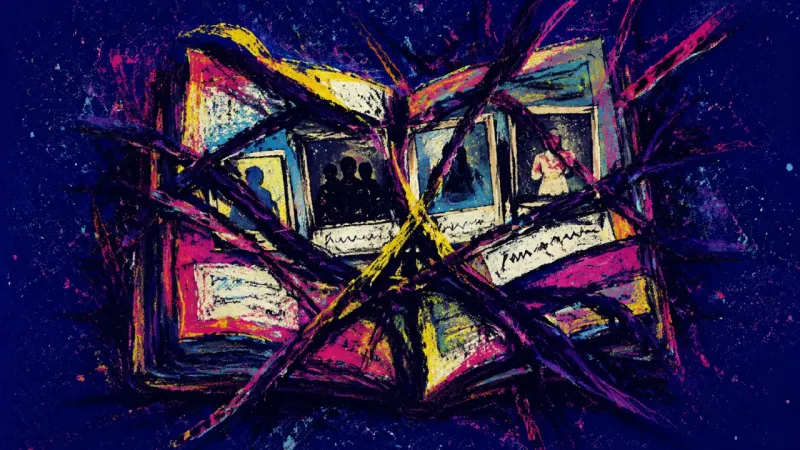
I recognized Maya as the Toronto digital product designer who could document a product decision in three tidy bullets, yet a relative changed one caption in the shared family archive and she spent the night writing a corrective essay. That was the family-memory trigger loop, not a simple metadata task.
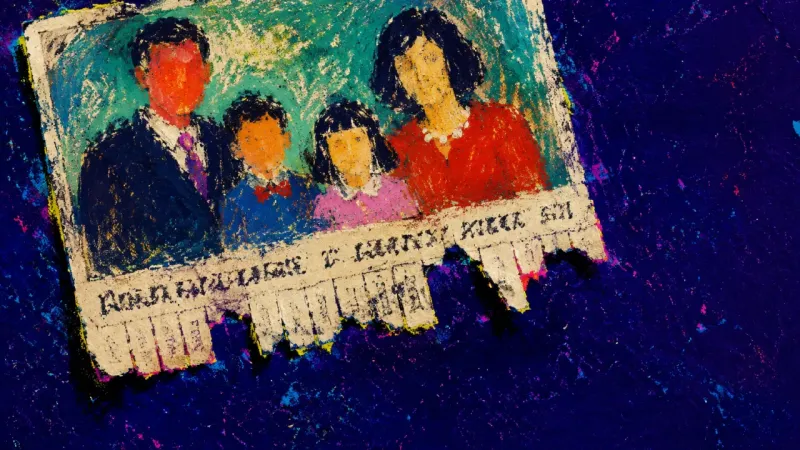
At 11:40 p.m. on a Tuesday, I watched her sit at the kitchen table with a scanned childhood photograph enlarged on her laptop. She toggled between the image and old family-chat screenshots while the laptop fan hummed, the kettle clicked as it cooled, and her phone warmed her palm. Her shoulders had risen almost to her ears.
She told me, 'It is not just a caption when they keep changing what happened. I want to look at the pictures without becoming that younger version of myself again, but letting their version stand feels like agreeing with them.'
I could see resentment in the heat of her face, the tightness across her chest, the jaw clenched around an immediate reply. It moved through her like an old phone notification that opened an unfinished app session: the screen showed the present, but her body loaded the same childhood argument underneath it.
I said, 'I believe that a caption can be small on screen and enormous in the family story. We do not need to decide whose entire history is official tonight. Let us look at what the photograph is asking of you, what it cannot answer, and what choice is still yours. Our Journey to Clarity begins by giving this loop a map.'
Choosing the Compass: A Six-Position Transformation Path Grid
I asked Maya to place her phone face down, take one slow breath, and hold the question in a plain sentence: Why do old family photos pull me into the same fight again? I shuffled slowly, treating the preparation as a transition into focused attention rather than a supernatural test.
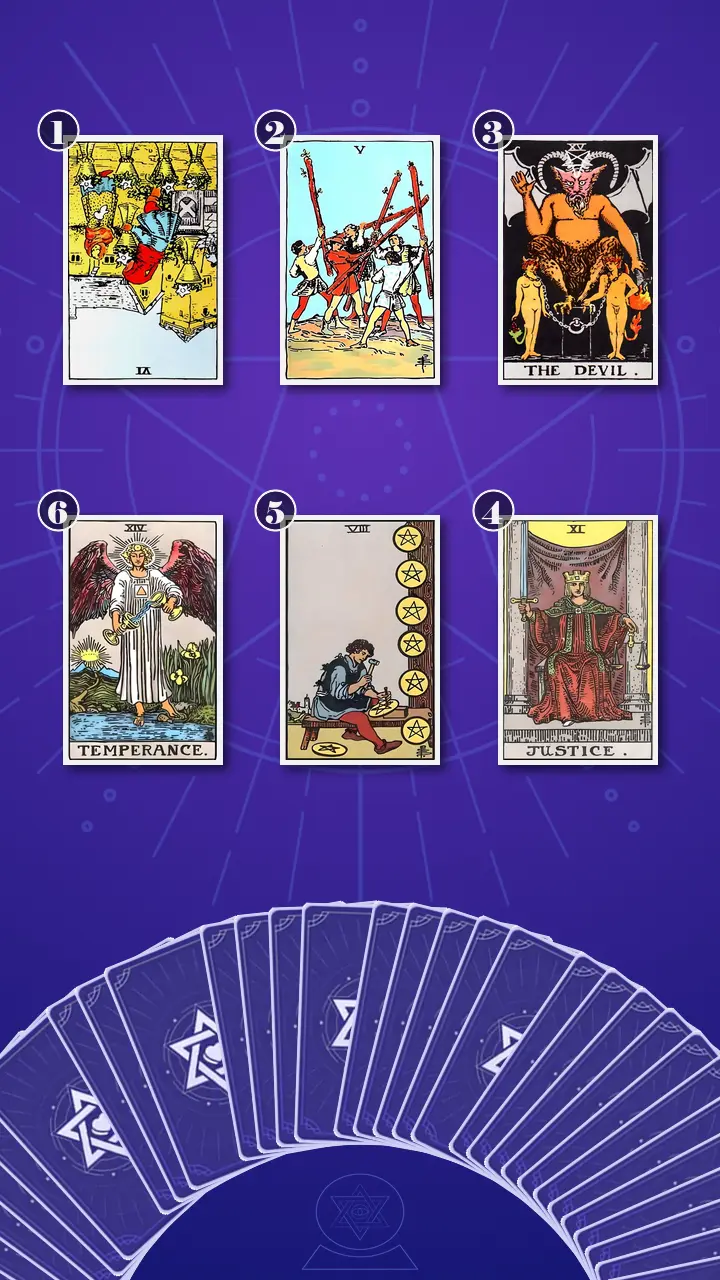
I chose the Transformation Path Grid: Context Edition because this question needed to trace a repeating system. It could show the visible symptom, the immediate family conflict, the attachment beneath the urge to prove, the interruption that changes the pattern, the practical archive routine, and the integrated state that might follow. This is how tarot works in a grounded reading: I use the images as an objective thinking tool, then test their meanings against lived behaviour and present choices.
A Celtic Cross would bring in broad context and future-oriented material beyond the question. A conventional Relationship Spread would centre two people instead of the whole repeating loop, while a Shadow Spread might illuminate the wound without mapping the behaviour that follows it. The six-position grid was the smallest structure that preserved the sequence of symptom, blockage, root, interruption, practice, and integration.
I explained the path to Maya and to anyone reading along: the first card would show how an old photograph collapses the distance between her adult present and a childhood-based family role. The second would identify where a practical archive task becomes a fight. The third would expose the attachment keeping the cycle alive. Justice would mark the key interruption, followed by a repeatable practice and a more balanced way to hold different memories.
Reading the Map Without Retrying the Past
The Reversed Six of Cups: When the Past Loads First
Now I am turning over the card for the position that depicts the present symptom from the diagnosis: how an old photograph collapses the distance between Maya's adult present and a childhood-based family role.
The card is the Six of Cups, in reversed position.
In the Rider-Waite-Smith image, a small child receives a flower-filled cup while six cups hold carefully arranged white flowers inside an enclosed courtyard. The flowers are preserved, but they are not growing there anymore. Reversed, the water of memory is blocked and backward-pulling. The past is not simply remembered; it is being treated as though it is still unfolding in the current thread.
I connected the image to the exact scene Maya had described. She opens a scanned childhood photograph to add a date, notices the enclosed old-home feeling of it, and then zooms into the background. Within minutes she is comparing a doorway with old screenshots, searching for a detail that will support a correction, and drafting a long message in the family group chat. The file label is present, but the younger family role has arrived first.
The energy here is not a bad omen. It is a blockage: preserved memory has stopped flowing into the present and instead pulls the present back toward an unfinished emotional task. Maya may be doing two different kinds of work at once: documenting what the image shows and seeking recognition for what her younger self experienced. A shared caption can handle the first task. It cannot be made responsible for the second.
Maya gave a small, bitter laugh. 'That is too accurate. Almost rude.'
I let the silence stay kind. 'You do not have to agree with the card for it to be useful,' I said. 'For one activating photograph, we can privately write What Is Visible, What I Remember, and What I Feel. Then you can wait before deciding whether the archive actually needs a response. Pausing is not surrendering your memory.'
She stopped rubbing the edge of her phone and looked from the card to the enlarged photograph. The smile remained for a moment, but its sharpness had softened into the first sign that she could observe the pattern without calling herself foolish for having it.
The Five of Wands: Five Cursors, No Shared Brief
Now I am turning over the card for the position that identifies the immediate relational blockage: competing accounts turn a practical archive question into another round of the same family fight.
The card is the Five of Wands, in upright position.
Five figures raise intersecting staves, but the staves do not create a structure or point toward one shared target. Their clothing does not match, their movements overlap, and the scene contains plenty of activity without a clear definition of done. I saw the family group chat in that image: one relative supplied a date, another insisted on a different location, and someone else added that everyone had been happy that day.
It was like five people editing the same Figma frame without a shared brief. Everyone had an active cursor. Nobody had agreed whether the task was to label one file or redesign the entire family story. The upright fire of the Five of Wands is scattered rather than focused, so every extra message creates another angle to contest. Maya begins by asking for accuracy, then finds herself defending whether her whole experience counts.
The obstruction is not merely that relatives remember differently. It is that the conversation has lost a shared task and gained a courtroom-shaped demand for a winner. I asked Maya to notice the exact message where a date, name, or location stopped being the subject and became evidence about what the entire event meant.
Her thumb moved toward the family thread, then withdrew. She placed the phone beside the laptop instead of reopening it. 'There is always a point where I think, I can explain this better,' she said. I noted the movement because the urge was still present, but it no longer automatically became an action.
The Devil: The Loose Chain Behind One More Message
Now I am turning over the card for the position that exposes the mechanism beneath the argument: attachment to obtaining a different ending through repeated proof, correction, and confrontation.
The card is The Devil, in upright position.
The chained pair beneath the central figure can look completely trapped at first glance. But in the Rider-Waite-Smith image, the chains are loose enough to be removed. That detail mattered. The Devil showed the binding promise beneath the urgency: Maya knows another evidence-heavy message is unlikely to make her relatives agree, yet the possibility that this photograph could finally prove her account keeps her composing it.
I used my signature Family Casting Analysis here, carefully and without turning a family pattern into a label. I asked what forced role the reply button seemed to assign her. It looked like the Record-Keeper or Courtroom Witness: the person who must gather enough detail to stop everyone else from rewriting the story. The role may have begun as a way to protect something important, but it leaves her permanently on call.
Then I brought in my Narrative Enmeshment Diagnosis. I was not claiming to know her parents' intentions or declaring that anyone had planned her pain. I was asking whether Maya's adult life story had been drafted into an older family plotline in which she had to make the record coherent for everyone before she could feel secure in her place. That is a load no caption can carry.
I pointed to the loose chains. 'The pattern is powerful because it offers a bargain,' I said. 'If I explain this one more time, then they will have to understand; if they understand, then I will finally feel included. The question is not whether you are wrong to want recognition. The question is what the current archive task can actually resolve.'
Maya's breathing paused. Her eyes went slightly unfocused, as if an old chat thread were replaying behind the laptop screen. Then her jaw released by a fraction. 'I know this message may not settle anything,' she said quietly, 'but I still want this image to finally prove my place in the story.'
I nodded. 'That sentence is honest enough to give you leverage. You can name the hoped-for emotional ending without sending another message in pursuit of it.'
When Justice Kept the Scales Separate
Justice, Upright: The Four Fields of a Fair Witness
Now I am turning over the card for the key interruption: separating observable facts, personal memories, emotional impact, and present responsibility before responding.
The card is Justice, in upright position.
The scales are even. The sword is upright and double-edged. The seated figure looks directly ahead between two stone pillars, steady enough to evaluate without rushing toward punishment or appeasement. Justice brought discernment, proportionate accountability, procedural fairness, and the capacity to witness Maya's experience without demanding a unanimous verdict from the family.
I translated the scales and sword into an archive interface Maya already understood: four separate fields. What is visible. What I remember. What I feel. What I need from this conversation now. The sword was separation rather than punishment; the scales were proportionality rather than a decision about which person deserved to lose. A ten-paragraph corrective message could become a bounded note that said what was known, what was attributed, and what remained disputed.
My Narrative Enmeshment Diagnosis gave me one more precise question: had Maya's personal story been recruited into an older plotline that required her to make one image carry evidence, emotional truth, belonging, and present responsibility all at once? I told her that separating those layers did not erase the past. It returned ownership of the next scene to her.
By the time I reached card four, the question was no longer merely whether a date had changed. Maya was caught in the familiar equation: if she did not make the evidence airtight, the family version could become official, and if it did, her younger self would disappear inside it. The laptop fan sounded suddenly loud.
You do not have to retry the past each time an image appears; name fact, feeling, and boundary separately, and let Justice's balanced scales keep them distinct.
For a second, Maya's breath stopped. Her fingers hovered above her phone as if the Send button had become something solid. Her pupils widened, and the colour in her face changed from heat to startled recognition. Then she said, with a sudden edge of anger, 'But does that mean I was wrong all along?' I answered, 'No. It means being right about your impact does not require one photograph to prove every detail, motive, and meaning.' Her eyes lost focus again, replaying the old scene. A long breath moved through her chest. Her shoulders lowered, her hand opened, and the muscles around her mouth trembled before settling. Outside, a car hissed along the wet Toronto street, and the sound seemed to give the room a little more space. Maya looked at the four imagined fields and whispered, 'I can keep my memory without making it testify to everything.' Now I invited her to use this new perspective to recall the previous week: was there a moment when separating fact, memory, impact, and boundary could have changed how her next reply felt?
I gave her the practical sentence frame: This image can tell us ____. It cannot settle ____. What I need now is ____. She typed it into Notes rather than the family chat. That small digital choice was the point of choice the spread had promised: the old loop was still active, but it was no longer automatic.
This was the first real movement from defensive evidence-gathering and backward-pulling resentment toward differentiated memory, proportionate boundaries, and grounded connection. Justice did not ask Maya to retract her account, forgive anyone, or accept a caption that felt false. It asked her to stop requiring one channel to solve four different problems.
The Eight of Pentacles: One Image at a Time
Now I am turning over the card for the position that translates the shift into an archive practice Maya can repeat, including limited work sessions, neutral metadata, and a procedure for disputed captions.
The card is the Eight of Pentacles, in upright position.
The craftsperson sits with one pentacle at a time while a neat row of completed work waits nearby. The town is distant. The attention is close, bounded, and practical. This is balanced earth energy: repetition redirected from proving the whole family story into a skill with one standard and one stopping point.
I connected it to Maya's actual strength. At work, she could leave a Figma comment with a clean rationale and move on. The card asked her to bring that adult systems thinking home without asking it to repair an emotional wound through better information architecture. One archive session could mean twenty-five minutes, no more than five photographs, neutral descriptions for visible details, and disputed recollections kept in a separate notes field with the speaker identified.
I watched her open the calendar instead of the family chat. She chose a Saturday morning, when daylight and a clear ending would make it less likely that the archive would turn into late-night checking. The healthier repetition was not endless research. It was careful practice that could stop.
Temperance: Letting Two Memories Breathe
Now I am turning over the card for the position that represents cognitive and emotional integration: holding several memories without surrendering Maya's experience or forcing agreement from relatives.
The card is Temperance, in upright position.
Water moves between two cups. One foot rests on land and one in water, while a path leads toward an illuminated horizon. I read this as active integration, not passive compromise. Maya's memory and a relative's different memory can remain in contact without becoming one final recording, just as two audio tracks can be mixed without muting either one.
The image also answered the Six of Cups. At the beginning, six flower-filled cups held a preserved moment that had become fixed evidence. Here, water was moving. Maya could keep her own account in an attributed note, allow another recollection to remain visible as another source, and end the conversation when it exceeded the archive task. She was not diluting what she remembered. She was choosing how much contact each photograph received.
Maya looked at the path on the card, then at the phone resting face down. 'I want to keep the pictures,' she said, 'without letting every picture summon the fight.'
I said, 'That is the integrated direction. The goal is not a unanimous family caption; it is a proportionate response.'
The Archive Can Hold a Disputed Fact
When I linked the six cards, the story became clear. The reversed Six of Cups showed preserved childhood memory pulling Maya backward into an unfinished role. The Five of Wands showed the family group chat losing its shared brief and filling with crossed facts, motives, and emotional claims. The Devil revealed the hidden bargain: perhaps one more correction could finally change the old verdict about whether her experience counted.
Justice supplied the adult capacity to separate those layers. The Eight of Pentacles gave that discernment a repeatable procedure, and Temperance showed the result: not perfect family agreement, but enough inner balance to let a meaningful photograph, a personal memory, and another person's account exist without one becoming a threat to belonging.
I named Maya's cognitive blind spot plainly. She had been treating an unchallenged caption as agreement and a private memory as powerless unless relatives endorsed it. That belief made every small archive decision feel urgent. The key shift was from using each photograph to prove one definitive family story to recording what is visible, what is remembered, and what present boundary is needed before responding.
I reminded her that the cards had not discovered a fate she was required to obey. They had made a feedback loop visible. Maya, the querent, was still the author of the next scene. She could preserve photographs, pause a thread, refuse a history trial inside a caption, or choose a fuller conversation at another time. Tarot had offered a map; her choices would determine the route.
A Smaller Door Into Finding Clarity
I offered Maya two pieces of actionable advice rather than a grand promise of closure. Both were small enough to begin while the urge to reply was still real, and both protected her right not to engage.
- The Four-Column Photo PauseThis week, at a neutral time rather than late at night, choose one photograph in the shared Google Photos or Google Drive archive that reliably activates the loop. Set a ten-minute timer and write one sentence under four headings: What is visible, what I remember, what I feel, and what I need from the present conversation. Keep the note private before deciding whether any caption needs changing.Treat the exercise as observation, not a test of whether the memory is correct. One line in each field is enough, and nothing needs to be sent when the timer ends.
- The Boundary-First Archive ProtocolFor the next disputed caption, copy the draft into Notes instead of the family group chat and wait twenty minutes before revisiting it. For archive work, use one daylight session of up to twenty-five minutes and five photographs, with neutral metadata and attributed memories in a separate notes field. Before the next family gathering or archive exchange, I will rehearse my Script-Flipping Rehearsal with Maya: an out-of-character response such as, 'I can help label what is visible, but I am not going to settle the full history in this thread.' If the exchange becomes a history argument, she can send that boundary once and stop replying.Close the folder when the timer ends and write Archive task complete; larger conversation not handled here. Stopping is not abandoning the family story; it is keeping the archive from becoming a courtroom.
I told her that this was the practical promise of the Transformation Path Grid: the six-position tarot spread traced the symptom into conflict, compulsion, discernment, practice, and integration, then handed the method back to her ordinary life. She could protect her memory without handing every image the power to summon the fight.
The result would not be measured by whether relatives changed their captions or finally agreed. It would be measured by whether Maya could notice her hot face, tight chest, clenched jaw, and urgent typing impulse, then choose a response proportionate to the present task. That was enough for a first experiment.
A Week Later: The Quiet Proof
Four days later, Maya messaged me: 'I used the four columns, labelled the visible date, and left the rest in Notes.' She slept through the night, though she woke thinking, What if I am wrong? This time she smiled, closed the folder, and made coffee before checking the chat.
I read the message twice. Nothing in the family system had been magically repaired, and the photograph still carried its history. But the image no longer had sole authority over the next scene. Maya had moved from defensive evidence-gathering to a pause, from a backward-pulling fight to a choice she could repeat.
When an old photo makes your chest tighten and your jaw lock, you may be trying to protect your place in the family story while escaping the very fight that keeps you tied to it. A photograph can remain meaningful without becoming a subpoena, and your memory can remain yours without a unanimous verdict.
If one image could hold what is visible, what you remember, and what you need now in separate places, which part would you want to name privately first?