Why Does It Still Sting?
Explore the sting beneath Betrayal Ache, the tarot cards that mirror it, and reading insights shaped by similar feelings.

Betrayal Ache
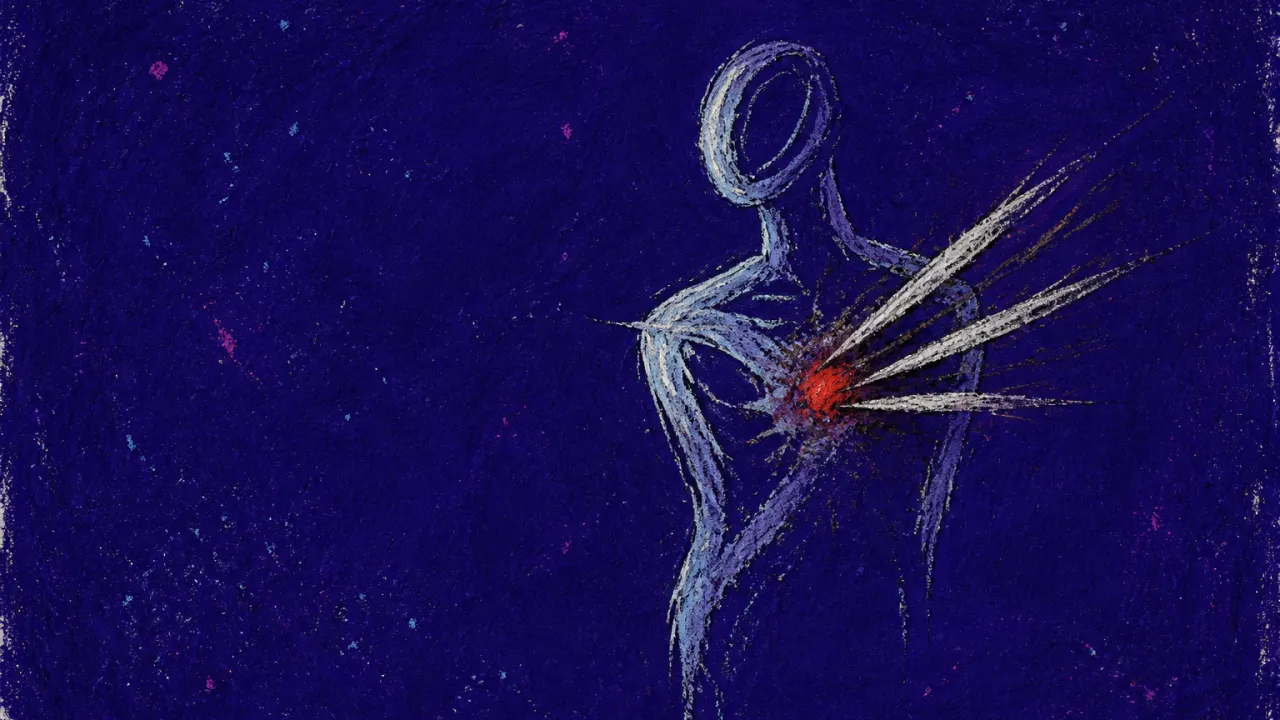
What does this feel like?
Betrayal Ache — it starts as a sharp pull under your breastbone, the kind of sting that makes your body go still before your thoughts can catch up. Your throat tightens around words you are not ready to say, your stomach drops in small waves, and everything feels suddenly overlit, as if some private room inside you has been exposed. You might keep moving through the day, answering messages, making coffee, sitting in meetings, but part of you stays fixed on one point, replaying the same detail with a cold, precise pressure: how did it reach me there? The ache is not only about being hurt; it is the strange, hollow shock of realizing that trust created a doorway, and something sharp came through it. You may feel guarded and tender at the same time, wanting answers while also flinching from them, checking old moments for signs you missed, wondering whether your softness made you unsafe or simply human. It can sit in the chest like a clean cut that keeps pulsing, not loud enough to collapse you, but too exact to ignore, much like the Three of Swords, where cold blades enter the red heart from different angles and still meet at the same center.
Why you're feeling this?
Betrayal Ache makes sense because the body notices when softness and impact occupy the same place. It is not a sign that you are weak or dramatic; it is your inner system marking the difference between ordinary hurt and hurt that entered through trust. The ache is there because access mattered.
Betrayal Ache in Tarot Cards
That sharp pull under your breastbone is the body-language of Betrayal Ache, the feeling that a soft place was reached too precisely. This is a universal emotional experience: not because every breach looks the same, but because the body knows the difference between ordinary hurt and hurt that enters through trust. Tarot gives that precise ache a visual edge without turning it into a lesson. Here are the Tarot Cards that often mirror Betrayal Ache.
Betrayal Ache in Tarot Card Reading Insights
For anyone sitting with Betrayal Ache, that chest-level sting and throat-tight silence can be the reason they come to a reading. Others have brought this kind of ache into readings, noticing what surfaced when trust no longer felt clean. Tarot Reading Insights from sessions shaped by Betrayal Ache.

Conditional Help From a Friend: From Betrayal Alarm to Clear Terms
Topic:Friendship Tarot Reading
Struggle:Clarity-Exposure Split
Context:Strings Attached Offer

Rereading an Apology After Betrayal, Then Keeping the Boundary
Topic:Personal Growth Tarot Reading
Struggle:Memory-Loyalty Bind

Calling Comfort Peace After Betrayal—Then Naming What Failed
Topic:Personal Growth Tarot Reading
Struggle:Comfort Entrapment
Context:Toxic Positivity Culture

Calling an Abandoned Plan a Sign: Naming Loss Before Meaning
Topic:Personal Growth Tarot Reading
Struggle:Agency-Fate Split
Context:Off-Script Life Path

Waiting for Family Acknowledgment: Choosing Contact Based on Behavior
Topic:Family Tarot Reading
Struggle:Family System Overidentification
Context:Family Script Pressure

Moving the Archived Chat: From Guarding Evidence to Guarding Attention
Topic:Friendship Tarot Reading
Struggle:Internal Authority Collapse
Context:Friendship Boundary Reset

After Friends Talk Behind Your Back: From Chat Checking to a Boundary
Topic:Friendship Tarot Reading
Struggle:Clarity-Exposure Split
Context:Direct Communication Trial

Ghosting After Intimacy: A Boundary Without One More Message
Topic:Love Tarot Reading
Struggle:Memory-Loyalty Bind
Context:Ghosting After Intimacy
A Fourth “Why?” Draft at 11:40 p.m. Led to a 24-Hour No-Check Window
Topic:Friendship Tarot Reading
Struggle:Clarity-Exposure Split
Context:Sunk Cost Exit Dilemma

Friendship Hypervigilance: From Checking DMs to Asking What Was Agreed
Topic:Friendship Tarot Reading
Struggle:Unspoken Expectation Load
Context:Unspoken Expectations Gap