Always Stuck in the Middle?

See how after-hours friendship mediation unfolds, which Tarot Cards mirror it, and what others brought into their reading insights.

Friendship Mediation Second Shift
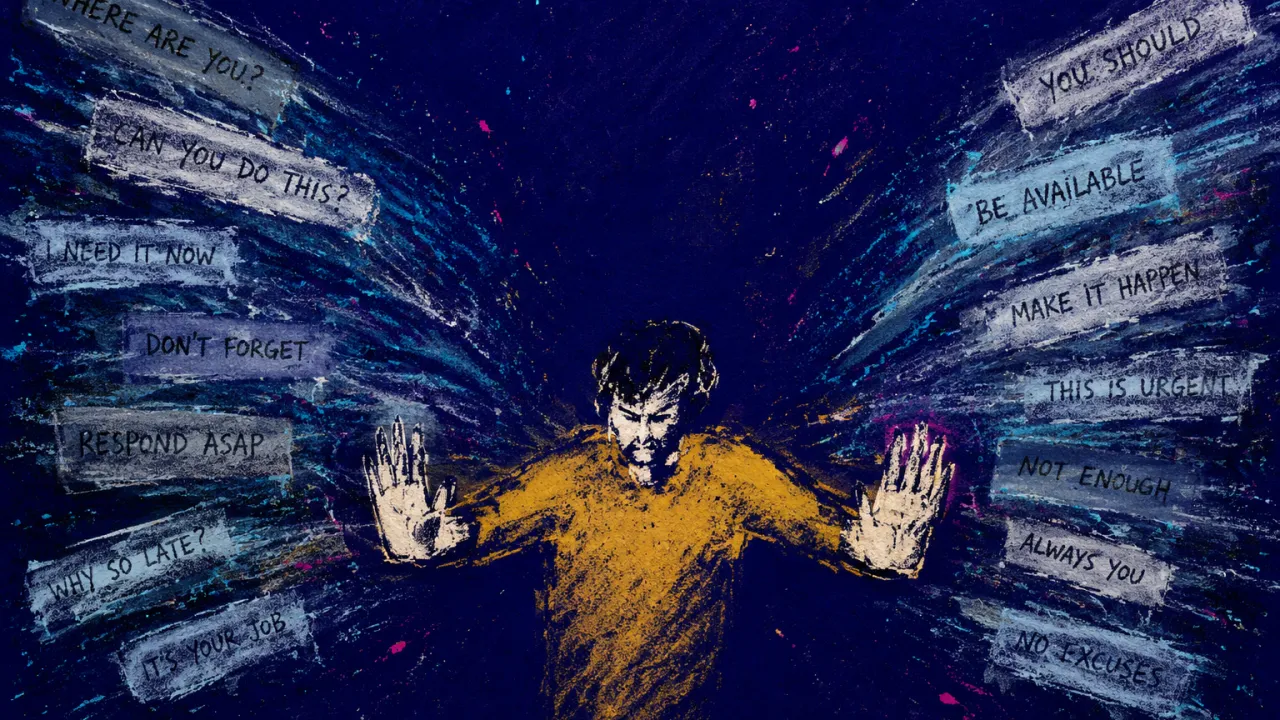
A figure with lowered shoulders and open palms stands between two inward-settling columns of silver message fragments.

What is this situation?

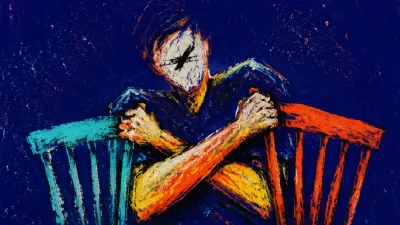
Friendship Mediation Second Shift is what happens when your own day ends and a second, unpaid role begins: keeping other people's friendships from breaking apart. You close your laptop, leave class, or finally get home, and one friend sends, "Can I tell you what happened?" Before you can answer, the other is typing separately, asking whether anyone mentioned them in the group chat. Soon your evening is split between parallel DMs, voice notes, screenshots, and carefully worded replies. Each person wants you to confirm their version, pass along the part they cannot say directly, and keep shared plans from becoming awkward; neither wants you to reveal everything they have told you. In the group chat, the argument may appear over, but behind it you are still translating tone, arranging a calmer conversation, and checking whether Friday's plans are still on. Because you are seen as the reasonable one, access to a workable friendship group starts to depend on your availability. If you pause, one person follows up; if you decline, your neutrality can be treated as distance or quiet support for the other side. The work arrives after work, study, commuting, or errands, usually through your phone and with no agreed stopping point. By midnight, your shoulders are tight, your eyes keep moving between message threads, and your own unfinished plans have been pushed aside by a conflict you did not start. The next day, both friends may return to normal while you still hold the details each asked you not to share, leaving you responsible for peace without the authority to set the terms, much like the Two of Swords, where a seated figure keeps two crossed blades raised in a fixed balance while open water stretches behind her.

Why it's not you?

This is not a failure to find the perfect tone or the perfect words. The strain comes from a friendship setup that routes two people's conflict through a third person, treats constant availability as the price of staying neutral, and leaves that person carrying private details without any shared authority.

Friendship Mediation Second Shift in Tarot Cards

In a Friendship Mediation Second Shift, two friends' unresolved conflict keeps arriving through separate messages after the rest of your day is already over. The tightness across your shoulders and the repeated movement between message threads mark what that setup physically demands. It is an environmental pressure, a structural transfer of responsibility, and a dynamic that places the group's stability on the person in the middle. The Tarot Cards below reflect the visible contours of that position without deciding who is right.

Justice
Reversed
The scales, upright sword, frontal seat, and symmetrical pillars promise an authorised process for weighing competing claims; reversed, that process loses its balance and legitimacy. Your friends ask you to evaluate versions, protect confidences, and preserve fairness, yet they provide no agreed rules and may contest your neutrality whenever it stops serving them. The blocked tribunal exposes responsibility without authority. You are expected to deliver a fair relational outcome while the parties retain control over the evidence, the consequences, and the meaning assigned to your silence, making the mediation burden structurally unequal rather than personally solvable through better wording.
Temperance
Upright
The angel pours a continuous stream between two cups while keeping one foot on land and one in water, creating a living bridge between separate conditions. You perform the same translation when you soften one friend's language, carry context to the other, and try to make a direct conversation possible without exposing everything said in confidence. The upright path and distant crown show that careful integration can create movement, but the flow is a resource rather than an unlimited obligation. The image makes your mediation skill visible while separating that skill from the friendship group's assumption that you must supply it after hours whenever conflict appears.
The Devil
Upright
The two chained figures stand beneath a dominant central structure, yet the collars visibly contain enough slack to reveal that the arrangement is maintained as much by perceived dependency as by physical force. In this friendship system, belonging, neutrality, and constant availability have been linked until declining mediation can feel equivalent to abandoning the group or choosing a side. The upright image names the contract hidden inside the role: access to a workable friendship circle appears conditional on continuing to absorb conflict. You can see that the chain is socially produced rather than a natural requirement of being a caring friend, creating a clearer distinction between chosen support and identity-level obligation.
Three of Cups
Reversed
The three figures meet in a closed circle with cups raised above them; reversed, the image turns mutual support into a triangle whose cohesion is unstable. Two friends can resume ordinary contact after separately routing their accounts through you, leaving you to retain the disclosures and relational residue that the visible reunion does not resolve. The overturned social bond makes the reciprocity problem legible. You remain part of the friendship network, but your place within it is being operationalised as mediator, translator, and keeper of confidential context rather than supported as an equal friendship in its own right.
King of Cups
Upright
The crowned figure sits steadily above turbulent water while a ship and a rising fish move through instability around the throne. You are similarly cast as the calm friend who can receive charged accounts, regulate the tone of replies, and keep the wider friendship from reacting to every emotional wave. The upright cup represents genuine emotional capacity, but the fixed throne distinguishes capacity from endless access. Your composure is a usable friendship resource; the surrounding sea exposes the structural distortion that occurs when everyone else's regulation begins to depend on your continued availability.
Two of Pentacles
Upright
The two pentacles circling inside an infinity loop, with ships pitching on waves behind the juggler, turn your evening into a visible allocation problem. Parallel DMs, voice notes, and friendship repair work keep moving while paid work, study, errands, rest, and personal plans remain inside the same finite system. The upright figure can keep both coins aloft but cannot calm the sea, separating practical competence from sustainable capacity. You may be skilled at managing competing demands, yet that skill is being converted into an expectation of unpaid availability, with your physical routine absorbing the cost of a conflict you did not initiate.
Six of Pentacles
Reversed
The standing giver distributes coins to two recipients while holding a scale that measures access; reversed, the exchange no longer functions as balanced support. Two friends draw separately on your time, attention, discretion, and emotional regulation, while neither has to match the resource cost imposed on your evening. The distorted distribution turns generosity into dependency on a single provider. You may still care about both friends, but the card exposes how care is being organised: the friendship group receives stability through your unpaid labour, while authority and reciprocity remain elsewhere.
Two of Swords
Upright
Two crossed blades remain suspended in front of a blindfolded figure while the water behind her stays open and unsettled. The image mirrors a friendship role in which you hold two competing accounts in fixed balance, unable to reveal everything and expected to prevent either relationship from tipping into open conflict. The upright posture shows real composure and the ability to create a temporary ceasefire, but it also reveals whose effort maintains that pause. You are being assigned responsibility for neutrality without the shared authority to set terms, verify claims, or require the friends to address one another directly.
Four of Swords
Reversed
The recumbent figure beneath three hanging swords is built around protected withdrawal, while a fourth sword remains close at hand; reversed, that recovery chamber no longer holds. Your phone allows other people's conflict to enter the hours meant to close out work or study, turning stillness into readiness for the next message. The blocked resting space makes the structural cost concrete: the friendship group receives continuity while your nervous attention remains on call. You are not merely choosing poor downtime; a social role with no endpoint is occupying the physical container in which recovery was supposed to happen.
Six of Swords
Upright
The standing boatman guides two seated passengers away from rough water while six swords remain planted inside the boat. You occupy a similar position when you organise a calmer conversation, translate what each friend could not say directly, and try to move shared plans beyond the immediate conflict. The upright passage shows that facilitation can create a viable transition, but the swords travel with everyone rather than disappearing. Your effort can move the friendship toward calmer conditions; it cannot independently resolve the assumptions, withheld information, or accountability that the two friends bring into the next stage.
Seven of Swords
Upright
The figure carrying five swords away from a camp, leaving two behind, and looking back over one shoulder captures the burden of transporting selected information outside the shared space. You move fragments between parallel conversations, retain details that cannot be disclosed, and continually assess which message can travel without escalating the friendship conflict. The upright image does not need to cast you as dishonest; it exposes an information architecture built around partial access and backchannels. Your strategic care may keep the group functional in the short term, but the swords in your arms show that confidentiality has become portable weight assigned to the intermediary rather than resolved through direct communication.
Eight of Swords
Upright
The blindfold, loose bindings, surrounding swords, and distant open ground show a person whose available movement is real but difficult to perceive from inside the enclosure. You may technically be able to decline, reveal less, or redirect the conversation, yet each move appears capable of exposing a confidence or damaging your standing with one friend. The upright image locates the constraint in a socially constructed corridor rather than an absence of all agency. The gaps between the swords matter: they reveal that the choice set has been narrowed by expectations and incomplete information, not erased by an unavoidable duty to keep both friendships stable.
Nine of Swords
Upright
The figure sitting upright in bed with face covered, nine swords stacked across the dark wall, gives physical form to an evening that has not mentally ended. After the messages stop, you still hold each friend's private details, replay the wording of replies, and monitor whether the next group interaction will expose something you were told not to share. The upright image makes the hidden cognitive bill visible rather than treating it as a private defect. Your mind has become the friendship conflict's storage layer, retaining unresolved information overnight even after both friends have returned to ordinary conversation.
Ten of Wands
Upright
The carrier bent beneath ten tightly gathered wands makes one person the transport system for an entire load. In the friendship group, you carry both narratives, the confidentiality rules attached to them, the task of translating tone, and the practical responsibility for getting shared plans back to a workable place. The upright movement toward the town shows that your labour can produce a visible result, which helps explain why the role keeps returning to you. The same image makes the imbalance undeniable: successful repair does not prove the load was appropriately assigned; it shows how much group continuity has come to depend on one friend's capacity to overfunction.

Friendship Mediation Second Shift in Tarot Card Reading Insights

When friendship conflict is routed through one person after hours, others have brought the same split-message, keep-the-group-together position into readings. The Tarot Reading Insights below show what surfaced in those sessions.
Psychological Contexts Related to Friendship Mediation Second Shift