Completion Paralysis at Thesis Submission: From Research to a Chosenวก

Completion Paralysis at 8:47 PM
At 8:47 PM on a Tuesday in a small London flat, I watched Alex open the thesis file they had promised to submit. The university submission checklist sat beside the laptop. A Google Scholar alert appeared; the phone grew warm in their hand, the radiator clicked, and the laptop fan lifted into a thin, steady whir. Alex added one article to Zotero, qualified a paragraph, and rewrote a citation that had already been clear. The manuscript became longer. The final PDF remained untouched.
I recognised the first click: Alex was a 28-year-old doctoral candidate in London's final extension period, and when the submission portal turned nearly done into a real decision, they answered by opening another article. I call that completion paralysis, not a lack of care.
When I asked what had brought them to my table, Alex looked at the screen and said, “I keep calling more research responsible, but it is also keeping the finish line moving. Why do I keep extending my thesis instead of submitting it?”
Their frustration had a physical shape. It was like a browser with forty tabs open inside the body: every tab promised one missing answer, while the shoulders tightened, the jaw worked, and fatigue settled heavily behind the eyes. I told Alex that I could hear both the competence and the strain in the pattern. “Let us draw a map of the loop,” I said. “Our Journey to Clarity is not about forcing a prediction. It is about finding the point where your own decision can become visible.”
Choosing a Compass for the Moving Finish Line
I invited Alex to place both feet on the floor, take one unhurried breath, and name the question without trying to solve it. I shuffled slowly, treating the ritual as a change of attention: a small bridge between the pressure of the laptop and the more spacious work of noticing what was actually happening.
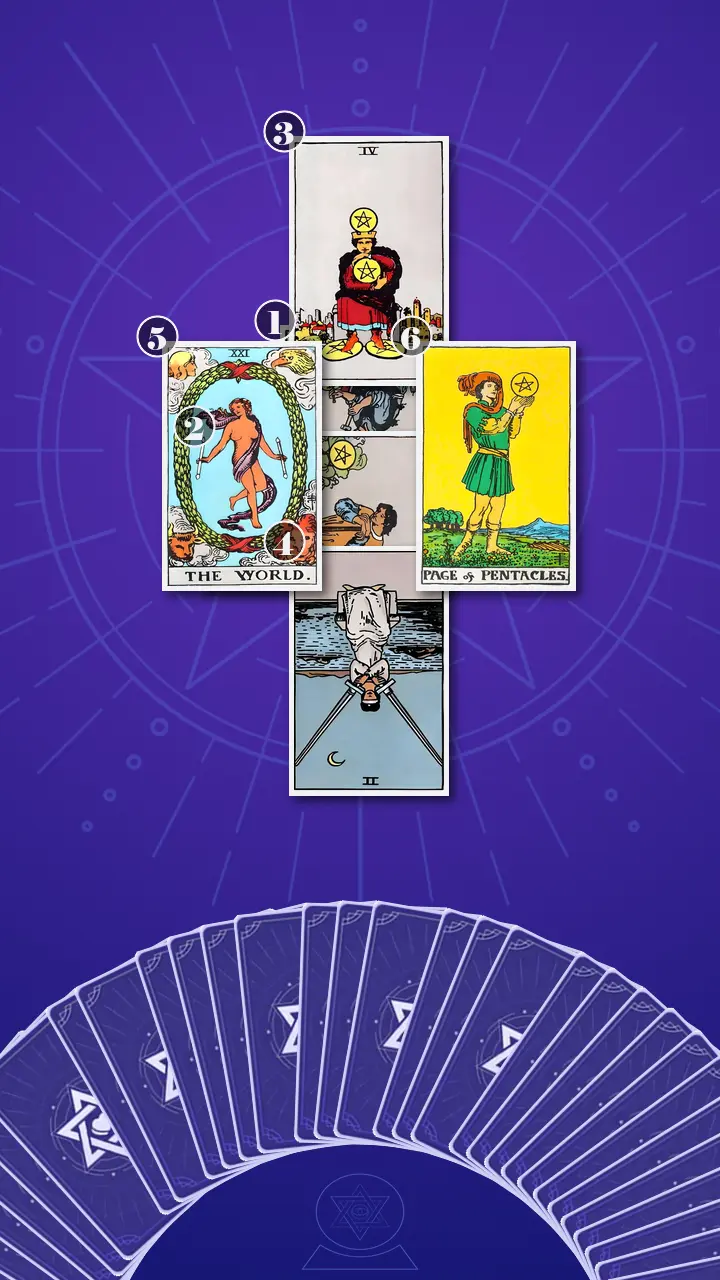
I chose the Decision Cross · Context Edition, a six-card tarot spread for thesis submission anxiety and completion paralysis. Its purpose was practical. The spread traces a repeated self-reinforcing behaviour: visible effort becomes more research, more research creates short-term relief, and relief keeps the submission boundary out of reach. A full Celtic Cross would add breadth that this focused loop did not need. This compact structure lets me examine the immediate habit, the promise of more time, the need for control, the hidden decision gap, the transformation lever, and one grounded next step.
I told Alex, and anyone reading along, what to expect. The first card would show the current extension behaviour. The crossing card would reveal how delayed gratification makes waiting look responsible. The cards above and below would expose the control driver and the Manifestation Gap, while the final pair would show what integrated completion and a practical submission action could look like.
The Workbench Where Effort Became a Loop
Position 1: The Workbench of Reopening
Now I turned over the card representing Current extension behavior: the observable loop of reopening, adding, and postponing instead of submitting. It was the Eight of Pentacles, reversed.
In the RWS image, a craftsperson sits absorbed at a workbench, with eight completed pentacles displayed in a neat vertical row and a distant town beyond the work area. I saw Alex at that bench: one more citation pass after the chapter was already clear, one more paragraph qualified after the argument had already answered its question, one more version named “final revised 2” while the submitted thesis remained like a town on the far side of the room. The cards were not questioning the amount of labour. They were asking whether the labour still moved the work toward release.
Reversed, the Earth energy had become over-refined and blocked. Effort was abundant, but direction had stalled. Continued editing offered a productive place to stand, and the submission portal remained a vulnerable place to step into. I asked, “Which proposed revision materially improves the argument, and which one mainly lets the stopping point move another inch?”
Alex gave a short, bitter laugh. “Damn. That is the exact moment I say I am getting ready to submit and somehow end up with another article, another version, and another extension note.” Their breath caught first and their fingers stopped above the laptop; then their gaze drifted to the file list as if replaying the sequence; finally, the laugh loosened into a long exhale. I answered gently, “The card is describing a loop, not assigning you a character flaw. We can change a loop once we can see its steps.” Alex nodded, though the smile still carried a little sting.
Position 2: The Harvest That Stayed on the Vine
The next card represented Crossing pressure: the promise of more time and delayed gratification that makes extension feel responsible while keeping the thesis private. I turned over the Seven of Pentacles, upright.
The RWS gardener leans on a hoe and studies seven pentacles growing from a cultivated vine. This was not a picture of laziness. It was real work, real investment, and a thoughtful pause to assess the crop. In Alex's life, a new publication could arrive through a Google Scholar alert, and suddenly another round of literature review felt like care. The manuscript had grown substantially, but assessment had no observable stopping point. The harvest kept being delayed because one more article might improve it.
Here, patience had shifted into excess waiting. Delayed gratification sounded virtuous because it postponed the moment when the current draft could be evaluated. I asked, “What evidence would be enough to gather this harvest instead of planting another round of research?” Alex rubbed the edge of the checklist with one thumb and looked toward the blank submission-date field. The question had not removed the discomfort, but it had made the promise of more time visible.
Position 3: The Grip Around the Private Folder
Now I read the card representing Underlying driver: the need for control and the deeper fear that an imperfect submission could threaten self-worth. It was the Four of Pentacles, upright.
The figure in the RWS card presses one pentacle against the chest, pins two beneath the feet, and keeps the city behind the body. I translated the image into a private Google Drive folder with sharing permissions turned off. Every limitation could still be edited away before anyone saw it. The thesis was real, but evaluation could not yet reach it. Keeping the file unsubmitted made criticism feel reversible, and control offered immediate relief.
I said, “The draft can be imperfect without becoming a verdict on your worth. The question is whether protecting the manuscript has become indistinguishable from protecting your identity from evaluation.” After ten years of studying sound energy, I have learned to notice the moment pressure changes an internal rhythm. I remembered the feeling from my own earlier work: not a lack of ambition, but the peculiar exhaustion of pushing at the wrong tempo and calling the resistance evidence that the wall must be stronger.
I began an Execution Rhythm Calibration in my notes, looking for the specific friction point where Alex's ambition exceeded their daily capacity and where the final visible action became too exposed to fit the existing routine. Alex's shoulders rose, then lowered slightly. “I am not avoiding the thesis because I do not care about it,” they said. “I think I am keeping it safe because I care so much.” I let that truth stand without trying to talk it away.
Position 4: The Blank Date Field
The fourth card represented Manifestation Gap and blind spot: the split between the stated intention to submit and the actual choice to extend. It was the Two of Swords, reversed.
The blindfold and crossed swords became two competing final plans, two thesis versions, and two browser tabs showing different formatting guidance while the calendar stayed empty. Reversed, the card showed a blocked Air decision becoming impossible to keep neatly contained. This was the major blockage in the spread: more information was being asked to resolve an emotional threshold that required a named boundary.
I placed the two sides beside each other. “The stated plan says, ‘I am preparing to submit.’ The visible sequence says, ‘I open another formatting guide, search one more source, and leave the date blank.’ The inner operating system says, ‘I just need one more answer before I choose.’ Which decision would that answer actually settle?”
Alex's jaw tightened. Their eyes moved from the crossed swords to the extension note on the desk, then to the untouched date field. For a few seconds they said nothing. I did not rush to fill the silence. The card was not telling Alex to obey an externally imposed deadline; it was showing how productive postponement temporarily relieved the fear of being seen while widening the gap between intending to submit and submitting.
When The World Drew a Laurel Wreath Around the Thesis
Position 5: The Bounded Whole
The room grew quiet as I turned to the card representing Transformation lever: defining integrated completion and replacing endless refinement with a bounded submission. It was The World, upright, the strategic antidote in this reading.
The central figure stood inside a laurel wreath, holding two wands, with four figures keeping watch at the corners. I saw the distant town beyond the Eight of Pentacles workbench widen into this frame. The same pages that had looked like a pile of separate fixes could become one coherent object: an argument with a chosen question, method, timeframe, and limitation. The wreath did not claim that no further learning was possible. It gave the learning a boundary.
At this point I ran my Tempo Misalignment Audit. When someone describes feeling as if they are pushing against a wall, I check whether their psychological and executive BPM have fallen out of sync. Alex's ambition was still moving; their stopping rules and daily capacity were not moving with it. More material was being used to protect the work from judgment, while a coherent frame could let the work travel. That was the shift: not from caring less, but from asking research to provide a certainty it could never provide.
It was 8:47 PM in Alex's London flat again in my mind. They had planned to prepare the final file, but a Google Scholar alert appeared, the phone warmed in their hand, and their shoulders tightened as one more article began to feel like responsibility. I could see the familiar tempo return before either of us named it.
You do not need another extension to prove the thesis is worthy; use the laurel wreath as a boundary, define what is complete, and let submission mark integration rather than perfection.
Then I gave the wider frame: “A thesis can be complete within its chosen frame without containing everything you could still learn. Submission is not a verdict on your worth; it is the boundary that lets your integrated work enter the world.”
For three seconds Alex did not move. Their breath stopped halfway in their chest, and the fingers pinching the edge of the card hovered as if touching it might alter the meaning. Then their eyes left the wreath and lost focus on the table; I could almost see the last three versions, the blank calendar field, and the article tabs replaying behind their face. Their jaw worked once. Their shoulders dropped by a fraction, not into confidence but out of defence. A small breath left them, rough and surprised. Their eyes brightened, and they pressed a thumb into the opposite palm before releasing it. “Complete enough,” they said, their voice low with a small tremor. “That feels different from pretending there is nothing left to learn.” Relief arrived with a thin edge of dizziness: a clear boundary meant Alex would own the next choice instead of waiting for readiness to make it. I stayed quiet long enough for that responsibility to feel theirs, not something the cards had assigned.
“Now use this new perspective to revisit last week,” I said. “Was there a moment when this distinction could have made the choice feel different?”
This was the first credible movement from relief-seeking productive postponement and fear of imperfect evaluation toward bounded completion, grounded relief, and self-trust. Completion was beginning to look less like a feeling that might eventually arrive and more like a boundary Alex could define. The thesis could leave the private editing room without taking Alex's worth with it.
Position 6: The Pentacle at Eye Level
The final card represented Practical next step: a small, observable submission practice chosen and tested within one week. It was the Page of Pentacles, upright.
The Page holds one pentacle at eye level in a green, ploughed field, with distant mountains behind them. I read that single coin as one real task, not a new grand plan: open the official submission guidance, check the required files, make one bounded proofing pass, and export a PDF. The mountains could hold future questions without requiring them to be solved today.
“I can learn more later; right now I can make this one step visible,” I said, offering the Page's inner operating system. I contrasted scattered research tabs with one file, one time block, and one exit point. Alex opened a blank calendar entry, then closed the urge to search for another template. The movement was tiny, but it belonged to them. I watched the card turn the World from an inspiring idea into a practical next step.
From the Endless Editing Room to a Bounded Frame
When I linked the spread together, the story became clear. The reversed Eight of Pentacles showed effort that had stopped travelling. The Seven of Pentacles showed how waiting could borrow the language of responsibility. The Four of Pentacles revealed the protective grip underneath: if the thesis stayed private, its limitations remained editable and could not yet be mistaken for a statement about Alex. The reversed Two of Swords exposed the split between preparation and a named decision. The World offered a different definition of completion, and the Page of Pentacles brought that definition back to one file and one deliberate action.
The road in Alex's story had been lengthened just as it reached the station. The extra miles were not meaningless; many represented genuine scholarship. But the road was also serving as shelter from the platform. The cognitive blind spot was asking a research problem to answer an identity question: “Can I survive being evaluated?” No new source could settle that. The transformation direction was to move from treating more time as proof of readiness to using observable criteria for enoughness, then completing one bounded final pass.
I named the practice The Syncopation Reset: a three-day tempo adjustment experiment that breaks a forced routine into smaller, more harmonious beats. My Execution Rhythm Calibration showed that Alex did not need a harsher schedule. They needed an exit point that could fit their actual capacity and a way to separate necessary checks from productive postponement. I offered the experiment as an option, adaptable to official university requirements and any genuine guidance from a supervisor or graduate office.
- Day One: Bounded Completion CheckOpen a blank note beside the thesis and title it “Bounded Completion Check.” In ten minutes, write three observable criteria tied to the research question and institutional requirements: the required sections are present, the central argument is stated, and the required formatting or declarations are checked. Give the criteria a date. Move every appealing but non-essential source, caveat, or wording improvement to a note titled “After submission questions.”If three criteria feel arbitrary, anchor them to official guidance rather than to a feeling of confidence. Confidence is allowed to arrive later.
- Day Two: One-Pass Thesis ProofingBook one 25-minute calendar block labelled “final file pass.” Open only the current thesis, the official submission guidance, and the short checklist. Edit only errors affecting clarity, accuracy, or submission rules. Then export one PDF with a concrete name such as “Thesis_Submission_14-June” and write down one limitation alongside the frame that makes it acceptable.When another improvement appears, put it on the parking list. Stop when the timer ends, even if the emotional feeling of readiness has not arrived; the experiment is testing a boundary, not manufacturing certainty.
- Day Three: File-Date-Exit PracticeSet a provisional submission date within the next week in Google Calendar, then verify it against official university guidance. Choose three non-negotiable checks: required files, required declarations or forms, and one final clarity or formatting pass. When a new article calls, record the question, close the tab, and spend the final two minutes preparing the file or portal instead.Treat the date as a self-chosen test, not a universal rule. Adapt it if institutional facts change, while keeping the exit visible and leaving future learning outside the current frame.
I reminded Alex that these were small steps, not a new perfection system. The goal was a ten-minute visible submission experiment and a bounded final pass, not a promise to feel fearless. The cards could clarify the pattern, but Alex remained the person who chose the criteria, the date, and the act of sending.

The Quiet Proof of a Complete-Enough Thesis
Four days later, I received a message from Alex: “I used the three criteria, did the one-pass proofing, exported one file, and submitted it. I still know what I would change, but those ideas are on the parking list now, not inside the thesis.”
Alex told me they had sat alone in a café with a flat white and watched the now-empty “final revised 2” folder for three quiet minutes. The action was firm; the room still held a small ache. I liked that detail. Relief did not have to erase the importance of the work, and submitting did not have to turn the next morning into a flawless new life.
The cards had not predicted an outcome or granted permission. They had given me and Alex a set of images precise enough to connect the warm phone, the blank date field, the private folder, and the fear of submitting an imperfect thesis. Alex supplied the decisive movement. The Journey to Clarity had begun with a moving finish line and reached its first proof through a file, a time, and an exit.
When the submission portal is open and your shoulders rise toward your ears, holding the thesis back can feel like protecting your worth, even as you long for the relief of letting this imperfect work be seen. That feeling deserves care, not a verdict.
If complete enough could mean a bounded version held inside its own laurel wreath, what is one small sign of that boundary you might quietly notice or name this week?