Who Decides You Belong?

Explore Outsourced Belonging through lived patterns, related tarot cards, and tarot reading insights from similar emotional questions.

Outsourced Belonging
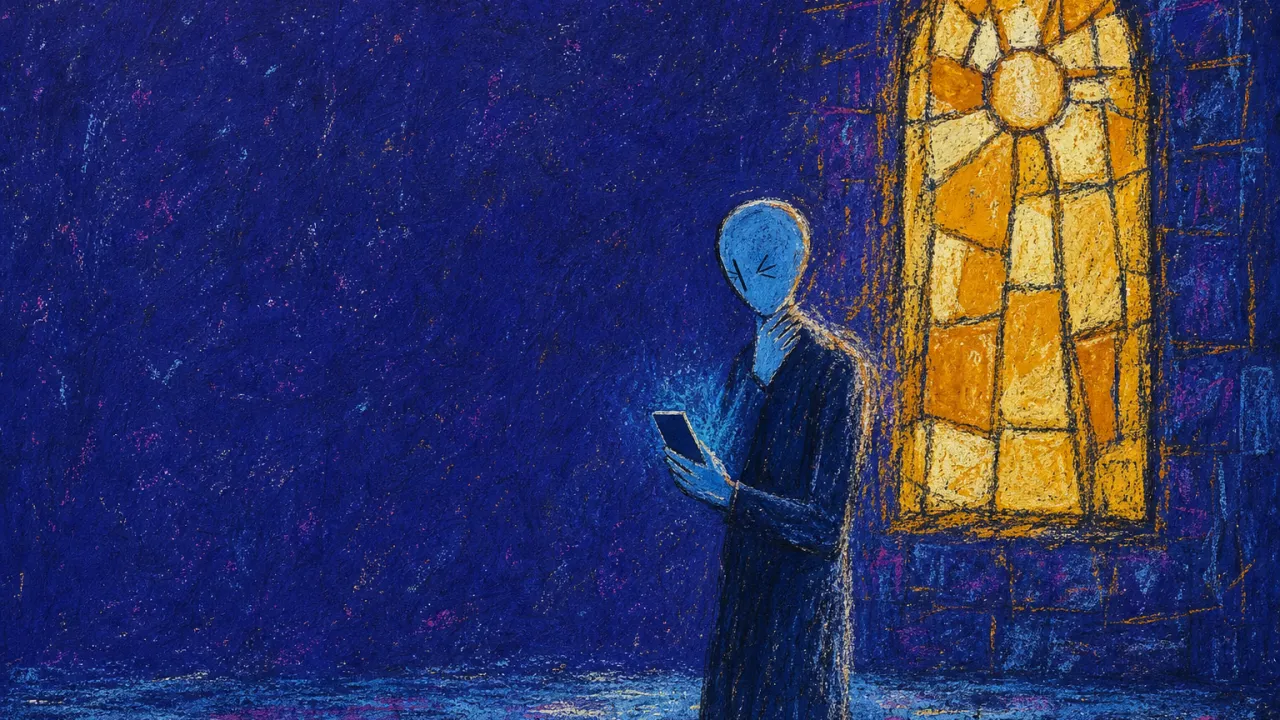
A figure outside a glowing stained-glass window, holding a blank phone as frost-blue shadows press around gold light

What does this feel like?

Outsourced Belonging is the feeling that your place in the world has to be confirmed by someone else's reaction before it becomes real. You notice it in the split second after you send a message, when your body goes quiet and alert at the same time, waiting for the typing bubble, the heart reaction, the small proof that you have not slipped out of someone's mind. You tell yourself you're relaxed, that everyone checks their phone, that it doesn't matter, but your shoulders are already tight and your breath has moved higher in your chest. In a group, you can feel yourself becoming adjustable: softer with one person, sharper with another, funnier if the room needs energy, quieter if the room seems tired of you. You do not feel fake exactly; each version is still you, but none of them gets to settle. The exhausting part is how quickly belonging turns into a task — read the room, match the tone, keep the thread alive, don't be too much, don't be too quiet, don't make anyone work to include you. Even when people are kind, part of you stays outside the moment, watching for signs that the door is still open. And when the signals go missing, your whole sense of self can feel like it has been left in a coatroom you can't get back into, much like the figures on the Five of Pentacles, walking past a warm stained-glass window, close enough to see the light but still moving through the cold outside it.

What's pulling at you?

You're caught between wanting connection to feel natural and needing constant signals that you're still wanted. The bind is that every sign of approval gives a short burst of relief, but it also hands your sense of belonging back to the room, the chat, the feed, or the person you're trying not to lose.

How It Shows Up?

  • You post something small — a photo dump, a joke, a line that sounds casual — and then keep checking who saw it, who liked it, who didn't react. Your thumb refreshes before you even decide to do it, your chest tightens at every pause, and your stomach drops when the names you wanted don't appear. The screen becomes a tiny stained-glass window, lit from the other side. You can let the phone sit facedown for a minute without deciding what it means about you.
  • You're with friends at dinner, and the conversation moves fast enough that you start editing yourself in real time. You laugh a little louder than you feel, change an opinion halfway through saying it, and scan the table for the safest version of you to offer. Your shoulders creep up, your mouth feels dry, and there is a small delay between what you think and what you let out. It's okay to notice the performance without forcing yourself to drop it all at once.
  • At work or school, praise lands like oxygen and silence lands like a verdict. You reread a short 'thanks' email three times, trying to hear whether it was warm or flat, then spend the next hour adjusting your tone so no one has a reason to pull away. Your jaw locks, your breathing gets shallow, and the task in front of you blurs while you wait for a signal that you're still in good standing. You can finish one small thing before you check the room again.
  • When someone you care about takes longer to reply, your whole inner weather changes. You tell yourself they're busy, then you replay your last message, then you consider sending something lighter so the silence doesn't harden. Your throat tightens, your ribs feel braced, and your hand hovers over the keyboard like one more word might buy your place back. A pause can stay a pause for now, without becoming proof.
  • Alone at night, you realize you don't know what you want when no one is watching. You open different apps, try on different moods, imagine how each version of you would be received, and feel the quiet spread around you when there is no audience to answer back. Your chest feels oddly hollow, your face relaxes into something unfamiliar, and the room has the cold stillness of standing outside a warm window. You don't have to name yourself perfectly tonight; being unobserved is still a place you exist.

Outsourced Belonging in Tarot Cards

Outsourced Belonging lives in the moment when your place in the room feels dependent on someone else's response. You can feel it in the tight throat, the braced ribs, and the hand hovering over a message that might buy your place back. From an existential perspective, the structural framework is about what happens when belonging becomes something granted from outside instead of felt from within. These Tarot Cards trace the visible outline of that bind.

The Devil
Upright
The chained pair remain connected to one another beneath an overseeing figure, with loose collars that make the mechanism of captivity visible. Internally, the image resembles a reassurance loop: another person's reaction quiets the fear of exclusion, but the relief strengthens the rule that belonging must be confirmed from outside. The next silence then reactivates the same psychological cache. You may understand that the loop is disproportionate while still feeling it in your throat, chest, and attention. The upright Devil does not frame this as a moral failure; it exposes a reinforcement structure. The chain shows how relief and dependence coexist, while its looseness marks the difference between witnessing the rule and being identical to it.
Judgement
Reversed
An angel's trumpet reaches figures rising with open arms, linking awakening to a call that fills the whole landscape. Reversed, the call is not simply silenced; it is mislocated as permission that must arrive from an external authority. Your own emerging values or identity can remain suspended until another person recognizes them as valid. You may accumulate insight about your patterns while still waiting for applause, agreement, or visible inclusion before living from that insight. The reversed Judgement scene names a failure of internal authorization, not a failure of potential. Growth remains organized around someone else's verdict, so becoming more fully yourself feels dangerously similar to leaving the group that once defined your place.
Two of Cups
Reversed
Two figures face one another and exchange cups beneath a caduceus and a winged lion's head. The image builds intimacy as a reciprocal circuit: each person offers something and receives visible acknowledgment in return. Reversed, that circuit becomes a bottleneck in which a partner's response is asked to certify not only the state of the relationship but your right to feel secure within it. You may start changing tone, suppressing needs, or sending a lighter follow-up when reciprocity becomes ambiguous. The reversed Two of Cups does not reduce the bond to rejection; it shows mutuality losing its containing function. Connection may still exist, but your sense of belonging cannot settle because it is repeatedly outsourced to the next affectionate message, warm expression, or reassuring gesture.
Three of Cups
Reversed
Three friends lift their cups into a shared center, forming a compact circuit of attention, mirroring, and celebration. Reversed, the circuit cannot guarantee that each person has a secure place once the visible interaction stops. The group chat, inside joke, or invitation becomes a membership test, and matching the group's energy becomes ongoing friendship labor. You may perform closeness effectively while still wondering whether the others would choose you without that performance. The reversed Three of Cups witnesses the difference between participating in friendship rituals and feeling held by a support network. Its unstable circle names belonging that must be continually renewed through reactions instead of carried across pauses, disagreements, and uneven energy.
Three of Pentacles
Reversed
A skilled worker presents work to two figures holding plans within an ornate institutional building. Learning, review, and admission to a knowledge community are visibly intertwined. Reversed, the exchange becomes a fragile approval system in which classmates, supervisors, or instructors appear to determine whether your ideas and your academic presence deserve space. You may change your voice in seminars, withhold questions, or overread study-group reactions so that no one has a reason to exclude you. The reversed Three of Pentacles shows knowledge production losing its collaborative container. Your contribution remains in the structure, but belonging is outsourced to the evaluators around it, making feedback feel like a referendum on membership rather than information about the work.
Five of Pentacles
Upright
Two exposed figures pass beneath a stained-glass window embedded in a substantial building, placing kinship-like shelter beside the experience of exclusion. Within a family system, the window can represent the warmth, history, and membership that should remain available even during disagreement. Outsourced Belonging turns a relative's silence or disapproval into evidence that you are now outside that shelter. You may continue participating in family life while feeling emotionally exiled from it. The upright Five of Pentacles witnesses that simultaneous proximity and exclusion without declaring the family bond nonexistent. Its architecture names the painful dependence on visible warmth from relatives before inherited membership can be felt as real.
Ten of Pentacles
Reversed
An elder, a couple, a child, and dogs occupy an arched family compound marked by inherited symbols and accumulated structure. Reversed, the architecture of continuity becomes a gatekeeping system: acceptance can appear contingent on performing the family role, values, temperament, or life path that others recognize. Belonging is inherited in theory but repeatedly subjected to interpersonal approval in practice. You may become more agreeable, successful, quiet, or useful depending on which version keeps the family atmosphere stable. The reversed Ten of Pentacles shows the family system failing to provide unconditional structural membership. Its crowded arch remains intact, but your place beneath it feels revocable whenever relatives disapprove, withdraw warmth, or stop reflecting the expected identity back to you.
Two of Swords
Upright
A blindfolded figure holds two swords crossed across her body while the sea and rocky islands remain behind her. Her posture keeps opposing options in exact suspension, but the blindfold prevents the environment from resolving the standoff. In Outsourced Belonging, a reply, invitation, or approving reaction can become the missing evidence expected to decide whether you should continue, withdraw, speak, or stay silent. You may appear calm while your body is doing the work of holding incompatible choices: protect your dignity by stepping back, or preserve connection by reaching again. The upright card keeps both forces visible without forcing a premature outcome. It shows how a real decision can be immobilized when the authority to choose has quietly been delegated to someone else's next move.
Eight of Swords
Upright
A blindfolded and bound figure stands inside a loose enclosure of swords, with open ground visible around her and a distant structure behind her. The restraints give internalized social judgment a physical form: imagined reactions narrow what can be said, wanted, or chosen before anyone has actually responded. Belonging is protected through self-limitation, but that protection also prevents a stable self from taking up space. You may silence an opinion, pre-edit a message, or become the version of yourself least likely to disturb the room. The upright Eight of Swords witnesses the trap as an active cognitive structure rather than proof that rejection is inevitable. The sword enclosure names the accumulated predictions of other people's judgment, while the gaps show that those predictions are not identical to the full relational field.
Nine of Swords
Upright
A figure sits upright in bed with her face covered while nine swords occupy the dark wall above her. The room contains no responding audience, yet the social interaction continues internally through replay, interpretation, and imagined verdict. A missing reaction can expand in that closed space until it appears to explain your entire relational worth. You may revisit one sentence, one delay, or one absent name long after the external moment has ended. The upright Nine of Swords makes the psychological afterlife of outsourced belonging visible: the room is quiet, but the external audience has been carried inside. The card witnesses rumination as the cost of trying to manufacture certainty from ambiguous social evidence.
Page of Swords
Upright
The Page holds his sword aloft while looking over his shoulder, his clothes and the surrounding trees pulled by a restless wind. He occupies a communication field in which every movement may contain information. In friendship, that posture appears in rereading messages, comparing response times, and tracking who reacted in a private chat before deciding whether closeness is still intact. You may be trying to protect a valued bond, not simply looking for reasons to distrust it. The upright Page shows how protective attention can become relational surveillance when belonging has no internal carryover between interactions. Your mind remains ready to parse the next signal, while the friendship's larger history is displaced by whatever happens on the screen now.
Six of Wands
Reversed
A rider carries visible laurels through a crowd whose attention completes the image of success. Reversed, achievement remains dependent on that public field but cannot be securely absorbed from it. Growth may occur, yet it feels unreal when nobody reacts, and a lack of applause can be mistaken for evidence that no meaningful change has happened. You may keep optimizing the version of yourself that receives recognition while losing contact with changes that are quieter, slower, or less legible to others. The reversed Six of Wands witnesses the cognitive fusion between progress and visibility. It locates outsourced belonging at the point where being seen developing becomes more authoritative than the lived evidence of development itself.
Eight of Wands
Reversed
Eight staffs travel together across an open sky toward distant ground, creating a clear visual expectation of uninterrupted arrival. Reversed, the shared trajectory becomes delayed, mistimed, or difficult to read. A message that has not landed, a reply that has not arrived, or a conversation that loses momentum can therefore become more than a timing problem; it can feel like evidence that your social place has expired in transit. You may know intellectually that delays have ordinary causes while your body treats the empty interval as a verdict. The reversed Eight of Wands locates the struggle in that interval between transmission and reception, where uncertainty invites repeated checking and corrective messaging. The card keeps the external delay separate from the meaning attached to it, exposing how timing becomes an unauthorized measure of belonging.

Outsourced Belonging in Tarot Card Reading Insights

When belonging feels outsourced to replies, reactions, praise, or the mood of the room, people often bring that same question into readings. The shift from cards to readings shows how this struggle appears when someone asks where they stand with others. Tarot Reading Insights for this pattern are gathered below.

Psychological Struggles Related to Outsourced Belonging