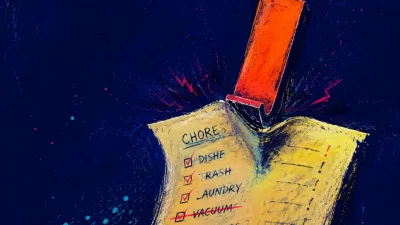
The 9:32 p.m. Cupboard Trial
If you are a late-20s city professional who can get through client decks and rent payments just fine but still stand in your kitchen at 9:30 p.m. thinking the good chocolate would be wasted on a day this average, this is probably your version of productivity guilt. When Maya came to me from Toronto, she did not open with a dramatic confession. She opened with a snack.
She told me about a Tuesday night: laptop finally shut after a day of calls and content revisions, the kind of screen-induced exhaustion that leaves the eyes sandy and the neck still half-braced for one more Slack ping. The fridge hummed. The cabinet door tapped softly on its hinge. The foil of a dark chocolate bar felt cool against her fingers. Then the whole moment changed temperature. Her stomach tightened. Her shoulders rose. Her chest gave that tiny clench that says a normal craving has somehow wandered into an exam room. She put the chocolate back, reached for a plain granola bar, and heard herself think that it would make more sense on a better day.
'I know it is just a snack,' she told me, with the embarrassed half-smile I hear from smart, capable people all the time, 'but it feels wasteful to eat it on a random Tuesday.' Underneath that sentence was the real question: why did enjoying something small in the present feel wrong unless she had first proved she was disciplined enough? Her guilt sat in the body like a Slack notification lodged under the breastbone, small but sharp, and the background to it was familiar too: rent, groceries, comparison fatigue, and a feed full of soft-productivity content that makes ordinary rest feel unofficial.
I nodded. I could already feel the shape of it: wanting to enjoy good snacks now, and fearing that pleasure had to be earned first. 'That makes sense,' I said. 'We are not here to diagnose your chocolate. We are here to find the private rule behind it. Let me help you draw a map through the fog, so this stops feeling like a moral mystery and starts feeling understandable.'

Choosing the Compass: The Shadow Spread
I asked Maya to put both feet on the floor and take one slow breath before we began. As she shuffled, I told her what I tell everyone: this part is not about summoning fate. It is about giving the psyche a clear reflective surface, so what feels blurry can become visible.
For a question like why do I save good snacks for later, I chose The Shadow Spread, a four-card shadow spread I use when a simple behavior is being powered by a hidden belief. It is one of the best tarot spreads for harsh self-judgment around pleasure because it does not overbuild the story. It tracks the whole chain with precision: visible symptom, shadow rule, corrective truth, and daily integration.
I laid the cards in a horizontal line from left to right and explained the terrain. The first card would show the conscious pattern she already recognized in her apartment and routine. The second would reveal the inner rule judging her access to pleasure. The third, the turning point, would name the medicine that could restore a felt sense of enoughness. The fourth would show one grounded next move, the kind that can happen in a real kitchen on a real weeknight.
I like this spread because the image of it is practical: a shelf becoming a place setting. Something hidden behind restraint gets brought back to the table. That matters when the question is not predictive but psychological: not What will happen next, but Why does an ordinary act of care feel morally loaded?

Reading the Constriction Cluster
Position 1: The Hand That Pulls Back
Now I turned to the card representing the visible withholding behavior in the issue: saving good snacks and postponing enjoyment until the day feels earned. The card was the Four of Pentacles, upright.
Sometimes tarot is almost comically exact. The figure on this card clutches one pentacle at the chest, pins two beneath the feet, and keeps the city at a distance. In Maya's life, that looked like the good chocolate sitting in the cupboard like a protected asset: physically near, emotionally locked. It had the same energy as saving the nice candle, the expensive serum, or a beautiful notebook for a future self who supposedly counts more.
'This is not greed,' I told her. 'It is contraction.' In energy terms, the Four of Pentacles shows Earth over-defending itself. Protection has tipped into overcontrol. It is like keeping your phone on low power mode even when the charger is right there, because you no longer trust ordinary use. The snack stays untouched, and the part of you that needed comfort stays underfed.'
Maya reacted in a three-step sequence I know well. First, her fingers froze on her mug. Then her eyes drifted past my shoulder as if replaying the cupboard door in real time. Then a dry little laugh escaped her. 'Wow,' she said. 'That is so accurate it feels a bit rude.'
'Sometimes the first honest card does feel rude,' I said. 'Especially when you have been calling the pattern sensible for a long time. Sometimes being sensible is just self-denial in business casual.'
Position 2: The Invisible Courtroom
The next card represented the inner rule that pleasure must be justified, along with the deeper fear about worth and self-discipline. It was Justice, reversed.
This is where the reading moved from habit into structure. Before a square of chocolate can happen, Maya runs a private audit: the unanswered emails, the skipped workout, the doomscrolling, whether dinner was healthy enough, whether she was focused enough on calls. Then the verdict arrives: maybe after one more task. Not on a day like this. The snack is never just the snack. It is evidence. It has a little Severance energy to it, the worker self writing policies the home self has to obey.
Justice reversed is not healthy discernment. It is distorted Air. The scales become a private scorecard, and the sword becomes the sharp inner voice that slices an ordinary evening into earned and unearned. When people search for the meaning of Justice reversed in a reading about self-worth, this is what I want them to understand: the problem is not lack of discipline. The problem is an inner legal system that is no longer fair.
When I look at Justice reversed, I never think of cosmic punishment. My mind flashes, oddly and very concretely, to old ship manifests from my years at sea: every line item accounted for, every number expected to balance before movement could happen. Accountability can be useful. But this card showed me accountability turned inward until it had become an unforgiving internal HR department. A kitchen choice was being treated like it needed approval paperwork.
'That is exactly it,' Maya said before I had fully finished. Her breath came out sharp through her nose. One shoulder lifted, then dropped. 'The internal performance review. I do that with chocolate, tea, candles... honestly everything.'
I asked her the real-life question of this position: 'The last time your hand hesitated, what was the exact verdict?' She answered without thinking. 'Too average. Too indulgent. Not earned yet.' Once she said it aloud, we could both hear how unfair it sounded.
When the Empress Opened the Cupboard
Position 3: The Antidote
When I turned the third card, the room went perceptibly quieter. Outside my window, even the city noise seemed to flatten for a second, the way it does just before rain changes direction over water. This was the medicine position, the corrective energy that challenges conditional deservingness and restores a felt sense of enoughness. The card was The Empress, upright.
I asked Maya to picture that exact 9:30 p.m. pause again: laptop shut, fridge humming, fingers on the expensive wrapper, body acting as though one small comfort is about to reveal whether she has been disciplined enough to deserve a normal evening. She nodded. I could see her jaw set before I spoke.
'The problem is not that you care too much about the snack,' I said. 'It is that you have been asking pleasure to certify your worth before it is allowed to feed you.'
Stop using productivity as the price of tenderness; let the Empress's wheat field remind you that nourishment is part of growth, not a medal after it.
I let the sentence sit between us.
Then I told her why this card matters so much in a reading about productivity guilt around small pleasures. The Empress tarot meaning for self-worth and nourishment is not indulgence without limits. It is embodied enoughness. Wheat is not a trophy. Fruit does not ask to be earned before it ripens. Flowing water does not wait for permission to move. An ordinary Tuesday is still your life. If pleasure has to prove your productivity first, it stops feeling like care.
This is the point where I use what I call Energy Flow Diagnosis. I watch where the body has been turning into a lock. With Maya, the whole pattern had been living in her shoulders, neck, chest, and the tiny recoil in her reaching hand. That is classic contracted holding: the nervous system bracing around receiving. As I described The Empress, I watched the brace begin to change. First her breath stopped for a beat. Then her gaze unfocused, as if she were replaying last Tuesday with a new soundtrack. Then her shoulders dropped so suddenly she noticed it herself and touched her collarbone with two fingertips.
'But if that is true,' she said, and there was a flicker of anger in it before the sadness arrived, 'then I have been making my own home feel like somewhere I have to pass a test.'
'Yes,' I said gently. 'And seeing that is not a conviction. It is the beginning of choice.'
Her eyes reddened at the edges. Not dramatic tears, just the kind that show up when a system inside you finally gets named correctly. She gave a small, shaky laugh, the kind that comes with a strange lightheadedness when a burden leaves and there is suddenly empty space where it used to sit. I asked her, 'Using this new lens, think of last week. Was there a moment when this truth could have changed how the evening felt?'
She looked down at the card. 'Wednesday,' she said. 'I had the fancy tea in my hand and chose the basic one because Slack was still pinging. I thought the nice tea should go with a calmer version of the day.'
'Exactly,' I replied. 'That is the shift. Not from chaos to perfect healing. From guilty withholding and future-self favoritism to ordinary enjoyment and steadier self-trust. From asking a treat to certify your worth, to letting present-self nourishment do what it was meant to do.'
Before I moved on, I offered her one more image from home. Growing up in Venice taught me that good water cannot stay alive by being trapped. It needs circulation. The Empress is that principle in psychic form. Care has to move through the life you are actually living, not just the fantasy version you keep saving it for.
Position 4: The Share That Comes Back to You
The final card represented the small, embodied practice that lets present-day comfort be allowed rather than postponed. It was the Six of Pentacles, upright.
I loved the symmetry immediately. Justice had given us scales as verdict; the Six of Pentacles brought the scales back as distribution. Same symbol, entirely different use. Here, fairness is not abstract. A hand is actively offering coins. In Maya's life, this is what it looks like when current Maya finally gets a portion: one square of chocolate tonight, the good tea on a workday afternoon, the candle during a solo dinner instead of only when guests come over.
In elemental terms, this is Earth restored to balance. Not hoarding. Not overcorrecting. Just fair circulation. It is the opposite of future-self favoritism. Future you is not more human than current you.
I brought in one of my Venetian Aqua Wisdom frames here. 'Think of your week like a little canal system,' I told her. 'Right now, all the good things are being redirected downstream to a mythical later version of you. The Six of Pentacles asks a simpler question: are you willing to let some of that care circulate back to the person standing in the kitchen tonight?'
Maya nodded slowly this time. No laugh, no argument. Just a hand over her sternum and a small exhale. 'So the question is not Have I earned this?' she said. 'It is Am I giving myself any share at all?'
'Exactly,' I said. 'That is the kitchen-table fairness check.'
The Kitchen-Table Fairness Check
When I stepped back from the whole Shadow Spread tarot reading, the story was clean. The Four of Pentacles showed the visible pattern: saving the good thing for later until pleasure became physically nearby but emotionally unavailable. Justice reversed named the real blockage: an invisible performance review that turns care into proof of discipline. The Empress interrupted that logic with embodied enoughness, reminding us that regular nourishment instead of reward is what supports an actual life. And the Six of Pentacles grounded the lesson: fair distribution of care means present-you gets a portion too.
The blind spot was subtle but powerful. Maya had been calling the pattern practicality, especially in a city where rent and groceries make everything feel loaded. But the cards showed something different. The issue was not budgeting or ordinary restraint. The issue was a private reward system that never really pays out, because the standard for deserving keeps moving. The direction of change was clear: shift from using pleasure as proof of productivity to using it as nourishment that belongs in the present.
I told her we did not need a grand reset. We needed evidence. Small, boring, repeatable evidence that an ordinary evening can hold care without everything unraveling. So I gave her three next steps.
- The Before-the-Task BiteOn one weekday evening this week, unwrap one saved snack before you answer any more emails or do any catch-up task. Sit down. Put your phone face-down. Take the first three bites there, not at the counter and not standing up.Use the good thing a little, not perfectly. One square counts. If food feels loaded, switch to the good tea or candle instead.
- The Present-Self Receiving ListOpen a note on your phone with two quick columns: Future Me Gets and Current Me Gets. Move at least one saved pleasure into the current column this week: chocolate, fancy tea, serum, candle, blanket, olive oil, whatever your version is.If lists start to feel like Notion turned into law school, make it a 20-second voice note instead. The goal is fairness, not a better tracking system.
- The Cupboard Verdict CheckPut one short sentence near the cupboard or snack drawer: An ordinary day is still a real day. When your hand hesitates, ask only this: Am I choosing based on taste, or based on a verdict?Keep it observational. You are collecting data, not trying to win an argument with yourself. If resistance spikes, shrink the action until it feels almost boring.
I also gave her my quick three-minute reset for the moment the body locks before receiving: drop the shoulders, unclench the jaw, exhale longer than you inhale, and let the hand keep moving. Non-medical, simple, practical. When the body stops bracing, the psyche often stops arguing quite so loudly.

A Week Later, the Quiet Proof
A few days later, Maya sent me a message. 'I did the chocolate first,' it said. 'Two squares before I reopened my laptop. I was weirdly tense for about thirty seconds, then mostly just... fine. Also, I lit the nice candle on Thursday for no reason.' I smiled when I read it, because that is how clarity often begins: not with a life overhaul, but with a tiny act that proves the old verdict was not a law.
Her change was small and real. She had not become a permanently serene Empress by Friday. She told me the next morning her first thought was still, What if I am getting sloppy? Then she laughed, made the good tea anyway, and did not put it back. Clear, but still a little vulnerable. That is honest progress.
When I think back on our session, this is what stays with me: tarot did not give Maya permission from the sky. It helped her see the machinery she had been living inside, and once she could see it, she could choose differently. That is the whole Journey to Clarity for me: from guilty withholding and future-self favoritism to ordinary enjoyment and steadier self-trust, one ordinary Tuesday at a time.
When your hand pauses over the good snack and your chest tightens like someone is about to grade you, the hardest part is not the chocolate; it is how fast an ordinary evening becomes a test of whether you are allowed to be cared for.
If that pause visits you this week, remember that noticing the courtroom is already the first crack in it. At the kitchen-table scales of your own life, if current you were allowed an equal share of care this week, what is one small pleasure you might be curious to stop postponing?
This story is adapted from psychological research, written so that those in a similar struggle can see their own pattern in it — and find their next step clearly.These insights are not a substitute for professional psychological, medical, legal, or financial advice.
Learn more about our Journey to Clarity.
How did this insight land for you?
🫂 This Resonates Deeply
🌀 Living This Story
✨ Now I See Clearly
🌱 Seeing New Possibilities
🧰 Useful Framework
🔮 The Confirmation I Needed
💪 Feeling Empowered
🚀 Ready for My Next Step
Author Profile
 AI
AI“Having traveled across cultures... I've learned that what we often lack isn't a simple answer, but a moment of being truly understood. I use a Jungian psychological lens to help you deconstruct your subconscious patterns—not to prove anything, but to be the gentle companion who helps you unravel your knots, free of judgment, so you can reconnect with your inner wisdom.”
In this Introspection Tarot Reading :
Core Expertise
- Shadow Integration Audit: Objectively mapping suppressed emotions (anger, shame, grief) that are covertly draining your psychological bandwidth.
- Inner-Critic Neutralization: Deconstructing the harsh, subconscious self-judgment loop that masquerades as 'self-discipline'.
Service Features
- The Active Imagination Protocol: A structured psychological journaling technique to safely dialogue with your 'Shadow', turning internal friction into deep self-compassion.
Also specializes in :
Explore Related Patterns:
Conditional Self-WorthThe moment Maya touches the dark chocolate, her body treats an ordinary craving like an exam. The wrapper is in her hand, but the question underneath is whether the day was disciplined enough to make pleasure legitimate. That is the logic of Conditional Self-Worth, not a diagnosis but a private rule that attaches care to proof. You can see it in the verdict she names out loud, 'Too average. Too indulgent. Not earned yet,' and in the way good tea, candles, and chocolate become evidence instead of nourishment. The pattern matters because the standard keeps moving. If comfort has to certify your worth before it is allowed to feed you, the present self is always waiting for a better, more productive version to grant permission.
Future Self IdealizationThe good chocolate waits in the cupboard beside the nice candle, the expensive serum, the beautiful notebook, and the fancy tea. Maya keeps sending the better objects toward a future self who is calmer, more accomplished, and apparently more eligible for care. Future Self Idealization is the habit of making later-you more real than current-you. In this story, the fantasy future is not just a planning tool; it becomes a moral ranking system where ordinary Tuesday Maya gets the substitute version of comfort. That matters because saving can look sensible while still quietly starving the present. You are not protecting the future when every small kindness is redirected downstream; you are training the current self to accept less than an equal share of care.
Energy ScorekeepingBefore Maya eats, the evening gets counted. Emails, workouts, dinner, focus, and even scrolling are entered into a private ledger before one square of chocolate can feel allowed. Energy Scorekeeping names the mechanism where care is distributed only after the numbers appear to balance. You can see the distortion in the shifted scales of the story, where fairness stops meaning nourishment for the person present and starts meaning proof that nothing has been wasted. The payoff never arrives because the ledger is built to keep reopening. When the standard is 'maybe after one more task,' pleasure stays physically close but emotionally unavailable.
Guilt ConditioningMaya's body reacts before she can debate it: stomach tight, shoulders up, chest clenched, hand pulling back from the foil. The craving itself is ordinary, but her system has learned to pair receiving with a sharp little alarm. Guilt Conditioning is the learned link between pleasure and wrongdoing. You can see it in the way chocolate, tea, and candles become loaded even when there is no actual harm, only the thought that an average day does not deserve the good thing. Once that association is visible, the pause stops being a moral truth and starts becoming data. The goal is not to force indulgence; it is to notice when guilt is running an old rule instead of letting taste, rest, and actual need participate in the choice.
Hedonic AvoidanceMaya has the wanted thing in her hand and chooses the plainer option instead. The chocolate goes back, the basic tea replaces the fancy one, and the candle stays unused because enjoying it now would make the day feel too exposed. Hedonic Avoidance is not the same as thoughtful restraint. It is avoiding pleasure because pleasure activates guilt, self-monitoring, or fear of getting sloppy, so the safer move is to postpone the good thing until wanting it feels less vulnerable. The pattern is subtle because nothing dramatic happens from the outside. Inside, though, the part of you asking for comfort learns that desire will be cross-examined before it is met, and that makes ordinary enjoyment feel harder than it should.
Productivity as SafetyMaya shuts the laptop after a day of calls and revisions, then still treats the good chocolate as something that needs a productivity receipt. The unanswered emails, skipped workout, doomscrolling, dinner quality, and Slack pings become the data she checks before she lets herself receive comfort. Productivity as Safety shows up when discipline becomes the condition that makes pleasure feel safe. You are not simply being responsible in this loop; you are trying to reduce guilt by proving you have done enough. The reversal in this story is that the safety system turns punitive. The more the inner audit demands one more task, the less the home feels like a place to land, and a snack becomes another performance review.
Explore Related Struggles:
Conditional Nurture BindThe chocolate is available, the tea is available, the candle is available, but Maya keeps treating each one as if it needs a stamped approval form. She is not refusing care because it is impossible to access. She is refusing it because her system has learned to ask whether she has become worthy enough first. Conditional Nurture Bind names the way comfort becomes conditional inside an ordinary domestic scene. Nurture is present, but it is not allowed to act as nurture until it has been converted into a reward for discipline. That shift makes a small pleasure carry the weight of a worth judgment. You can feel the bind in the line about making her own home feel like somewhere she has to pass a test. The struggle is not about wanting too much. It is about being surrounded by forms of care while still living under a rule that says receiving them must be justified.
Inner Tribunal LockBefore Maya can eat the chocolate, the private audit starts running: emails, workouts, doomscrolling, dinner choices, focus on calls. The snack becomes evidence, the evening becomes a hearing, and the verdict arrives as too average, too indulgent, not earned yet. Inner Tribunal Lock names the moment when self-evaluation stops being useful discernment and becomes an internal legal system. The story is full of courtroom language because Maya is not simply choosing between two snacks; she is being judged by a rulebook that keeps expanding. You can feel the lock in how normalized the process has become. Chocolate, tea, candles, and other comforts all enter the same review cycle. The struggle is that the judge lives inside the routine, so even a quiet kitchen can start to feel like a place where care must defend itself.
Moving Finish Line TrapMaya does not only save the chocolate for later. She saves the fancy tea for a calmer day, the nice candle for a more fitting evening, and the good versions of ordinary things for a self who has somehow crossed an invisible threshold. Moving Finish Line Trap fits because the reward system keeps promising access while quietly changing the conditions. The better day never has to be defined clearly, so the present moment can always be ruled insufficient. Too much Slack, too average a Tuesday, not enough discipline, not the right atmosphere yet. You can see how the trap drains the payoff from restraint. Waiting is supposed to protect the good thing, but the waiting itself becomes the structure that keeps care out of reach. The struggle is not patience; it is living under a standard for deserving that moves every time current you gets close enough to receive.
Nourishment RejectionThe chocolate sits in the cupboard like a protected asset: close enough to touch, but not truly available. Maya's fingers reach the wrapper, then the body tightens and the hand retreats toward the plainer option. Nourishment Rejection names the locked receiving pattern underneath the practical explanation. The issue is not that she has no comfort around her. The issue is that comfort becomes unacceptable at the exact point where it could meet a real need. You can see the rejection in the body's sequence: chest clench, raised shoulders, frozen hand, substitute snack. The struggle is not a lack of resources; it is the conversion of available care into something off-limits, as if being fed in the present would violate a rule she never consciously agreed to.
Permission ParalysisMaya's hand hesitates over the good snack, and the hesitation is physical before it is verbal. Her stomach tightens, her shoulders rise, and her chest gives a small clench, as if a craving has crossed into an exam room. Permission Paralysis fits because the action itself is tiny, but the threshold around it is overloaded. Eating one square of chocolate should not require a verdict, yet the moment stalls until an inner authority decides whether the day has earned it. You can see the struggle in the gap between capability and permission. Maya can handle client decks, rent, calls, and revisions, but a small act of receiving gets frozen at the point of choice. The paralysis is not lack of desire; it is desire waiting for clearance from a system that keeps moving too slowly to nourish her in real time.
Productivity Shame BindMaya closes the laptop, reaches for the dark chocolate, and then turns the moment into a performance check. The good thing is in her hand, but the day has to be evaluated before she can let herself have it: unanswered emails, the skipped workout, the average Tuesday, the feeling that a better version of the day would make the snack make sense. That is why Productivity Shame Bind fits the story. The problem is not that she lacks discipline or that chocolate matters too much. The friction is that care has been attached to proof of output, so a normal desire for comfort has to pass through the same logic that governs work performance. You can see the bind most clearly in how private the scene is. No manager is standing in the kitchen, yet the worker self still grades the home self. The struggle is the internal rule that says pleasure must be earned before it can be received, even when the body is already asking for something small, ordinary, and restorative.
Real-Time Care BindMaya saves the good chocolate, then names the same pattern with tea, candles, serum, and other small comforts. The care is not rejected outright; it is rerouted to a future version of herself who seems calmer, more deserving, more organized, or more legitimate than the person standing in the kitchen tonight. Real-Time Care Bind captures that split between the self who needs care now and the imagined self who is allowed to receive it later. The tension is subtle because it can sound responsible from the outside. Inside the story, though, the result is that present-day Maya keeps getting the substitute while future Maya gets protected access to the good thing. You are not looking at simple delayed gratification here. The struggle is that present need loses its claim to care unless it can compete with an idealized later self. That makes ordinary enjoyment feel like stealing from the future, even when the future is being fed at the current self's expense.
Explore Related Emotions:
Productivity GuiltMaya shuts her laptop after a day of calls and revisions, reaches for the good chocolate, and immediately feels her body tighten as if a normal craving has become a performance review. The snack is already in her kitchen, but her access to it is filtered through whether the day was productive enough to count. That is the core emotional logic of Productivity Guilt: care becomes something that must be justified by output. You can manage rent, client work, Slack, groceries, and the visible demands of adult life, yet still feel that a small comfort is suspicious unless the day has been optimized first. The feeling lands in the body as a sharp little permission check. You are not asking whether you want the chocolate; you are asking whether your effort has made you morally eligible for it, which turns an ordinary Tuesday night into a test instead of a place to be fed.
Receptivity GuiltThe chocolate is physically near Maya's fingers, but emotionally it becomes locked away the second she starts to receive it. Her stomach tightens, her shoulders rise, and the reaching hand turns into a place where comfort gets stopped. Receptivity Guilt points to the specific discomfort of being given something soothing before you feel fully entitled to it. You are not rejecting pleasure because it is absent; you are rejecting it while it is right there, because receiving it seems to create a debt or a moral problem. This is why the story keeps returning to the body. The guilt is not abstract. It lives in the neck, chest, shoulders, and the small recoil before taking what would have helped you feel cared for.
Self-Audit AnxietyBefore Maya can eat one square of chocolate, her mind checks the unfinished emails, the skipped workout, the doomscrolling, the healthiness of dinner, and whether she was focused enough on calls. A snack does not stay a snack; it becomes a ledger. Self-Audit Anxiety is the inner weather of being constantly reviewed by your own standards. You are scanning for evidence that you have done enough, improved enough, restrained enough, and the scan itself keeps moving the finish line. That is why the reward system never quite pays out. The anxiety is not solved by completing one more task, because the emotional engine is the audit itself: the feeling that every comfort has to survive a private inspection before it can be received.
Verdict DreadHer hand pauses over the cupboard and the whole kitchen changes texture: the fridge hums, the cabinet taps, the chocolate wrapper is cool, and then her chest tightens like someone is about to grade her. The ordinary act of choosing a snack becomes a courtroom where the evening is divided into earned and unearned. Verdict Dread names the fear that arrives before the inner ruling does. You are bracing less for the chocolate itself than for the sentence that may follow: too average, too indulgent, not earned yet. The story makes this feeling especially clear when Maya realizes she has made her own home feel like somewhere she has to pass a test. The dread is not loud or theatrical; it is the small, sharp anticipation that comfort will expose a failure of discipline.
Soft Life ShameMaya does not only save chocolate. She saves the good tea, the nice candle, the serum, and the beautiful notebook for a version of herself who is calmer, cleaner, and more worthy of softness. Even a workday afternoon starts to feel like the wrong setting for something nice. Soft Life Shame names the embarrassment that gathers around ease when your ordinary life does not look polished enough to deserve it. You may crave comfort, beauty, and gentleness, but the moment they appear, part of you asks whether you have earned the aesthetic of being cared for. The feed full of soft-productivity content matters because it makes rest feel unofficial unless it looks serene and intentional. In Maya's kitchen, that pressure turns a random Tuesday into the wrong kind of day for pleasure, even though it is still the day she is actually living.
Explore Related Contexts:
Access as Proof PressureMaya has the dark chocolate in her hand after the laptop is shut, then puts it back because an average Tuesday does not feel like a valid occasion. The problem is not access in the literal sense; the chocolate is already in the cupboard. The pressure appears when access to comfort has to prove that the day was disciplined enough. For you, the useful signal is the checkpoint around small pleasures. Work output, unanswered emails, workouts, dinner choices, and focus become the paperwork required before care is allowed. Once that checkpoint is visible, the question shifts from whether the snack has been earned to who installed the proof system and whether it still deserves authority over an ordinary evening.
Adulting Performance PressureMaya is introduced as a late-20s city professional who can get through client decks and rent payments, yet still stands in her kitchen wondering whether good chocolate would be wasted on an average day. The competence is real, but the performance standard keeps expanding past work and bills into the private details of rest. For you, the pressure is not simply about being busy. It is the urban adulthood script where rent, groceries, comparison fatigue, and polished self-management content make even a normal weeknight feel like something to pass. The snack becomes a tiny stage where the larger question of being a proper adult gets acted out through restraint.
External Scorecard PressureBefore a square of chocolate can happen, Maya checks the invisible ledger: unanswered emails, the skipped workout, doomscrolling, whether dinner was healthy enough, and whether she was focused enough on calls. A snack becomes evidence in a wider evaluation system, even though no actual evaluator is standing in the kitchen. For you, this context points to the imported scorecard that turns ordinary care into a performance review. The standards come from work, wellness culture, comparison loops, and adult competence pressure, then get enforced at home as if they were official rules. Seeing the scorecard clearly gives you a place to intervene before a small pleasure is mistaken for a failed audit.
Hustle Culture TrapThe laptop is finally shut after calls and content revisions, but Maya's body is still half-braced for another Slack ping. Even after the formal workday ends, productivity remains the frame that decides whether chocolate, tea, or a candle counts as reasonable care or premature indulgence. For you, this context names the trap where output becomes the price of tenderness. The workday does not have to be actively happening for work logic to keep running the room. When comfort is only allowed after sufficient productivity, the home stops functioning as a recovery space and starts acting like an unpaid extension of the office.
Scarcity Lifestyle Lock-InRent and groceries sit in the background of Maya's Tuesday night, making the good chocolate feel loaded even though it is already paid for and already in the apartment. The treat becomes a protected asset, physically close but not available for ordinary use. For you, the scarcity signal matters because it explains why small comforts can start to feel economically and morally heavier than they are. This is not the same as a budgeting problem, and the story makes that distinction clear. The pressure is a lifestyle lock-in where usable resources are held back because the present moment does not seem stable, special, or efficient enough to justify using them.
Work Life Boundary CreepMaya's neck stays half-braced for one more Slack ping after the laptop shuts, and another scene has Slack still pinging while she chooses the basic tea over the fancy one. Work is not only a place she leaves; it is a demand pattern that keeps following her into the kitchen. For you, this context shows why the snack decision carries more weight than taste. When work chat, catch-up tasks, and laptop reopening remain active possibilities, the evening never fully becomes yours. The good snack waits because the boundary around rest is still porous, and comfort feels safer after the work system has stopped making claims on attention.