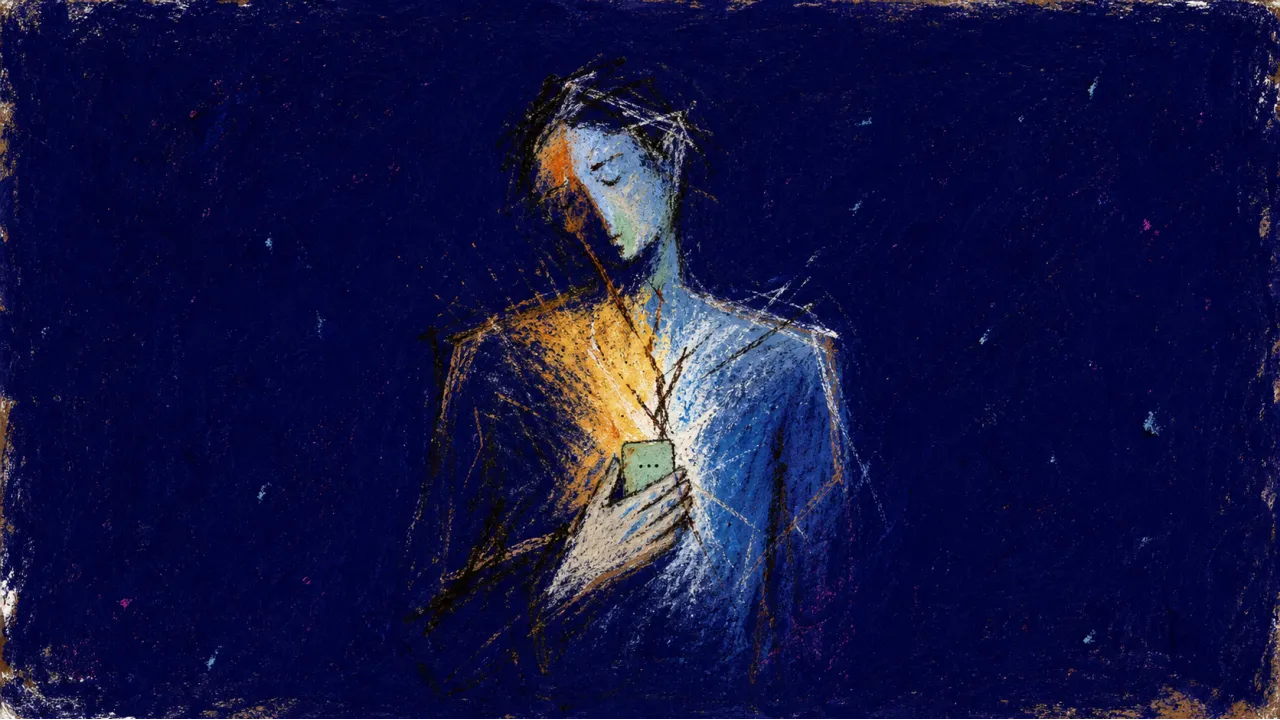
That moment when a feeling starts acting like evidence before the wider scene has been checked is the pattern here. Your stomach may drop and your chest may tighten before anything else has happened, and the body can make the half-lit room feel settled. From a Jungian archetypal theory lens, this is where inner images and outer facts blur. Here are the Tarot Cards that reflect those unconscious dynamics.
The Moon UprightThe moon does not create the same kind of direct light as the sun; it reflects, softens, distorts, and makes the landscape emotionally charged. Beneath it, the dog and wolf react as if the atmosphere itself has become evidence, while the crayfish rises from the pool with raw instinct still attached to it. This is the visual logic of Emotional Reasoning: an inner state becomes so vivid that it gets mistaken for objective information. Fear feels like proof that the path is wrong, doubt feels like proof that you are not ready, and a sudden dip in confidence feels like a verdict on your potential. In personal growth, this pattern can make every threshold feel like a warning. The Moon does not deny the reality of the feeling; it shows how feeling becomes misleading when it is asked to do the work of perception, evidence, and strategy all at once.
ReversedThe Moon's light is reflected, not direct, yet it still governs the whole landscape. Under that light, the animals' alarm feels persuasive, as if the intensity of the reaction proves the reality of the threat. Emotional Reasoning works by treating feeling as fact. In academic life, feeling behind can become proof that you are failing, feeling confused can become proof that you are not smart enough, and feeling anxious can become proof that the outcome will be bad. You are not inventing the emotion; the emotion is real. The card shows the distortion that happens when a real feeling is allowed to overrule the rest of the evidence, turning the study path into a landscape lit by panic rather than by data.
Ace of Cups UprightThe chalice overflows before anything in the scene compares alternatives, measures distance, or weighs consequence. A white dove drops a marked disc into the cup, and the emotional vessel responds immediately with rising streams and falling water. That sequence gives a feeling the force of evidence. In a choice spread, Emotional Reasoning appears when the option that creates the strongest pull starts to look more true than the option with better structure, better timing, or clearer costs. The cup does not make feeling irrelevant; it makes feeling visible. You can see where emotional intensity is valid data, and where the psyche may be asking that data to do the entire job of discernment.
ReversedWater is the dominant language of the scene: the cup receives through feeling, responds through flow, and connects every level of the image through liquid motion. In reversal, that sensory dominance can turn the emotional weather around a task into the main evidence your mind consults. In academic pressure, Emotional Reasoning makes difficulty feel like proof of incompetence and boredom feel like proof that the path is wrong. The card's overflowing water shows how a real feeling can become over-interpreted as a fact, especially when grades, feedback, or complex material are already touching your self-worth.
Three of Cups UprightThe raised cups, open posture, and smiling faces pull the eye toward emotional certainty before anything else. The harvest at their feet reinforces the feeling that because the moment is joyful, the outcome must already be validated. That is the internal logic of Emotional Reasoning in a decision: the body treats relief, excitement, or social warmth as evidence that the choice is correct. You are not simply feeling good about an option; the feeling starts acting like a verdict. The Three of Cups makes that mechanism easy to see because the emotional field is so coherent. The audit asks whether the choice survives once the celebratory charge is separated from the actual costs, timing, and long-term fit.
Five of Cups UprightThe spilled liquid spreads outward from the fallen cups, making emotion look like evidence. The figure's gaze fixes on that evidence so completely that the scene begins to feel less like an event and more like a verdict. Emotional Reasoning takes shape when the intensity of a feeling is treated as proof of reality. In personal growth, disappointment can start to feel like objective data about your ability, your future, or the point of trying again. The card does not deny the feeling; it shows how feeling can become too powerful a witness. The two standing cups and the bridge introduce counter-evidence, but the pattern filters them out because they do not match the emotional conclusion already forming in the foreground.
ReversedThe black cloak seals the figure into a private weather system. The spilled cups are only one part of the scene, yet their emotional intensity becomes so dense that the river, bridge, remaining cups, and castle lose practical reality. Emotional Reasoning begins when the feeling of loss is treated as proof about timing itself. Because the disappointment feels final, the mind concludes that the cycle is final; because the delay hurts, it must mean the opportunity is dead. In timing work, this reversed Five of Cups exposes the difference between emotional truth and timing data. You can feel the sting of a missed window without letting that feeling become the entire forecast for what is still possible.
Ten of Cups UprightThe river moves gently through the scene while the family responds to the rainbow of cups with open arms and dancing bodies. Emotion is not hidden here; it becomes the organizing force of the entire image, pulling attention upward into the feeling of completion. Emotional Reasoning emerges when the body treats an emotional signal as if it were the full decision record. In a choice reading, the Ten of Cups can reveal where calm, excitement, relief, or discomfort has become a verdict before the hidden costs, probabilities, and trade-offs have been examined.
Page of Cups ReversedThe fish looks back from the cup, and the Page's attention gives that small image unusual authority. Because it appears from water, it carries emotional force; because it is held in a cup, it can feel defined enough to be mistaken for certainty. Emotional Reasoning forms when the intensity of a feeling is treated as evidence. In personal growth, this can turn a moment of fear into a verdict of unreadiness, a flash of excitement into proof of destiny, or a wave of resistance into a fixed identity story. The card's visual logic asks for a cleaner separation between message and proof. You can respect the fish as meaningful without letting it become the whole sea; the pattern becomes workable when feeling is read as data, not as a final ruling.
Knight of Cups UprightThe Knight's eyes rest on the cup even as the horse approaches the stream, so the visible decision system is organized around a feeling before it is organized around the terrain. One hand carries the emotional object while the other hand regulates movement, making the body split its attention between desire and control. That arrangement is the visual logic of Emotional Reasoning in a choice spread. The felt pull becomes evidence, the smooth atmosphere makes risk seem smaller, and the decision starts to look clear because the emotion around one option is coherent. You are not being asked to distrust feeling; the audit is showing where feeling has started doing the job of a full risk assessment.
ReversedThe knight's eyes lock onto the cup until the held feeling becomes more compelling than the river, the horse, or the path. In the reversed texture, the emotional object gathers too much authority and starts to define the whole scene. Emotional Reasoning appears when a mood is treated as evidence rather than information. You may read intensity as truth, longing as destiny, or discomfort as a verdict, and the card shows how the psyche can lose grounded checking when the cup becomes the only data point.
Queen of Cups UprightThe Queen's gaze stays fixed on a covered chalice, while the calm sea, shell clasp, and wave-colored cloak make the whole scene echo the same emotional signal. The image does not show her testing the cup against the outside world; it shows a private feeling-state being held as if it were a complete source of knowledge. That visual loop maps cleanly onto Emotional Reasoning in a decision spread: the body relaxes when one option feels right, or tightens when one option feels scary, and the feeling starts to masquerade as evidence. The audit is not that intuition is wrong; it is that the cup needs to be read as emotional data, not allowed to replace cost, timing, and consequence.
ReversedThe calm water and the sealed cup make the Queen's inner state the strongest source of information in the image. Her gaze keeps returning to the vessel, as if the feeling inside it has the authority to decide what is true. Reversed, that inward authority can turn into Emotional Reasoning. You may wait for growth to feel clean, aligned, exciting, or safe before you act, then read discomfort as evidence that the next step is wrong. The card reveals the cognitive trap: the cup is meaningful, but it is still a container of feeling, not a complete reality test.
King of Cups ReversedThe blue of the king's robe blends with the sea behind him, and his gaze rests on the Cup as if the inner weather has become the main source of evidence. The ocean is real, but it is also a field of reflection around the throne. Emotional Reasoning takes shape when intensity is mistaken for accuracy. You may read dread, relief, longing, or calm as proof that one option is objectively right, while the card asks for a cleaner audit of which feeling is information and which feeling is residue.
Three of Swords UprightThe pierced heart sits under grey clouds and rain, so the emotional wound is not contained inside the heart alone. The whole sky takes on its colorless weight, making the surrounding field look as if it has accepted the heart's pain as the weather of reality. That is the visual logic of Emotional Reasoning: an intense feeling becomes treated as evidence. In a direction reading, a heavy inner state can start to look like proof that your future is blocked, your timing is ruined, or your desire is unrealistic. The card does not ask you to dismiss the feeling; the swords show that the pain has a real point of entry. The pattern begins when the emotional weather becomes the map, and You start navigating long-term choices by how much the wound hurts rather than by what the full terrain actually shows.
ReversedThe red heart dominates the gray field, and the swords give its pain a clean, organized shape. The image makes emotional intensity look like evidence, because the wound is so vivid and the structure around it is so precise. Emotional Reasoning appears in personal growth when discouragement is treated as proof. You feel behind, so the mind concludes You are behind; You feel incapable, so the mind concludes the next level is not for You. The card links this pattern to the way feeling can occupy the whole perceptual field. The heart is real, but when it becomes the only vivid object, the system begins to mistake intensity for accuracy and pain for truth.
Nine of Swords UprightThe swords appear to cross the head, throat, and heart, linking thought, voice, and feeling under one painful structure. The figure's face is covered, so the only available evidence comes from inside the body and the dark field around it. Emotional Reasoning emerges when inner intensity is treated as proof. The pain feels so present that the mind assumes it must be accurate, meaningful, or final. Because the figure is sealed inside the night scene, the feeling has no external reference point to test itself against. For introspection, this pattern shows where emotional truth and factual truth have become fused. You may be trying to honor what you feel, but the card reveals the risk of letting distress become the whole interpretive system.
ReversedThe swords cross the places of thinking, speaking, and feeling, making inner distress appear as if it has the force of external fact. The dark room offers no counterweight, so the emotional state becomes the dominant evidence in the scene. Emotional Reasoning takes shape when a feeling is mistaken for a reliable conclusion. Panic becomes proof of danger, shame becomes proof of inadequacy, and exhaustion becomes proof that the task is impossible. In academic life, this can make a blank mind during revision feel like objective evidence that you are unprepared. You are not simply receiving information from the task; the body state is being translated into a verdict about your ability.
No cards available for this filter.