Clear, but untouched?

A clear audit of how feelings become analysis, the tarot cards that mirror it, and reading insights where this pattern appears.

Intellectualization
What is this really?

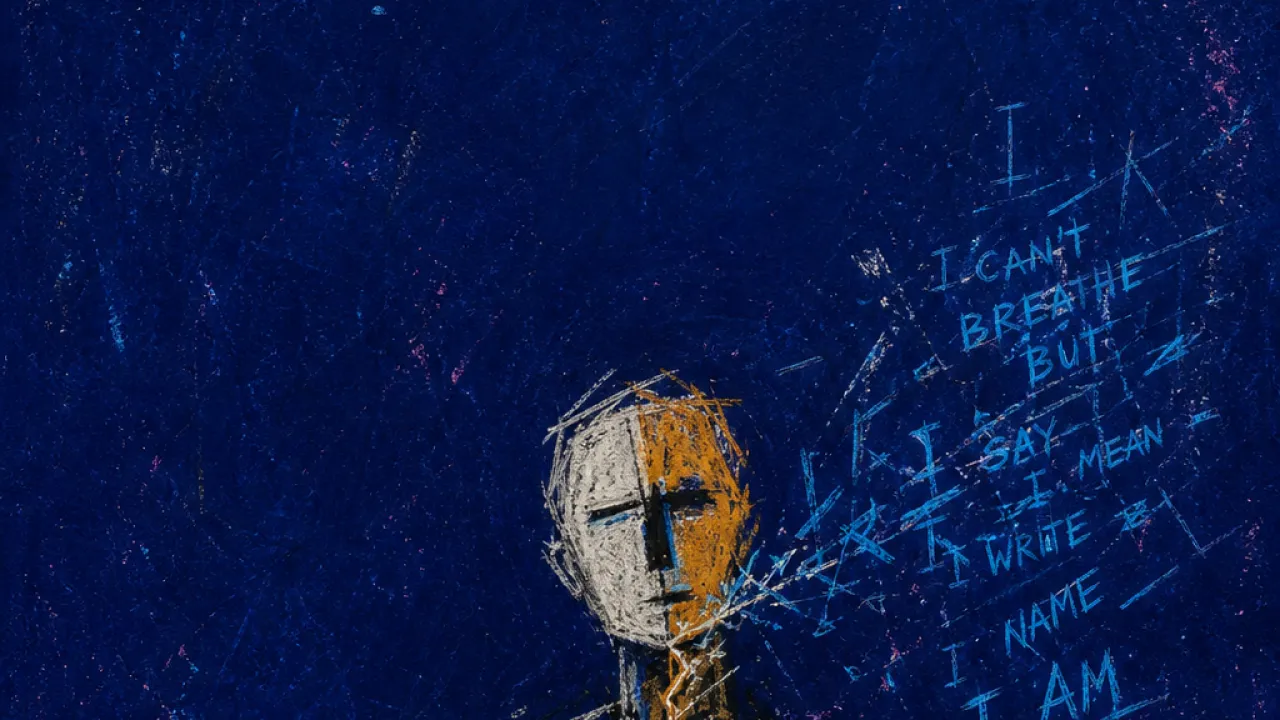
Intellectualization is the defense mechanism where you turn charged moments into analysis before they can fully land: you define the issue, map the timeline, quote the pattern, and make your voice sound calmer than your chest feels. You are not trying to be cold; you are creating enough mental distance to keep desire, fear, anger, or grief from flooding the room and making you feel exposed. Yet the more perfectly you explain what is happening, the more your life can start to feel like a clean diagram you are watching from above, with your body still waiting for contact—much like the Ace of Swords, a bright blade lifted from a cloud over dry, distant hills, sharp enough to clarify and too elevated to touch the ground.

Why did it happen?

At some point, putting words and structure around what was happening may have helped you stay steady when the room felt too charged, unpredictable, or exposing. Your body learned that if you could name it, rank it, or make it make sense, you would not have to feel the whole impact at once. Now that same inner pattern can run ahead of you, turning every ache into a theory so quickly that the tiredness, anger, need, or grief underneath never gets a clear place to land.

How does it feel?

  • In a tense conversation, you pause with one finger lifted, tilt your head, and say, 'Let's define the issue first,' while the other person is still talking... in that beat, your chest may tighten and your voice may feel like it is coming from a few inches above your body. You can let that distance be noticed without having to close it immediately.
  • During feedback at work, you nod evenly, open a fresh document, and turn the comments into headings, criteria, and next steps before your face has fully reacted... afterwards, your jaw may stay set and your stomach may drop once the meeting window closes. It is okay for the body to arrive later than the spreadsheet.
  • When a message lands with a sting, you reread it twice, delete 'that hurt,' and replace it with a careful line about timing, tone, or mixed signals... your throat can feel dry, your shoulders may creep up, and the reply may look cleaner than you feel. That cleaner sentence can be allowed to sit beside the uncensored one for now.
  • Alone at night, you open a notes app and split the ache into bullet points: what happened, what it might mean, what you learned, what to do next... as the list grows, your breathing may get shallow and your eyes may blur without obvious tears. You do not have to turn the blur into a thesis before you let it be there.
  • At brunch or in a group chat, when someone asks if you are okay, you give a neat recap, half-smile, and swirl the straw or roll the glass between your fingers... under the polished wording, your ribs may feel tight and a warm pressure may gather behind your eyes. Not everything has to become explainable before it is allowed to exist.

Intellectualization in Tarot Cards

The reflex to define the issue before it lands is the same place where your throat can feel dry and your shoulders may creep up. From a Jungian perspective, archetypal theory gives that split between clean language and delayed feeling a symbolic frame. The cards below reflect the unconscious dynamics of thought becoming the first layer of contact; here are the Tarot Cards that mirror Intellectualization.

Ace of Swords Upright
Only a hand appears from the cloud, not a full body with weight, breath, or facial expression. The sword is brilliantly clear, but the emotional terrain below remains dry, distant, and untouched. That visual split is the basis of Intellectualization. The mind can create a clean model of change while keeping the body, fear, grief, and desire outside the frame; the sword gives language to the problem before the nervous system has actually moved through it. You may be using clarity as a stabilizer, and that can be useful. The audit point is whether the framework is helping growth become embodied, or whether it is keeping the entire transformation safely above ground.
Two of Swords Upright
The swords are tools of thought, and in her hands they sit directly across the heart. The blindfold blocks visual evidence while the blades create a clean mental architecture over a much softer emotional center. That arrangement gives Intellectualization its shape. You can turn a growth edge into an elegant explanation, a framework, or a theory of yourself while the vulnerable feeling underneath remains untouched. The moon and tide behind her show that intuition and emotion are still active, but they are kept behind the body rather than integrated into the choice. The pattern gives you clarity that feels sophisticated, yet it can also keep change at the level of language instead of lived behavior.
Three of Swords Upright
The swords are instruments of clarity, but here they enter the heart instead of cutting through confusion from a distance. Their clean lines and precise convergence turn emotional pain into something mapped, measured, and mentally held in place. Intellectualization appears when the mind tries to survive feeling by converting it into analysis. The wound becomes a structure to inspect rather than an experience to inhabit, and the sharpness of thought creates the impression of control while the heart remains pierced. You may recognize this when you can explain your pain with impressive accuracy but still feel unchanged underneath. The card does not reject analysis; it shows the cost of letting analysis become the only permitted contact with emotion.
Four of Swords Upright
The knight is armored even while resting, and the swords above the head and chest keep the scene organized around thought rather than emotional expression. The body is protected, still, and formal, as if raw experience has been translated into a controlled mental posture. This is why the card can anchor Intellectualization in a personal growth context. The mechanism creates safety by turning discomfort into frameworks, language, and analysis before the body has to feel the full uncertainty of change. Used consciously, that distance can create clarity. When it becomes rigid, You may understand every layer of a limiting belief while remaining untouched by the behavioral risk that would actually rewrite it.
Six of Swords Upright
The six swords are not scattered; they stand in two clean rows inside the boat, turning the crossing into a narrow corridor of ordered thought. They protect the passengers from the open water, but they also occupy the same space the passengers must travel through. Intellectualization appears when the mind turns structure into shelter. In personal growth, frameworks, theories, journaling systems, and self-analysis can make transition feel less chaotic because they convert emotional uncertainty into something named, mapped, and organized. The card also shows the cost of that defense. The boat can still move, but it moves while carrying the weight of the very mental structures that make the journey feel safe. You may be using insight to keep the crossing manageable, while also keeping the deeper emotional contact slightly out of reach.
Reversed
The swords are arranged with almost clinical neatness, turning the inside of the boat into a system of order. The figures face away, the destination is distant, and the rowing continues, so the scene can be read as movement held together by thought rather than by emotional contact. Intellectualization appears when the mind organizes timing so thoroughly that it stops feeling the transition it is trying to manage. The swords offer structure, but they also create a barrier between the passengers and the rawness of leaving one shore without yet reaching another. The process becomes easier to explain than to inhabit. In timing questions, this pattern shows up as tracking cycles, signs, plans, deadlines, and strategic windows while staying detached from the actual fear of change. You may have a precise theory of timing and still feel stuck because the emotional cost has been converted into analysis. The card asks the mind to remain useful without becoming the whole vessel.
Seven of Swords Upright
The swords dominate the figure's body more than the landscape does. He carries them like mental instruments, bundled close to the chest and knees, while his movement stays carefully calculated around what can be held, managed, and removed from the scene. The emotional atmosphere is displaced into logistics. This is the visual logic of a mind that processes growth through concepts before it allows direct experience. You may be able to explain your patterns with precision, map your triggers, name your beliefs, and still remain protected from the more vulnerable task of feeling what the insight is pointing toward. Intellectualization appears here as a defensive use of clarity. The pattern turns self-knowledge into a controlled object you can carry, arrange, and justify, while the more embodied risk of transformation remains at a distance.
Page of Swords Upright
The Page's hands close around the upright sword while his face stays serious and the sky remains thick with moving cloud. His body is not collapsing into the rugged terrain; it is organizing uncertainty through a sharp, vertical instrument of thought. That visual structure maps onto Intellectualization because feeling is being converted into analysis before it can become embodied risk. In personal growth, you may become extremely articulate about your patterns while still delaying the moment when a new behavior has to be practiced in real time. The card does not frame intelligence as a problem. It shows the cost of letting the sword become the only container for change: clarity becomes safer than contact, and insight starts substituting for evolution.
Knight of Swords Upright
The raised sword cuts a clean line through the air while the knight's armor seals his body away from the surrounding wilderness. His direction is sharp, his structure is intact, and the whole image privileges mental clarity over sensory openness. That is the visual signature of thought being used as protection. The sword can clarify, but the armor shows how clarity can also become a defense: a polished intellectual structure that keeps the person from direct contact with uncertainty, tenderness, or fear. In personal growth, Intellectualization appears when You can explain the pattern with impressive accuracy while staying untouched by its emotional cost. The card reveals the difference between insight as a blade that cuts through confusion and insight as armor that prevents integration.
Queen of Swords Upright
The Queen's upright spine, stern face, and vertical sword create a body that appears almost fully organized around thought. Her hand is open, but the sword is the stronger signal: contact is allowed only after it passes through discernment, language, and mental precision. That visual structure mirrors a defense that protects growth by converting emotional uncertainty into analysis. You may be able to name your fears, trace your patterns, and explain your resistance with impressive clarity, yet still keep the risky part of change at a distance. In personal growth, this pattern becomes visible when insight replaces embodiment. The mind stays clean and elevated above the cloud layer, but the next stage of self-development asks whether clarity is being used as a bridge into action or as a refined way to avoid being changed by what you already know.
King of Swords Upright
The King's body is held in a vertical line of control, with the raised sword becoming the axis through which the whole scene is organized. His blue garments, stern face, and stone throne make the mind look clean, disciplined, and almost untouched by the warmer red tones beneath the robe. That visual order mirrors a defense system that turns emotional uncertainty into concepts, standards, and verdicts. You may be trying to understand every inner movement before allowing yourself to feel the risk of change, using clarity as a way to keep vulnerability at a controlled distance. In personal growth, this pattern can look sophisticated because it produces insight, language, and self-awareness. The trap is that the sword can keep naming the truth without letting the body enter the experiment that would actually transform it.
Two of Wands Upright
The figure's face is unreadable, while the globe in his hand turns the world into something observable, organized, and contained. From the height of the battlement, the terrain below can be studied without being felt at ground level. Intellectualization emerges from that elevated distance. The card shows a mind capable of abstraction and strategy, but the same vantage point can also keep desire, fear, envy, and uncertainty safely converted into concepts. In personal growth, this pattern often looks like insight, framework building, or a refined vocabulary for transformation. You may understand your process with precision while the emotional charge underneath the next step remains untouched, which keeps clarity from becoming change.
Eight of Wands Reversed
The card separates motion, water, and land into clean layers: the wands travel through the air, the stream crosses the ground, and the body is absent altogether. The scene is clear, but that clarity comes with distance between thought, emotion, and embodiment. In the reversed texture, this becomes the logic of Intellectualization. The psyche moves into clean frameworks before the emotional current has been allowed to disturb the structure. The mind may describe the pattern accurately while remaining insulated from the feeling that gave the pattern its charge. You may experience this as being able to explain your inner life with precision while still feeling unchanged underneath. The card links that split to a defense that preserves order by keeping the emotional stream separate from the place where insight is moving.

Intellectualization in Tarot Card Reading Insights

For anyone who turns every ache into a theory before the feeling lands, others have brought a similar split into readings too. Here is how the cards appeared when clean language met the feeling underneath. Below are Tarot Reading Insights that speak to Intellectualization.

Psychological patterns related to Intellectualization