Why Does Every Choice Feel Wrong?

Explore the restless churn of second-guessing, its related tarot cards, and reading insights from others who brought it to a spread.

Restless Self-doubt
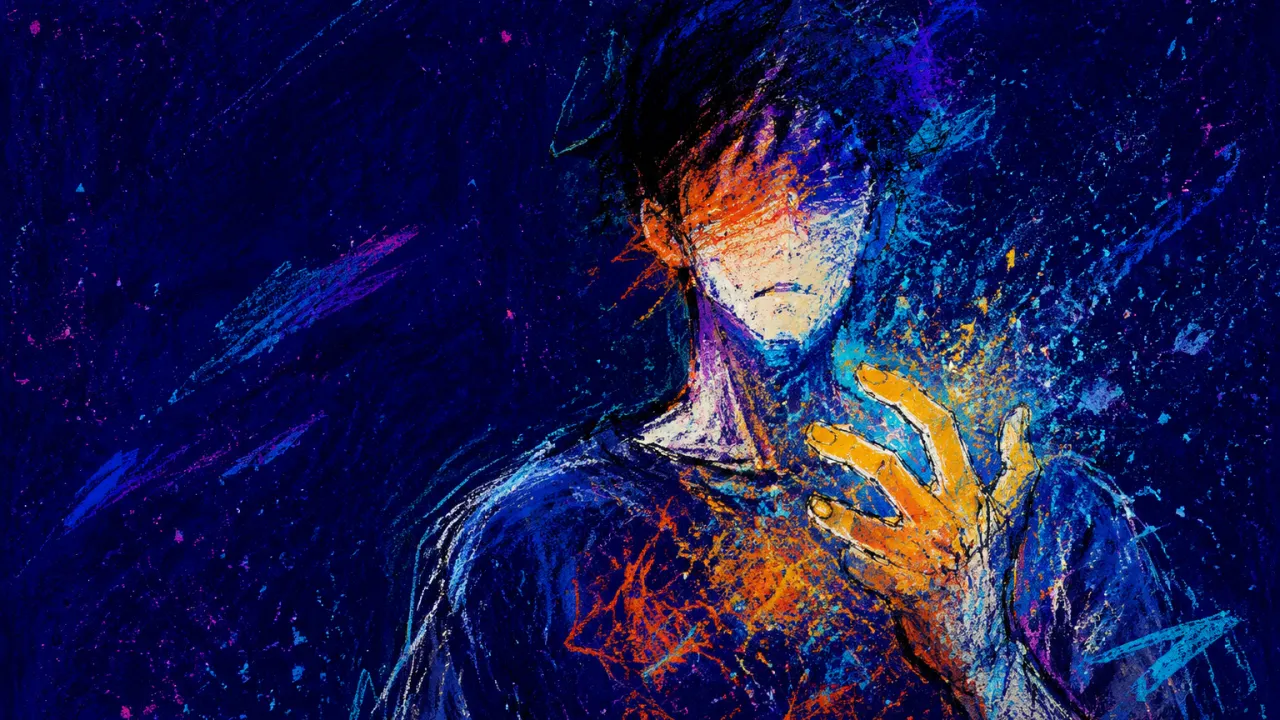
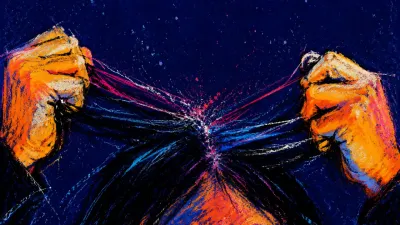
A solitary figure in deep indigo space, chest and shoulders veiled in amber static, fingertips fading into cool cyan.

What does this feel like?

Restless Self-Doubt — you feel it first as a low buzz across your chest and shoulders, as if your body is waiting for a correction that has not arrived yet. You choose a message, an outfit, or an answer, then hover over it, reread it, change it, and wonder whether the first version was better. Even quiet moments refuse to stay quiet; your attention keeps pacing from one possibility to another, turning small choices over until their edges feel worn smooth. You may look composed from the outside while your fingertips stay alert and your thoughts keep asking, “Was that wrong? Did I miss something? Am I about to make myself look foolish?” Relief comes briefly when someone agrees with you, but it drains almost at once, replaced by the next doubt before the last one has fully settled. The feeling is not simply uncertainty; it is uncertainty with motion inside it, a constant urge to check, revise, or hold back because certainty always seems one step away. By the end of the day, even simple decisions can feel strangely heavy, much like the blindfolded figure in the Eight of Swords, surrounded by upright blades while open ground remains close but hard to trust.

Why you're feeling this?

Restless self-doubt is a valid feeling: some part of you is asking for enough certainty to feel steady. You are not weak or incapable for feeling it; the uncertainty is present, and it deserves to be noticed without being treated as a verdict.

Restless Self-doubt in Tarot Cards

Restless self-doubt can feel like a low buzz across your chest and shoulders, with every choice reopening the question. It belongs to a universal emotional experience: the unsettled space between wanting clarity and not yet trusting what you know. Tarot images can give that restless motion a visible outline without explaining it away. These Tarot Cards reflect the contours of restless self-doubt.

The Fool
Reversed
At the cliff's edge, the Fool's lifted foot, lightly packed bundle, and alert white dog capture a future that is close enough to enter but not fully mapped. Reversed, that threshold becomes a stop-start circuit: possibility creates motion, while fear of an unseen error keeps interrupting it. You may keep reviewing long-range paths as though one more comparison will remove every risk. The image makes the self-doubt observable without treating it as a verdict; the friction sits between readiness to move and the demand to feel completely certain first.
The Magician
Reversed
Before the Magician, the wand, cup, sword, and pentacle are already arranged on the table, while one hand lifts and the other points toward the work surface. Reversed, the available tools do not disappear; the current between intention and execution becomes diverted into monitoring whether the performance is convincing enough. You may possess the relevant skill and still keep editing, rehearsing, or minimizing it before colleagues can respond. The restless doubt lives in that gap between having resources and trusting yourself to use them visibly, turning competence into an audition that never feels finished.
The High Priestess
Reversed
Between the black and white pillars, the High Priestess sits before a patterned veil with a partly concealed scroll in her lap. Reversed, the protected inner chamber becomes difficult to read, so every subtle impression is checked against its opposite before it can settle into knowing. You may notice an internal signal and immediately interrogate whether it is insight, fear, projection, or wishful thinking. The card contains the restless self-audit inside a quiet symbolic room, showing how doubt can become louder precisely because the original signal arrived softly.
The Chariot
Reversed
Before the charioteer, two differently colored sphinxes face away from a single shared route, and no visible reins connect them to his hands. Reversed, determination remains present but loses a coherent vector, creating effort that strains in competing directions. You may keep adjusting your long-range plan because each route activates a different fear about being wrong, late, or exposed. The scene names restless self-doubt as divided command: plenty of drive is available, but confidence drains whenever your internal motives stop pulling together.
Judgement
Reversed
Above the rising figures, the angel's trumpet sends a clear call across open coffins and lifted arms. Reversed, the call is not absent; it is routed through an internal review panel that questions whether the response is authentic, deserved, or embarrassing. You may recognize a version of yourself that wants to emerge and then audit it until the momentum collapses. The image makes growth-related self-doubt visible as delayed self-recognition, where every change is forced to survive another private verdict before it is allowed to count.
Seven of Cups
Upright
Across a bank of clouds, seven cups present dazzling, threatening, and partly concealed possibilities to a single silhouetted figure. The options are visible all at once but cannot be tested from where the figure stands, so attention keeps moving without gaining firmer contact. You may scan every option for the hidden detail that would finally prove which choice is safe. The card gives restless self-doubt a crowded mental stage: each possibility generates another imagined outcome, and comparison itself begins to erode trust in your preference.
Two of Pentacles
Reversed
Inside the looping ribbon, two pentacles rise and fall between the juggler's hands while ships pitch on high waves behind him. Reversed, the loop loses its adaptive rhythm and becomes reactive correction, with each adjustment immediately creating another point to monitor. You may reorganize routines, priorities, and small tasks without ever feeling that the system is stable. The card locates the doubt in constant rebalancing: daily life remains in motion, but every wobble is interpreted as evidence that you are managing it incorrectly.
Seven of Pentacles
Reversed
Leaning on his tool, the figure pauses before a crop of pentacles that is visible but not yet ready to gather. Reversed, the pause becomes restless scorekeeping, with every incomplete result treated as a possible sign that the effort, method, or timeline was wrong. You may keep measuring progress during the very interval in which progress is difficult to verify. The card separates delayed evidence from personal failure, revealing how timing uncertainty can turn neutral waiting into a repeated audit of your competence.
Eight of Pentacles
Reversed
Alongside the workbench, multiple finished pentacles document sustained practice while another piece remains under active correction. Reversed, the visible record of growth cannot settle the question of being good enough, because the standard shifts toward whichever imperfection remains. You may turn every habit, skill, or self-improvement project into a continuous audit of whether you are changing correctly. The card exposes a broken feedback loop in which practice produces output but not self-trust, leaving development busy, exacting, and emotionally unregistered.
Two of Swords
Upright
With a blindfold over her eyes, the seated figure crosses two equal swords over her chest while a broken shoreline and rippling sea extend behind her. The body remains still, but the balanced blades hold opposing possibilities in active tension, containing motion without resolving it. You may freeze between options while your attention races through reasons to distrust each one. The card makes restless self-doubt visible as defensive balance: postponement protects you from immediate error, yet maintaining the stalemate becomes its own exhausting decision.
Four of Swords
Reversed
Beneath three suspended swords, a recumbent figure lies above a fourth blade while the stained-glass window holds a quiet scene nearby. Reversed, the protected resting space fractures internally: the body may stop, but the mind keeps reaching toward unfinished checks and possible corrections. You may sit down after routine tasks and immediately wonder what was forgotten, done badly, or left vulnerable. The image distinguishes physical inactivity from actual rest, revealing how self-doubt can keep the daily system running inside you after the visible work has ended.
Eight of Swords
Upright
The eight swords form a visible boundary around a figure whose restraints are real but incomplete, while the landscape continues beyond them. As a growth image, this arrangement distinguishes a learned self-limitation from the total absence of capacity or possibility. You may begin changing a pattern and then interpret every wobble as proof that the new version of you is false. The card names restless self-doubt as a bottleneck in self-trust, where evolution remains imaginable but each experiment is judged before it has enough lived evidence.
Nine of Swords
Upright
In the dark bedchamber, the upright figure covers her face while nine swords line the empty wall with rigid repetition. The scene gives private thought a physical architecture, showing how one uncertainty can multiply when the outside world becomes quiet. You may examine a choice, find a temporary explanation, and immediately produce another question that invalidates it. The card contains the restless inner audit within a bounded night, revealing that emotional intensity can grow through repetition even when no new evidence enters the room.

Restless Self-doubt in Tarot Card Reading Insights

Restless self-doubt also enters readings as repeated second-guessing, hesitation, and the sense that certainty stays one step away. Others have brought that same unsettled feeling to the cards; the Tarot Reading Insights below show what appeared in those readings.
Psychological Emtions Related to Restless Self-doubt