See how one capable person becomes permanent emergency coverage, which tarot cards mirror the pressure, and what surfaced in related reading insights.
Expert Rescuer Role Lock-in
What is this situation?
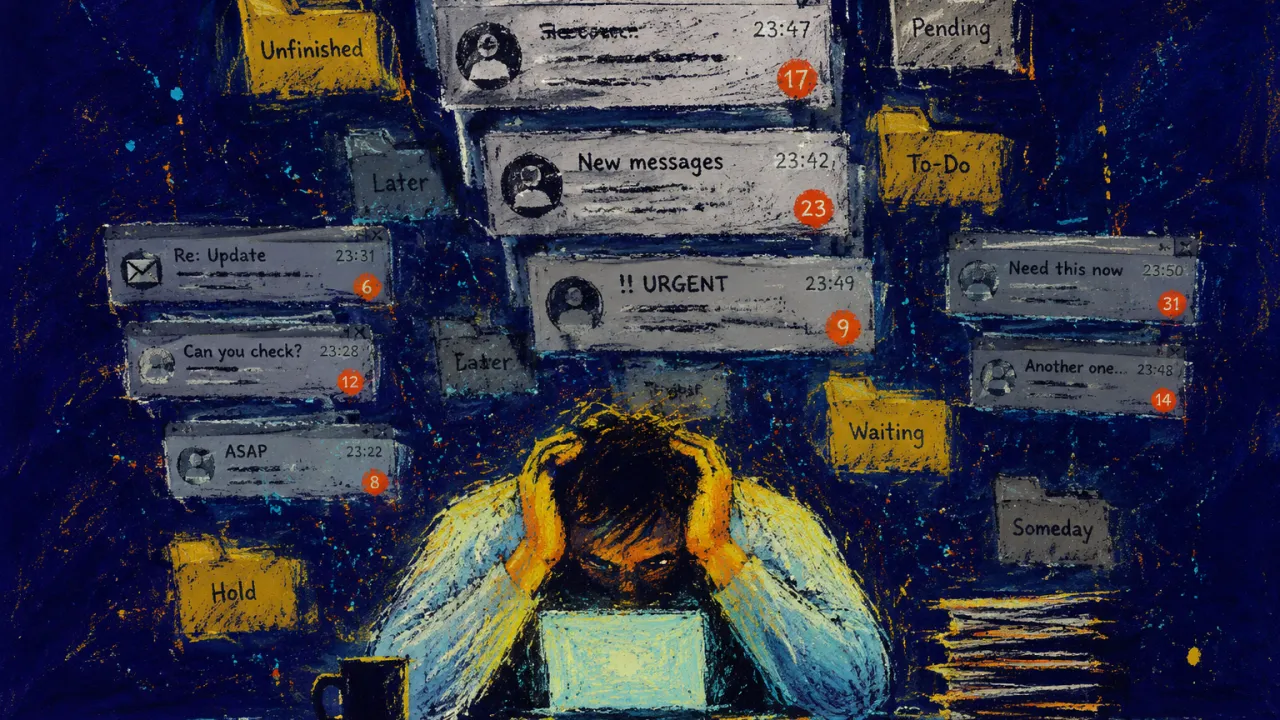
Expert Rescuer Role Lock-In begins when a team sees you resolve one difficult situation and quietly makes you the default answer to every one that follows. At first, the requests sound temporary: can you jump on this call, rewrite this plan, calm this client, cover this shift, or explain this to everyone? Soon your name is tagged before you are consulted, half-finished work lands in your inbox near the deadline, and messages arrive at night because people assume you will know what to do. Others can say they are out of their depth or unavailable; your competence is cited as the reason you should take over, while decision-making power stays elsewhere and no extra time or credit comes with the handoff. In meetings, you are invited when something is failing but left out when priorities, staffing, or ownership are decided, so you keep fixing outcomes created by decisions you could not shape. The pattern spreads into ordinary days: you cannot finish your own work before another escalation appears, your lunch gets postponed, your shoulders remain lifted over the keyboard, and the screen follows you into the evening. Once the crisis passes, attention moves away until the next urgent request, leaving you highly visible as a solution and nearly invisible as a person with limits and responsibilities of your own. Over time, the group stops treating rescue as an exception and builds its routines around your availability, much like the figure on the Ten of Wands, bent forward beneath all ten staffs with the town ahead blocked from view by the load.
Why it's not you?
The problem is not that you are failing to handle the pressure correctly; the problem is a group that routes responsibility toward you while keeping control and recognition elsewhere. Repeated emergencies, after-hours contact, and automatic handoffs are the architecture of the role being assigned to you. They are not proof that you should simply become better at carrying it.
Expert Rescuer Role Lock-in in Tarot Cards
In Expert Rescuer Role Lock-In, every urgent problem is routed to you while authority, planning time, and recognition remain elsewhere. The shoulders held high over your keyboard and the screen still glowing after hours mark how that repeated demand reaches the body. This is an environmental and structural dynamic, sustained by who is expected to act and who is allowed to step back. The Tarot Cards below reflect the visible contours of this situation without deciding what you should do.
Two sphinxes face different directions before an armored driver who holds no visible reins, with the city positioned behind the chariot. Reversed, competing demands consume the coordination required for forward movement, reflecting a career repeatedly diverted by emergencies that belong to other owners. The vehicle and driver preserve evidence of skill and potential direction, but the surrounding forces are not aligned around your destination. The inverted scene reveals that stalled progress can result from organizational pulls routed through your role, not from an absence of ambition or professional capability.
A large wheel turns between figures rising and falling on its rim while four winged witnesses remain fixed in the corners. Reversed, the rotation becomes recurrence without organizational learning: a project fails, you are summoned, the crisis passes, and the same conditions produce another turn. The cycle makes urgency look like timing, but its repetition reveals a stable operating pattern. Your availability functions as the mechanism that closes each incident quickly enough for the team to postpone changing ownership, staffing, or escalation rules before the next one begins.
Scales occupy one hand, a raised sword the other, and a seated authority controls both judgment and consequence. Reversed, those instruments no longer describe a balanced workplace contract; accountability is directed toward the person fixing the outcome while decision power and recognition remain with those who shaped the conditions. The tilted structure reveals why successful delivery does not settle the problem. You can resolve each incident and still remain inside an inequitable allocation of responsibility, because the organization measures your response without redistributing the authority needed to prevent recurrence.
One ankle ties the haloed figure to a living beam while his hands remain behind his back and his own movement is suspended. Reversed, the pause no longer reads as a bounded exchange for insight; it shows sacrifice being prolonged after the organization has learned to depend on it. Your projects, development, and ordinary responsibilities are repeatedly placed on hold so that failing work can continue elsewhere. The inverted suspension reveals the hidden bargain in the rescuer role: the team preserves its momentum by normalizing the interruption of yours.
Two people wear loose chains beneath a larger figure whose pedestal organizes the entire scene. The chains capture a workplace role that feels compulsory because routines, praise, urgency, and other people's dependence have all been built around your continued availability. Upright, the collars are binding but not physically sealed, exposing a system maintained through normalized expectations rather than absolute necessity. The image reveals how being called indispensable can function as a restraint: your skill remains real, while the workplace turns that skill into a reason to narrow your authority and expand your obligations.
The juggler holds both pentacles inside one looping cord as rough waves toss two ships behind him. Reversed, the image describes a workplace that keeps routing separate workstreams through one expert without reducing scope, adding time, or stabilizing the surrounding conditions. Each successful catch can conceal the absence of capacity planning, allowing management to treat your improvisation as proof that the model works. The inverted balance reveals why your own deliverables keep slipping even when your skill is not in doubt: the role has been designed around interruption.
The craftsperson faces two figures who possess the building plan, all standing inside the project they are meant to create together. Reversed, that arrangement reveals fractured collaboration: the person expected to make the work succeed lacks consistent access to the planning authority that shaped it. You are brought close enough to repair outcomes but not early enough to influence staffing, deadlines, or scope. The inverted triangle makes responsibility without participation visible, showing how the workplace can use expertise as a corrective service while preserving decision power elsewhere.
A standing figure holds the scales and controls the flow of coins while two lower figures receive what his hand allocates. Reversed, the scene exposes an uneven exchange in which the people controlling resources and evaluation can decide how much time, credit, and authority accompany the work they route elsewhere. Your expertise supplies value, but the organizational scale remains in other hands. The inverted exchange names the central mismatch: responsibility is transferred toward you more readily than the resources or recognition that would make that responsibility equitable.
A blindfolded, bound figure stands among eight swords with a distant castle behind her and open ground still visible between the blades. The expert-rescuer role creates a similar directional enclosure: urgent responsibilities dominate the immediate field while paths toward different work remain difficult to see or socially costly to enter. Upright, the constraints are real but do not form a complete physical wall. The image separates limited visibility from a total absence of options, revealing how team expectations, unfinished work, and a reputation for rescue can narrow your career movement without defining the full extent of your professional capacity.
One figure holds a single staff from elevated ground while six other staffs rise toward him from below. The scene gives the expert-rescuer workload a visible direction: many incoming claims converge on one person who must keep responding before any wider group becomes visible. Upright, the figure still occupies defensible ground and can distinguish his own staff from the six demands approaching it. That separation reveals that each escalation belongs to a particular source; the team has bundled them into your role, but their common destination does not make them a single personal obligation.
A bandaged figure grips one staff and watches from in front of a wall formed by eight more. His body records previous rounds even while his stance anticipates another, mirroring the shoulders held above a keyboard and the attention that remains attached to work after the official day ends. Upright, the wall of staffs makes recurrence visible rather than treating every interruption as unexpected. The scene reveals your physical readiness as a cost produced by repeated workplace escalation, while the standing boundary shows that endurance and permanent accessibility are not the same resource.
All ten staffs are held by one worker while the town waits ahead and no other carrier appears in the scene. This is the workplace architecture of expert rescue: multiple responsibilities converge on the person known to deliver, even when those responsibilities originated across the team. Upright, the figure's capability is real, but so is the compression of ownership into one body. The gathered load makes the imbalance legible, allowing you to read chronic overextension as a role-design problem rather than as evidence that greater competence should produce greater availability.
No cards available for this filter.
Expert Rescuer Role Lock-in in Tarot Card Reading Insights
When every crisis is handed to the same person, others have brought that expert-rescuer role into readings as well. The Tarot Reading Insights below gather what surfaced when those recurring handoffs, after-hours messages, and uneven responsibilities were placed on the table.

Psychological contexts related to Expert Rescuer Role Lock-in