Dating Again, But From Where?

See how dating after a breakup unfolds through a detailed situation portrait, related Tarot Cards, and selected reading insights.

Post-breakup Dating Reentry
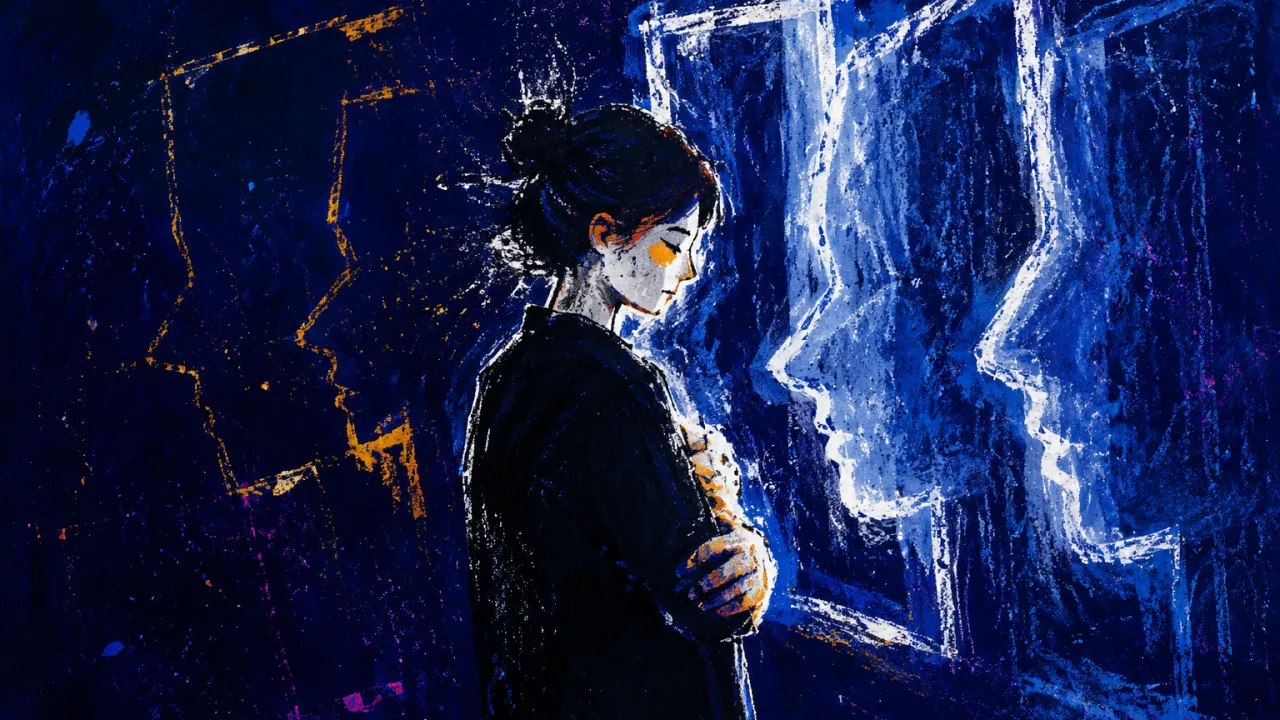
A half-turned figure holds both arms near the torso as silver profile frames approach and an amber outline recedes.

What is this situation?

Post-Breakup Dating Reentry puts you back in front of profile grids, typing indicators, and first-date tables after your routines were built around one person. It often starts with a friend suggesting an app, a late-night download, or someone asking whether you are “ready to meet people,” and suddenly you are expected to reduce yourself to six photos, three prompts, and a clean answer about what you want. Matches arrive in bursts; conversations stall without explanation; plans are made, moved, or dropped; and strangers ask how long you have been single before the drinks have landed. On dates, another person’s pace can set the terms: one wants immediate chemistry, another keeps things casual, and another treats your previous relationship as evidence to inspect. Your former shared places still appear on maps, mutual contacts surface online, and each new venue asks you to sit across from someone who has no context for the life you just left. Before opening the app, your shoulders tighten; before a date, you change outfits, check the route, and rehearse how much history to disclose, while the steady cycle of swiping, small talk, and read receipts occupies evenings that once followed a familiar rhythm. The strain comes not only from meeting someone new but from having to perform availability on platforms and timelines that reward quick judgments, much like the Six of Swords, where a boat carries its passengers toward another shore while six upright swords remain inside it.

Why it's not you?

This is not evidence that you are bad at dating or taking too long to move on. Dating apps, compressed profiles, inconsistent messaging, and first-date expectations create a setting where people are asked to make fast decisions with very little context. The strain belongs to that setup, not to a personal failure on your part.

Post-breakup Dating Reentry in Tarot Cards

Post-breakup dating reentry places you in a fast cycle of profile judgments, stalled chats, and first dates with people who do not know the life you just left. The shoulders tightening before you open the app register an environmental and structural dynamic: platforms and dating timelines keep setting the pace before fuller context can emerge. The Tarot Cards below mirror the visible contours of that situation without deciding what you should do next.

The Fool
Upright
A traveller approaches an unseen drop with a white rose, a small bundle, and a dog close beside them. The light luggage captures the exposed quality of a first date after a long relationship: you bring a real history, but the stranger across the table has access only to the portion that can be carried into that first encounter. The upright image preserves curiosity without requiring certainty or immediate commitment. You can enter a conversation as an exploratory participant rather than performing total availability, allowing a new person to remain new instead of assigning them the job of resolving the breakup.
The Magician
Upright
A figure stands before a table displaying the four suit objects, with one hand raised, one hand lowered, and an infinity sign above. The carefully arranged tools resemble the limited components of a dating profile: photographs, prompts, labels, and messages must be selected and coordinated to make a complex person legible on a small surface. The upright posture keeps authorship available even inside that compression. You can recognise profile-making as a translation task rather than a complete statement of who you are, separating intentional presentation from the exhausting demand to make every part of your post-breakup identity immediately marketable.
The High Priestess
Upright
A seated figure holds a partly concealed scroll between contrasting pillars, with a veil behind her and a crescent moon at her feet. The scene gives information a boundary: something can be real and relevant without becoming immediately accessible to the person asking for it. That structure maps directly onto first-date questions about how long you have been single, what happened, and what you now want. You can treat disclosure as paced access rather than evidence owed to a stranger, allowing context to emerge in proportion to trust instead of according to the timetable of a dating interview.
Wheel of Fortune
Upright
A large wheel dominates the image while figures occupy rising, falling, and temporarily elevated positions around it. The scene mirrors the externally generated cycles of app dating, where matches appear in bursts, attention disappears, and a quiet week can become crowded without any corresponding change in your intentions. The upright wheel keeps the cycle moving, but it does not place all timing under personal control. You can separate an algorithmic surge or lull from your actual relational value, recognising that platform visibility, other people’s schedules, and chance encounters organise much of the apparent momentum.
Justice
Reversed
A seated figure holds a sword and scales between two pillars, presenting a formal apparatus for evaluating evidence. Reversed, those instruments remain present but lose dependable alignment, mirroring dating environments where six photos, a few prompts, and a brief breakup explanation are treated as sufficient grounds for a complete judgment. The distorted evaluation turns a first date into an informal hearing about how long you have been single and what your history supposedly proves. You can distinguish legitimate compatibility assessment from a process that demands a verdict before either person has enough context to weigh the evidence fairly.
Temperance
Upright
Water moves between two cups while the figure remains anchored in both land and water, and a path extends toward a distant horizon. The scene frames post-breakup development as integration: relationship history, single-life routines, current boundaries, and new attraction are being placed into a workable system rather than divided into a discarded past and a perfected future. The upright exchange keeps learning connected to lived dating experience. You can develop a more precise model of availability through paced encounters, noticing which inherited assumptions still organise your choices and which current values can now shape the next relationship structure.
The Moon
Upright
A winding path runs between two towers while a dog and a wolf react beneath the moon and a creature rises from the water. The landscape supplies partial visibility rather than no visibility, matching early dating situations where delayed replies, edited profiles, and unfamiliar behaviour provide enough signal to activate interpretation but not enough to confirm it. The upright path continues through uncertainty instead of resolving it prematurely. You can name the stories filling gaps around silence, chemistry, or another person’s intentions, while preserving the distinction between an activated expectation and evidence available in the current dating interaction.
Five of Cups
Upright
Three cups lie spilled before a cloaked figure while two remain standing outside the figure’s immediate line of sight. The composition mirrors the psychological split of dating reentry: the external scene offers new people, but attention can still be pulled toward the relationship structure that has visibly ended. The upright image allows grief to be named without giving it total ownership of the landscape. You can notice when a date, map location, or question about your ex activates the loss, separating that activation from the broader conclusion that no new possibility exists.
Seven of Cups
Upright
Seven cups float before a silhouetted viewer, displaying appealing, alarming, and concealed images inside the same clouded field. Like dating profiles, the cups provide enough information to trigger attraction and projection but not enough to establish character, compatibility, or follow-through. The upright display makes imagination active before evidence can catch up. You may be asked to feel chemistry, anticipate commitment, or detect danger from fragments, so the strain comes from making relationship-level interpretations inside a profile-level information system.
Page of Cups
Upright
A young figure holds a cup from which a fish unexpectedly appears, with moving water behind the encounter. The surprising, slightly awkward exchange resembles the first message or invitation that makes romantic possibility concrete after a breakup, before either person knows what the interaction can support. The upright Page keeps curiosity accessible without inflating the message into a promise. You can register a match or reply as a small relational opening, allowing interest to exist at its actual scale instead of making every notification prove that you are ready for a complete new relationship.
Two of Pentacles
Upright
Two pentacles circle through an infinity-shaped loop while ships rise and fall on the waves behind the juggler. The image turns dating reentry into a visible coordination problem: messages, first-date plans, clothing, travel, and ordinary life all compete for limited evening capacity while the surrounding conditions remain unstable. The figure stays upright because movement remains possible, but only through continuous adjustment. You are not failing because the new routine does not yet feel natural; you are carrying a newly added stream of dating administration inside a week that was previously structured around a different relationship system.
Two of Swords
Upright
A blindfolded figure holds two swords in a locked cross while a rocky sea and crescent moon sit behind her. The options are physically present, but the defensive posture prevents either path from being tested, mirroring the pull between continuing to date and withdrawing until certainty about readiness appears. The stalemate is sustained by limited information rather than personal indecisiveness. You are being asked to choose among apps, matches, disclosure levels, and relationship intentions before those options have supplied enough context, so the real bottleneck is the demand for a clean answer under conditions designed around ambiguity.
Six of Swords
Upright
A cloaked passenger sits inside a boat whose bow is occupied by six upright swords, while a ferryman directs the crossing toward land. The image makes the dating situation concrete: a new person may meet you on the far side, but the route there still contains routines, memories, mutual contacts, and protective conclusions formed in the relationship that ended. The upright passage allows movement without demanding historical emptiness. You can bring context into new dating while deciding which parts belong in the first conversation, which require trust, and which no longer need to organise the destination.
Two of Wands
Upright
A figure stands on a battlement holding a globe, with one wand secured to the wall and another held beside an open view of land and sea. The image places a known structure and an unexplored field in the same frame, matching the choice between preserving newly regained single-life stability and entering the uncertain reach of dating again. The globe keeps multiple routes available without pretending that all must be taken. You can examine what kind of dating exposure fits your actual horizon before allowing app momentum, social pressure, or a stranger’s pace to make the decision on your behalf.
Five of Wands
Upright
Five figures cross their staffs in a crowded scene without a visible shared rule or coordinated objective. The image resembles the competitive field of app dating, where several conversations, alternative matches, conflicting intentions, and attention metrics overlap without a common agreement about what participation means. The upright contest makes friction public and active rather than locating it entirely inside you. You can recognise that comparison pressure and inconsistent effort are produced by a multi-option marketplace, especially when each person is balancing several possible connections under different assumptions.
Eight of Wands
Reversed
Eight wands travel together across an open sky, but in reversal their apparent shared direction no longer guarantees a clean arrival. The disrupted line mirrors dating chats that produce rapid banter, typing indicators, and definite-sounding plans before slowing or disappearing without relational accountability. The stalled motion separates communication intensity from dependable interest. You can recognise that a burst of messages may create momentum without creating a bond, and that another person’s inconsistent follow-through does not provide a valid score for your capacity to date again.
Nine of Wands
Upright
A visibly bandaged figure stands alert before a line of wands, gripping the final staff while watching for the next approach. The body is participating and protecting itself simultaneously, echoing the tightened shoulders, rehearsed disclosures, route checking, and close reading of signals that can precede a first date. The upright guard can still evaluate what actually arrives. You can distinguish a boundary based on present evidence from an automatic defence built for the previous relationship, turning vigilance into information rather than allowing it to consume the entire encounter.

Post-breakup Dating Reentry in Tarot Card Reading Insights

Others have brought post-breakup dating reentry into readings after stalled chats, shifting plans, and first dates shaped by quick judgments. The Tarot Reading Insights below collect what surfaced when this dating setup entered their readings.
Psychological contexts related to Post-breakup Dating Reentry