When Home Needs Rules

A clear look at shared-home tension, related tarot cards, and reading insights around boundaries, fairness, and roommate friction.

Roommate Boundary Negotiation
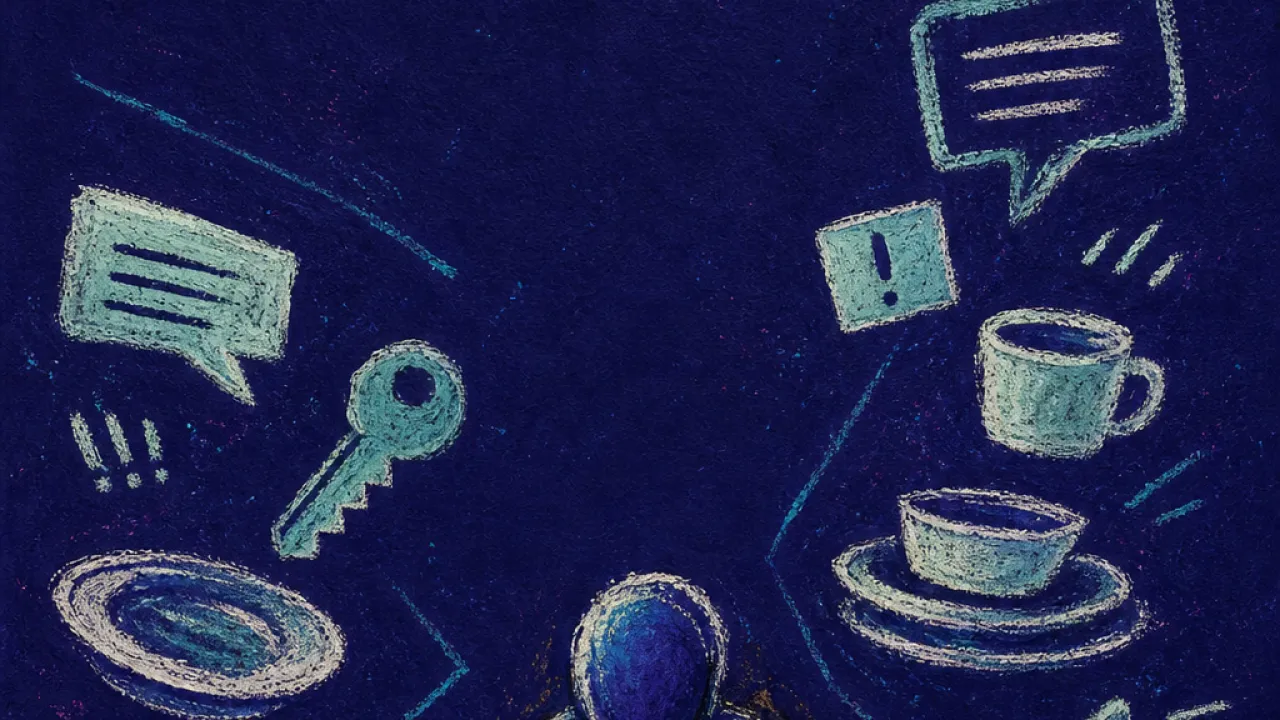
A solitary figure between shared walls, shoulders drawn inward as keys, dishes, and message bubbles press into their space

What is this situation?

Roommate Boundary Negotiation — you move into a shared place thinking the rules will be obvious once everyone is unpacked, but the apartment starts teaching you otherwise within the first few weeks. At first it is small: dishes left in the sink overnight, a towel on the bathroom floor, music through the wall when you have an early shift, a partner staying over so often they start to feel like a third roommate. You tell yourself you can bring it up casually, then the group chat makes everything feel weirdly formal, and the kitchen table turns into a meeting room where you have to phrase basic needs like a proposal. Your roommate says they are easygoing, but somehow every request gets softened, delayed, joked away, or treated like you are making the vibe tense. Because you share rent, keys, utilities, walls, groceries, delivery space, and the same front door, there is no clean exit from the conversation; even after you send the message, you still have to pass them in the hallway, hear their footsteps, and sleep in the room next to theirs. Your shoulders tighten before you ask again, not because the request is unreasonable, but because the place where you are supposed to recover has become a negotiation you cannot clock out of. Over time, the apartment stops being neutral space and starts feeling like a map of invisible lines: which shelf is yours, which noise is too much, which guest overstays, which mess counts, which bill reminder sounds passive-aggressive. You keep trying to be fair without becoming the house manager, direct without sounding harsh, flexible without disappearing, much like the figure on the Two of Swords, seated with arms crossed and blades held in balance while a quiet shoreline waits behind them.

Why it's not you?

The issue is not that you are difficult for needing clear limits in a shared home. A lease, shared utilities, thin walls, different routines, and uneven follow-through can turn ordinary roommate habits into constant friction. This is a boundary problem built into the living setup, not a flaw in your ability to be chill.

Roommate Boundary Negotiation in Tarot Cards

Roommate Boundary Negotiation is the moment a shared home stops feeling automatic and every sink, hallway, guest, and late-night noise becomes part of the agreement. The tightness in your shoulders before you send the message is tied to an environmental and structural dynamic: two lives sharing one space without equally clear rules. The cards below do not decide who is right; they reflect the pressure points, the crossed limits, and the stalled conversations inside this setup. Here are the Tarot Cards that tend to mirror this kind of living situation.

Justice
Upright
Level scales measure one side against another while a raised sword makes the standard visible between two pillars. The image supports a shift from evaluating whether you are sufficiently chill to evaluating the actual household distribution of labour, access, cost, privacy, and disruption. The stable framework makes fairness evidence-based and revisable rather than dependent on who sounds more relaxed during the conversation. You can recognise that equal rent does not automatically create equal impact and that an agreement is not balanced merely because everyone technically had a chance to speak. The cognitive change is from managing impressions to auditing how the shared system operates in practice.
Temperance
Upright
A winged figure pours water steadily between two cups while keeping one foot on land and one in water; a path remains visible beyond the mixed terrain. The exchange between containers resembles the ongoing adjustment required when different sleep schedules, cleaning thresholds, guest habits, and noise tolerances must operate inside one apartment. The measured flow makes negotiated coexistence available without requiring either person to erase their routine. You can read flexibility as a controlled exchange with limits, not as endless accommodation by the roommate who notices the problem first. The path appears when compromise is attached to specific household practices rather than left as a vague demand to relax.
The Devil
Upright
Two figures stand visibly chained to the same pedestal beneath a larger controlling presence, with the material bond connecting them to one structure. The scene mirrors roommates tied into rent, deposits, utilities, keys, furniture, and a fixed address: conflict cannot be cleanly clocked out of because both people remain attached to the same domestic infrastructure. The chains are visible and relatively loose, making the terms of attachment capable of being named and examined. You can distinguish the practical dependencies of the lease from the extra compliance produced by fear of making the atmosphere awkward. The pressure becomes more workable when shared housing is recognised as a binding resource arrangement, not proof that one roommate is entitled to unlimited access or accommodation.
Three of Pentacles
Upright
A craftsperson stands inside a shared building while two other figures consult plans beneath a carved stone arch. The architecture, divided roles, and visible plan translate directly into a household that works only when residents coordinate standards instead of assuming that dishes, bins, bills, and guests will somehow organise themselves. The figures bring different forms of input to the same structure, so collaboration remains materially possible. You can participate in designing the domestic system without becoming its sole administrator; the useful distinction is between contributing to a shared plan and carrying the planning, reminders, and enforcement for everyone else.
Four of Pentacles
Upright
A seated figure holds one coin tightly against the chest, places both feet on two more, and carries another above the head while the city remains at a distance. The guarded arrangement mirrors the practical response to shelves being crossed, food being taken, rooms being entered, or shared supplies becoming ambiguous: possessions and zones must be physically controlled because social limits are not being trusted. The coins remain visible and countable, making ownership capable of definition rather than endless private guarding. You can examine whether tighter control protects a legitimate personal resource or has become necessary only because the household has no respected categories for mine, yours, and communal. The experience is not simply possessiveness; it is the cost of living where access has outpaced consent.
Six of Pentacles
Reversed
A standing distributor holds scales while coins pass downward to two kneeling figures, but the reversed orientation destabilises both the measurement and the flow. The domestic parallel is an apartment where one roommate repeatedly supplies reminders, cleaning, money, flexibility, or emotional smoothing while another retains the power to decide whether and when reciprocity occurs. The blocked exchange shows why isolated acts of generosity do not correct an unequal household structure. You may keep covering a missed task to make the home usable, yet each rescue can hide the true distribution of labour and turn basic cooperation into discretionary help controlled by the less accountable roommate.
Two of Swords
Upright
A blindfolded figure holds two blades in a perfectly crossed position while the uneven shoreline sits behind her. The image concentrates the choice between continuing to absorb the disruption, confronting the pattern more directly, formalising the rules, or considering an eventual exit, with each route carrying consequences inside the same home. The stable seat allows a decision pause without turning delay into a permanent arrangement. You can compare options through concrete criteria such as sleep, cost, privacy, follow-through, and housing flexibility rather than through the single question of whether speaking up will feel awkward. The choice becomes clearer when social peace is treated as one factor, not the automatic priority.
Eight of Swords
Upright
A blindfold covers the figure's eyes while loose bindings restrict her arms and upright swords narrow the surrounding space. The scene mirrors the internal freeze that can occur before a roommate conversation, when you edit a simple request repeatedly because every wording seems capable of producing defensiveness, awkward silence, or a colder apartment afterward. The gaps and loosened bindings preserve room for psychological differentiation. You can recognise that the anticipated reaction belongs to the household dynamic, while the belief that no wording, timing, or boundary can be valid is an additional layer produced by repeated avoidance. The image makes visible how external proximity becomes internal self-censorship.
Queen of Swords
Upright
An upright sword defines a clean vertical line while the queen's open hand remains extended toward another person. The paired gestures capture a cognitive upgrade central to roommate boundaries: clarity and receptiveness are not opposites, and a concrete limit can coexist with respect, negotiation, and adult-to-adult communication. The wind-cleared sky makes distinctions available between harshness and specificity, flexibility and disappearance, peacekeeping and actual cooperation. You can examine the inherited belief that a good roommate never creates tension, then compare it with the practical reality that shared homes require explicit limits precisely because needs and habits differ. The growth lies in making the request legible without making yourself responsible for eliminating every uncomfortable reaction.
Four of Wands
Reversed
Four decorated posts frame a threshold, with a home and welcoming figures beyond them, but the reversed orientation makes that domestic frame feel unsupported. The apartment may still look settled from outside while its internal agreements around access, guests, noise, and upkeep are too unstable to provide the ease associated with being at home. The visible structure shows what is missing: not a more convincing performance of harmony, but reliable supports beneath it. You can recognise that a friendly move-in, shared jokes, or occasional good nights do not substitute for domestic predictability. When the threshold does not protect recovery and privacy, belonging remains conditional on how much friction you are willing to absorb.
Five of Wands
Upright
Five figures cross raised staffs in the same limited space, each moving with effort but without a shared formation. The scene resembles roommates pursuing incompatible ideas of normal living at once: one needs sleep, another wants music, one expects a clear sink, another treats common space as overflow storage, and nobody is working from the same rules. The open setting and active figures keep coordination possible, but activity alone does not create cooperation. You can see recurring domestic friction as a standards conflict rather than evidence that every incident requires a separate debate; the exhausting repetition comes from competing routines meeting without an accepted method for resolving them.
Seven of Wands
Upright
A figure on raised ground braces one staff against six approaching from below, even standing in mismatched shoes. The elevated position and repeated pressure mirror the resident who has stated a limit but must keep defending it against jokes, exceptions, forgotten agreements, and claims that enforcing the rule is ruining the atmosphere. The defensible ground remains available, so persistence does not have to become aggression. You can distinguish the content of a boundary from the social discomfort produced when it interrupts another person's convenience. The uneven footwear also captures the improvisation of enforcing house rules while still trying to cook, sleep, work, and remain civil in the same space.
Nine of Wands
Upright
A visibly injured figure watches the space ahead while gripping a staff in front of a defensive row of eight more. The posture mirrors the psychological cache created by repeated roommate friction: you may rehearse requests, scan the kitchen on arrival, interpret footsteps as advance warning, or tighten before opening the group chat because prior agreements did not hold. The established boundary line gives that alertness a concrete history rather than reducing it to oversensitivity. You can use the pattern to identify which breaches keep the internal alarm active and whether the household has produced credible evidence of change. The figure remains upright, but the image also makes the cost of permanent readiness impossible to hide.
Ten of Wands
Upright
A figure carries an entire bundle of staffs toward town, with the load obscuring the view ahead. The image closely matches the roommate who becomes the default cleaner, bill reminder, guest-policy monitor, supply tracker, and conflict translator because leaving any task undone makes their own home less usable. The destination is visible and the bundle can be set down, which makes the workload measurable rather than inevitable. You can separate responsibility for your own share from responsibility for making the whole household function; without that distinction, competence becomes the mechanism through which more domestic labour keeps accumulating around you.

Roommate Boundary Negotiation in Tarot Card Reading Insights

When Roommate Boundary Negotiation turns the apartment into a place where every small habit has to be named, others have brought that same shared-space tension into readings. These Tarot Reading Insights show what came up when people sat with cards around boundaries, fairness, and the cost of keeping peace at home.

Psychological Contexts Related to Roommate Boundary Negotiation