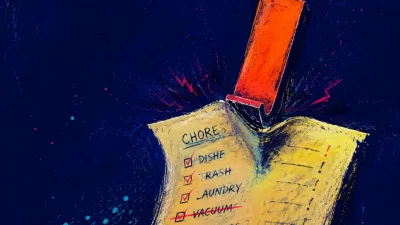
At the Full Sink, Chore-Talk Dread Gave Way to a Fair Request

The Chore Conversation Waiting at 8:47
If you are an early-career UX writer in a Toronto rental, used to making other people's sentences sound neutral, yet you keep rewriting the roommate chore text while the sink stays full, I know the particular irony of that moment: every sentence works except the one you need at home.
At 8:47 on a Sunday evening, Casey joined my video consultation from their shared kitchen. Through the camera, I could see dishes crowded around the sink and a recycling bag leaning against the door. The refrigerator hummed beneath the call, rain tapped the window, and the warm cabinet light gave every glass and plate a sharp yellow edge.
Casey unlocked their phone and opened Notes. Their jaw shifted as they reread a draft beginning, “Hey, no worries if not, but could we maybe talk about the kitchen sometime?” Then they put the phone facedown and wiped one narrow strip of counter. Their shoulders dropped when the strip looked clean, but only by a fraction.
“The mess keeps growing, but starting the conversation feels like the bigger mess,” they said. “I keep telling myself I'll bring it up when I can say it without sounding accusatory. Then I clean one thing, scroll for a while, and wait for a better moment.”
I could hear the contradiction clearly. Casey wanted a relaxed, genuinely shared home and a fair chore routine. At the same time, they were avoiding the one conversation that could make those things possible because silence seemed safer than an awkward response. The dread had become physical, like carrying a tray of cold, unstable glasses through a narrow room: jaw locked, shoulders raised, stomach braced against the sound of something falling.
“You're not confused about whether the dishes exist,” I said. “You're trying to protect the feeling of home from what you fear the conversation could do to it. That protection makes sense, even though it is now costing you. Let's use the cards to map the exact point where your internal rhythm slips from noticing into postponing, then find one beat you can change without forcing yourself into a huge confrontation.”
I made one boundary clear before we began: I would not use tarot to predict whether Casey's housemate would cooperate, become defensive, or change. The reading could show Casey's patterns, available choices, and practical next steps. Their housemate's response would remain their housemate's responsibility.

Choosing a Map for the Household Stalemate
I asked Casey to place both feet on the floor, loosen their hands, and take one unforced breath while holding a single question: “Why do I keep avoiding the chore talk as the mess piles up?” I shuffled slowly in view of the camera. The pause was not a mystical performance. It was a transition from rehearsing every possible argument to examining one real pattern.
I chose the Relationship Spread · Context Edition, a six-card cross designed for communication problems inside a relationship. For anyone wondering how tarot works in a situation like roommate conflict, I treat the spread as a structured reflection tool. Card meanings in context help separate the visible behavior, the emotional protection underneath it, and the action that remains within the querent's control.
This was more useful than a predictive outcome spread because Casey was not choosing between two isolated options. They were caught in a shared-home stalemate involving mismatched definitions of clean, unspoken resentment, solo cleaning, and the fear that direct language would disturb their belonging at home.
I explained the map. Position one would show Casey's present stance immediately after noticing the mess. Position two would reveal the shared household atmosphere. Position three would expose the maintenance pattern underneath the visible conflict. Position four would identify what kept the conversation suspended. Position five would show the communication bridge Casey could personally initiate. Position six would translate the insight into one small collaborative experiment.
“This spread won't decide who is the better housemate,” I told Casey. “It will help us distinguish what you're observing, what you're assuming, what you're avoiding, and what you can ask for clearly.”

Reading the Shared Kitchen in Six Cards
Position 1: The Opening Dismissed as Another Demand
“The card I'm turning over now represents your present stance in the household relationship, especially what you do in the first thirty seconds after noticing the mess,” I said.
I revealed the Four of Cups, upright. The seated figure's arms were crossed. Three cups rested nearby, while a fourth was being offered and ignored.
In Casey's life, that offered cup was not a romantic opportunity or a dramatic revelation. It was the ordinary opening created by the visible sink. Casey saw the dishes, opened a half-written message, felt the emotional demand of beginning the chore conversation, and wiped one strip of counter instead. The problem had registered, but engagement had not followed.
The upright Four of Cups showed Water turned inward into a blockage. Casey's feelings were not absent. They were so concentrated around the anticipated discomfort that withdrawal felt more manageable than participation. The phone and the substitute task offered immediate relief, while the actual opening for clarity was treated like one more thing being demanded of them.
“When you walk into the kitchen and see the same dishes again, what happens in your body before you choose the smaller task?” I asked.
Casey gave a brief, bitter laugh. “That's so accurate it's kind of brutal. My jaw tightens, I open Notes, and then suddenly wiping the stove feels urgent.”
I did not defend the card or turn the moment into a judgment. “Brutal isn't the goal,” I said. “Useful is. This card is showing us a specific fork in the road, not a flaw in your character.”
I used what I call Somatic Rhythm Mapping to slow that fork into visible beats: the eyes register the sink, the jaw locks, the shoulders lift, the phone opens, the cloth moves, and the body receives a short drop of relief. Casey's avoidance was not one mysterious act. It was a practiced rhythm, and a rhythm can be adjusted at one beat without condemning the whole song.
Position 2: Five Standards in One Small Kitchen
“The card I'm turning over now represents the shared household dynamic as you experience it, especially the cold-war atmosphere created by different chore standards and long silences,” I said.
I revealed the Five of Wands, upright. Five figures raised their wands in different directions. Everyone was active, but no movement was coordinated.
In Casey's apartment, the card looked like two people entering the same kitchen with different definitions of urgent and clean enough. One person could see a few dishes as normal end-of-day clutter. Casey could experience the same dishes as a task already overdue. Each delay, correction, or loaded glance added heat because nobody had stated the shared standard.
This was Fire in excess, not necessarily an open fight. It was scattered effort, competing assumptions, and ordinary objects carrying more emotional weight than they were built to hold. The kitchen resembled a team editing the same document without acceptance criteria: everyone could make local changes, but nobody had agreed what finished meant.
I was careful not to use the Five of Wands as evidence that the housemate was selfish or deliberately provoking Casey. Tarot could not establish motive. It could show that silence had allowed mismatched preferences to harden into private conclusions.
“Which task is carrying the most unspoken tension?” I asked.
Casey rubbed their thumb along the edge of the phone. “Dishes overnight. I treat that as obviously not okay, but we've never actually agreed on it. I think I keep waiting for them to notice my standard without me having to say it.”
Their shoulders remained high, but their voice became less defensive. The card had shifted the problem from a private case against another person to a coordination problem that could, at least in principle, be named.
Position 3: Cleaning the Room Without Changing the Agreement
“The card I'm turning over now represents the hidden maintenance pattern beneath the conflict, specifically how procrastination separates your intention from a repeatable chore practice,” I said.
I revealed the Eight of Pentacles, reversed. The traditional image of a solitary craftsperson repeating a skill now appeared interrupted. The tools and effort were present, but consistency and shared structure were not.
In Casey's life, this was the dramatic Saturday cleanup. They would put on a familiar podcast, wash everything, carry out the recycling, and feel the apartment become breathable again. The labor was real. Yet no task, frequency, or owner had been agreed, so the next full sink returned them to the same starting point.
The reversed Earth energy showed a deficiency of repeatable structure combined with an excess of emergency effort. Casey was not failing to work. They were working in bursts that relieved the immediate pressure while leaving the recurring decision unassigned.
“Cleaning the room is not the same as changing the agreement,” I said. “A spotless kitchen can actually make the chore talk easier to postpone because the visible evidence disappears for a day.”
Casey's fingers stopped moving. Their gaze dropped from the card to the clean strip of counter beside the sink. After a moment, they said, “I think I clean alone partly so I can feel morally clear. Then I resent that nobody saw how much it took.”
I heard both shame and honesty in the sentence, so I separated responsibility from blame. “You can acknowledge that pattern without making yourself responsible for all the household labor. The useful question is whether the next burst of effort will be another private rescue or the beginning of a stated arrangement.”
Position 4: Perfect Wording Becomes a Waiting Room
“The card I'm turning over now represents the obstacle sustaining the distance, specifically the demand for perfect timing and perfectly neutral wording,” I said.
I revealed the Two of Swords, upright. The figure wore a blindfold and held two crossed swords against their chest. Still water waited behind them, while a rocky shoreline suggested that the protected position was not a comfortable one.
For Casey, the two swords were two unsent opening lines held side by side in Notes. “Can we talk about chores?” felt too blunt. “Would you maybe be open to discussing the kitchen sometime?” felt so vague that it could disappear without an answer. Each draft was rejected for a different tone problem, and silence was selected as the safest remaining option.
This was Air in blockage. Casey did not lack information about the kitchen. They were trying to make language perform an impossible job: guarantee that the other person would not feel criticized, become awkward, or respond unpredictably. The blindfold was not ignorance. It was the hope that waiting might remove uncertainty.
“Perfect wording is becoming a waiting room,” I said. “It feels careful, but every extra rehearsal keeps you seated outside the conversation.”
Casey's breath paused. Their fingers hovered above the phone, then curled inward as if holding both drafts again. Their eyes moved away from me and settled on the sink, replaying something I could not see. Finally, they let out a low breath and said, “I've been looking for a sentence that comes with a guarantee.”
“Yes,” I said. “And there is no sentence that can control another adult's response. There can only be a sentence that represents your observation and request honestly enough for a real response to become possible.”
The temporary peace of saying nothing had protected Casey from one uncomfortable exchange. Its longer rhythm had produced more mess, a tighter jaw, and a private scorecard with no agreed rules. Naming that cost did not require Casey to rush into confrontation. It simply allowed them to stop calling suspended communication peace.
When Justice Replaced the Silent Scorecard
Position 5: The Bridge Casey Could Initiate
The rain softened against Casey's window as I reached for the fifth card. At almost the same moment, the refrigerator compressor clicked off. The shared kitchen, so full of background noise seconds earlier, became unexpectedly still.
“The card I'm turning over now represents the communication bridge you can personally initiate, specifically the move from assumptions and silent scorekeeping to facts, fairness, and a clear request,” I said.
I revealed Justice, upright. The scales were balanced. The sword stood vertical. The seated figure between two pillars did not look angry or apologetic; the posture was composed enough to distinguish evidence from verdict.
In Casey's situation, Justice replaced “You never help” with “The dishes have been in the sink since last night; could we agree on when they get handled?” The scales represented proportionate responsibility, not punishment. The sword represented language clear enough to be answered, negotiated, or declined.
Seeing those symbols, I flashed back to long sessions studying layered sound. When a mix became muddy, making every channel louder never created clarity. I had to isolate the tracks. Here, the three tracks were observable behavior, the story attached to it, and the request Casey wanted to make. Justice asked us to stop mixing them into one overwhelming chord.
I brought in my Execution Block Dismantling lens. The dissonant starting chord contained three notes: the room should be clean first, the script should be impossible to criticize, and the other person's response should be predictable. No wonder Casey could not begin. The entry conditions were impossible. Justice removed those extra notes and left two playable ones: one observable fact and one fair request.
I asked Casey to picture Sunday at 8:47 again: the full sink, the recycling bag beside the door, the cloth moving across one clear patch of counter, and the message still waiting in Notes. They had been trying to make the whole apartment feel safe before allowing one sentence to exist.
You do not need a spotless room or a perfect script to deserve a fair conversation; name what is visible, choose one balanced agreement, and let Justice's scales replace silent scorekeeping.
I let the sentence sit in the quiet.
For two seconds, Casey seemed to stop breathing. Their lips parted, but no sound came. Their eyes widened and then lost focus, as if they were watching every solo cleanup and deleted draft replay behind the screen. A flush rose over their cheeks. Their shoulders, still held close to their ears, dropped halfway and stopped. Then resistance arrived before relief.
“But doesn't that mean I've been doing this wrong the whole time?” they asked, their voice sharper than before. “Like I created the resentment by not saying anything?”
I did not rush to erase the sting. “It means a strategy that protected you from immediate conflict also had a cost. That is different from saying the whole problem is yours. Your housemate still has responsibility for how they use a shared space. Justice is asking you to make your part visible, not carry theirs.”
Casey's jaw worked once, then released. Their hands opened flat on the table. Their eyes shone slightly, and the first full exhale seemed to come from much lower in their chest. Relief appeared, followed by a brief, almost dizzy blankness. The path was clearer, but clarity meant accepting that they could choose their words without controlling what happened next.
I asked, “Now, using this new perspective, think back to last week. Was there a moment when this insight could have made the situation feel different?”
“Wednesday,” Casey said after a pause. “There were two plates and a delivery container. I took a photo like I was collecting evidence, stacked everything neatly, and told myself I'd say something next time. I could have just named the dishes. I didn't need the whole case.”
“Exactly,” I said. “Fairness needs a sentence, not a silent scorecard.”
I set a ten-minute timer and invited Casey to write two lines in Notes: “I notice that...” and “Could we agree to...” They chose one task, dishes left overnight. I reminded them that they could stop at the draft, postpone sending it, or return when their body felt steadier. A reflective tarot reading should create agency, not pressure someone into a conversation before they are ready.
Casey wrote: “I notice dishes are often still in the sink the next morning. Could we take ten minutes to agree on an overnight routine that feels fair to both of us?” They read it once. This time, they did not add an apology at the beginning.
I named the shift I was witnessing. It was not instant fearlessness. It was the first movement from dread-driven avoidance, task substitution, and silent scorekeeping toward fact-based self-trust and fair communication. Justice restored balanced Air: clarity, proportionate accountability, and a willingness to let experience teach Casey what one script could never guarantee.
At the Three of Pentacles Workbench
Position 6: A Trial Agreement, Not a Verdict
“The card I'm turning over now represents the grounded next experiment, specifically one repeatable agreement that can be discussed, tried, and adjusted,” I said.
I revealed the Three of Pentacles, upright. A craftsperson stood near visible plans while two other people examined the work. The image did not show one person secretly building the entire structure while hoping the others noticed. Roles and design were available for discussion.
In Casey's apartment, this card looked like two housemates standing over a short shared note and choosing one task, one frequency, and one next owner. It was not an elaborate roommate chore chart, a performance dashboard, or permission to monitor another adult. It was a one-week build that could be reviewed.
The Earth energy had returned in balance. Earlier, the reversed Eight of Pentacles showed real work trapped in isolated bursts. Here, effort became coordinated practice. Justice provided language; the Three of Pentacles gave that language somewhere practical to land.
“What is the smallest agreement you could test without turning the whole apartment into a referendum on who is good or bad at sharing a home?” I asked.
“Dishes handled by bedtime, with whoever didn't cook taking the next turn,” Casey said. Then they hesitated. “But only for a week first. I don't want either of us pretending the first version has to work forever.”
I nodded. “That is the card exactly. This is a trial agreement, not a verdict on either of you.”
Casey opened a new note titled “Kitchen trial.” Their hand still paused before typing, but the pause no longer sent them into another app. They wrote the task, a proposed frequency, and a date to review it. I could see possibility enter their posture without pretending the conversation itself would be painless.
The Three-Day Frictionless Tempo Calibration
I laid the six-card story out plainly. The Four of Cups showed Casey withdrawing from an available opening. The Five of Wands showed separate household standards generating friction without coordination. The reversed Eight of Pentacles revealed why solo cleaning created relief but no reliable practice. The Two of Swords exposed the demand for a perfect script. Justice separated fact from verdict, and the Three of Pentacles converted clarity into a shared experiment.
The apartment had been functioning like two metronomes set to different tempos, with neither person naming the beat. Each pile became louder evidence, while every cleanup muted the sound without correcting the timing. Casey's cognitive blind spot was the belief that keeping the peace meant preventing discomfort altogether. In practice, that standard made honest communication impossible and allowed a quieter form of conflict to continue.
The transformation direction was specific: stop waiting for a painless, perfectly worded chore talk. Name one observable task, propose one fair standard, and request one ten-minute conversation. The purpose was not to win a case or control the housemate's reaction. It was to make one piece of the shared system visible enough to discuss.
Casey raised a practical obstacle. “I can turn a five-minute draft into forty minutes of editing. Even this message makes me want to replace every word.”
That was the right point for my Frictionless Tempo Calibration, a three-day micro-habit sequence designed to lower starting friction without triggering an exhausting household overhaul. Instead of asking Casey to leap from silence to a perfect agreement, I gave each day one small beat.
The One-Task, Three-Day Reset
- Day 1: Map the entry beat.The next time one visible kitchen task tightens your jaw or lifts your shoulders, pause before moving it. Open Notes and spend no more than five minutes completing two lines: “What I can observe is...” and “The story I am adding is...” Use only one task, such as dishes overnight or recycling before collection day.Tip: Stop when the five-minute timer ends. The goal is separation, not polished wording.
- Day 2: Send the ten-minute invitation.Read your factual observation once, then send your housemate a direct request for a brief check-in within the next seven days: “Could we take ten minutes tonight or tomorrow to agree on what fair looks like for overnight dishes?”Tip: If the kitchen feels charged, send the invitation by text. If the proposed time does not work, ask the other person to suggest another ten-minute window.
- Day 3: Draft one reviewable trial.Create a shared note with one task, one frequency, one person taking the next turn, and a five-minute review date one week later. Bring this as a proposal, not a finished contract, and leave room for both people to negotiate the standard.Tip: Do not import every past chore into the conversation. One task and one week are enough data for the first experiment.
I told Casey that the dates could shift if scheduling required it; the protective value was in the sequence, not rigid compliance. Body cue, factual draft, brief invitation, reviewable trial. Each beat reduced the friction of entering the next one.
I also reminded them that direct communication did not require remaining in a conversation that became insulting, coercive, or unsafe. Casey could pause, return to written communication, revisit boundaries, or seek outside support. Clarity includes knowing what is yours to initiate and what is not yours to absorb.
This was the actionable advice held inside the spread: not a promise that the housemate would respond perfectly, but a way for Casey to replace mind-reading with a clear request and learn from a real exchange. The cards had provided a map. Casey retained the authority to choose the pace, the words, and the boundary.

Four Days Later: The Quiet Proof
Four days later, I received a message from Casey. They had sent the ten-minute invitation without cleaning the kitchen first. Their housemate could not talk that evening, suggested the following night, and then joined Casey in choosing an overnight-dishes trial with a review date on the shared calendar.
Casey wrote, “It was awkward for maybe thirty seconds. Then it became weirdly practical. I kept waiting for it to turn into a huge thing, and it didn't. I also noticed I could have handled it if they disagreed.”
The recycling bag was still by the door when Casey messaged me, and they still wondered whether the next check-in might feel tense. But the sink was no longer carrying every unsaid sentence by itself.
I did not see that update as proof that tarot had fixed a household. The cards had not sent the message, set the boundary, or made the agreement. Casey had. My role was accompaniment: to help them hear the dissonant entry pattern, separate the tracks, and recover a tempo they could choose for themselves.
That was the real Journey to Clarity. Casey did not move from uncertainty to total control. They moved from a closed door in a cluttered hallway to one hand on the handle, one factual sentence spoken, and one small household agreement available for revision.
When the sink is full and your jaw is tight, it can feel safer to restore the room alone than risk disturbing the peace by asking for a fair share. Yet if silence keeps the real issue untouched, noticing that rhythm already gives you a place to change the next beat.
If you did not have to make the conversation painless or prove anyone wrong, which one visible task could you place on Justice's scales for ten minutes as the first clear beat in a more shared home?