Is Safety Choosing For You?

Explore the protected-choice pressure behind this situation, related tarot cards, and tarot reading insights from similar decision patterns.

Safe Harbor Option
What is this situation?

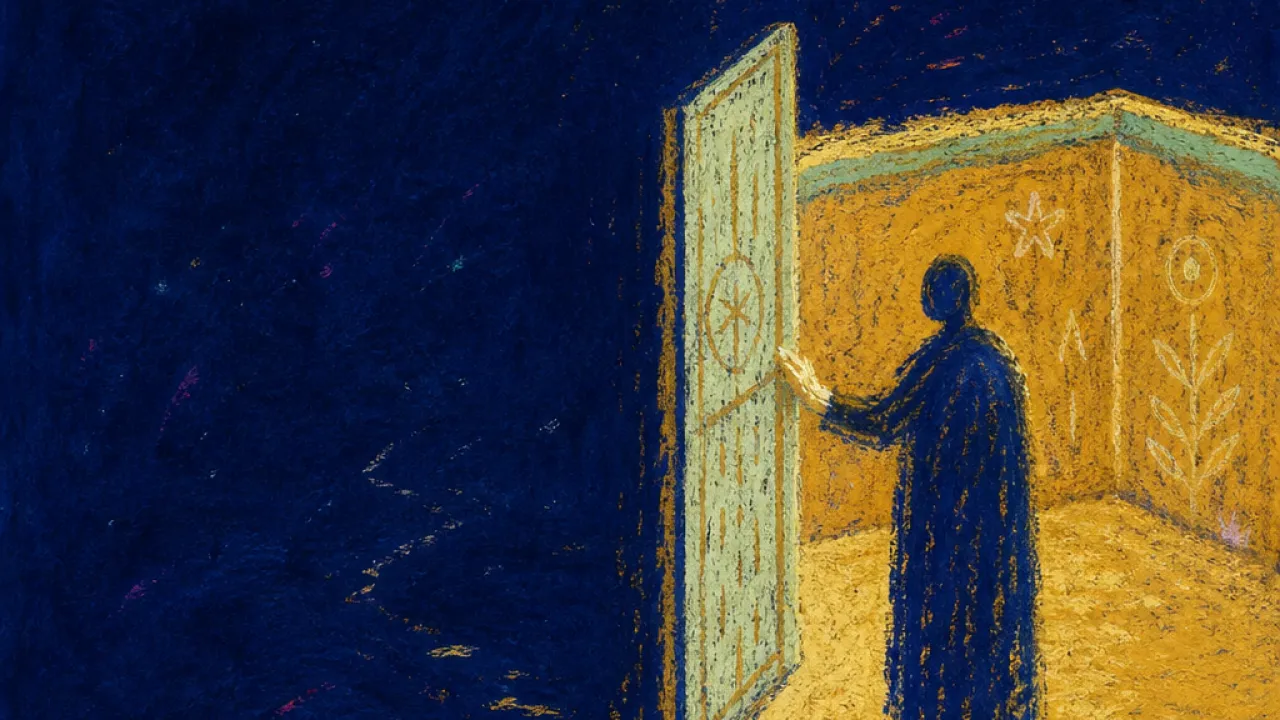
Safe Harbor Option — you are standing in front of a choice where one path is not necessarily the most exciting, ambitious, or expansive, but it is the one with walls around it. It might be the stable job you already know how to do, the former employer who would take you back, the family home with a spare room, the partner or friend who can offer a soft landing, the familiar city, the funded pause, the safer lease, the plan that lowers the chance of everything falling apart at once. Around it, the other options ask for more exposure: a new industry with no guarantees, a move without a built-in network, a breakup with logistics attached, a creative risk that needs runway, a version of independence that looks clean online but expensive in the calendar, the bank account, and the body. People around you may have opinions that make the protected path sound either sensible or small, and the pressure often gets louder in ordinary moments: checking rent prices at midnight, rereading an offer email, comparing commute times, imagining how many conversations you would have to survive if you chose the harder route. The safe option becomes more than one option among many; it starts acting like a room with lights on while the rest of the map sits in weather. You may feel your chest tighten when you try to audit it honestly, because the shelter is not fake: it really does offer structure, support, routine, and fewer immediate consequences. The cost is that its comfort can begin to do some of the choosing for you, especially when every alternative seems to ask you to give up stability before you have enough leverage to replace it. This is the tension at the center of a Safe Harbor Option: whether the protected place is giving you enough ground to choose clearly, or quietly becoming the only place you can imagine choosing from, much like the Six of Cups, where a walled courtyard and flower-filled cups make one protected corner of the world look cleaner, gentler, and easier to enter than everything outside it.

Why it's not you?

The issue is not that you are weak for noticing the safer path; the setup itself is giving that option a visible advantage. When one choice comes with shelter, money, familiarity, support, or lower exposure while the other choices come with more risk, safety becomes a powerful external force. That force deserves to be named clearly, because it can support a decision without being allowed to make the whole decision for you.

Safe Harbor Option in Tarot Cards

The Safe Harbor Option is the protected path that keeps pulling focus because the rest of the decision field is crowded with exposure, cost, and timing pressure. That tight chest you get when you compare every other route against the stable job, familiar home base, or lower-risk offer is not random; it is your body registering the difference between open risk and visible shelter. This is an environmental, structural dynamic: safety becomes more persuasive when the surrounding setup makes every less-protected option feel harder to enter. The Tarot Cards below reflect the outline of that harbor, its usefulness, and the point where protection can start narrowing the map.

Six of Cups Upright
The manor wall, clear weather, and patrol presence create a world where growth can happen without immediate threat pressing in from every side. The cups are full, the garden is ordered, and the figures have enough protection to remain soft while they exchange something meaningful. In personal growth, this fits a protected runway: a stable job, supportive home base, grant, community, or low-risk option that gives you room to rebuild. You can use that safety as infrastructure, but the card also makes the boundary visible enough to audit how long the protected space should remain the center. The relevance comes from the card's architecture of shelter. It shows that some upgrades do not begin with a leap into pressure; they begin by securing a container strong enough for the next version of discipline to form.
Ten of Cups Upright
The house in the distance, the garden around it, and the calm river beside it give the Ten of Cups a geography of shelter. The family is not floating in abstract happiness; they are standing in a landscape where support has a place, a boundary, and a visible source of emotional supply. In introspective work, a Safe Harbor Option appears when the outside world provides enough steadiness for the inner world to become readable. You may not be finished processing what is underneath, but the presence of a stable person, household, routine, or community gives the psyche a platform from which deeper material can be reviewed without turning every insight into a survival problem. The open posture of the figures matters. Nothing in the scene is clenched or hidden behind walls, which makes the card less about escape and more about regulated contact. The external harbor is valuable because it gives You room to sort the backlog, name what has been stored, and recover clarity without being forced to perform constant self-sufficiency.
Knight of Cups Upright
The white horse moves through open ground under a clear sky, and the knight's armor is present without aggression. The cup is intact, the reins are controlled, and the space around the rider does not force a fight. That visual field maps onto a safe harbor option: an available choice that lowers immediate conflict and offers emotional steadiness. In a decision spread, this option may feel calm because it genuinely contains support, or because it asks for less visible risk than the alternatives. The card does not make safety the same as surrender. It shows You a protected route that still needs inspection, especially if comfort is being mistaken for alignment or if low friction is being confused with long-term viability.
Queen of Cups Upright
The throne placed on a small sandbar, surrounded by calm water and backed by a distant wall, creates a protected pocket rather than a public stage. The Queen’s light contact with the shore keeps her close to the wider world without forcing immediate exposure. In an introspection cycle, that maps to a real-life opening where quiet, privacy, or distance can hold what daily speed usually scatters. You still have agency inside the pause; the point is to tell whether the harbor supports return or quietly becomes a place to stay hidden.
King of Cups Upright
The shell throne is not land, but it is a platform. One foot reaches toward the water while the body remains supported above it, creating a precise image of contact with protection rather than total immersion. In social life, that structure points to a circle that may function as a safe harbor: a place where warmth, humor, and shared interest do not immediately demand overexposure. You can approach the water, test the rhythm, and notice whether the group lets connection move at a human pace. The distant ship and leaping dolphin keep the scene active without making it chaotic. Safety here is not isolation from people; it is the presence of enough structure that social energy can arrive, leave, and return without overwhelming the whole system.
Ace of Pentacles Upright
Below the pentacle, the garden is protected by a low fence rather than a hard wall. The space is safe enough to shelter growth, but open enough to remain connected to the wider world. In an introspective context, this points to an external option that can lower the noise around the inner life: a calmer room, a less demanding setup, a supportive household, a funded pause, or a daily rhythm that gives the nervous system room without requiring disappearance from life. The card does not present safety as passivity. The path and gate show that the safe harbor still has to be consciously entered, and the value of the option depends on whether it gives your inner work enough grounded space to become real.
Four of Pentacles Upright
The stone seat and guarded pentacles form a small protected zone in the foreground. The figure’s hands and feet keep contact with every coin, creating a visible perimeter around what has already been secured. In timing terms, this points to the stabilizing option that keeps a person from being forced into premature action. You may have a fallback, reserve, home base, current role, or temporary arrangement that buys time while the bigger move is still forming. The card also shows why safety can become part of the timing calculation rather than an excuse to disappear from the wider world. The town remains visible, so the protected base is most useful when it preserves your ability to choose the next opening with more clarity.
Five of Pentacles Upright
The church window holds warmth, order, and shelter in a clean vertical frame while the two figures remain exposed to snow at ground level. The image does not present comfort as fantasy; it presents it as a real structure nearby, separated from the current route by an unentered threshold. In a choice reading, this becomes the option that may not look exciting but clearly lowers exposure. It could be the stable job, the supported pause, the safer lease, the slower route, or the decision that protects your baseline while you recover leverage. The card does not flatten that option into automatic surrender. It asks whether you are dismissing a protected path because it feels too modest, too dependent, or too far from the identity you wanted to perform.
Six of Pentacles Upright
The open hands and falling coins show real support, not imaginary rescue. The platform is stable, the sky is clear, and the exchange has enough structure to make receiving possible. In a decision, this points to the option that can hold you while the larger future is still unresolved. You are not being asked to glorify safety or reject it on principle; the card highlights the practical question of whether the shelter being offered preserves enough mobility for the next phase.
Nine of Pentacles Upright
The protected garden, the visible home, and the ripe vine create a clear image of material shelter. The woman has space around her, resources within reach, and an environment that does not demand immediate defense. As an option inside a larger decision, this is the stable base that can reduce unnecessary pressure. Its value is not that it answers every question; its value is that it can hold you while the more uncertain parts of the choice are examined. The card asks for precision around safety. A safe harbor can be a legitimate strategic position, especially when it preserves energy and bargaining power, but it still needs to be named as a harbor rather than mistaken for the entire map.
Ten of Pentacles Upright
The city wall, household crest, seated elder, and gathered family create a protected compound rather than an open road. For timing, that enclosure can be a Safe Harbor Option: a real base that lets You pause, consolidate, or prepare without losing the thread of the larger move. The same protection has to be named clearly, because shelter only helps when it remains a staging ground rather than the whole horizon.
Queen of Pentacles Upright
Under the rose arch, the Queen is surrounded by shade, greenery, stone, and a pentacle held close to the body. The image is not empty comfort; it is a visibly resourced place where the body can sit, assess, and be held by a stable environment. In a decision context, that protected seat becomes the option that lowers immediate risk. You may be facing a choice where one path offers recovery, predictability, or material cover, and the useful question is whether that safety is a strategic base or a place where the next step keeps being postponed.
King of Pentacles Upright
Seated inside a walled estate, the King holds the pentacle without scrambling for it; the castle, vines, and black marble throne make security physically visible before any choice is made. The scene shows an option that already has shelter, resources, and institutional backing built into it. In a choice reading, this points to the offer that reduces chaos by giving you a stable base. You are not being asked to romanticize safety; the card asks for a clean audit of what this protected option covers, what it makes possible, and where its boundaries start shaping the future.
Two of Swords Upright
The stone slab is cold, narrow, and limited, but it is also stable. The figure has not entered the water yet; she has created a small protected edge where the wider uncertainty can be observed without immediate exposure. In a decision spread, this points to the option that is not necessarily the deepest desire, but functions as a stabilizer while the larger terrain is still unclear. It may be a fallback plan, a holding pattern, a temporary agreement, or a low-risk path that preserves enough structure to think. The card does not romanticize safety. It asks whether this harbor is protecting your agency long enough to choose well, or whether its comfort is quietly becoming the reason the larger decision never gets made.
Four of Swords Upright
Stone walls, a pillow, and a supported platform hold the armored figure in a protected enclosure. The scene gives the body a place where it can stop absorbing impact, even though the swords remain present in the room. As a decision context, this points to an option that offers containment, stability, and reduced exposure. You may not be choosing the most expansive route yet; You may be identifying the option that preserves capacity long enough for the larger choice to become less distorted by pressure.
Six of Swords Upright
The passengers sit low inside a narrow boat, shielded by the hull, the cloak, and the ordered line of swords. The vessel is not expansive, but it is intact enough to carry vulnerable cargo across moving water. In a decision spread, that visual structure gives the safer option real dignity. You may be looking at a choice that does not satisfy every ambition, yet it can provide enough containment to move you out of a harsher field without forcing the whole future to be decided at once.
Two of Wands Upright
The castle wall, prosperous land, and fixed wand create a protected base before any movement begins. The figure can survey the sea because the structure behind him is still holding; safety is not imagined, it is built into the scene. For you, the safe option deserves to be examined as an actual external resource, not dismissed as fear or comfort. The card asks whether that harbor is supporting a deliberate choice or quietly defining the limits of what you believe you are allowed to choose.
Four of Wands Upright
Four upright wands stand on their own in a square, with garlands hanging intact between them. The image begins with an option that has structure before anyone reaches for it; shelter, welcome, and proof of completion are already present. For a decision, this points to the choice that lowers immediate exposure because the scaffolding is already built. You are not being asked to romanticize safety or dismiss it, but to audit what this protected option makes possible, what it screens out, and whether its stability is a resource or the whole reward.
Nine of Wands Upright
Eight grounded wands stand like a usable fence, and the ninth wand gives the figure a staff to lean on. The image makes safety visible as a material structure: a wall, a support, and a defined perimeter after prior strain. For a major choice, the safe option is not automatically avoidance. You can read it as a real shelter with real limits, a path that protects energy and exposure while still asking whether protection is serving the future or simply preserving the old perimeter.

Safe Harbor Option in Tarot Card Reading Insights

When a Safe Harbor Option shows up, people often bring the same question into readings: is this protected path a base for clearer movement, or is it starting to define every choice before the rest can be considered? The readings below shift from the cards themselves into how this kind of decision appears when someone sits with the pull of shelter, stability, and timing. Tarot Reading Insights from sessions involving this kind of protected choice.

Psychological contexts related to Safe Harbor Option