Stuck Outside the Door

A grounded look at stalled help-seeking, related tarot cards, and reading insights from others navigating academic access barriers.

Office Hours Paralysis
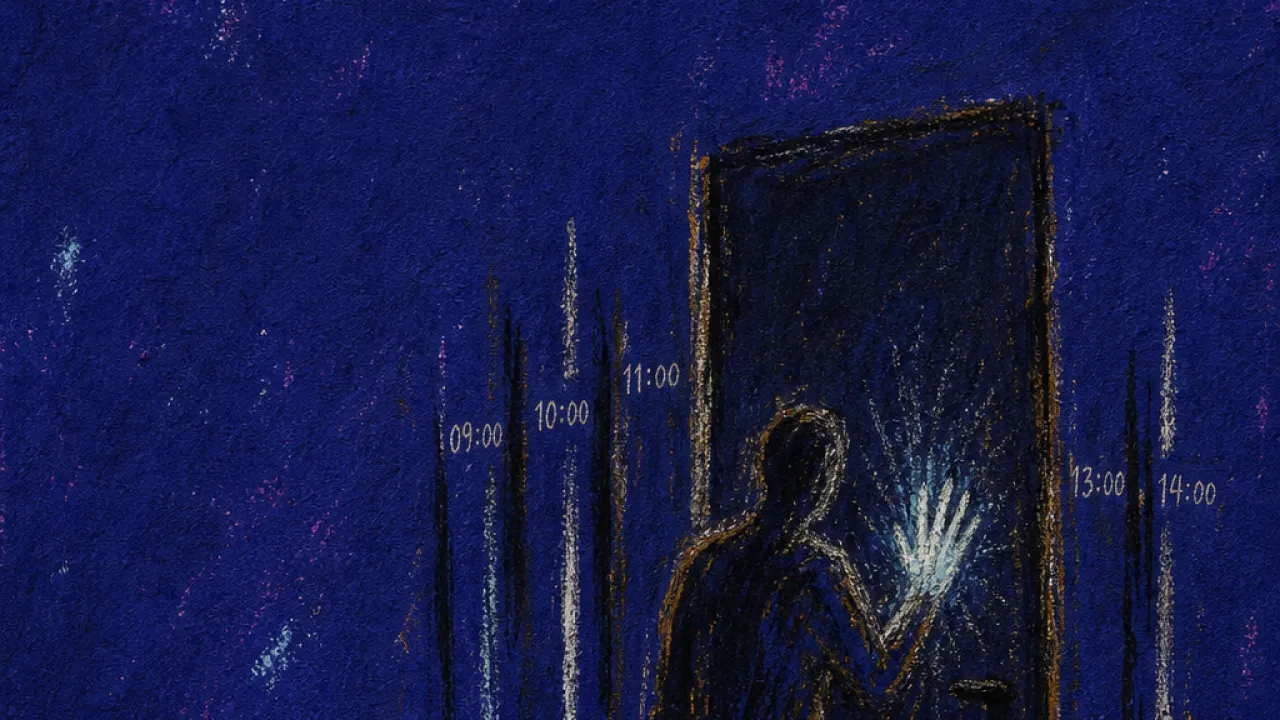
A solitary figure with one palm on a closed door, calendar-like bars crossing the hallway in cold silver light

What is this situation?

Office Hours Paralysis — you see the professor's office hours listed on the syllabus, in Canvas, in the email signature, and every version of it says the same thing: come by if you need help. At first it sounds simple, almost casual, but then the week fills up with lectures, problem sets, unread feedback, and a question you can't quite phrase without sounding behind. The slot is only Tuesday 2-3, the building is across campus, the hallway is too quiet, and the door is either half-open in a way that reads like interruption or closed in a way that reads like final. Other students seem to know how to walk in, make small talk, ask for clarification, and leave with a plan; you hover outside with your bag strap digging into your shoulder, rehearsing an opening line while the minute hand moves. The power gap is built into the room: they grade the work, write references, know the department language, and control the small window where help is allowed to happen. Even email doesn't fully solve it, because every draft becomes a miniature performance of being polite, prepared, not too much, not too vague. So the question stays in your notes, the grade portal keeps updating, and the same open-door policy turns into another locked threshold, much like the figure on the Eight of Swords, standing still inside a narrow ring of blades while a path exists just beyond the trap.

Why it's not you?

The problem is not that you are bad at asking for help; the setup turns help into a performance with a person who grades you, a narrow slot, and unclear rules. When access depends on reading the room, interrupting the right way, and sounding prepared before support arrives, the barrier belongs to the system around the door.

Office Hours Paralysis in Tarot Cards

Office Hours Paralysis turns a posted invitation to ask for help into a closed-threshold problem, where rank, timing, and etiquette decide who can step in. The bag strap digging into your shoulder and the hand hovering near the door show how the situation lands in the body. This is an environmental, structural dynamic, not a private failure; it is built into the way access is arranged. The Tarot Cards below reflect the visible contours of that doorway, delay, and held-back question.

The High Priestess
Reversed
A veiled figure sits between contrasting pillars with a partially concealed scroll across her lap and a curtained space behind her. Reversed, the image makes knowledge and permission feel withheld at the threshold, mirroring a syllabus that publishes the appointment while leaving the real rules for approaching, interrupting, and asking undisclosed. You are forced to interpret small signals such as a half-open door, hallway silence, or the professor's tone because explicit access information stops at the time and location. The paralysis grows from this hidden curriculum: students who already know the code can pass through, while everyone else must guess whether the threshold is genuinely open.
The Emperor
Reversed
An armored ruler occupies a high stone throne against a severe mountain landscape, making authority physically solid and difficult to approach. Reversed, that stabilising structure becomes rigid access control: the professor's grading power, reference power, departmental fluency, and limited availability all concentrate on the far side of one office door. You may therefore feel required to sound competent before asking for the support needed to become competent. The card frames the paralysis as an authority-design problem, because the learning environment relies on a power-holder appearing approachable without creating procedures that reduce the actual cost of approaching them.
The Hierophant
Reversed
An enthroned teacher sits between institutional pillars while two students face him and crossed keys lie at the base of the scene. Reversed, those formal symbols reveal an academic access system whose official invitation does not unlock the room unless you already understand the hidden etiquette governing interruption, preparation, and deference. You are encountering more than a single intimidating conversation; you are encountering an institutionally coded relationship between authorised teacher and petitioning student. The open-door language remains real, but the pathway is obstructed when the university publishes the time without teaching how the interaction is supposed to work.
The Moon
Upright
A narrow path runs between two towers under uncertain moonlight while a dog and a wolf answer the same environment differently. The scene captures the ambiguous signals surrounding professor access: a half-open door can mean welcome or interruption, silence can mean availability or concentration, and other students appear to read cues that remain unstable to you. You are still moving through a real academic environment, but the route is poorly illuminated by the institution responsible for defining it. The resulting hesitation is not evidence that the question lacks value; it reflects the cognitive load of navigating unclear rules while the person beyond the threshold holds grading and reference power.
Two of Pentacles
Reversed
The two pentacles circulate through a continuous loop while ships rise and fall on an unsettled sea. Reversed, the loop resembles a weekly office-hours cycle that keeps returning but never aligns with coursework, commuting time, employment, or the moment when your question is ready to be asked. You can experience each missed Tuesday as evidence that you waited too long, even though the recurring bottleneck is built into the schedule. The card separates timing pressure from personal willingness by showing a system that requires several unstable calendars to line up inside one small window.
Three of Pentacles
Reversed
An apprentice stands with tools before two robed figures who hold the plans inside an institutional building. Reversed, the scene turns a potentially collaborative review into a failed feedback architecture: expertise, criteria, and authority are present, but the student does not have a clear script for entering the discussion or presenting unfinished work. You may believe the meeting requires a polished question even though the purpose is supposedly to develop understanding. The resulting paralysis reflects a breakdown in academic scaffolding, because the institution has made feedback available without making the expected roles, entry cues, or acceptable level of preparation legible.
Five of Pentacles
Upright
Two figures move through snow outside a brightly lit stained-glass window, placing visible institutional shelter beside the experience of remaining outside it. The scene captures the difference between support being advertised and support being usable when the route inside is governed by limited hours, quiet hallways, and uncertain permission to interrupt. You can see the professor's availability on the syllabus and still be excluded by the form that access takes. The card locates the academic cost in that gap: unanswered questions compound, feedback remains unreadable, and the grade portal changes while the resource continues glowing on the other side of the threshold.
Six of Pentacles
Reversed
A standing figure holds the scales in one hand and distributes coins downward with the other while two people kneel before him. Reversed, the scene exposes the same person controlling evaluation, resource allocation, and the terms of access, closely matching a professor who grades your work while deciding when and how clarification can be received. You may therefore experience asking for help as another assessment rather than a neutral learning interaction. The imbalance is structural: the professor can define the exchange as informal generosity, while you must demonstrate politeness, preparation, brevity, and academic legitimacy before receiving a scarce share of attention.
Two of Swords
Upright
A blindfolded figure holds two swords in a rigid cross while a difficult shoreline and open water sit behind her. The blocked posture reflects the choice between knocking, emailing, waiting, or leaving when none of the available signals clarifies which action will be read as appropriately prepared and respectful. You are being asked to decide without access to the social information that would make the decision feel safe. The stalemate is maintained by ambiguous etiquette and unequal consequences: a professor can treat the interaction as casual, while you must account for grading power, future references, and the risk of appearing behind.
Eight of Swords
Upright
A blindfold covers the figure's view, loose bindings restrict her body, and the surrounding swords turn uncertain space into a narrow psychological enclosure. The scene reflects the internal cache built by repeated office-hours hesitation: imagined opening lines, anticipated judgments, remembered feedback, and conflicting interpretations of the professor's door all remain active at once. You may internalise the enclosure even though its materials come from a real power gap and an underexplained support system. The visible path prevents that internalisation from becoming a verdict about your capacity; it shows how anticipatory self-monitoring can persist while the external structure that produced it remains open to examination.
Nine of Swords
Upright
Nine swords hang in parallel above a figure who sits upright in bed with both hands covering the face. The repeated blades resemble unfinished email drafts and rehearsed conversations continuing after the office has closed, while the bed scene captures how an unresolved academic interaction can occupy time that should have become private rest. You may keep trying to perfect the request because the professor controls both support and evaluation, making every sentence feel consequential. The card gives that overnight replay a concrete structure: one unanswered course question multiplies into concerns about timing, politeness, competence, grades, and whether asking now will reveal that you are already behind.
Ten of Wands
Upright
A bent figure carries ten staffs toward a visible town, but the load fills his field of vision and leaves no free hand for anything else. In the academic setting, the staffs resemble lectures, problem sets, unread comments, deadlines, and the pressure to formulate a polished question before crossing campus for a single hour. You can need clarification most intensely at the exact point when coursework has consumed the capacity required to seek it. The card reveals the feedback paradox inside Office Hours Paralysis: support is positioned as an extra task at the end of the workload rather than infrastructure that helps carry the workload.

Office Hours Paralysis in Tarot Card Reading Insights

Office Hours Paralysis also shows up when people bring the same closed-door access problem into readings. The focus shifts from the cards themselves to how others sat with the stalled question, the narrow time slot, and the power gap. Explore the related Tarot Reading Insights below.
Psychological Contexts Related to Office Hours Paralysis