The 12:13 a.m. Enroll Button
It’s course registration night and you’ve got the catalog, your degree audit, RateMyProfessor, and a color-coded spreadsheet open—and somehow the only class that fits your life perfectly is the one that makes you feel ashamed for wanting it (hello, Sunday Scaries).
Jordan said that to me on a late Zoom call from Toronto, and I could hear the smile that wasn’t really a smile. On their end, it was 12:13 a.m.—they were sitting on their bed with a warm laptop pressed into their thighs, one desk lamp throwing a tired yellow circle onto the wall while the rest of the room stayed in the screen’s blue glow. Every few seconds, I heard the faint click of a trackpad: catalog tab, degree audit tab, RateMyProfessor tab, Notes app titled “Fall Plan.”
“The ‘easy A’ description makes my shoulders drop for, like, half a second,” they admitted, eyes fixed slightly below the camera like they were watching their own cursor hover. “And then my stomach tightens. Like I just… confessed something.”
I watched their jaw set the way people brace for a hit that hasn’t happened yet. Shame can feel like that—like a thick, hot film on the tongue, turning relief into something you have to spit out before anyone sees you swallow it.
“You’re not stuck because you can’t choose,” I said gently. “You’re stuck because the choice feels like a character test. Let’s make this less of a trial and more of a map. We’re aiming for clarity—practical clarity you can use tonight, not a vibe.”

Choosing the Compass: The Transformation Path Grid (6) for Decision Paralysis
I asked Jordan to take one slow breath with me—not as a mystical thing, just as a nervous-system reset. “One inhale,” I said. “One exhale. Let your body be part of the data.” Then I shuffled on my side of the screen, the soft snap of cards sounding like a metronome in my New York studio.
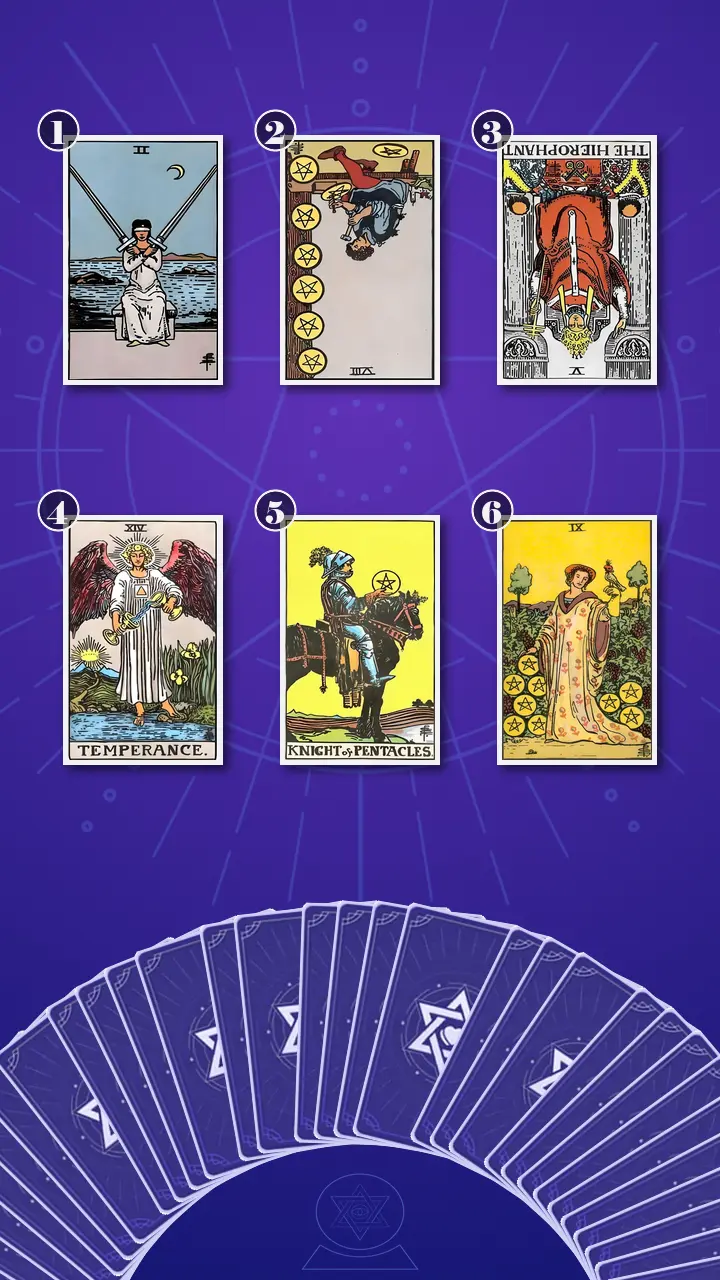
“For this,” I told them, “I want to use a spread called the Transformation Path Grid (6) · Context Edition.”
And here’s why that matters if you’ve ever Googled ‘tarot spread for academic shame and decision paralysis’ at 1 a.m.: this isn’t really a question about predicting which class will be ‘best.’ It’s about identifying the internalized rule that makes one option feel morally unsafe. This spread gives us a clean arc—present behavior → blockage → root rulebook → reframe → action step → integration—without drowning you in ten cards and ten new things to overthink.
I also previewed the three positions I knew would hit hardest: the surface trigger (the exact moment you freeze), the blockage (what makes “easy” feel like a threat), and the turning point (the reframe that creates a third option beyond “hard = worthy” vs “easy = lazy”).
Air That Won’t Move: The First Three Cards in Context
When I laid the grid out, the top row felt like a diagnostic screenshot of Jordan’s night: tense, bright, endlessly scrollable. The bottom row waited like a different operating system.
Position 1: The Freeze at the Enroll Button
“Now we’re turning over the card that represents Surface trigger + observable behavior when the course catalog is open—the moment you freeze or back out.”
Two of Swords, upright.
I tapped the screen lightly. “This is midnight in your room, catalog open, cursor hovering over ‘enroll.’ You keep toggling between two tabs: the manageable class you’d probably enjoy and the brutal one that looks impressive. You tell yourself you’re just being responsible and gathering data, but your jaw is tight and your shoulders are braced—because clicking feels like delivering a verdict on your own character.”
In Tarot terms, the Two of Swords is often called “indecision,” but I’ve never liked that label. Upright, it’s more like self-protection disguised as neutral analysis. The energy isn’t missing—it’s blocked. Air (thought) is crossing itself over your chest like, “Nope. Not safe.”
Jordan let out a small, startled laugh—bitter around the edges. “That’s… kind of brutal,” they said. Then, quieter: “But yeah. I keep calling it ‘research.’” Their fingers rubbed the rim of their water bottle, fast enough to squeak.
Position 2: The Mechanism That Makes “Easy” Feel Unsafe
“Now we’re turning over the card that represents what is actively blocking a clean decision—the self-worth mechanism that makes ‘easy’ feel unsafe.”
Eight of Pentacles, reversed.
“This one is big,” I said, and I kept my voice plain on purpose. “You treat workload like moral currency. The heavier the syllabus, the safer you feel—like you’ve paid for your spot. So you delete anything labeled ‘easy,’ stack advanced classes, and keep optimizing the schedule until it feels punishing enough to be respectable… even though you know it risks another exhausted, resentful semester.”
Reversed, the Eight of Pentacles isn’t “you don’t work hard.” It’s work pointed at the wrong target. Effort becomes a receipt you wave around to buy legitimacy. The energy is in excess, but it’s also misdirected—like practicing scales for ten hours because you’re scared to play the song.
I mirrored the echo I could see in Jordan’s shoulders. “I can practically picture it: 1:07 a.m., editing the same color-coded spreadsheet, deleting the ‘easy’ option like it’s contraband. ‘If it looks light, it looks suspicious → if it looks brutal, it looks respectable.’ Learning versus proving.”
Jordan exhaled—small, involuntary. “Oh. Yeah.” Another half-laugh, this time more recognition than humor. “I literally delete it like I’m hiding evidence.”
Position 3: The Borrowed Rulebook Behind the Shame
“Now we’re turning over the card that represents the deeper rulebook behind the shame—where the ‘easy = bad’ story comes from.”
The Hierophant, reversed.
“This,” I told them, “is the invisible audience.”
“You’re not just choosing classes—you’re trying to pass an invisible inspection. You picture an authority—a professor, an employer, an admissions committee, even just the vibe of ‘serious people’—reviewing your timetable. The shame around ‘easy’ spikes because it feels like breaking a rule you didn’t consciously agree to, but still fear violating.”
Reversed, the Hierophant is that moment you realize the rule might not even be yours. The energy here is rigid tradition losing its grip, but it doesn’t let go quietly. It guilt-trips you on the way out.
I leaned in a little. “I use a browser metaphor for this: you didn’t open a tab called ‘Judge Me’, but it’s running in the background, draining your battery.”
Jordan went still—breath held, eyes unfocusing like they were rewinding a memory. Then their shoulders lowered a fraction. “Wait,” they said, almost to themself. “Whose voice is that?”
When Temperance Poured Between Two Cups
I let the silence do some work. In my studio, a radiator clicked once—an old-building sound that always reminds me: systems run even when you’re not watching. Jordan’s inner gatekeeper had been running for years.
Position 4 (Key Reframe): The Third Option Beyond “Hard” vs “Lazy”
“Now we’re turning over the card that represents the key reframe that dissolves the shame—the turning point that opens a third option.”
Temperance, upright.
“Temperance is the Alchemist,” I said. “Not in a ‘sparkles’ way—in a proportions way. Kitchen, recipe card, mixing bowl. It’s also a pacing card: building a semester like a training plan—hard days plus easy days—so you actually get stronger instead of injured.”
This is where I brought in my favorite tool—what I call Einstein’s thought experiment, but for self-worth. “Let’s do a quick mental experiment,” I told Jordan. “Imagine two parallel Jordans.”
“In Universe A, you choose the ‘brutal’ class load because it looks impressive. You get a short hit of respectability, then you live in chronic catch-up. In Universe B, you choose a mix: one stretch class, one requirement-efficient class, one manageable class that protects your bandwidth. Same intelligence. Same seriousness. Different design. Which universe actually produces learning?”
Jordan swallowed. Their eyes stayed on the card. “Universe B,” they said, like it hurt to say it.
The Aha Moment
Jordan was still stuck in the old logic: If I pick what fits, I’m admitting I’m not real. It was midnight-catalog math where relief counted as suspicious evidence, and every “easy” option looked like it could expose them as not serious enough.
Stop treating your schedule like a moral test and start blending challenge and ease like Temperance pouring between two cups—measured, intentional, and sustainable.
Something moved across Jordan’s face in three small steps. First: a physical freeze—breath catching, fingers hovering above the trackpad like they’d been caught mid-crime. Second: the idea seeped in; their gaze went distant, like they were picturing their calendar not as a battlefield, but as a container. Third: the release—an exhale that sounded almost like a laugh, except their eyes went glossy. Their shoulders dropped, and their jaw unclenched in a way you could actually see on camera.
“But…” they said, and the word came out sharper than they expected—brief anger, brief resistance. “If that’s true, doesn’t it mean I’ve been doing it wrong?”
“It means you’ve been doing what the inner gatekeeper said would keep you safe,” I answered. “That’s not ‘wrong.’ That’s protection. The question is whether it still works.”
I paused, then asked softly, “Now, with this new lens—can you think of one moment last week when you felt relief about an easier option, and shame immediately tried to shut it down? What would have changed if you’d treated that relief as information, not evidence?”
This was the shift in real time: from meritocracy shame and self-policing to the first flicker of quiet self-trust—choosing by outcomes, capacity, and alignment instead of pain-as-proof.
The One-Click Follow-Through (and the Tabs You Close)
Position 5: The “Boring, Effective” Next Step
“Now we’re turning over the card that represents a concrete next step you can implement immediately—for enrollment and follow-through.”
Knight of Pentacles, upright.
“This card is a love letter to the unsexy choice,” I said. “You set a simple rule: one final check for scheduling conflicts, then you enroll and close the tabs. No late-night re-trial. You add the class to your calendar, set one reminder for the first week, and let consistency build confidence—because you’re done needing the decision itself to feel morally perfect.”
The Knight’s energy is steady Earth in balance. Not grind-for-status. More like: show up, do the reps, let time do the talking.
Jordan nodded once. It wasn’t dramatic, but it looked like their spine remembered it was allowed to hold them up. “I don’t need the perfect choice,” they repeated slowly, trying it on. “I need a chosen choice.”
Position 6: What Success Feels Like When It’s Not Self-Punishment
“Now we’re turning over the card that represents integration—what alignment looks like after the choice.”
Nine of Pentacles, upright.
“A few weeks into the term,” I said, “you’re not panicking every Sunday. Assignments get done without all-nighters, and you still have energy for friends, sleep, movement, and actual curiosity. It doesn’t look dramatic, but it feels quietly competent—like stability itself is proof of skill.”
In the Nine of Pentacles, discipline exists—but it’s trained attention, not punishment. Boundaries, not bracing.
Jordan’s expression softened into something almost unfamiliar: not excitement, not dread—just a calm “okay.”
From Verdict to Design: Actionable Advice You Can Use Tonight
I pulled the story together for them the way I’d edit a short film: cut the noise, keep the throughline. “Here’s what your cards say in plain language,” I told Jordan. “The Two of Swords is the freeze—your brain calling it ‘research’ while your body braces for judgment. The Eight of Pentacles reversed is the choke point—effort being used as moral currency, so ease feels suspicious. The Hierophant reversed is the root—an inherited gatekeeper rulebook running in the background. Temperance is the reframe—proportions, not verdicts. And the Knight and Nine of Pentacles are the path—commit, then build quiet competence.”
“Your cognitive blind spot,” I added, “is thinking that difficulty is the only reliable proof of seriousness. But the transformation direction is different: outcome-over-optics scheduling. You choose by what you want to learn and what you can actually sustain—not by what would look impressive in someone else’s timeline.”
- The 3-Line Temperance RubricBefore you enroll, write three lines: (1) One outcome I want this semester (ex: “learn Python basics”), (2) My realistic weekly bandwidth (hours + energy, ex: “15 hours/week outside class”), (3) One non-negotiable life need (sleep, therapy, movement, relationships). Then choose the class mix that fits those lines—even if an “easy” label tries to argue.If shame spikes, don’t debate it—label it (“meritocracy shame”) and return to the rubric. If screens trigger spiraling, do this on paper.
- The Temperance Mix Rule (One Stretch, One Efficient, One Manageable)Pick your courses by design: one class that genuinely stretches you, one that covers a requirement efficiently, and one that feels manageable or enjoyable. You’re building a livable semester, not a LinkedIn post optimized for applause.If you feel guilty about the manageable one, say out loud: “Relief isn’t evidence. It’s information.” Then keep building the mix.
- The 24-Hour “Chosen Choice” ProtocolSet a 24-hour decision window. Do one final check for scheduling conflicts, then click enroll. Immediately screenshot your schedule and save it as “Chosen” (not “Final Draft”). Within 10 minutes, do one follow-through action: add class times to your calendar or bookmark the syllabus page.Expect your brain to reopen the case (“What if the other class was more impressive?”). Pre-plan a one-check limit, then close the tabs. Pick the class. Close the tabs. Let consistency do the talking.
I offered them one extra tool from my own practice—my Manuscript Mindmaps trick. “If the inner gatekeeper gets loud,” I said, “write your Temperance Rubric in mirror writing for two minutes. It slows the courtroom voice just enough for the real information to come through. You’re not doing it to be artsy. You’re doing it to interrupt the automatic script.”

A Week Later: Quiet Competence, Not Loud Suffering
Eight days later, Jordan messaged me: “I did the 24-hour window. I enrolled. I saved the screenshot as ‘Chosen’ and closed everything.”
They added, “I didn’t feel triumphant. I felt… weirdly calm. And then I stared at the empty tab bar for a full minute like I didn’t know what to do with myself.”
Later, they told me they’d sat alone by a campus café window while rain streaked the glass—no doomscrolling, no re-litigating. Just a warm coffee and a calendar that finally looked like something a human could live inside. Their first thought that morning was still, What if I picked wrong? But this time, they noticed the thought, exhaled, and kept eating their bagel anyway.
That’s the Journey to Clarity I trust most: not a personality makeover, not instant confidence—just the moment your body stops bracing and your choices stop needing to be a punishment to count.
When you’re staring at the course catalog and your stomach tightens at the thought of an “easy” class, it’s not laziness—it’s the fear that if you stop suffering, you’ll stop being respectable.
If you didn’t need your schedule to prove anything about you, what would the most honest mix of challenge and support look like for this one semester?
This story is adapted from psychological research, written so that those in a similar struggle can see their own pattern in it — and find their next step clearly.These insights are not a substitute for professional psychological, medical, legal, or financial advice.
Learn more about our Journey to Clarity.
How did this insight land for you?
🫂 This Resonates Deeply
🌀 Living This Story
✨ Now I See Clearly
🌱 Seeing New Possibilities
🧰 Useful Framework
🔮 The Confirmation I Needed
💪 Feeling Empowered
🚀 Ready for My Next Step
Author Profile
 AI
AI“I’ve always felt our lives are films currently in production. As an artist, I know that when you feel stuck, it’s often because you’ve bravely stayed in a painful scene for just a little too long. I’m not here to coldly analyze you. I want to sit closely with you, look at those difficult moments with profound empathy, and gently hand you the pen so you have the courage to write your next beautiful act.”
In this Study Tarot Reading :
Core Expertise
Service Features
Also specializes in :
Explore Related Patterns:
Achievement FusionJordan deletes the class that fits their life as if it is evidence of something shameful, then keeps rebuilding the schedule until it looks demanding enough to feel legitimate. The practical question of course fit gets absorbed into a worth test, where workload functions like moral currency and difficulty becomes a receipt for belonging. That is why Achievement Fusion fits the case: the achievement marker is no longer just a goal, a grade, or a course choice. It becomes fused with identity, so choosing ease feels like threatening the self-image of being serious, capable, or deserving. You are not just comparing syllabi; You are trying to protect a version of yourself that only feels safe when the plan looks hard enough. The shift begins when the schedule stops being treated as a public proof of character and becomes a design problem. The story's turning point is not 'take the easy class no matter what'; it is choosing by outcomes, bandwidth, and sustainability instead of using pain as proof that the semester counts.
Analysis ParalysisJordan has the catalog, degree audit, RateMyProfessor, Notes app, and color-coded spreadsheet open, yet the decision does not get clearer. The cursor keeps hovering because the problem is no longer missing information; it is that clicking enroll feels like delivering a verdict on their character. Analysis Paralysis shows up here as self-protection disguised as neutral research. The checking and comparing create the feeling of responsible decision-making, but they also delay the emotional risk of choosing an option that might be judged as too easy. The mind keeps asking for more data because the body is trying to avoid shame. The next step works because it changes the rules of the loop: one final conflict check, then enroll and close the tabs. You are not trying to make the choice feel morally perfect before acting. You are putting a boundary around analysis so the decision can become real.
Black-and-White ThinkingJordan's inner math turns the schedule into a binary: the brutal class looks respectable, while the manageable class looks suspicious. Once the decision is framed as 'hard = worthy' and 'easy = lazy,' every realistic option starts to feel like a threat to identity. Black-and-White Thinking is the cognitive compression behind that trap. It strips out proportion, context, and design, then forces the choice into two moral categories. You either prove yourself through strain or risk being seen as unserious, even though the actual situation contains more than two options. The Temperance reframe breaks the binary by making room for a mixed semester: one stretch class, one efficient requirement, and one manageable course that protects bandwidth. You are not choosing between suffering and laziness. You are choosing the conditions under which learning can actually happen.
Shame BindingJordan's body gives the pattern away before the argument starts: the 'easy A' description brings a split-second drop in the shoulders, then the stomach tightens as if relief itself has exposed something unacceptable. A class that fits their life does not register as neutral data; it gets converted into a confession. Shame Binding names the mechanism where a normal need, preference, or relief response becomes glued to self-judgment. In this story, ease is not just ease. It gets bound to the fear of being lazy, unserious, or not fully legitimate, so the nervous system treats a practical scheduling option like a moral risk. The important move is separating the feeling from the verdict. You can notice the shame spike without letting it define the meaning of the class. Relief can be information about capacity and fit, not evidence that You are trying to get away with something.
External ValidationJordan is not only looking at course descriptions; they are picturing an invisible audience reviewing the timetable. A professor, employer, admissions committee, or vague group of 'serious people' becomes the imagined judge, even though no one is actually in the room making that inspection. External Validation fits because the decision starts orbiting around perceived legitimacy rather than lived fit. The borrowed rulebook says a schedule has to look impressive before it can feel acceptable, so your own relief, curiosity, and capacity get treated as less reliable than the imagined approval of someone else. The story loosens when Jordan asks, 'Whose voice is that?' That question creates separation between You and the evaluator in your head. From there, the schedule can be built around outcomes and bandwidth instead of being optimized for a jury that may not even exist.
Explore Related Struggles:
Academic Shame SpiralThe easy A label makes Jordan's body soften and then brace, as if wanting the class were a confession. They delete the option like hidden evidence and keep reopening the case through tabs, ratings, audits, and spreadsheet edits. You are watching an academic choice become a loop of self-prosecution. The more the option fits the semester, the more it can trigger the fear that you are cutting corners, so the decision keeps circling back to self-judgment instead of course design.
Capacity-Identity FusionJordan can describe the livable mix clearly: one stretch class, one efficient requirement, one manageable class that protects bandwidth. The old logic interrupts with the thought that if they pick what fits, they are admitting they are not real. You get trapped when capacity stops being a design constraint and becomes an identity verdict. A schedule your body can sustain starts to feel like evidence of not being serious enough, so honest limits are treated as threats rather than data.
Ease-Productivity SplitThe manageable class fits Jordan's life, and their shoulders drop for half a second before the stomach tightens. The catalog is offering relief, but relief is immediately treated as suspicious evidence instead of usable information. You get caught between learning outcomes and optics: the schedule that would keep you steady feels less legitimate than the one that would hurt more. The struggle is not laziness; it is the split where ease stops being part of productivity and starts looking like a threat to it.
Identity Verdict LockThe enroll button stops being a button when Jordan imagines the click as a verdict on their own character. The catalog, audit, professor ratings, and spreadsheet are practical tools, but they get pulled into deciding whether the person choosing is legitimate. You freeze because the choice has been forced to carry more identity weight than any single course can hold. A class schedule can show priorities, capacity, and timing; it cannot deliver a final ruling on whether you are serious enough to belong in your own life.
Inner Tribunal LockJordan names the invisible audience: professor, employer, admissions committee, serious people. No one is in the room, but the timetable is still being submitted for inspection. You are not only comparing syllabi; you are answering a background court that asks whether your effort looks punishing enough to count. The lock forms when the borrowed rule keeps speaking with authority even after you notice it may not be yours.
Permission ParalysisAt 12:13 a.m., the cursor hovers over enroll while the tabs keep multiplying. Jordan calls it research, but their jaw and shoulders are already braced because the click feels like a permission request. You are stuck at the point where action needs moral clearance before it can become practical. The next step is simple only after the permission problem is named: one final check, choose, close the tabs, and let the semester prove itself through follow-through rather than a perfect feeling at the button.
Explore Related Emotions:
Imposter Exposure FearJordan's fingers hover over the trackpad like they have been caught mid-crime, even though the only visible act is choosing a class that fits. The fear spikes because the easy option seems to reveal something, as if a sustainable schedule could expose them as less real. The story keeps linking manageability with illegitimacy: if it looks light, it looks suspicious; if it looks brutal, it looks respectable. That equation turns a course catalog into a mirror where Jordan is afraid of seeing proof that they do not belong among serious people. Imposter Exposure Fear names the dread of being found out through an ordinary preference. The emotional charge is not just wanting approval; it is fearing that relief itself will betray the version of the self that has been working so hard to look valid.
Permission AnxietyJordan already knows the easier class fits their life, but knowing does not feel like enough. They keep looking for an authority outside the body to approve what their bandwidth has been saying all along. The story makes permission feel physical: the hovering cursor, the swallowed admission, the repeated line about needing a chosen choice instead of a perfect one. Jordan is practicing the right to stop putting the decision back on trial. Permission Anxiety is the nervous feeling that self-support must be signed off by someone else before it becomes legitimate. Here, it appears in the gap between wanting the manageable class and feeling allowed to choose it.
Rulebook ShameJordan watches the cursor hover over the manageable class while their body treats the option like contraband: shoulders dropping for half a second, stomach tightening, jaw setting before anyone has actually judged them. The shame is not coming from the class itself; it comes from the rulebook running behind the screen, the one that says ease has to be suspicious and struggle has to be respectable. You are seeing a private authority system turn a practical choice into a moral inspection. The imagined professor, employer, admissions committee, or vague crowd of serious people becomes an invisible audience reviewing the timetable for signs of weakness. Rulebook Shame names the hot, internal sting of wanting something that fits your life while feeling like you have violated a standard you never consciously agreed to. It gives the shame a shape, which matters because once the rule is visible, it can be questioned instead of obeyed automatically.
Verdict DreadThe enroll button becomes a trial scene: catalog open, tabs multiplying, cursor hovering while Jordan's shoulders brace as if a judgment is already incoming. They are not just choosing between course loads; they are waiting for the click to announce something about who they are. You can feel the psychological courtroom in the way the story keeps returning to inspection language: character test, invisible audience, suspicious evidence, respectable pain. A normal scheduling decision gets inflated into a verdict on discipline, seriousness, and legitimacy. Verdict Dread captures that specific pressure of living under an imagined ruling before anything has happened. The fear is not only that the choice might be wrong; it is that the choice might be used as proof against the self.
Cautious Self-TrustA week later, the old thought still appears: What if I picked wrong? The difference is that Jordan notices it, exhales, and keeps eating their bagel instead of reopening the whole case. That detail matters because the story is not selling instant confidence. Jordan's trust is tentative, behavioral, and grounded in one chosen action that did not require self-punishment to count. Cautious Self-Trust is the fragile but real feeling of letting your own capacity matter. It shows up when you can hear the old alarm and still stay with the choice you made from clearer information.
Clarity ReliefJordan's body changes before the whole belief system changes: an exhale, shoulders dropping, jaw unclenching, the room no longer organized around a hidden trial. The relief arrives when the choice becomes a design question instead of a verdict. The follow-through is deliberately plain: one final check, enroll, screenshot the schedule as Chosen, close the tabs. That small sequence gives the mind a clean edge where the loop used to keep reopening. Clarity Relief names the release that comes when the next step is simple enough to be taken. It is not instant certainty; it is the quiet reduction of pressure once the decision has a usable shape.
Decision DreadJordan has the catalog, degree audit, RateMyProfessor, spreadsheet, and notes app open, yet the next click still feels impossible. The problem is not a lack of information; the problem is that the decision has become emotionally loaded enough to make action feel dangerous. The body tells the truth before the spreadsheet does: jaw tight, shoulders braced, cursor hovering. Each tab offers more data, but the underlying question has shifted from What fits my semester? to What will this choice say about me? Decision Dread captures the heavy pause before a choice that has been overcharged with identity. It is the feeling that one practical action might seal a judgment you are not ready to face.
Grounded AgencyJordan's next step is small enough to trust: one final conflict check, one enrollment click, one screenshot named Chosen, one closed tab bar. The decision stops floating in abstract shame and becomes something the body can complete. Agency here is not loud or performative. It is the grounded feeling of having a boundary around the process, so the mind cannot keep dragging the choice back into court every night. Grounded Agency captures the shift from proving to doing. Jordan does not need the schedule to perform moral perfection; they need a structure they can live inside and follow through on.
Rest GuiltJordan deletes the easier option from the spreadsheet like they are hiding evidence. The manageable class is not rejected because it fails the degree audit; it is rejected because it gives the body a little too much relief. That guilt attaches itself to bandwidth, sleep, and a livable semester. The heavier syllabus feels safer because it creates a receipt of suffering, while the lighter option feels like something that must be explained before it can be chosen. Rest Guilt is the inner pressure that makes recovery feel morally expensive. In this story, it shows up as the belief that if the schedule does not hurt enough, it may not prove enough.
Soft Life ShameThe class that fits Jordan's life perfectly is the one that makes them feel most exposed. It would protect sleep, energy, and actual curiosity, yet the word easy lands like evidence that the semester might not be painful enough to count. You are watching softness get misread as fraud. The story does not frame ease as laziness; it frames it as a forbidden kind of support, something Jordan wants but immediately feels they must defend. Soft Life Shame names the sting of wanting a humane option while feeling embarrassed by that desire. It is the emotional weather that appears when comfort, capacity, or sustainability starts to look like a character flaw instead of a design need.
Choice Paralysis OverwhelmThe late-night setup is crowded with tools that should create clarity: catalog, degree audit, professor ratings, spreadsheet, Fall Plan notes. Instead, every tab keeps Jordan in motion without letting the decision land. You can feel the overwhelm in the loop itself. Toggling looks responsible from the outside, but inside the room it becomes a way to keep postponing the emotional cost of choosing. Choice Paralysis Overwhelm names the pressure of having too many ways to justify staying suspended. The story shows that Jordan is not missing a path; they are overloaded by the meaning each path has started to carry.
Explore Related Contexts:
Academic Performance PersonaJordan is not only selecting courses; they are trying to assemble a timetable that can pass as impressive under imaginary review. The brutal class looks safer because it protects the persona of the serious student, even when the manageable class better fits the semester. Academic Performance Persona captures the outside-facing pressure to make academic choices legible as ambition. The problem is not ambition itself. The problem is that the schedule becomes a display object, shaped around how it might read to others instead of what it will make possible week after week. The next step is an outcome-over-optics schedule. You name the learning outcome, the realistic weekly bandwidth, and one non-negotiable life need, then build from those lines. That gives the persona less control and gives the actual semester a structure You can live inside.
Academic Planning ParalysisJordan has the course catalog, degree audit, RateMyProfessor, Notes app, and a color-coded spreadsheet open at 12:13 a.m., yet the cursor still hovers instead of committing. The tools meant to clarify the decision have become a loop of tab-switching, rechecking, and calling the freeze research. That makes Academic Planning Paralysis the clearest external stage: the academic system offers multiple metrics for being responsible, but no single metric can answer the hidden question of whether the choice makes You look serious enough. The more data You gather, the more the enrollment button turns from a practical action into a public verdict. The next step is not more information. It is a bounded decision container: one final conflict check, one rubric based on outcome and bandwidth, then the click and the closed tabs. That restores planning to its real job, which is helping You build a semester rather than putting You on trial.
Access as Proof PressureJordan talks about the heavier syllabus as if it pays for their place in the room. The harder class feels safer because it creates visible proof that they are not taking up academic space too easily. Access as Proof Pressure names the structural edge underneath the shame. When belonging feels conditional, every choice can become a receipt: more workload, more legitimacy; more pain, more evidence that You deserve to be there. The easy class threatens that receipt system because it offers fit instead of visible sacrifice. The useful move is to stop making the schedule carry the burden of proving access. A class can be legitimate because it advances the degree, supports the desired skill, and fits the term. You can choose from design instead of repeatedly paying for belonging with exhaustion.
Model Student Performance TrapJordan deletes the easy option like it is contraband and keeps stacking advanced classes until the schedule looks punishing enough to be respectable. The manageable class is not rejected because it fails the degree audit; it is rejected because it fails an imagined inspection. Model Student Performance Trap names the external academic theatre around this choice. Within that theatre, visible difficulty becomes the costume of seriousness, and a lighter class load starts to look like weak evidence in front of professors, employers, admissions committees, or the vague category of serious people. This is why the easy class triggers shame: it threatens the performance layer, not the learning goal. The practical next step is to separate optics from outcomes by asking what the semester is designed to produce, then choosing the mix that supports that result without requiring suffering as proof.
Third Path SearchJordan is trapped between two bad options: take the brutal class to look worthy, or take the easy class and feel exposed as lazy. The turning point comes when the schedule is reframed as a design problem instead of a verdict. Third Path Search names the constructive external stage that opens after the freeze. You are not choosing between suffering and slacking; You are building a semester with proportions: stretch, efficiency, and manageability in the same plan. The next step is to make that third path concrete before shame can reopen the case. Write the outcome, bandwidth, and life-need lines, then pick the course mix that matches them. Relief becomes information about fit, not evidence against Your seriousness.
Academic Overload SpiralJordan knows the brutal class load could create another exhausted, resentful semester, yet the punishing option still looks more respectable. The risk is not one hard class; it is a pattern where academic seriousness gets measured by how little room the semester leaves for being a person. Academic Overload Spiral is visible in the pressure to stack advanced courses until the plan feels heavy enough to count. Once that logic takes over, every manageable choice gets reclassified as suspect, and the schedule fills up around proof rather than capacity. The correction is the Temperance mix: one stretch class, one efficient requirement, and one manageable class. That keeps challenge in the design while preventing overload from becoming the main credential.