Everything Is Due at Once

A grounded look at academic pressure, related tarot cards, and reading insights for workload that has become hard to sequence.

Academic Overload Spiral
What is this situation?

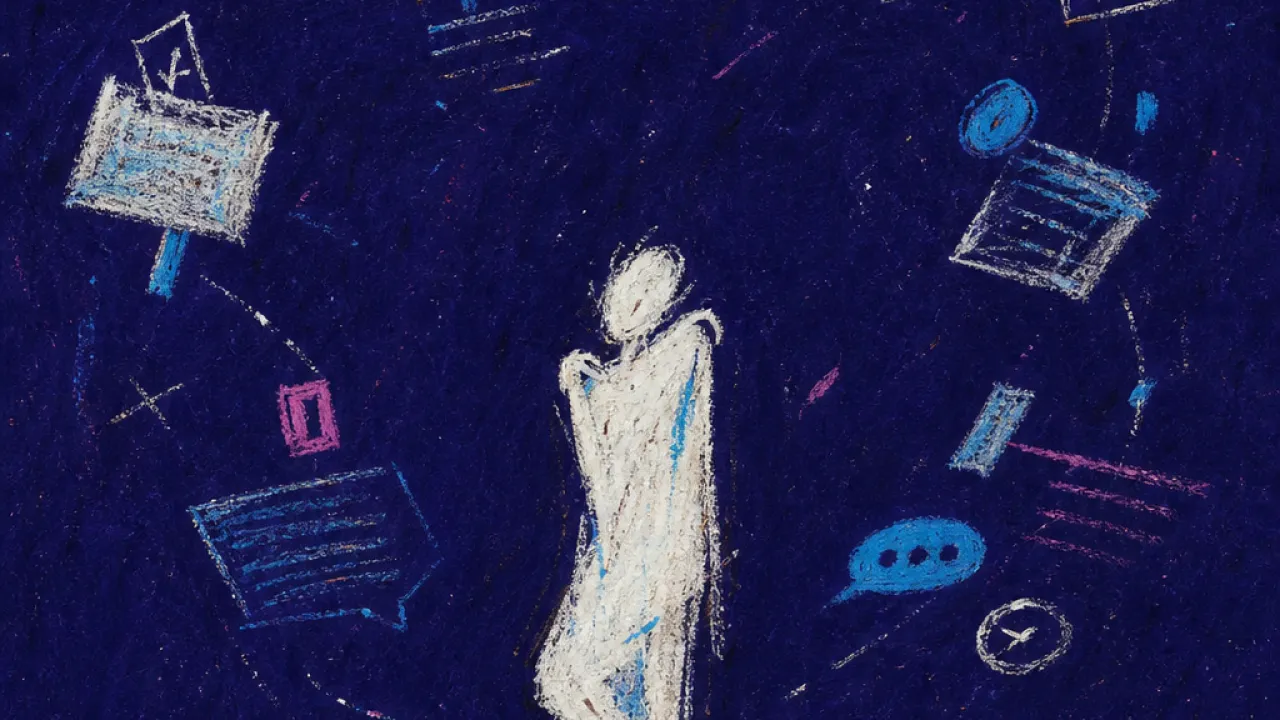
Academic Overload Spiral — you start the term thinking the workload is heavy but technically manageable: a syllabus here, a reading list there, a lab report, a group chat, a part-time shift, an application deadline, a professor's reminder email, a calendar full of colored blocks that still looks clean if you do not zoom in too closely. Then the week begins to fold in on itself. One lecture creates three readings, one reading creates notes you do not have time to review, one essay needs sources, one source opens five tabs, one quiz pushes revision into the same evening as a shift, and a group project drops messages while you are trying to finish something already overdue. Everyone around you seems to treat each task as separate: a tutor says it is only one draft, a classmate asks if you have looked at the shared doc, an advisor reminds you about the application window, your inbox adds another form, and the platform marks another module as incomplete. The pressure is not dramatic from the outside; it looks like a normal student life arranged in neat folders, deadlines, portals, and notification badges. But inside the day, every item depends on uninterrupted coordination: if you answer the email, you lose the reading time; if you do the reading, you miss the revision; if you sleep, the backlog grows; if you push through, your body starts carrying the timetable before your mind can even choose where to begin. You sit at a desk with tabs open, a half-finished paragraph on screen, lecture slides behind it, messages sliding in at the corner, and a planner that keeps rearranging itself around demands that all seem urgent because none of them has been allowed to pause. By the time night comes, the work has not simply increased; it has become a moving system that requires you to keep every piece airborne, much like the figure on the Two of Pentacles, arms spread wide, one foot lifted above uncertain ground while the rough sea behind him makes constant adjustment visible.

Why it's not you?

The problem is not that you are lazy, weak, or bad at studying; the problem is that the academic setup is asking too many demands to move through the same narrow channel at the same time. Deadlines, readings, exams, admin tasks, work shifts, applications, and group expectations can each look reasonable alone while becoming unreasonable in combination. That overload has a shape, and it belongs to the system pressing in around you, not to your character.

Academic Overload Spiral in Tarot Cards

Academic Overload Spiral is not just a busy calendar; it is the moment coursework, deadlines, revision, applications, and outside obligations all start pulling on the same limited stretch of attention. The body tells the shape of it first: shoulders lifted, jaw set, one foot mentally hovering because nothing can be put down without something else wobbling. This is an environmental, structural dynamic, built by overlapping demands and fragile sequencing rather than by a lack of effort. The Tarot Cards below reflect the visible outline of that pressure: what is being juggled, what is being stacked, and what is becoming too heavy to carry at once.

Two of Pentacles Upright
The young figure holds two pentacles in continuous motion, arms spread wide while one foot stays lifted above uncertain ground. Nothing in the image is collapsing, but the whole scene depends on uninterrupted coordination, with the rough sea behind him making the pressure of constant adjustment visible. That is the academic logic of overload before it becomes total shutdown. Assignments, readings, exams, applications, and outside obligations can each look manageable in isolation, yet the system becomes fragile because every piece must be kept moving at the same time. You are not simply looking at a busy semester. The card maps a study environment where balance has become a performance, and the clearest path starts with naming which demands are real priorities and which demands are only staying alive because the loop has not been interrupted.
Reversed
The lifted foot, spread arms, and exposed pentacles create a body that can only stay upright through constant correction. In the reversed texture, the juggling no longer reads as flexible rhythm; it becomes a fragile academic performance where every object is still airborne and nothing has been safely set down. That is the structure of an overload spiral in study life. Lectures, readings, essays, exams, applications, and admin tasks stop behaving like separate responsibilities and start pulling on the same limited attention system. You are not being shown a simple need to work harder. The card makes visible the moment when academic balance becomes mechanically impossible under the current load, and clarity begins by identifying which moving piece is destabilizing the whole circuit.
Eight of Pentacles Reversed
The bent back, lowered face, and repeated hammering turn the workstation into a narrow channel of output. Eight pentacles crowd the scene as completed, active, and pending units, so the body is organized around production before any wider landscape can matter. In coursework, that visual pressure becomes an overload spiral where each task creates another visible obligation. You are not facing one assignment in isolation; the academic system stacks readings, drafts, quizzes, and revision cycles into a queue that keeps the body at the bench. The card exposes the structure of accumulation, not a personal failure to keep up.
Six of Swords Reversed
The six swords form a barrier, but they also add weight. They stand neatly, yet the boat sits low enough that every stroke of the oar has to move passengers, tools, and accumulated metal through the same narrow channel. Academic overload often looks orderly from the outside: a reading list, a submission calendar, a revision plan, a stack of saved lectures. Inside the boat, that order becomes mass. The card captures the point where each new task does not simply add work; it deepens the waterline and makes every attempt to study, write, or catch up require more force than the last.
Nine of Swords Upright
Nine blades crowd the upper field while the lower half of the body disappears under a quilt packed with repeated, incomplete symbols. The image is not sparse; it is overfilled, with information, standards, and bodily consequence layered into the same room. That is the visual logic of academic overload. You may have readings, deadlines, revision notes, lab work, feedback, and admin tasks all competing for the same cognitive surface, while the body underneath has no room to move or recover. The card makes overload visible as a system design problem. Too many inputs are stacked above one student without enough sequencing, recovery, or prioritization, so effort begins to loop instead of converting into progress.
Ten of Swords Reversed
The ten swords do not strike as one symbolic wound; they accumulate until the whole body line is occupied. From the head downward, the card turns pressure into a stack of impacts, each one leaving less room for movement, recovery, or response. That is the structure of academic overload when readings, deadlines, exams, lab work, group tasks, and revision plans all arrive inside the same narrow window. The problem is not laziness or weak discipline; the system has exceeded the body's usable bandwidth and converted study into a pinned position. The riverbank matters because the crossing was close. You may still see what needs to be done, but the current workload has removed the transition space required to do it. The card makes the bottleneck visible so the academic pileup can be separated into what must be completed, what can be renegotiated, and what has been allowed to become structurally impossible.
Knight of Swords Reversed
The rider's body is pitched forward while the horse works hard against the wind, and every tool in the image is built for speed rather than recovery. Armor protects the rider from impact, but it does not create shelter, pause, or a slower place to think. That is the shape of academic overload when the semester becomes a continuous acceleration system. Readings, exams, lab work, essays, messages, and grade expectations keep arriving as moving air against the body, while the student is expected to stay sharp inside the charge. You are not simply managing a busy week in this image. The card shows a structure where every resource has been converted into output pressure, and where the missing element is not effort but a container that allows learning to be absorbed before the next demand hits.
Nine of Wands Reversed
The contracted neck, bandaged head, and locked grip turn the body into a substitute beam inside the fence. The gap in the line is not repaired by another wand; it is covered by the person standing there. In academic life, that is the structure of overload when every course, deadline, reading list, and expectation keeps standing, but the missing capacity is supplied by your own body. The system still appears organized from the outside, while the actual load has shifted onto one overextended point of maintenance. The Nine of Wands makes the spiral visible as a resource design problem. You are not only facing too much work; you are being positioned as the part that keeps the whole study structure from showing its gap.
Ten of Wands Reversed
The bowed figure carries all ten wands at once, with the bundle lifted completely off the ground and pressed into his body. The image turns academic workload into a single mass: readings, assignments, exams, lab hours, admin, and revision cycles are not separate anymore, because they all demand the same grip, posture, and forward motion. The living branches remain concentrated in the rods while the carrier looks depleted, which makes the imbalance visible. In a study context, the system can appear productive from the outside because the tasks are alive, countable, and moving, yet the learner's capacity is being spent just keeping the pile from falling. You are not looking at a lack of motivation here; you are looking at a load architecture problem. The card maps the point where more effort stops creating more learning, because the structure has turned every academic demand into one unsupported carry.
Knight of Wands Reversed
The armor contains the rider while the red horse pushes upward with more heat than the scene can comfortably absorb. Control is present, but it is control under strain, maintained through reins, posture, and rigid presentation. A heavy course load creates the same external container when classes, assessments, work, and extracurricular expectations all demand motion at once. You are not simply busy; the card shows a load-bearing system running hot, where each new commitment increases the force needed to stay upright.

Academic Overload Spiral in Tarot Card Reading Insights

When Academic Overload Spiral takes over, many people bring that same loop of readings, deadlines, exams, and admin tasks into readings because the workload has stopped behaving like separate pieces. The shift from cards to readings shows how this pressure appears when someone asks for clarity around what can be held, moved, or set down. Tarot Reading Insights from sessions on this kind of academic pressure are collected below.
Psychological contexts related to Academic Overload Spiral