Finding Clarity in the Kitchen That Still Felt Portable
“If you're the kind of city renter who can write clean UX copy at work but still uses a tote bag as a dresser at home, this may be your version of permanent temporary mode.” That was how I began when Casey sat down with me for a reading.
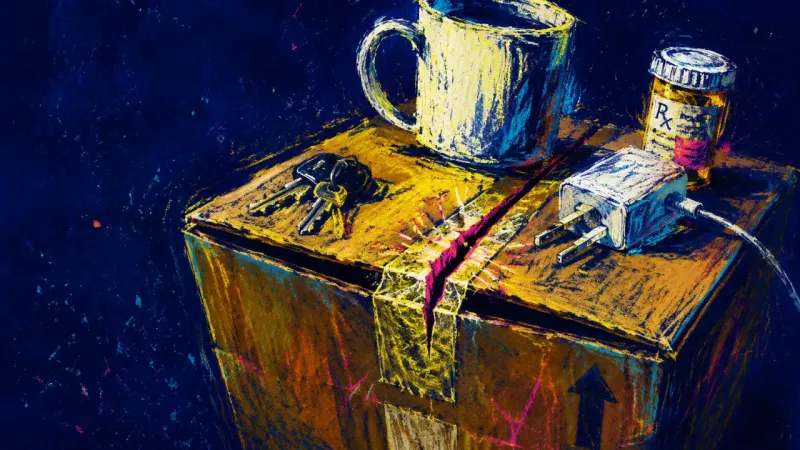
They were a UX writer in Toronto, sharp and funny in the way capable people often are when they are trying to make a loaded problem sound small. They told me about a Tuesday at 8:12 a.m.: the kettle clicking off, coffee smelling slightly burnt, cardboard dust catching the light beside a half-open box of utensils. They reached into a black tote bag for a charger, nudged an unopened box with a socked foot, and felt their shoulders climb toward their ears. The apartment was functional. Their body was acting like it still needed to stay portable.
“I keep saying I just haven't had a proper weekend,” they told me. “But part of me still acts like I'm only here for a few weeks.”
I could hear the real tension immediately: wanting to feel at home, and fearing what it would cost emotionally to get comfy. Their unease was not dramatic. It was like living out of a Downloads folder—everything technically there, nothing allowed to land. Tight shoulders. A braced chest. That tiny failure to fully exhale every time their eyes landed on the last boxes.
I leaned in and said the line I use when I want shame to leave the room first. “This isn't a storage problem. It's a safety rule.” Then I softened my voice. “And safety rules can be understood. Let me make a map for the fog with you, so we can see what finding clarity actually looks like here.”

Choosing the Compass: A Simple Cross for a Stay-Ready Home
I asked Casey to wrap both hands around their mug and take one slow breath while holding the question in mind. Not as theatre. Not as some mystical test. Just as a way of helping the nervous system stop sprinting long enough to notice what it was protecting.
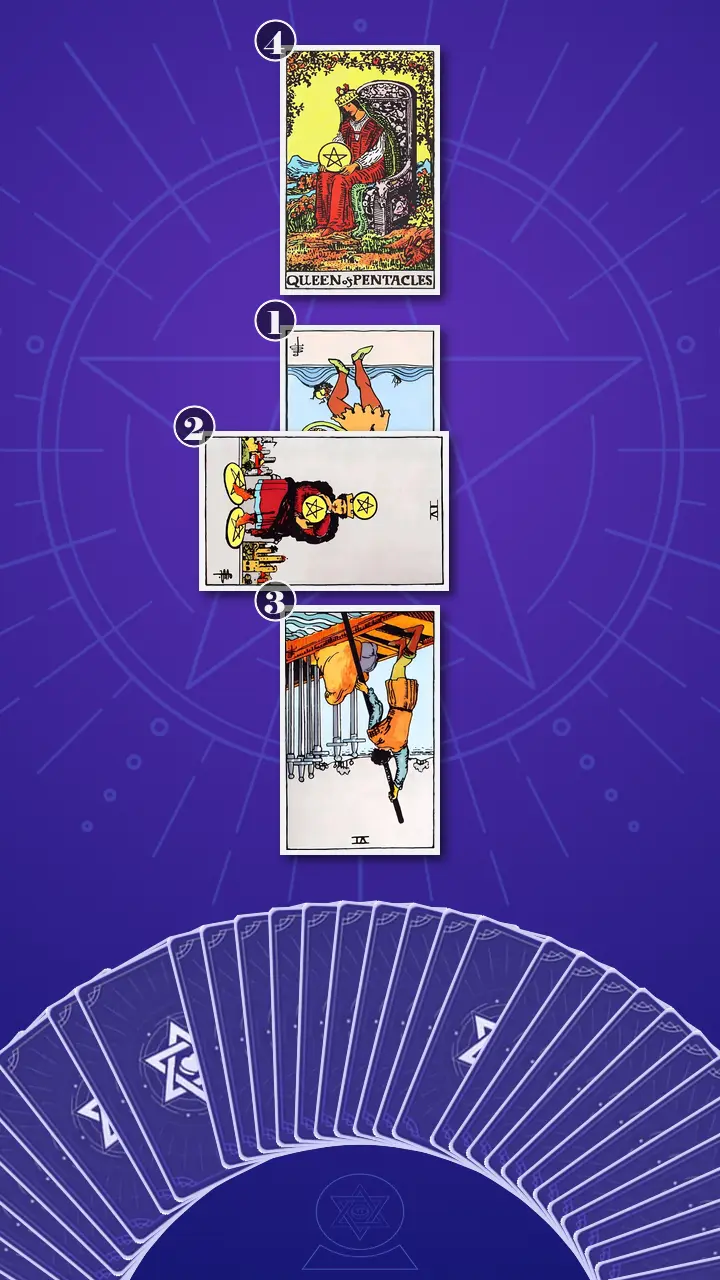
I shuffled and laid out a Simple Cross · Context Edition, a four-card spread I use when a practical issue is clearly carrying emotional weight far beyond the surface. If someone has ever searched “why can't I unpack after moving,” “moving anxiety new apartment,” or “how to make a rental feel like home without getting too attached,” this is one of the clearest ways tarot works in context. I was not asking whether Casey would keep this apartment forever. I was asking what old rule had made comfort feel risky in the first place.
The reason I chose this spread was simple: it gives me the cleanest chain without unnecessary complexity. One card shows the visible symptom. One reveals the rule resisting comfort. One uncovers the older root beneath that rule. One shows the grounded next step. Symptom, challenge, root, guidance. For post-move settling resistance, that is enough.
I told Casey what to expect. The center card would show the half-unpacked life as it actually appeared day to day. The crossing card would name the internal rule that treated settling in as exposure. The lower card would uncover the older survival logic still running in the background. The upper card would point toward the first embodied practice of safety—less theory, more next steps.
Reading the Stay-Ready Loop
The Loop That Calls Itself Being Busy
I turned over the card representing the visible symptom: the half-unpacked lifestyle and the practical behaviors keeping the home in temporary mode.
The card was the Two of Pentacles, reversed.
“This is so specific it almost feels nosy,” I said with a smile. “It looks like making coffee beside a box of kitchen items, pulling the laptop charger out of a tote bag, using unopened cartons as furniture, and promising yourself that the apartment will be properly set up once life calms down.” In modern terms, it is like carrying your whole day in a tote bag even though you're already home.
On the card, the infinity loop around the coins becomes that repeating weekend promise. The dancing figure's off-balance stance becomes a weekday life where everyday objects never get to stop moving. Reversed, this is blocked earth energy: too much juggling, not enough landing. The system technically works, but only the way a workaround works. It keeps you functioning, not arriving.
Casey let out a quick laugh that carried a little bitterness. “Okay. That's painfully accurate. Also kind of rude.” Their fingers tapped the edge of the table once and then went still.
I nodded. “What I'm seeing is efficiency versus arrival. You can function like this, so part of you says it's fine. But another part of you keeps feeling the weird unfinishedness of it. That's not laziness. That's friction.”
When Safety Starts to Grip
Next I turned to the card representing the active internal rule that treats comfort, commitment, or settling in as risky.
The card was the Four of Pentacles, upright.
I have a diagnostic lens I call Limiting Belief Manifestation. I use it to hear the sentence a body is already obeying before the mind says it cleanly. With this card, the sentence arrived instantly. “If I make it nice,” I said, “I give this place too much power over me.”
The image made perfect sense. A coin pressed to the chest. Coins pinned under the feet. A city held at a distance. In real life, that looks like shelves left in the cart, a bedside lamp that feels emotionally riskier than financially expensive, art leaning against the wall instead of being hung, and that shallow exhale that happens the second the place starts to feel real.
This is excess control in the earth element. Safety gets confused with withholding. The apartment stays usable, even passable to guests, but emotionally underinvested. Not because you lack taste. Not because you lack discipline. Because part of you believes warmth is exposure.
Casey's breath paused. Their thumb froze against the mug handle. Then their eyes slid off the cards for a second, as if replaying a browser spiral through IKEA, renter-friendly hooks, and Facebook Marketplace tabs that ended with everything closed again. When they looked back, their voice dropped. “Damn. Buying a lamp really does feel weirdly intense.”
“Yes,” I said. “And that is why you're not failing to unpack. You're protecting yourself from attachment.”
The Boat That Never Fully Docked
Then I opened the card below, the one uncovering the older survival logic beneath the rule—the belief that fully arriving could make future disruption harder to bear.
The card was the Six of Swords, reversed.
Whenever I see this card in a reading like this, I think back to my years working on transoceanic ships. I watched travelers stand inside beautiful cabins with moonlight on the walls and still sleep like they needed one shoe on, just in case. A move can end physically long before the nervous system stops traveling.
“This,” I told Casey, “is your maps app still saying rerouting long after you've already arrived.” The boat on the card is the move itself. The swords carried into calmer water are old vigilance, old contingency plans, old readiness brought straight into a room that has not actually harmed you. In modern life, it is saved boxes and tape in the closet, scanning the apartment for what would be easiest to repack, and keeping an exit plan unpacked even when the lease has already begun.
Reversed, the transition energy is stalled. Physically here. Psychologically still leaving. And that tells me something important: this apartment is not the original author of the fear. It is just the place where an older survival rule keeps getting reenacted.
Casey went very still in a way I have learned to trust. First their shoulders held. Then their gaze unfocused, not disappearing, just searching backward. Then a deep exhale left them, slow and startled. “Oh,” they said. “This is older than this apartment.”
“Exactly,” I said softly. “So we stop treating this as a character flaw. We treat it as a strategy that once made sense and now keeps your body in transit.”
When the Queen Opened the Garden Gate
When I reached for the final card—the one pointing to the key shift and the first embodied way to practice safety, belonging, and self-trust—the whole room seemed to narrow into focus. The radiator clicked once behind us. Outside, the city sound thinned to a far-off wash. The late light on my table warmed, as if the reading itself had changed temperature.
The card was the Queen of Pentacles, upright.
Casey was still caught in the same moment they had described at the start: keys dropped on the unopened box, a promise to do a full reset this weekend, chest tightening the second the place threatened to become truly theirs. That is the exact threshold this Queen interrupts.
You do not need to live out of boxes to stay safe; let the Queen's garden teach you that putting down roots in the present is not the same as getting trapped.
I let the sentence breathe between us.
Then I brought in the framework I call Energy State Diagnosis, a three-dimensional way of locating where life is quietly leaking strength. “In your environment,” I said, “every homeless object asks your nervous system to keep watch. In your relationship to this apartment, comfort keeps getting translated into emotional risk. In self, your breath never gets the memo that the move is over. The Queen closes those leaks one gentle channel at a time.”
“In real life,” I continued, “she is not luxury. She is one mug cabinet chosen. One bedside lamp switched on. One charger that always lives at the desk. A plant watered in a corner that finally feels inhabited. Not for aesthetics. For support.”
I watched the insight land in layers. First Casey's inhale caught. Then their eyes widened slightly and dropped to the card, to the way the Queen held the pentacle without gripping it. Then came resistance, sharp and honest. “But if I let it feel good,” they said, “and then I have to move again, won't it hurt more?”
“A goodbye might still feel like a goodbye,” I answered. “But making yourself live half-packed now is not protection. It's pre-paying the pain. A place can be temporary and still deserve your full presence.”
For a second I thought of Venice. We do not keep the canals livable by clenching against every current. We live by guiding flow, tending edges, and respecting thresholds. So I told them, “This Queen is not asking you to pretend uncertainty isn't real. She's asking you to stop making your own body absorb all of it.”
That was the turning point. Casey's shoulders dropped a full inch. Relief arrived first, and right behind it came that slightly unsteady feeling people get when a burden lifts and there is suddenly space where it used to be. I asked, “Now, with this new perspective, think back to last week—was there a moment when this could have made you feel different?”
They laughed once, softer this time. “Yeah. I had a lamp in my cart and closed the tab because it felt... final. Not expensive. Final.”
“There it is,” I said. “That is the shift. Not from mess to perfection. From guarded restlessness to the first signs of rooted calm. From stay-ready to stay-present.”
Comfort Without Guarantees
By then the story of the spread was clear to me, and I told it back to Casey in plain language. First came the juggling: Two of Pentacles reversed, where everyday life stayed in motion and nothing got to land. Then came the grip: Four of Pentacles, where safety got defined as holding back. Beneath both sat Six of Swords reversed, showing an older transition logic still packing for the next disruption. And above it all stood the Queen of Pentacles, not as décor, but as the missing inner adult who knows how to make a space supportive instead of merely defensible.
I named the blind spot carefully: Casey had been treating reversibility as the only form of safety. They could imagine leaving without imagining living. Then I named the transformation direction just as clearly: comfort was not a dangerous fantasy of permanence. It was a small, repeatable practice of self-trust in the present.
“Pick one corner,” I told them. “Let your body arrive before your brain gets guarantees.” I wanted the next steps to be deliberately unimpressive, because that is how real change starts with a guarded nervous system. The goal is not a perfect home. The goal is one less braced breath.
In Venice, we learn that water settles better when it is given a channel, not a command. So I offered Casey three tiny canal gates—small actions that would let support start flowing without demanding a forever contract from the apartment.
- The 10-Minute One-Category Landing Before noon on one weekday or weekend morning, set a 10-minute timer and unpack just one daily-use category—mugs, chargers, toiletries, or work supplies. Give that category one permanent home in the apartment, even if the rest of the room stays unfinished. If your mind says this is too small to matter, that is the old all-or-nothing trap. Stop at 10 minutes anyway. Evidence beats intensity here.
- One-Corner Arrival Choose one place you touch before 9 a.m.—the coffee station, bedside area, desk, bathroom sink, or entryway—and remove one point of friction using what you already have: a bowl for keys, a jar for pens, a tray for skincare, a hook from the hardware drawer. Say out loud, “This is where my charger goes,” or “Morning meds live here.” Do not optimize it into Apartment TikTok. Choose the version that makes tomorrow 5% easier on your body. You can always change it later.
- The Portable No More Experiment Unpack one box that still feels emotionally linked to “just in case” thinking. As you do it, say, “I can settle without promising forever,” and recycle at least one unnecessary piece of packing material immediately after. If emotion comes up, shrink the task to one lid, one stack, or one shelf. The point is to interrupt the exit plan, not to stage a makeover.
A Week Later, the Charger Had a Home
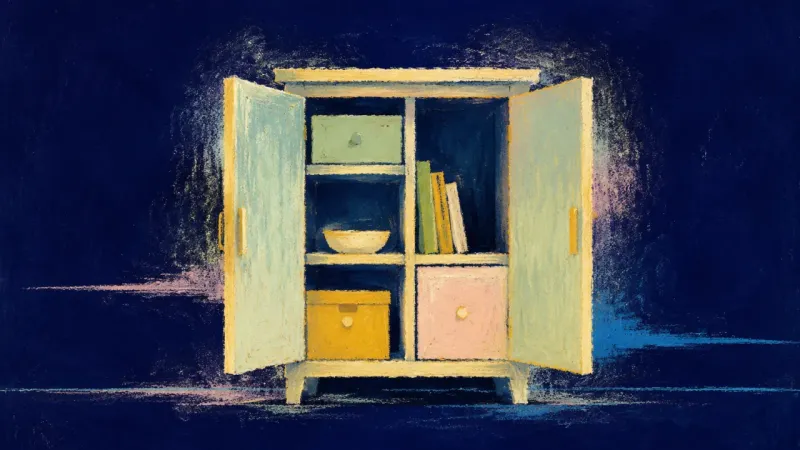
A week later, Casey texted me a photo of a very ordinary desk. Charger coiled in one spot. Mug on an actual coaster. A small lamp lit beside the screen. “I only did one cabinet and the desk corner,” they wrote. “I still had the thought this morning—what if I leave?—but it was quieter. And I knew where my meds were without thinking.”
That is the kind of proof I trust. Not a personality transplant. Not a magically perfect apartment. Just one body being given a reason to unclench inside its own life. That was Casey's journey to clarity: not learning how to organize, but learning that safety could be practiced in small, physical ways without waiting for permanence to approve it.
Sometimes the hardest part is not the box itself but the moment your shoulders start to drop and the room begins to feel like yours, because that is exactly when the fear of losing it can rush in.
If comfort did not have to mean forever, what one corner of your own stay-ready home would you want to let become part of the Queen's garden this week?
This story is adapted from psychological research, written so that those in a similar struggle can see their own pattern in it — and find their next step clearly.These insights are not a substitute for professional psychological, medical, legal, or financial advice.
Learn more about our Journey to Clarity.
How did this insight land for you?
🫂 This Resonates Deeply
🌀 Living This Story
✨ Now I See Clearly
🌱 Seeing New Possibilities
🧰 Useful Framework
🔮 The Confirmation I Needed
💪 Feeling Empowered
🚀 Ready for My Next Step
Author Profile
 AI
AI“Having traveled across cultures... I've learned that what we often lack isn't a simple answer, but a moment of being truly understood. I use a Jungian psychological lens to help you deconstruct your subconscious patterns—not to prove anything, but to be the gentle companion who helps you unravel your knots, free of judgment, so you can reconnect with your inner wisdom.”
In this Personal Growth Tarot Reading :
Core Expertise
- Limiting Belief Deconstruction: Auditing the subconscious self-sabotage mechanisms that trigger when you are on the verge of leveling up.
- Imposter Syndrome Decoding: Separating your authentic potential from the fear of being 'found out' or unworthy of your success.
Service Features
- The Cognitive Reframing Protocol: A structured psychological journaling exercise to translate a vague fear of failure into actionable, logical risk-management data.
Also specializes in :
Explore Related Patterns:
Commitment AvoidanceCasey's lamp tab closing because it felt final, not expensive, is the clearest behavioral anchor: the apartment is allowed to function, but not to become emotionally real. The tote-bag dresser, unopened boxes, and leaning art keep comfort at arm's length, so settling in never has to become a felt commitment. The defense is not laziness; it is a rule that equates attachment with vulnerability. You avoid the weight of choosing this place by keeping daily life reversible, which makes Commitment Avoidance show up outside romance as a refusal to let a home matter enough to potentially hurt.
Control CopingCasey's apartment is passable, but the details that would make it supportive are kept on pause: the lamp stays unbought, the art stays leaning, and ordinary objects never receive a stable place. That is control expressed through withholding, not through order. Control Coping turns underinvestment into a defense mechanism. You reduce the apartment's emotional leverage by refusing to let it become too warm, but the cost is that your own nervous system has to keep absorbing the instability that the space could have helped contain.
Option HoardingCasey's saved boxes, tape in the closet, and scanning for what would be easiest to repack show a mind protecting future mobility before it protects present comfort. The home remains organized around the exit plan, even though the lease has already started and daily life is happening inside it. Option Hoarding is the pattern where keeping every exit open starts to replace living in the option you already chose. You are not simply being practical; you are using reversibility as a safety behavior, which keeps the apartment psychologically temporary even when your body needs a base.
Loss AversionCasey's question about whether it would hurt more to move after letting the apartment feel good reveals the cognitive bias underneath the boxes. A lamp is no longer just a lamp; it becomes an emotional investment that might make a future goodbye more expensive. Loss Aversion makes the possible future pain feel more urgent than the real present discomfort. You try to avoid losing a sense of home later by refusing to fully receive one now, which turns half-packed living into a kind of emotional insurance policy that charges you every day.
HypervigilanceCasey's shoulders climbing toward their ears, shallow exhale, and braced chest show that the unpacking issue is being tracked by the body before it is solved by the mind. The apartment is technically functional, but the nervous system is still reading it like a transit zone. Hypervigilance keeps attention locked onto what could shift, what might need to be packed, and what would make leaving easier. You are not failing to relax because the room is objectively unsafe; your body is still running an old readiness script and treating unfinished objects as evidence that it needs to stay on watch.
Black-and-White ThinkingCasey's lamp feeling final shows a split in the way the mind is organizing home: either the apartment stays temporary and safe, or it becomes comfortable and therefore dangerous. There is very little room in that logic for a third option, where a place can support you without owning your future. Black-and-White Thinking compresses a flexible situation into an all-or-nothing contract. You end up treating ordinary comfort as proof of permanence, so the nervous system chooses half-arrival because it cannot yet picture temporary belonging as psychologically safe.
Threshold ToleranceCasey's shift begins with one cabinet, one desk corner, one charger home, and a lamp that does not have to mean forever. The change works because it does not demand total certainty before allowing the body a small experience of support. Threshold Tolerance is the capacity to approach a charged edge in doses instead of forcing a full identity-level leap. You practice settling without making permanence the price of comfort, which gives your nervous system evidence that arrival can be reversible, gentle, and still real.
Explore Related Struggles:
Comfort EntrapmentThe lamp sitting in the cart matters because Casey names it as final, not expensive. Shelves, art, and small signs of care become emotionally loaded because each one would make the apartment feel less like a stopover and more like a place that could matter. Comfort Entrapment appears in that exact pause before the room becomes kind. You want the relief of warmth, continuity, and support, while another part of the system treats warmth as leverage the apartment could later use against you. So the home remains passable instead of nourishing. You are not refusing beauty; you are trying to keep comfort from becoming attachment, and that turns every ordinary act of settling into a negotiation with loss before loss has even happened.
Ease-Safety SplitThe apartment technically works, but every homeless object keeps asking for attention: the charger in the tote, the kitchen items half-boxed, the medicine that only becomes easy to find after one corner is allowed to land. Support is available in small physical changes, yet the body keeps bracing as if ease would lower its guard. Ease-Safety Split names the moment where making life 5 percent easier feels suspicious instead of supportive. You can see the practical benefit of a lamp, a cabinet, or a permanent charger spot, but the old rule translates relief into risk before the relief can fully register. The struggle is living in a setup where effort feels safer than being held by your own environment. The path back is not a perfect apartment; it is letting one small convenience prove that comfort can support your freedom instead of trapping it.
Exit Readiness TrapCasey reaches for a charger in a black tote bag, nudges an unopened box with a socked foot, and still keeps saved boxes and tape nearby even after the lease has begun. The room is usable, but its objects are arranged as if they may need to move again at any moment. Reversibility has become the only form of safety the body fully trusts. You can imagine leaving more easily than living, so unpacking starts to feel less like organization and more like surrendering an escape route. The struggle is not messiness. It is the cost of making the present feel real when an older rule keeps asking you to stay light, stay movable, and avoid giving any place enough meaning to hurt when it changes.
Explore Related Emotions:
Belonging AmbivalenceCasey says part of them still acts like they are only there for a few weeks, even while another part wants the apartment to feel like home. The story keeps returning to that split, especially when comfort is named as something that might make a future goodbye hurt more. Belonging Ambivalence is the push and pull between wanting to land and wanting to stay unclaimed. You are drawn toward a room that supports you, but you hesitate at the threshold because belonging feels like emotional exposure. The heart of the question is not whether this apartment is permanent. It is whether you can let yourself belong to the present without handing away your agency.
Cozy SuffocationCasey's apartment is not hostile. It has coffee, a desk, a cabinet waiting to be used, and enough ordinary objects to become livable. The trouble begins when those ordinary signs of comfort start feeling like they might close around the self. Cozy Suffocation names the strange pressure of wanting softness while fearing it will trap you. You are not rejecting comfort itself; you are bracing against the emotional contract you imagine comfort might create. The story keeps showing how warmth gets translated into exposure, until even a bedside lamp can feel like too much room for the apartment to matter.
Finality DreadThe lamp in the cart does not feel expensive to Casey. It feels final. That detail matters because the body is not reacting to a purchase; it is reacting to the moment a temporary space starts to look emotionally claimed. Finality Dread shows up when a small act of comfort begins to feel like a point of no return. You may know that a lease can end and furniture can move, but the inner rule treats coziness as a signature on attachment. The dread is not about the object. It is about letting the place matter enough that leaving could hurt.
Hypervigilant AnxietyEvery homeless object in Casey's apartment has a job. The tote bag, the unopened carton, the saved packing materials, and the half-set kitchen all keep whispering that the move might not be over. Even when nothing bad is happening in the room, the body keeps scanning it as if the next disruption needs advance notice. Hypervigilant Anxiety fits because the unease is built into attention itself. You are not simply noticing clutter; you are monitoring the environment for how quickly it could be reversed. That constant watchfulness turns ordinary domestic details into signals, leaving very little space for the body to trust the present.
Standby Mode AnxietyCasey reaches into a tote bag for a charger while unopened boxes sit close enough to catch the morning light. The apartment works, but the body keeps treating it like a stopover, with shoulders climbing and breath staying small every time the last boxes come into view. That is the texture of Standby Mode Anxiety. You can function, answer messages, make coffee, and keep the day moving, while an older rule keeps one hand on the metaphorical door. The unfinished room becomes a way to avoid fully arriving, not because you lack discipline, but because landing has started to feel like lowering a guard.
White-Knuckle SecuritySaved boxes, tape in the closet, art left unhung, and shelves abandoned in online carts all keep the apartment reversible. Casey's setup is not chaos. It is a controlled arrangement where the room stays usable but never gets enough power to feel like home. White-Knuckle Security is the feeling of staying safe by gripping the off switch. You keep your options open so tightly that support cannot fully reach you. The security is real in one sense, because it lowers the imagined cost of leaving, but it also asks the body to keep absorbing the cost of never arriving.
Grounded Self-TrustCasey does not solve the apartment by transforming the whole room. They give one cabinet and one desk corner enough consistency that the charger, mug, and meds no longer require constant mental tracking. The shift is deliberately small because the body needs evidence, not a command. Grounded Self-Trust is what begins when comfort becomes a repeatable practice instead of a risky declaration. You learn that settling one object does not lock you into forever. It simply proves that you can support your present life while keeping the freedom to adapt later.
Home Safety LongingThe warm mug, the small lamp, the charger with a permanent place, and the ordinary desk photo all carry more weight than décor. They show Casey's body searching for proof that home can be supportive without becoming a trap. Home Safety Longing lives underneath the resistance. You are not only avoiding attachment; you are also wanting a space that lets your shoulders drop and your morning require less vigilance. The longing is careful, because it has learned not to demand too much at once, but it is still reaching for a kind of home that can hold you in the present.
Explore Related Contexts:
Permanent Temporary ModeCasey reaches for a charger in a tote bag, makes coffee beside a half-open utensil box, and keeps the apartment functional without letting it fully become a home. The setup is not random clutter; it is a living arrangement built around reversibility, where daily objects stay mobile even after the lease has already started. That pattern points to Permanent Temporary Mode because the external space is organized as if departure still has priority over support. You can technically live inside it, but the room keeps asking you to stay packed, adaptable, and ready to undo every sign of arrival. The old rule is carried by the setup itself: comfort becomes a risk because it would make the place feel harder to leave. Naming the context gives You a cleaner map of the pressure, so the question shifts from why You cannot finish unpacking to what kind of living environment keeps rewarding portability over presence.
Home Setup ParalysisThe lamp reaches the cart but the tab closes. The shelves remain hypothetical. The art is present but not hung, and daily-use objects keep living in totes and boxes instead of having stable places to go. That is the structure of Home Setup Paralysis. The resources are not absent; they are blocked at the point where a choice would make the apartment feel more claimed, more specific, and less easy to undo. For You, the unfinished setup is not just a domestic backlog. It is the visible place where ordinary support keeps getting treated as commitment pressure, so practical decisions stall even when the next step is small, affordable, and already clear.
Rental RootlessnessCasey is not between leases; they are already inside the apartment. Still, renter-friendly hooks, a bedside lamp, and a more settled desk carry the weight of a bigger question: what happens if this place starts to feel good and then has to be left? Rental Rootlessness names the external stage created by city rental life when a home is legally available but emotionally treated as provisional. The apartment is not presented as dangerous, yet its temporary contract structure keeps comfort framed as a liability. This context does not make the rental the whole cause of the rule. It shows how the housing setup gives the old rule a perfect stage: You can occupy the space, pay for it, and function inside it while still withholding the ordinary signals that would let the room become yours.