Safe, But Missing Yourself?
Explore this struggle through lived experience, related tarot cards, and tarot reading insights that reveal its hidden shape.

Safety-identity Fusion
What does this feel like?
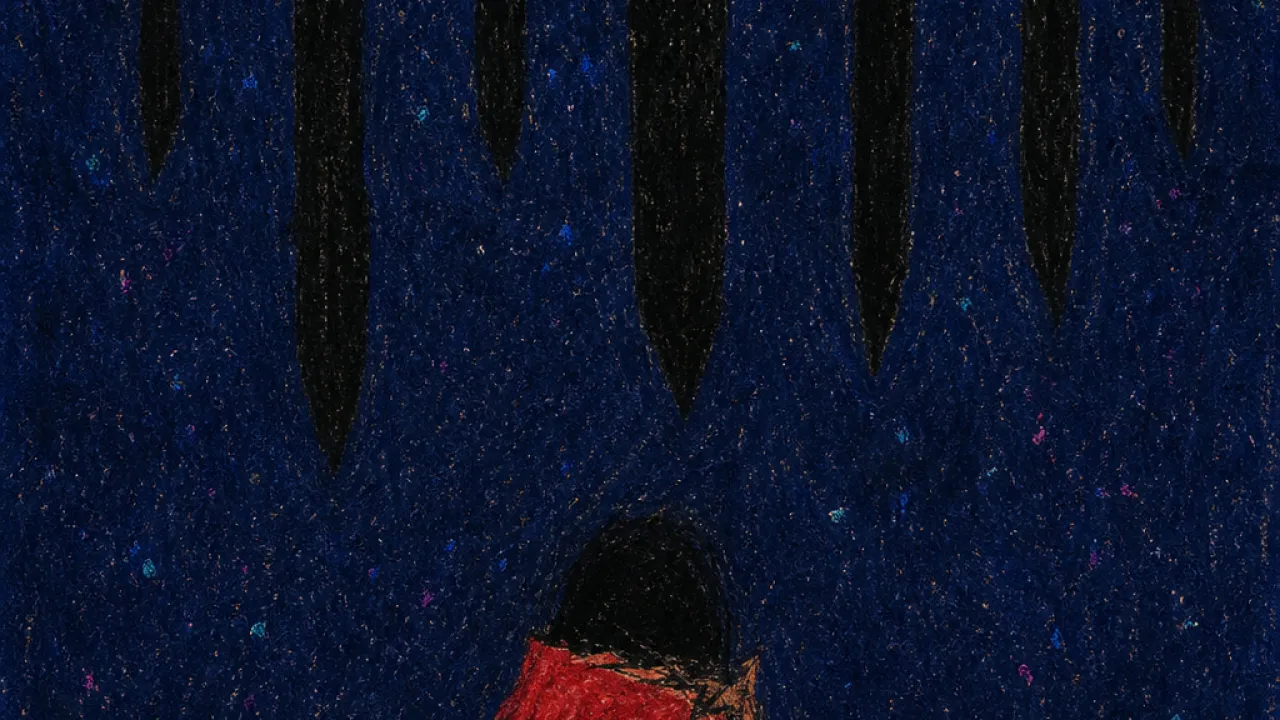
Safety-Identity Fusion is when the safest version of you starts to feel like the only version of you that is allowed to exist. You notice it in the split second before you speak, when your body scans the room faster than your mind can form a sentence: Is this too much, too direct, too different, too hard to place? Your throat tightens, your shoulders make themselves smaller, and the thought you wanted to say gets translated into something softer, neater, less likely to change the temperature. It is not that you have no self. It is that the self you learned to show came wrapped in conditions: stay legible, stay calm, stay familiar, stay covered. So when you start wanting more space, more honesty, more texture, even more pleasure, some part of you reads that expansion as danger before it reads it as growth. You can be alone in your apartment, choosing clothes for a night out, and suddenly feel the old tug toward the safest outfit, the safest tone, the safest answer. You can write a message that says what you mean, then delete it because the truer version of you feels like it might cost you access to warmth. The hardest part is how reasonable it all feels from the inside. The protected shape of your life has kept you connected, included, and intact in rooms where being too visible may have changed the air. But over time, protection stops feeling like something you use and starts feeling like who you are. You begin to confuse quiet with character, compliance with kindness, invisibility with maturity, and the body keeps choosing the map it knows, even when your life has outgrown it. The cost is subtle but heavy: you can be safe and still feel missing from your own life, much like the figure on the Nine of Swords, covered by a quilt that shelters the body while the dark wall and sword-lined ceiling press the room into a place where comfort and restriction share the same surface.
What's pulling at you?
You are caught between the need to stay safe in familiar rooms and the need to become more fully yourself inside them. The problem is not that safety is wrong; it is that safety has become tied to being quiet, recognizable, and easy to place. So every move toward more visibility can feel less like freedom and more like risking the only version of you that once kept the room stable.
How It Shows Up?
- You are about to say what you really think in a group chat, then you delete the sentence and replace it with something smoother, smaller, easier to like. Your throat tightens as if the unsent words are stuck there, and your thumb hovers over the keyboard long enough for the screen to dim. The safer version of you feels immediately recognizable, but the quieter you get, the harder it is to tell whether you chose silence or just stepped back under the same quilt. You can let the message stay unfinished without deciding what it means about you.
- You go home, call home, or walk into a room with people who know an older version of you, and your body adjusts before anyone asks anything of you. Your shoulders drop into a familiar posture, your voice gets softer, your opinions arrive wrapped in disclaimers, and a small pressure gathers behind your ribs. Nothing dramatic has to happen; the room simply has a shape, and you know where you used to fit inside it. It is allowed to notice the old position without forcing yourself to break it in one move.
- At work or school, you get a chance to pitch an idea, ask for a different role, or put your name on something visible, and the first flash of excitement is followed by a cold check in your stomach. You start scanning for what might change if you become harder to ignore: who will expect more, who will pull away, who will see you differently. Your chest feels tight, like the open sky is there but your feet still organize around a perimeter, holding a wand you no longer know how to put down. You can pause at the edge of being seen without calling the pause failure.
- You are out with friends and everyone is relaxed, but you are still monitoring the room: the joke that landed, the comment that changed someone's tone, the moment your own opinion might make the air shift. Your smile appears quickly, your laugh arrives on cue, and your jaw aches by the time you get home. It feels like standing in a temporary shelter while your eyes keep searching for a fortress in the distance, as if ease only counts when it can promise permanence. It is okay for a good moment to stay provisional.
- Late at night, you replay a version of yourself that felt more visible that day: the outfit, the boundary, the sentence you said without softening it first. Instead of pride, your body gives you static: shallow breathing, a tight neck, cold hands under the blanket, the sense that expansion has changed the room's conditions even if no one said so. The ceiling feels lower, almost lined with blades, while the blanket is both comfort and restraint. You do not have to argue with your nervous system at 2 AM; noticing the compression is already information.
Safety-identity Fusion in Tarot Cards
Safety-Identity Fusion lives in the moment when staying recognizable feels safer than becoming more fully visible. You can feel it in the tight throat, the careful voice, the jaw that aches after performing ease. From an existential perspective, the structural framework of this struggle is about what happens when shelter and restriction become hard to separate. The Tarot Cards below make that shape visible without turning it into a verdict.
Safety-identity Fusion in Tarot Card Reading Insights
When Safety-Identity Fusion shows up, people often bring questions about being seen, staying small, and not knowing whether protection has become part of the self. The readings below move from the card images into how this conflict can appear inside a spread. Tarot Reading Insights for this pattern.
A Green PR at 11:47 p.m.: From Founder Rewrites to Shared Ownership
Topic:Career Tarot Reading
Struggle:Control Lock
Context:Founder Mode Overreach

Three Pull Requests, One Trade-Off Question, and a Keyboard Left Alone
Topic:Career Tarot Reading
Struggle:Control Lock
Context:First Manager Transition

When Your Transcript Turns Into a Verdict: Safe-Enough Career Experiments
Topic:Career Tarot Reading
Struggle:Control Lock
Context:Career Transition Fog
The Timesheets-Due-by-EOD Ping—and the Case File I Quit Writing
Topic:Career Tarot Reading
Struggle:Inner Tribunal Lock
Context:Work Life Integration Trial