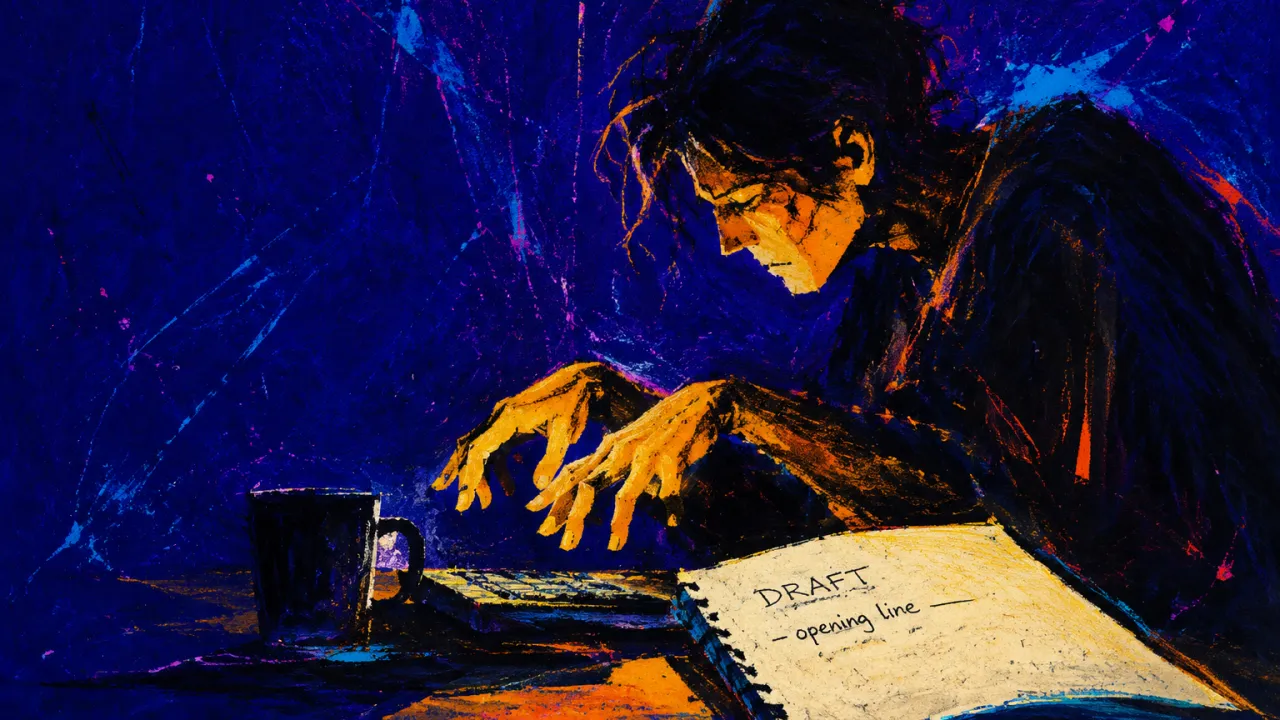
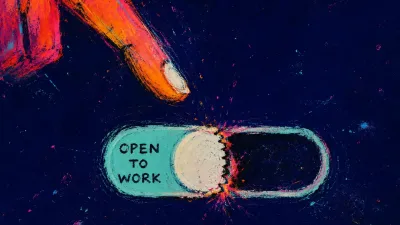
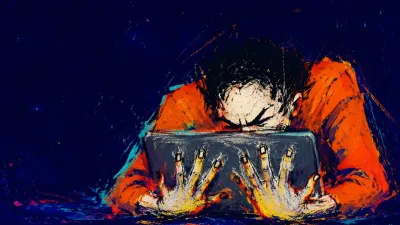
The file is open, the message is drafted, the plan is clean, and Action Paralysis still keeps the decisive step suspended. That tight chest and hovering fingers are the body-level signal of a cognitive trap where movement feels more exposed than waiting. From a Jungian perspective, archetypal theory gives this pattern a visual language without turning it into a diagnosis. The unconscious dynamics underneath this freeze are mirrored by the Tarot Cards below.
Seven of Swords ReversedThe figure is mid-step, with one foot lifted forward and the other stretched back on tiptoe. He is moving, but the movement is suspended inside a threshold: the camp is not fully left, the path is not fully claimed, and the swords require so much management that the body cannot simply land. Action Paralysis in personal growth often looks like motion from the outside. You may research, prepare, refine, draft, and reposition, while the decisive embodied step stays delayed because it would make the new identity visible before it feels fully secured. The reversed card captures the trap of being almost in motion. The mind narrows around managing the risk of transition, and the body remains caught between who you have been and what you are trying to become.
Eight of Swords UprightThe woman is standing, not collapsed, yet her hands are bound and her vision is covered. The card captures a body with enough life force to move but no trusted channel for action. The swords create a narrow pressure field where each possible step feels like it could cut, even though the blades are planted outside her body. Action Paralysis forms when the nervous system reads movement as exposure before it reads it as agency. You may know the next step, have the plan, and understand the logic, but the body stays in a suspended state because action would force the belief system to meet reality. In personal growth, this is the gap between the vision board and the first uncomfortable repetition. The pattern keeps you mentally upright and strategically aware, but it blocks the small embodied tests that would actually update your life. The card makes that split visible: cognition is crowded, agency is tied, and the exit requires movement before total certainty arrives.
ReversedThe figure is upright, but the body is not moving. The swords do not strike her, yet their arrangement makes every direction feel charged, while the blindfold removes the visual confidence needed to choose a path. In the reversed state, this image becomes Action Paralysis. The issue is not absence of awareness; it is a frozen threshold where every possible movement feels like it might create more danger than staying still. For introspection, this is the moment when the psyche can name the inner issue but cannot metabolize it. You may have the language, the framework, and the desire to shift, while the body remains locked in a no-move response because clarity has not yet become felt safety.
Nine of Swords UprightThe figure is awake, upright, and intensely activated, yet the lower body remains covered under the quilt. The scene contains enormous mental pressure, but no visible movement toward the room, the floor, or the outside world. That split is the exact structure of Action Paralysis in personal growth. The mind is not empty; it is overloaded. Every sword becomes another reason to delay the first embodied step, until thinking about change consumes the energy required to begin it. The bed becomes important because it should support rest, but here it holds immobility. The card shows a person mentally seized by the future while physically fixed in place, which is why the pattern feels so recognizable when a growth goal becomes more analyzed than lived.
ReversedThe upper half of the card is all pressure: swords, darkness, and a face closed off by both hands. The lower half is covered and still, with no visible step from the bed into the world. In the reversed state, Action Paralysis is not quiet indecision; it is a body stalled by an overloaded inner command system. You may know exactly that growth is needed, but the mind has attached so many meanings to the next move that movement feels like a verdict on your whole identity. The absence of a doorway or horizon matters. The card connects to this pattern because it shows mental urgency without a usable path, a self-development crisis where the body cannot translate pressure into one grounded action.
Ten of Swords UprightThe fallen figure lies at a threshold: the river is calm, the opposite bank is visible, and a faint dawn exists, yet the body cannot cross. The image is psychologically precise because the route is not absent; agency is what has collapsed at the edge of transition. Action Paralysis in personal growth often appears exactly there, right before the next meaningful move. You may have the framework, the plan, the course notes, the vision board, or the strategy, but the body-system reads the threshold as exposure and shuts down before action can convert insight into evidence. The Ten of Swords does not frame this as laziness. It shows a defensive freeze around upgrade pressure, where the mind has already imagined the cost of crossing so vividly that staying down begins to feel safer than testing the next step.
ReversedThe body lies at the edge of possible movement, close to the river yet unable to cross it. The blades pin the figure into place, turning a threshold into a freeze response rather than a transition. Action Paralysis in study has the same physical logic. The essay file is open, the exam date is known, the reading list is visible, but the first move feels loaded with so much threat that the system locks before action can begin. The reversed Ten of Swords does not describe laziness. It shows a nervous system treating initiation as danger, where starting the task would mean facing the full weight of failure, judgment, and self-evaluation all at once.
King of Swords ReversedThe King appears ready to decide, but the throne keeps the body fixed in place. The sword is elevated, the posture is controlled, and the whole composition holds power in a state of suspended execution. Reversed, that same authority can become a freeze response dressed up as discipline. You may already know the standard, the strategy, and the next move, but the system keeps producing verdicts instead of motion because action would expose the self to imperfect feedback. In personal growth, this pattern is especially costly because it creates the feeling of being mentally prepared while remaining behaviorally unchanged. The image reveals a self that can command the future from the throne but struggles to stand up and enter it.
Ace of Wands ReversedThe hand emerges from the cloud with the wand held high, but no body stands on the ground beneath it. The river, hills, trees, and castle are all visible, yet there is no bridge from the suspended spark into a first embodied step. Action Paralysis appears when inspiration is present but cannot cross into behavior. You can feel the call, understand the potential, and even see the future shape of change, while the system freezes at the point where the idea would need to become a repeatable action. The suspended wand is the mechanism. It shows activation without incarnation, a charged inner yes that has not found a physical route into time, habit, feedback, and consequence.
Two of Wands ReversedThe wand is already in the figure's hand, but the body does not move beyond the wall. The coastline, hills, and sea open into possibility, yet the composition holds him at the observation point where action is imagined more than enacted. Action Paralysis appears when the nervous system treats the next concrete step as a threat to control. The tool is available, the direction may even be known, but the body remains suspended because beginning would turn possibility into evidence. In study work, You may know the assignment, have the sources, and understand the deadline, yet freeze at the blank page or unopened problem set. The Two of Wands connects this paralysis to the fear of collapsing a perfect future into an imperfect first move.
Five of Wands ReversedThe same airborne wands that create action also create blockage when every angle obstructs another angle. The bodies are braced for movement, but the center is so crowded that any next move would collide with another demand. In the reversed psychological state, Action Paralysis is overactivation trapped in the body. You may want change badly, but competing growth scripts pull at once, so the system freezes at the threshold where one committed move would require disappointing all the others.
Seven of Wands ReversedThe body in the card is active, but it is not advancing; every muscle is organized around holding the line. The diagonal wand blocks the incoming pressure, while the uneven ground makes any step forward risky. Action Paralysis in study settings often looks like effort without output. You may keep preparing, rereading, collecting sources, or rewriting the first paragraph because the mind is defending against imagined objections before the assignment has a chance to exist. The card shows why this can feel so exhausting. The system is working hard, but its energy is trapped in readiness, and readiness is not the same as completion.
Eight of Wands ReversedThe wands rush toward materialization, but there is no figure to receive them and no hand to translate their force into a first concrete act. The final gap between air and earth becomes more charged than the motion itself. Action Paralysis forms when the pressure to become someone new overwhelms the mechanism that would take the next small step. In personal growth, You can see the direction with painful clarity, yet the landing point feels so loaded with identity consequences that movement stalls at the threshold.
Nine of Wands ReversedThe figure has a path implied by the gap in the wands, but his body is planted in front of it. His hands stay locked around the staff, and his attention remains aimed toward what might happen rather than what he could initiate. Action Paralysis appears when preparation stops being a bridge and becomes a holding pattern. The scene contains readiness, tools, and a clear threshold, yet the body is organized around not crossing it. In personal growth, this is the moment where insight, plans, courses, and self-awareness have accumulated, but the first exposed action still feels impossible. You are not empty of resources; the resources have been arranged into a structure that makes movement feel like a breach.
Ten of Wands ReversedThe road ahead is physically open, but the man's own bundle creates a private wall in front of him. His arms are occupied, his face is covered by the vertical wands, and his body cannot easily adjust without risking the whole load. This is paralysis produced by overload rather than by absence of desire. The system has gathered so many obligations, ideas, and possible improvements that it has no free channel left for one simple experiment. The blockage is internalized as a carrying structure, not placed in the road itself. In personal growth, this pattern appears when the next step is technically available but psychologically unusable. You are not stuck because there is no path; You are stuck because the accumulated pressure of becoming better has consumed the bandwidth needed to begin.
Page of Wands ReversedThe Page stands with the wand gripped in both hands, ready and upright, while the open desert gives him room to move. The tension is that the image contains readiness without visible motion. Action Paralysis is not the absence of desire; it is desire trapped at the threshold of embodiment. For you, personal growth may feel vivid in the mind and intense in the body, yet the first concrete step becomes the place where the system freezes because action would turn possibility into measurable reality.
No cards available for this filter.