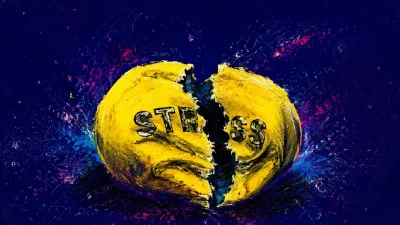
That reflex to polish the acceptable part of yourself while the rougher sentence gets deleted is the exact shape of Shadow Avoidance. Your body may register it first as shallow breathing, a stomach drop, or fingers tightening around a cup before your mind has a clean explanation. From a Jungian perspective, archetypal theory gives this pattern a language: the disowned material is not absent, just kept outside the preferred self-image. The cards below mirror those unconscious dynamics through visible postures of guardedness, selective focus, and hidden pressure: Tarot Cards for Shadow Avoidance.
Ace of Pentacles ReversedThe eye is first pulled to the bright pentacle, but the image quietly holds a barren mountain beyond the lush garden. Reversed, that contrast becomes psychologically important: the psyche may keep looking at the clean symbol of potential while leaving the rougher, less decorated terrain untouched. Shadow Avoidance emerges when attention moves toward what is beautiful, promising, or easy to name, and away from what feels dry, old, or inconvenient to the self-image. The hand's suspended gift can remain above the ground, never fully meeting the neglected parts of the inner landscape. For introspective tarot, this card can expose a refined form of avoidance. You may be seeking clarity sincerely, but the pattern keeps steering You toward the acceptable version of healing and away from the emotions, motives, or resentments that would disrupt that image.
Three of Pentacles ReversedThe blueprint directs the eye toward the planned surface, and the craftsman's tool meets the visible stone rather than the unseen interior beyond the doorway. The card's geometry makes the approved work clear, measurable, and easier to manage than whatever remains hidden inside. In the reversed field, that focus can become selective repair. The psyche keeps working on the parts of the self that look acceptable, explainable, or impressive, while the more conflicted material stays behind the arch, out of view and out of contact. Shadow Avoidance is the habit of renovating around the locked room. In introspection, You may be doing real inner work, but the card asks whether the work is touching the avoided material or only polishing the parts that are already safe to name.
Four of Pentacles ReversedThe crowned figure protects the symbol above the head and the symbol at the heart while keeping the face sealed. The scene gives no soft reflection back to him; the sky and ground are blank, and the distant town does not interrupt the guarded self-image. Shadow Avoidance appears when the inner system protects the acceptable self by refusing contact with disowned material. Shame, envy, resentment, need, fear, or anger may be kept outside awareness because they threaten the identity that has been carefully arranged and defended. You may not be unaware of your inner world; you may be guarding against the parts that would complicate the image you are trying to preserve. The card's rigidity shows why this avoidance is costly. What is excluded does not disappear; it becomes the unprocessed pressure that keeps the posture locked. In introspection, the pattern is visible wherever self-protection prevents honest contact with the very material that needs to be integrated.
Five of Pentacles UprightThe two figures can be read as the neglected, under-resourced parts of the self walking beneath an idealized window of light. The pentacles are elevated, ordered, and protected, while the wounded bodies remain on the cold street. This split shows personal growth becoming too identified with the polished future self and not integrated with the parts still hungry, ashamed, or tired. Shadow Avoidance keeps evolution performative because the material You refuse to include continues to walk beside You.
ReversedThe red-wrapped figure and the injured walker carry visible deprivation, yet the scene's brightest source of warmth remains unapproached. The wounded material is in the picture, close to shelter and meaning, but the bodies keep moving as if looking directly would cost too much. That is the defensive motion of Shadow Avoidance. You may sense the presence of old shame, need, envy, grief, or resentment, but the mind keeps it outside the circle of contact to protect the self-image that still needs to function. In introspection, the card shows that the avoided part is not absent; it is walking beside you, waiting to be included without being turned into evidence against you.
Seven of Pentacles ReversedThe scene is organized around one cultivated vine, while the wider background is plain and emotionally quiet. The figure stays near the familiar crop, close enough to monitor it, but not engaged with whatever lies beyond the bounded plot. Shadow Avoidance appears when attention remains with the parts of the psyche that can be cultivated, named, and measured. The visual focus on one productive plant can become a defense against the less orderly material outside the chosen frame. In inner-world work, this pattern shows how You may keep refining the story that already makes sense while avoiding the emotional residue that does not fit it. The card turns the cultivated plot into an audit question: what part of the inner field has been excluded because it would interrupt the clean narrative of progress?
Eight of Pentacles ReversedThe craftsman looks only at the coin under his tools while other coins, the path, and the distant town remain outside the main line of attention. The visible work is clean, repeatable, and respectable; the less organized material sits lower in the image or farther away. Shadow Avoidance uses that selective focus as its defense. You may keep working on the parts of yourself that can be improved neatly while the more charged material, envy, resentment, shame, desire, stays off the bench because it would disrupt the image of orderly progress.
Nine of Pentacles ReversedThe falcon is a creature of sharp sight, yet it sits hooded on the woman's gloved hand. Its power is present but withheld; instinct, appetite, and vision are not absent, they are covered so they can remain controlled inside the cultivated scene. In the reversed texture, that hood becomes a precise image of selective inner blindness. The psyche preserves a polished identity by blocking direct sight of the parts that would complicate it: envy, hunger, anger, shame, loneliness, or desire. The estate, robe, and pentacles then become a belief system that says order is the same thing as truth. In introspection, Shadow Avoidance can make self-awareness feel strangely incomplete. You may understand yourself in elegant language while still circling around the one feeling, motive, or contradiction that would disturb the curated version of who you are.
Ten of Pentacles ReversedThe ten pentacles hover as a perfect diagram over a scene full of thresholds, crests, walls, and checkered patterning. The card's surface is organized enough to make disorder feel out of place, while the child remains only partly visible behind the mother. Shadow Avoidance grows in that gap between display and hidden material. You may preserve an inner image of being stable, grateful, or composed by moving unwanted feelings out of sight, but the excluded material keeps returning as projection, mental noise, or a pressure that order alone cannot dissolve.
Page of Pentacles ReversedThe Page's attention selects the cleanest object in the scene and leaves the wider terrain in the background. Reversed, the selectivity becomes defensive: what can be held neatly receives attention, while what is harder to organize remains outside the frame. This is Shadow Avoidance in the language of the card. The psyche keeps working with acceptable material because the less polished material would interrupt the self-image built around being grounded, improving, and aware. In introspection, the pattern can look like discipline, spirituality, or maturity. You may keep returning to the coin because it is safe to study, while resentment, jealousy, grief, or shame waits in the landscape that the gaze refuses to enter.
Knight of Pentacles ReversedThe Knight's armor covers the body while the pentacle occupies the foreground of attention. The darker horse and the unrich field are present, but the figure's focus remains controlled, practical, and forward-facing. In the reversed texture, that controlled focus can become a way of staying with the respectable parts of the self while leaving the less manageable material untouched. The psyche keeps its gaze on what can be held neatly, while resentment, shame, envy, grief, or desire remain outside the official story. In introspection, Shadow Avoidance hides behind discipline. You may look like you are doing serious inner work, but the card shows when the work stays close to what is acceptable and avoids the material that would actually disturb the self-image.
Queen of Pentacles ReversedThe Queen appears to be studying the pentacle, but the card's deeper tension comes from how safe and complete the scene feels. The throne, garden, shade, and held object form a self-contained chamber where looking can continue for a long time without the body needing to move. Reversed, that chamber can become a refined avoidance structure. The psyche keeps the difficult material near enough to interpret, but not near enough to feel directly. Symbols, rituals, and self-analysis become a beautifully organized orbit around the part of the shadow that would disturb the cultivated inner order. In introspective tarot, this pattern shows how You can use depth language to avoid depth contact. The issue is not that the practice is empty; it is that the search for the right meaning can become a defense against the direct emotional encounter that the meaning is pointing toward.
King of Pentacles ReversedThe card's surface is rich, composed, and cultivated: crown, grapes, vines, throne, pentacle, scepter, castle. Yet beneath the robe, armor remains visible, showing that the polished identity is still built around protection. In reversal, the beautiful surface can become a filter that decides which parts of the psyche are acceptable. The mature, grounded image leaves little room for motives that feel less flattering: control hunger, envy, possessiveness, dependency, or fear of loss. Shadow Avoidance forms when the self keeps identifying with the respectable surface and exiles whatever does not match it. In introspection, this pattern does not mean the shadow is dangerous; it means the inner audit has found the parts that were denied access because they threatened the image of being fully stable and in command.
Two of Swords UprightThe sea, moon, and distant shore sit behind the woman while her body stays closed and forward-facing. The unconscious material of the card is not absent; it is placed just out of direct contact. Her posture creates a clean boundary between the self that can deliberate and the self that may already know something less convenient. Shadow Avoidance shows up when a direction question cannot be answered because the disowned material is carrying part of the truth. You may avoid admitting that a respectable path feels dead, that a desired path threatens your identity, or that someone else's expectation has been mistaken for your own compass. The crossed swords protect the conscious self from information that would disrupt the current self-image. The Two of Swords makes that avoidance visible without turning it into a flaw. The hidden material is not an enemy; it is unintegrated data. In direction work, the real blockage often sits where the official life plan and the private inner signal refuse to look directly at each other.
ReversedThe blindfold covers the eyes while the moon hangs between the two blades, placing unconscious material in the exact center of the conflict. The woman is calm, but the calm depends on not looking directly at what the scene is organizing around. Shadow Avoidance takes shape when personal growth is allowed only as long as it does not expose the disowned motive, fear, envy, anger, or desire underneath the polished self-story. You can keep doing inner work while still protecting the one truth that would actually change the pattern. The water behind her is quiet, not empty. What is avoided remains present in the field, and the crossed swords show how much energy is required to keep it unexamined.
Four of Swords ReversedOne sword lies underneath the knight, parallel to the body, hidden inside the resting structure rather than displayed with the three swords above. The visible posture looks composed, but the card quietly places the root of tension beneath the figure's entire weight. Shadow Avoidance appears when the relationship can only remain peaceful by keeping certain truths out of view. In love, those truths might be resentment, fear of dependence, jealousy, a desire to leave, or a need that feels too exposed to admit. You do not have to force every hidden thing into speech at once, but the card shows why silence can become heavy when it is built on concealment. The unacknowledged material does not disappear; it becomes part of the bed the relationship is lying on.
Seven of Swords ReversedThe figure's backward smile creates a charged visual contradiction: he is leaving the scene, but his attention is still hooked into the place he is escaping. The body carries the evidence of the act while the face tries to make the act look clever, light, or justified. In a reversed psychological field, that contradiction becomes a way of not meeting the disowned material directly. The psyche keeps moving, explaining, minimizing, or reframing so the uncomfortable motive never has to stand still in consciousness. For introspection, Shadow Avoidance appears when You can sense the hidden impulse but keep stepping around it. The card shows the exact mechanics of that avoidance: the part You do not want to own is already in Your hands, yet the mind keeps looking elsewhere so it can remain unnamed.
Eight of Swords UprightThe woman is surrounded by sharp mental symbols while her eyes are covered and her hands are bound behind her. She is not unconscious, but she is prevented from directly touching or seeing the conditions that hold her in place. That is why the card anchors Shadow Avoidance so strongly. The psyche knows there is material nearby, but it keeps the most charged parts of the inner world behind the blindfold: resentment, desire, shame, anger, grief, or fear that would disrupt the controlled self-image. In introspective work, the muddy water matters. It shows emotional material at the threshold, close enough to affect the body but not yet cleanly integrated. The pattern is not about having a shadow; it is about circling the shadow while calling the circling self-awareness.
Nine of Swords UprightThe quilt covers the lower body while the upper body remains exposed to the swords, creating a split between protected vulnerability and visible distress. Along the bed frame, the carved scene remains uncovered, as if the deeper story is present in the room but not being directly looked at. Shadow Avoidance works through that split. The mind stays busy with the pain it can name while circling around the hidden content that gives the pain its charge. The repeated, incomplete symbols on the quilt add to this coded feeling: meaning is everywhere, but the central truth remains avoided. In introspection, this pattern can look like deep self-analysis while still protecting the most uncomfortable material from contact. You may be close to the shadow without integrating it, using distress, symbolism, or mental activity to remain near the truth without fully turning toward it.
Ten of Swords ReversedThe body turns away from the viewer while the river, mountains, and dawn remain visible behind him. The route toward the other bank exists, but the figure is pinned before crossing, leaving the hidden face and the unreachable horizon in the same frame. This creates the shape of an inner threshold that cannot yet be crossed. You may circle the same reaction, resentment, desire, or grief without naming it directly; the pattern protects the conscious self from the disowned material, but the unlooked-at content still organizes the whole scene.
Queen of Swords ReversedThe red hood covers the Queen's hair beneath a crown, and the white robe keeps her figure visually immaculate. The throne is decorated with angelic and butterfly forms, making transformation appear orderly, elevated, and acceptable. The hidden tension is that the heavier clouds remain below and around the throne rather than being entered directly. You may preserve a clean self-image by keeping anger, envy, desire, grief, or need outside the version of yourself that feels safe to know. Shadow Avoidance is the pattern of staying above the fog because descending into it would complicate the identity you have learned to maintain. The card reveals where inner order is being protected by excluding the material that would make the self more whole.
King of Swords ReversedThe butterfly on the throne points toward transformation, but it is fixed into stone behind the king's controlled body. The figure stays elevated above the earth, and the emotional landscape is kept at a distance. Reversed, the image suggests a mind that can admire transformation while refusing the raw material that transformation requires. That is the mechanism of Shadow Avoidance. In introspection, You may read the wound, name the projection, or build a precise language for the psyche while still avoiding the parts that feel needy, angry, jealous, ashamed, or irrational. The card shows self-knowledge becoming clean enough to stay safe, but not deep enough to reach the exiled material. The sword can help reveal what has been hidden, but only if it stops treating the hidden part as contamination. The pattern is not a failure of awareness; it is awareness being used to keep the shadow organized at a distance.
Four of Wands ReversedThe card places the bright celebration in front while the larger home sits across distance and water. Reversed, that separation can show a psyche lingering at the beautiful threshold because the deeper house contains material that would disturb the ceremony. Shadow Avoidance grows from this split between the presentable foreground and the avoided interior. The mind keeps revisiting the parts of introspection that feel clean, hopeful, or meaningful, while jealousy, anger, need, shame, and old resentment stay behind the bridge. For introspection, the Four of Wands reversed does not condemn the need for safety. It shows that the safe threshold has become too comfortable when it keeps you from entering the rooms where the rejected parts of the self are still waiting to be included.
Nine of Wands ReversedThe most charged space in the image is the gap in the wand fence, and the figure stands directly in front of it. His gaze turns outward, while the break behind him quietly marks the place where the structure is not as sealed as it appears. That posture turns attention away from the inner breach. You can keep watching for external threats while the less acceptable material inside remains guarded by the very stance that claims to protect you. In introspection, Shadow Avoidance appears when the mind studies everything except the feeling it most needs to face. The psyche keeps the darker content at the edge of awareness, not because it is meaningless, but because naming it would require the whole defensive line to reorganize.
Ten of Wands ReversedThe wands stand between the face and the horizon, blocking both self-presentation and wider perception. The carrier can keep moving forward, but the movement is also a screen that prevents direct contact with what is happening inside. Shadow Avoidance works by making busyness feel safer than recognition. You may stay loaded, useful, and externally directed because stillness would bring up anger, shame residue, envy, grief, or projections that have been kept behind the bundle. The avoided material does not vanish; it travels inside the weight.
Queen of Wands ReversedThe black cat sits exactly where the Queen's bright authority meets the ground. It is small compared with the throne and sunflowers, but visually it carries the concentrated darkness of the entire card. When that material is avoided, growth turns into brightness management. The pattern keeps ambition, anger, appetite and private intensity below the throne, then wonders why the visible self starts to feel brittle, performative or blocked.
No cards available for this filter.