What Does This Mean Between Us?

Explore the blurred feeling of unreadable connection through related tarot cards and Tarot Reading Insights from reflective sessions.

Relational Fog
What does this feel like?

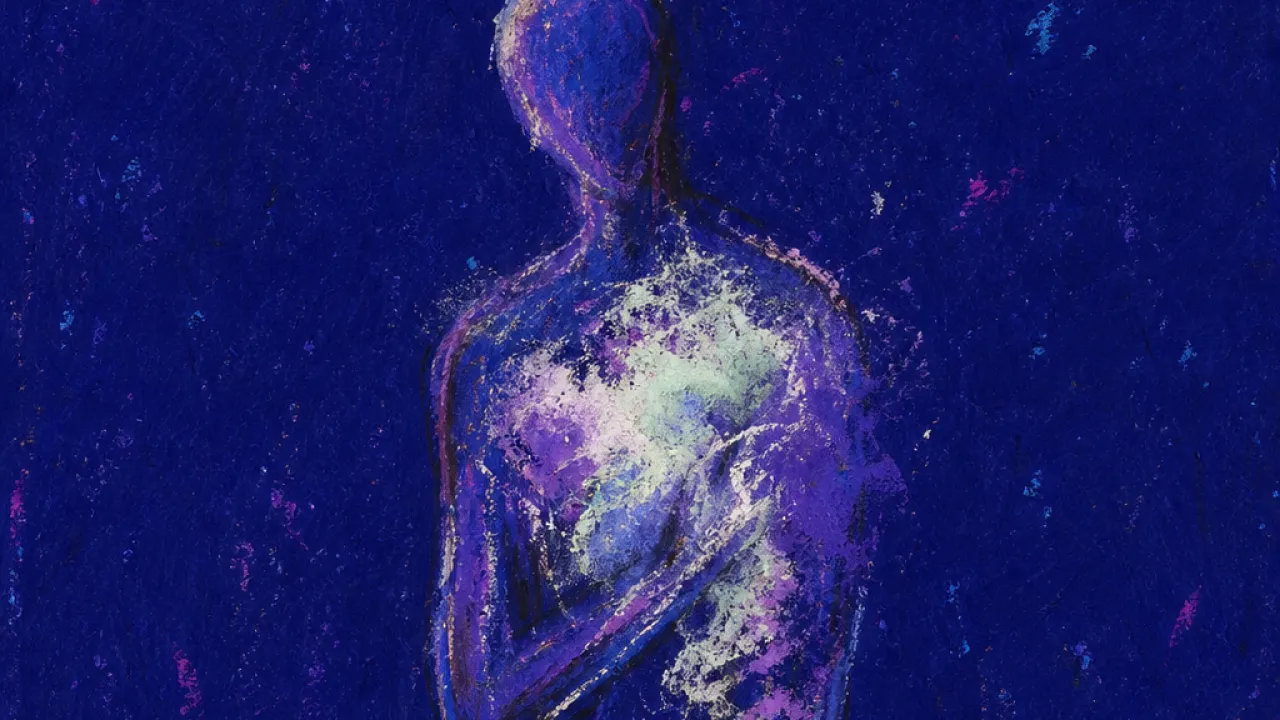
Relational Fog — you can feel it before you can name it, like a low mist pressing into your chest when a message arrives, a tone changes, or a silence stretches just long enough to make your body start scanning. Nothing is fully missing, but nothing lands cleanly either; warmth, distance, attraction, loyalty, doubt, care, and caution all move through the same air until the connection starts to feel readable only in fragments. You replay small details while brushing your teeth, pause over a notification longer than you meant to, reread a sentence that should have been simple, then wonder why your stomach is tight when nobody has said anything clearly wrong. It can make ordinary contact feel strangely high-stakes: a delayed reply becomes a weather report, a joke feels like a clue, a soft gesture feels comforting and loaded at the same time, and your mind keeps asking, "Am I sensing something, filling in blanks, or losing my grip on my own read?" The hardest part is the almost-clarity — the sense that if you could just get one more signal, one cleaner sentence, one moment without emotional static, the whole picture would assemble, but it keeps breaking apart as soon as you reach for it, much like The Moon lighting a path in fragments, where the road is visible, the gate is distant, and nothing is completely hidden yet nothing is fully revealed.

Why you're feeling this?

Relational Fog makes sense because connection is not just something you think about; it is something your whole system tries to read. When the signals feel partial, mixed, or hard to place, your uncertainty is not a failure. It is your inner field asking for steadier light before you decide what anything means.

Relational Fog in Tarot Cards

That dim pressure of reading tone, timing, silence, and tiny shifts without a stable picture — Relational Fog has a body, and it often sits as a tight haze behind your ribs and throat. This is a universal emotional experience: the human need for connection can keep scanning even when the field is too blurred to settle. Tarot gives that blur a visible shape without forcing it into a verdict. Here are the Tarot Cards that tend to mirror Relational Fog.

The Moon Upright
The Moon's road is unmistakably there, but it does not offer clean orientation. It bends through a guarded landscape under reflected light, while the central face above the scene keeps its eyes closed. Relational Fog fits family systems where meaning travels sideways. A request may carry guilt, silence may carry punishment, and care may arrive mixed with control, leaving you unsure whether you are reacting to the present moment or to the older pattern behind it. The card gives the fog a structure. You are not simply confused; you are moving through a field where emotional signals are indirect, boundaries are unstable, and clarity has to be reclaimed from atmosphere rather than handed to you in plain words.
Reversed
The dog and wolf stand as paired responses under the same moonlight: one familiar and socialized, the other raw and untamed. Between them and the horizon, the towers create a guarded passage, while the reflected light gives outlines without letting the scene become fully legible. Relational Fog emerges when introspection cannot separate present perception from old projection. A reaction to another person may be real, but it may also be carrying a shadow from previous disappointment, self-protection, or unspoken need. The Moon helps you see that the confusion is not random. It shows an inner field where the social self and the instinctive self are both reacting, and where clarity begins by naming which part of you is barking at the moon before deciding what the other person means.
Judgement Reversed
The ground beneath the coffins in Judgement reads like mud and water at once, giving the scene an unstable base even as the trumpet creates a clear call above. The mirrored families, the turned child, and the encircling mountains make orientation feel emotionally charged rather than simple. In love, this is the fog of not knowing whether the relationship is ending, repairing, or repeating the same cycle in new language. Signals appear everywhere, but they do not settle into a stable answer you can stand on. Relational Fog belongs to this reversed reading because the card’s awakening signal becomes difficult to integrate when the ground itself feels uncertain. The emotional work is not to force instant certainty, but to notice which signals are clarifying the bond and which ones are keeping you suspended.
Six of Cups Reversed
The offered cup can be read as care, memory, innocence, apology, or projection, and the card allows all of those meanings to hover in the same bright space. The protected courtyard keeps the exchange gentle, but it also makes the present relationship easy to filter through older emotional templates. Relational Fog appears when you cannot tell whether you are responding to what is happening now or to what the moment resembles. In love, a sweet gesture can feel real, rehearsed, loaded, or familiar all at once. The reversed Six of Cups connects this haze to the past tinting present perception. It does not erase the affection in the scene; it shows why affection can become hard to read when memory, hope, and old attachment needs are all using the same symbol.
Seven of Cups Upright
The cups rise out of cloud rather than landscape, and the figure can only face them from below. The scene offers images instead of evidence, symbols instead of contact, and a visual field where every cup looks meaningful before any of them becomes verifiable. In friendship, this becomes the weather of reading tone, silence, invitations, exclusions, and delayed replies as if they were floating omens of the bond. You keep trying to locate the real shape of the relationship, but the card shows a system where closeness is visible only through misted signs and partial projections.
Eight of Cups Reversed
The moon sliding over the sun leaves the landscape visible but not fully legible. The figure can see enough to move, yet the path ahead is dim, the face is hidden, and the river crossing makes the boundary between leaving and staying feel unstable. Relational Fog is the inner weather of not knowing what the friendship is asking of you anymore. You may feel pulled between loyalty, discomfort, guilt, and the quiet suspicion that the old closeness is no longer emotionally clean. The card does not force a verdict from the fog. It gives you a mirror for the threshold itself, where the work is not to rush into a dramatic answer but to notice which signals keep disappearing whenever you try to name the truth of the bond.
Page of Cups Reversed
The sea behind the Page makes the background feel mobile, even while the figure stands on a flat platform. His gaze narrows onto the cup and fish, leaving the wider scene emotionally out of focus. The soft blue and pink surfaces keep the atmosphere gentle enough that confusion does not immediately look like conflict. Relational Fog is the feeling of being inside a romance where nothing is openly broken, yet the meaning of the connection keeps blurring. You can sense tenderness, avoidance, fantasy, and hesitation moving through the same space, but the edges between them refuse to stay clean. The reversed Page of Cups supports this emotion because the card's receptive symbolism becomes over-saturated. The cup still receives, the water still moves, and the fish still appears, but the emotional signal is no longer easy to translate into grounded relational clarity.
Knight of Cups Reversed
The rider's eyes stay with the cup while the route beyond the water remains undefined. The horse continues forward, but the landscape does not give a clean map of what happens after the crossing. In friendship, this captures the mental haze of not knowing where the bond stands. You keep reading tone, response time, favors, silence, and emotional access, but the connection refuses to resolve into a clear shape.
King of Cups Reversed
Layered green and blue waves fill the background, the boat sits far off, and the king's gaze narrows toward the cup rather than the whole scene. The card's emotional field is active but not transparent. When reversed, this concentration can become too narrow, turning one feeling into the lens through which everything else is read. Relational Fog fits because the issue is not a lack of feeling; it is too much emotionally tinted perception. In love, you may keep asking whether a signal is intuition, fear, projection, or evidence. The card shows the mind staring into the cup until the wider relationship weather becomes harder to distinguish. The distant boat suggests that orientation still exists, but it is not close enough to settle the body immediately. This emotion asks for a clearer map of what belongs to the present connection and what belongs to the inner sea it has activated.
Two of Swords Upright
The blindfold, dim shoreline, dark island, and distant shore create a field where the woman has reference points but no clean visual access to them. The scene is not empty; it is full of signals that cannot be read with certainty. Relational Fog forms in friendship when the bond still contains warmth, history, and shared language, but the current emotional weather no longer matches the old map. You can sense a shift in tone, reciprocity, or power, yet the evidence stays soft enough that you keep questioning your own read.
Three of Swords Upright
The heart appears inside gray mist and rain, with no face, ground, or horizon to provide context. The wound is obvious, but the surrounding field makes the story around the wound harder to locate. Relational Fog enters family readings when the emotional impact is clear but the meaning keeps shifting. A parent may call control concern, comparison motivation, silence peacekeeping, or guilt love, leaving you unsure which signal to trust. The Three of Swords gives the fog a hard center. It shows that confusion does not erase impact. Even when the family narrative keeps blurring the edges, the body can still register where the blade went in.
Reversed
Clouds and rain fill the field around the heart, while the absent horizon removes any stable point of reference. The wound is sharply visible, but the surrounding weather makes the situation hard to locate. In friendship, Relational Fog appears when the impact is real but the meaning is hard to read. You may be stuck between loyalty, doubt, group dynamics, and your own memory of what happened, trying to tell whether the cut came from one person, the whole atmosphere, or the silence that followed.
Four of Swords Upright
The chamber gives no horizon and no clear path forward; the knight lies inward-facing in a low-contrast field of gray wall, gray swords, and muted body tones. The only bright window sits off to the side, present but not integrated into the figure's line of sight. Relational Fog belongs here because the card captures a friendship that has entered a suspended state. Nothing is actively breaking, yet nothing clearly moves toward repair, renewal, or ending either. In that quiet ambiguity, your mind may keep asking whether the friendship needs rest, distance, honesty, or release. The Four of Swords does not rush the answer; it shows the moment when clarity has to form in stillness before the next relational move can be made.
Five of Swords Reversed
The gray water, distant bank, and wind-shaped clouds make the scene feel readable only in fragments. The figures do not face one another, so the viewer is left with posture, distance, and aftermath instead of a clear account of what happened. Relational Fog appears when a friendship conflict is built from half-comments, tonal shifts, private alliances, and things everyone feels but no one names. You can sense that something has changed, but the evidence arrives as atmosphere rather than a single clean fact. The reversed field of this card holds that uncertainty without forcing a premature conclusion. It shows the mind trying to navigate a social shoreline where motive, accountability, and repair are all blurred by distance.
Six of Swords Upright
The figures face away from the viewer, and even the direction of their gaze is muted by cloaks, distance, and downward angles. The shore ahead exists, but it is pale and unresolved, giving the whole crossing the feel of a transition that has not yet found language. In friendship, Relational Fog appears when you cannot tell whether you are repairing, withdrawing, outgrowing, or quietly ending something. The bond is still in the boat with you, but the meaning of that bond has become hard to name. The Six of Swords captures this uncertainty without forcing a verdict. It shows that confusion can be part of an honest crossing, especially when old closeness no longer fits and the next form of connection has not arrived yet.
Reversed
No one in the boat offers a face, a glance, or a clear relational signal. The far shore is visible only as pale distance, and the water gives no strong landmark except the slight disturbance made by the oar. Relational Fog fits when your social map has lost contrast. You may be surrounded by contacts, chats, and loose circles, yet still unable to tell who feels aligned, who is safe to move toward, or which community actually has room for you. The card does not make the uncertainty a moral problem. It shows a low-visibility crossing where connection cannot be forced into clarity before the inner navigation system has had time to recalibrate.
Seven of Swords Upright
The scene sits in deep yellow dusk, with tents, flags, hills, trees, a house, low clouds, and divided swords all competing for attention. Nothing in the image gives one clean emotional horizon; it is a threshold between day and night, inside and outside, taken and left. Relational Fog emerges when a love situation carries too many half-signals to organize into one clear story. You can see pieces of the truth, but they do not settle into a stable map of whether the connection is repairing, distancing, hiding, or quietly changing shape. The Seven of Swords does not make the fog mystical. It makes it structural: incomplete information, indirect movement, and a relationship field where the most important things are happening slightly out of direct view.
Eight of Swords Upright
The castle, mountains, water, and swords can all be seen from outside the image, but the central figure cannot use that information because her eyes are covered. The structure is clear to the viewer and unavailable to the body living inside it. Relational Fog follows that exact split. In friendship, other people may tell you the pattern looks obvious, but from inside the bond the signals blur: closeness, obligation, jealousy, withdrawal, care, and control can start to occupy the same emotional space. The Eight of Swords makes this fog concrete by showing clarity as something blocked at the level of perception, not intelligence. You are not missing the truth because you are careless; the friendship field has become arranged in a way that makes clean interpretation difficult until the blindfolded assumptions are named.
Page of Swords Reversed
The Page stands beneath layered clouds with distant birds and mountains still visible but not fully clean. His sword gives the scene a line of analysis, yet his head turns elsewhere, so the card never settles into one simple direction of knowing. Relational Fog emerges from that split field of vision. In a friendship, you can sense that something is happening, but the meaning keeps shifting: closeness, rivalry, drift, obligation, and care all blur into the same weather system. The card gives this fog a precise shape. It shows the mind trying to use sharp perception in a bond where the emotional atmosphere is too clouded for quick certainty, which is why the confusion feels so consuming instead of merely unclear.

Relational Fog in Tarot Card Reading Insights

For anyone who has sat inside Relational Fog, trying to read a bond through half-light, others have brought this same haze into readings too. The shift from cards to sessions shows how this feeling appears when people ask for clarity without already having it. Tarot Reading Insights from sessions involving Relational Fog.
Psychological emtions related to Relational Fog