What If You Can't Tell Yet?

Trace the half-lit feeling, see matching tarot cards, and browse reading insights where uncertainty enters the draw.

Ambiguity Dread
What does this feel like?

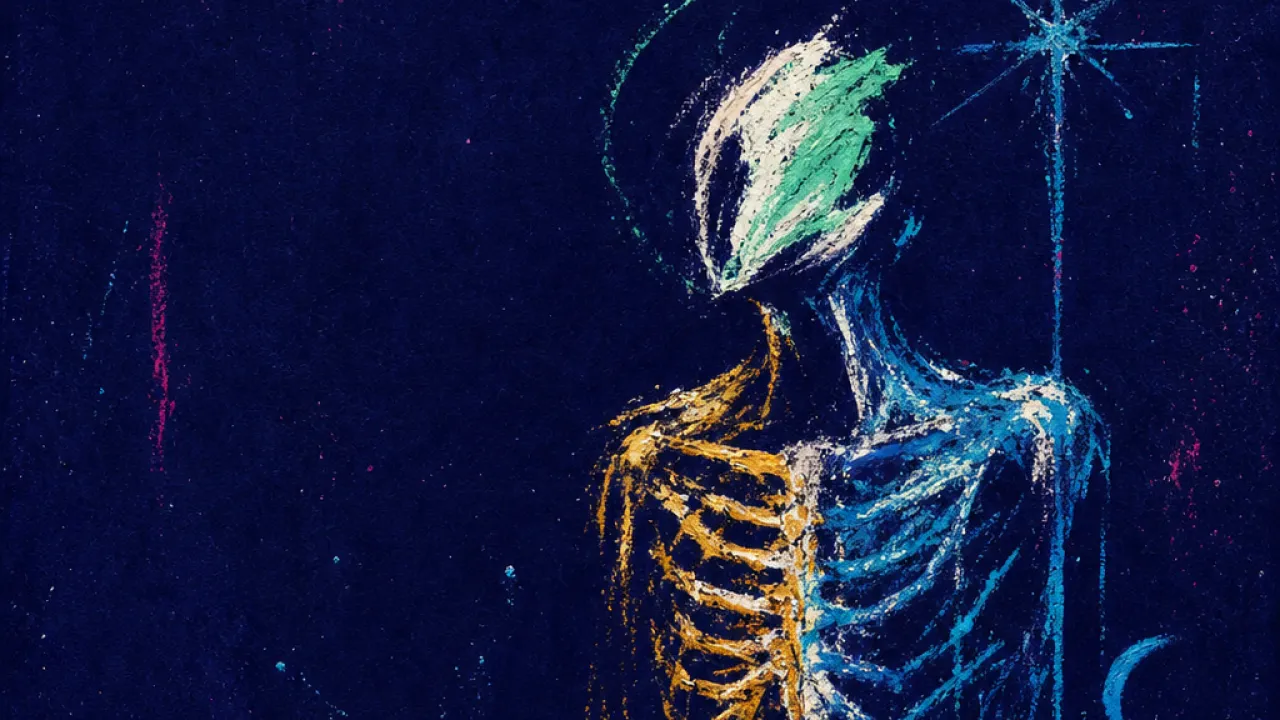
Ambiguity Dread: you can see the outline of the situation, but the edges will not sharpen, and your body starts acting like the missing details are already pressing against you. It can begin as a tight ribcage, a held jaw, a low cold feeling in your stomach while you stare at a message, a calendar invite, a pause in someone's voice, or a plan that technically exists but will not become clear enough to rest on. You keep rereading the same words, checking the same signals, trying to tell whether the silence is harmless, loaded, temporary, or the first sign of something shifting under your feet. The day gets narrower around it; you answer other texts, do your work, make food, laugh at the right moment, but a part of you stays turned toward the half-lit corner of the room, waiting for one clean sentence to arrive and make everything readable. Inside, the questions loop in small, sharp pieces: What am I supposed to do with this? Am I missing the obvious? If I move now, am I stepping toward clarity or into a version of my life I cannot inspect yet? Ambiguity Dread is not just fear of the unknown; it is the ache of having enough information to stay alert and not enough to feel settled, much like The Moon, where the road keeps going between two towers under reflected light, visible enough to follow and too dim to trust.

Why you're feeling this?

Ambiguity Dread is not a failure of confidence; it is what happens when something matters before the picture has enough edges. You are not wrong for bracing in half-light. Some part of you is trying to keep the next step from becoming a blind step.

Ambiguity Dread in Tarot Cards

Ambiguity Dread has a half-lit shape: enough outline to keep you moving, not enough clarity to let your body settle. That low cold stomach, tight ribcage, and held jaw show how uncertainty can become a universal emotional experience when the signs stay partial. Tarot gives that corridor a visual language without forcing it into a clean answer. Here are the Tarot Cards that mirror Ambiguity Dread.

The Moon Upright
The dim path running from the pool toward the two towers gives the card its central emotional pressure: movement is possible, but the route is lit by reflected light, partial shapes, and a horizon that refuses to clarify itself. The closed-eyed moon above does not offer direct certainty; it casts enough illumination to reveal that there is a path, while withholding the kind of proof that would make the next step feel clean. That visual tension mirrors the personal growth moment when your old map stops working before a new one has stabilized. You can sense that a threshold is ahead, but every signal arrives through mood, instinct, projection, and incomplete information. Ambiguity Dread belongs here because the fear is not simply fear of change. It is the specific inner weather of knowing you must move through uncertainty while your mind keeps demanding a level of clarity the landscape cannot provide yet.
Judgement Reversed
The cemetery floor looks like land and water at once, with coffins floating in a cold field while the angel remains partly veiled by cloud. In a choice reading, that unstable terrain captures the dread of making a call before the environment becomes readable. You can hear that something must change, yet the blurred ground makes every option feel under-specified and difficult to trust.
Four of Cups Upright
The scene gives the figure cups but no road, no horizon line of action, and no visible next step. His closed eyes deepen the sense that the problem is not just what is being offered, but the uncertainty surrounding what the offer would become. In a decision context, this creates dread around the unknown space after the choice. The cups may be real, but they do not disclose their hidden costs, future consequences, or the version of life each one would ask you to inhabit. Ambiguity Dread names the pressure of needing to move without total proof. The card does not remove uncertainty; it makes the fear of unverifiable outcomes visible enough that it stops disguising itself as neutral caution.
Seven of Cups Upright
A covered figure sits among the cups while the surrounding visions reveal only enough to attract attention, not enough to create certainty. The mist removes the horizon, so the scene offers possibility without a trustworthy route through it. Family choices often carry that same hidden underside. Saying yes may preserve contact but blur autonomy; saying no may create clarity but awaken guilt, silence, or retaliation in the emotional atmosphere of the group. Ambiguity Dread arises when every option seems to contain an unseen cost. The card gives this feeling a visual body: beautiful cups with concealed interiors, suspended in a space where the next step cannot be verified before it is taken.
Reversed
Cloud replaces the horizon, and the cups float without a stable floor beneath them. The scene offers symbols instead of a road, so desire, warning, fantasy, and insight all share the same uncertain atmosphere. In personal growth, that uncertainty becomes heavy when there is no syllabus for the next version of your life. You may be able to sense that something needs to change, but the lack of a clear route turns openness into a pressure field. Ambiguity Dread names the fear of having to choose before reality has become legible. The reversed Seven of Cups shows the emotional cost of standing inside possibility when no symbol has yet proven itself trustworthy enough to follow.
Eight of Cups Reversed
The moon crossing the sun leaves the landscape half-lit, and the route into the hills is visible only as a dark direction rather than a clear plan. The figure moves under a sky that refuses full certainty. In career decisions, that dimness becomes dread when you know the old role is not enough but cannot yet see the next stable landing. The card holds the pressure of choosing under partial information, where clarity arrives as a narrow path rather than a floodlight.
Two of Swords Upright
The calm sea behind the woman is not empty; it carries tide, reflection, and unseen movement. The moon sits between the swords like a soft signal that cannot be pinned down by force. Family ambiguity often works the same way: nothing obvious may be happening, yet every silence, pause, and vague comment seems to carry a second layer. You may feel the pressure of what is not being said more sharply than the words themselves. Two of Swords gives that dread a visual form. The threat is not a single fact; it is the unstable emotional weather around unclear expectations, hidden disappointment, and meanings that keep shifting under the surface.
Reversed
The night sea, dark island, and hidden eyes create a field where direction exists but cannot be fully verified. The tide may rise or withdraw, the shore may remain reachable or become harder to cross, and the body has to hold still inside that uncertainty. In personal growth, ambiguity becomes heavy when every option seems to carry an identity cost. You are not simply choosing a task; you are trying to choose which version of yourself gets to become real. Ambiguity Dread belongs to the Two of Swords because the card makes uncertainty physical. The blindfold does not erase the world; it turns the world into an unresolved pressure around the body.
Six of Swords Reversed
The passengers' hidden faces, the lowered gazes, and the pale shore ahead remove the usual cues that would tell the body what kind of future is waiting. The boat has direction, but the image withholds emotional feedback; it shows a crossing before the destination has enough color to feel real. When a choice is being weighed, that absence can become its own pressure. You are not only deciding between options; you are trying to read a future that refuses to become vivid, and the card gives that underlit uncertainty a visible shape.
Eight of Swords Upright
The blindfold removes direct sight, while the muddy water underfoot makes the ground itself difficult to read. Behind the figure, the grey castle and distant mountains hold a possible direction, but the route toward it is visually uncertain. Ambiguity Dread belongs here because the card is not simply about being blocked; it is about trying to make a choice without clean perception. In a decision reading, the fear gathers around what cannot be verified: hidden costs, unspoken motives, future regret, and the emotional price of choosing too soon. The Eight of Swords turns ambiguity into something concrete. You are not asked to pretend the unknown is harmless; the card shows how uncertainty becomes frightening when the mind loses access to trustworthy orientation.
Two of Wands Reversed
The high ledge, the globe, and the distant coastline create a viewpoint with more scale than contact. You can see a lot, but the picture does not show the bridge between the wall and the terrain below. Ambiguity Dread grows out of that missing bridge. The options are visible enough to matter, yet incomplete enough to keep the whole inner system braced against what cannot be verified before choosing.
Three of Wands Reversed
The far shore is visible but faint, and the sea between the figure and the destination occupies most of the psychological space. The man watches the distance from a high place, yet the image gives him no close-up feedback, no clear arrival point, and no immediate proof. Ambiguity Dread rises from that partial visibility. You can see enough to know a choice matters, but not enough to make the future feel internally stable. The ships moving in the distance keep the situation active, while their remoteness keeps the consequences unresolved. For choice work, this card mirrors the pressure of deciding without total information. The dread is not a failure of logic; it is the body reacting to a field where several paths remain plausible and none of them can remove the unknown before you choose.

Ambiguity Dread in Tarot Card Reading Insights

For anyone sitting with Ambiguity Dread, that half-lit path can enter a reading as a question about signals, timing, or the next step. Others have brought this same braced feeling into readings when the signs were present but hard to trust. Tarot Reading Insights from sessions shaped by Ambiguity Dread.
Psychological emtions related to Ambiguity Dread