Is Tone Deciding the Meaning?
See how delivery takes over judgment, which tarot cards mirror the bind, and what surfaced in related reading insights.

Tone-truth Fusion
What does this feel like?
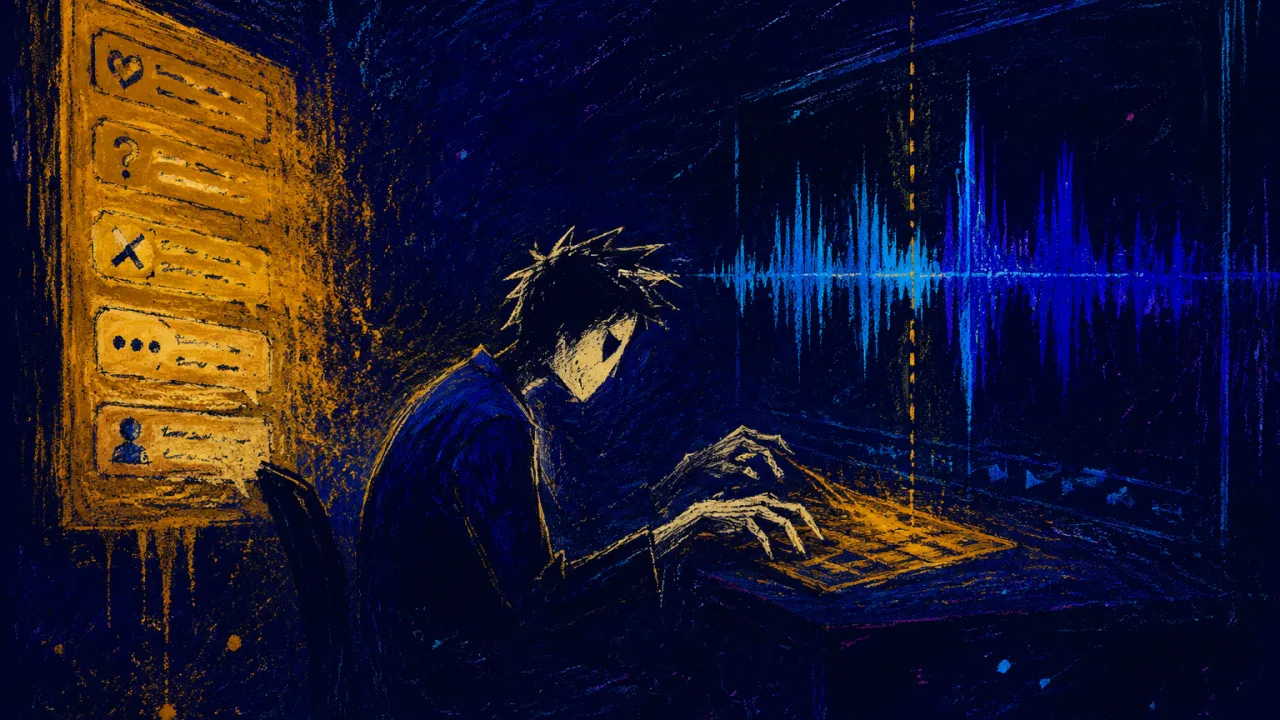
Tone-Truth Fusion: you open a message that says, "We've already covered this," and before you can decide whether the point is fair, the clipped sentence lands like a verdict. Your shoulders lift, your fingers stop above the keyboard, and heat gathers around your eyes. You read it again, looking for evidence in the punctuation: maybe they sound certain because you really did miss something; maybe the sting in your chest is proof that they have seen a flaw you should have caught. Then the same confusion runs in the other direction. Someone tells you something dismissive in a soft voice, adds a smile, and you hear yourself agreeing because calm sounds reasonable, even while your body stays rigid in the chair. Later, you replay the exchange and cannot keep two questions apart: was the point fair, and was the way it was delivered acceptable? A sharper voice can make a weak claim feel solid; a warmer voice can make an unfair claim hard to challenge. When it is your turn to speak, you rewrite one clear sentence six times, sanding away the point because you fear that firmness will make you wrong. The cost is not just a difficult conversation. Bit by bit, your sense of what happened starts depending on who sounded most composed, disappointed, or certain, until your own reading of the moment feels unavailable to you, much like the figure in the Two of Swords, blindfolded at the water's edge, holding two crossed blades while an open horizon remains behind her.
What's pulling at you?
You are trying to answer two separate questions at once: was what they said fair, and was the way they said it acceptable? When those questions become one, a sharp delivery can make a weak point feel undeniable, while a gentle delivery can make an unfair point feel reasonable; your need to protect your dignity and your need to judge the message clearly keep blocking each other.
How It Shows Up?
- You open Slack before breakfast and see, "As I said yesterday..." Your eyes catch on the ellipsis while the rest of the message fades into background noise; your shoulders rise, your fingertips cool, and you start drafting an apology before checking whether the request has changed. The cursor blinks through a Two of Swords pause: answer the point or answer the tone. You can leave the reply in drafts until both questions are visible.
- A partner or friend says, "You never follow through," then adds, "I'm just being honest," in a low, even voice. You nod because their calmness makes your objection feel dramatic, while your chest stays tight and one palm remains flat against the table. You do not have to decide that a calm delivery settles what was said.
- Someone makes a sarcastic joke about you while everyone is getting drinks, and the group laughs before you have worked out what just happened. You smile half a second late, your jaw sets, and your stomach drops as the confidence of the joke starts to feel like evidence. It is enough to notice how it landed without turning the group's laughter into a verdict.
- At 1:13 a.m., you replay a voice note, dragging the progress bar back to the same five seconds. Each sigh and pause grows louder than the words; pressure collects behind your eyes and your breathing becomes shallow as you search the speaker's tone for a final answer. The phone glows like a small moon beside you, but it does not have to deliver a verdict tonight; you can stop without one final listen.
- You type, "I can't take this on by Friday," then replace it with, "I might be a little stretched, sorry!" Your hands hover over send and your shoulders remain locked, as if clarity itself could make you unfair; by the sixth rewrite, the deadline remains but your limit has vanished. You can let the message rest before choosing a version, with kindness and clarity held as separate weights.
Tone-truth Fusion in Tarot Cards
Tone-Truth Fusion lives in the moment when delivery starts deciding whether a message counts as fair. Your shoulders lift and your fingers go still as the same sentence pulls your attention back to its punctuation. From an existential perspective, the structural framework of this struggle is the loss of a stable place from which to weigh impact and content separately. The Tarot Cards below mirror the visible shape of that standstill.
Tone-truth Fusion in Tarot Card Reading Insights
Others have brought Tone-Truth Fusion into readings after a clipped message, a calm dismissal, or feedback that will not stop replaying. The articles below gather Tarot Reading Insights from those sessions.

Family Arguments and Self-Doubt: Testing a Self-Defined Path
Topic:Direction Tarot Reading
Struggle:Internal Authority Collapse
Context:Social Clock Pressure
Spiritual Bypassing Behind 'I'm Fine': Name the Need First
Topic:Introspection Tarot Reading
Struggle:Masked Self-Division
Context:Quarter-Life Crisis
Advisor Email Perfectionism: From Imagined Verdict to Clear Request
Topic:Study Tarot Reading
Struggle:Control Lock
Context:Advisor Power Imbalance

Forced Positivity at Work: From a Deleted Sentence to a Boundary
Topic:Personal Growth Tarot Reading
Struggle:Pseudo Growth Loop
Context:Toxic Positivity Culture

When a Dry Reply Feels Like a Verdict: Reading Patterns Over Time
Topic:Friendship Tarot Reading
Struggle:All-or-Nothing Belonging
Context:Friendship Whiplash

“That Should Be Fine”: From Camera-Off Silence to an Honest Limit
Topic:Introspection Tarot Reading
Struggle:Masked Self-Division
Context:Public Mask Maintenance

Peacekeeper Burnout: From a Deleted Message to a Boundary at Work
Topic:Introspection Tarot Reading
Struggle:Caretaker Role Lock
Context:Friend Group Triangulation

A Thirty-Second Pause Turned a Verdict Into One Open Question
Topic:Social Tarot Reading
Struggle:Truth-Connection Split
Context:Toxic Positivity Culture