Adapting Before You Choose?
A clear definition of rapid reframing, the tarot cards that mirror it, and insights from related readings.

Cognitive Flexibility
What is this really?
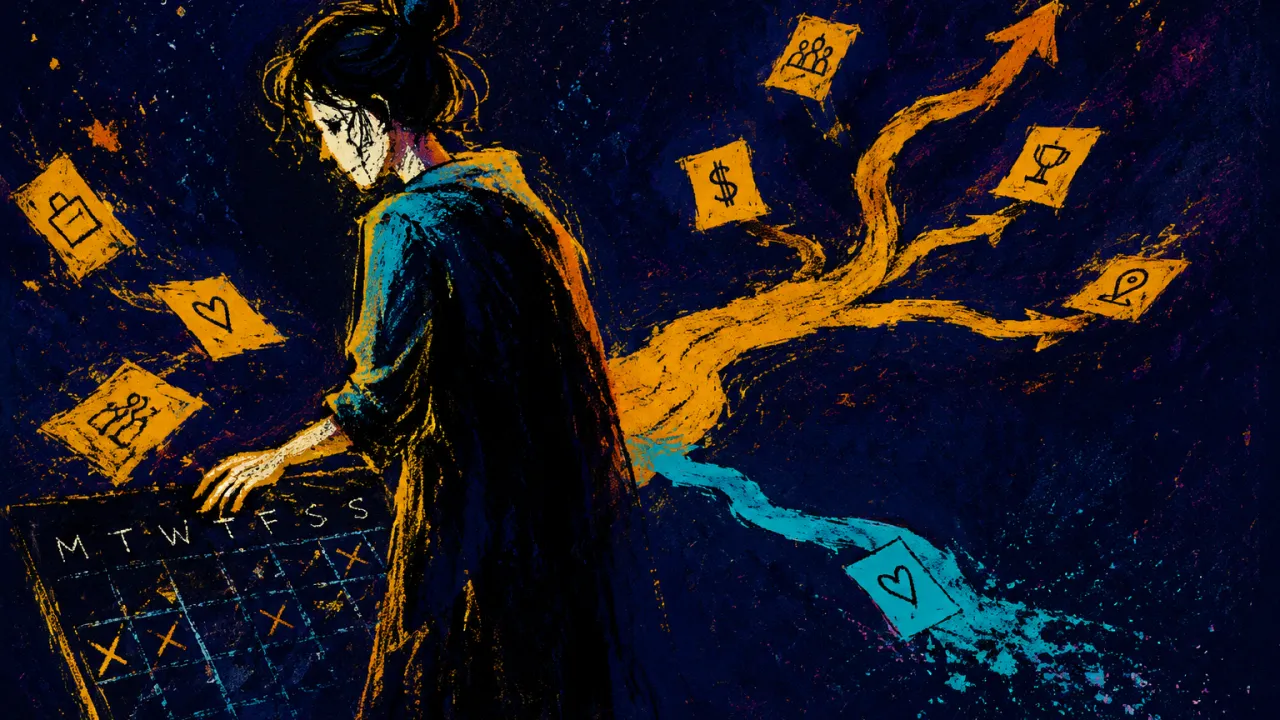
When a meeting changes direction, a friend moves the plan, or new information challenges your first take, you pause, update the plan, and hold cognitive dissonance without forcing a quick either-or answer. You are protecting room for learning and connection, so being responsive matters more than defending an outdated position. Yet when every flicker of discomfort sends you searching for another frame, your own preference can fade beneath a stack of equally workable options, leaving your shoulders poised to pivot even after the decision is made, like the figure in the Two of Pentacles, keeping both coins moving while ships pitch behind him, never setting either one down.
Why did it happen?
When expectations or plans once changed faster than you could prepare, spotting another route helped you avoid getting stranded in one answer and made unpredictable moments easier to navigate. Now that inner pattern may switch on before you have checked what you prefer, keeping your shoulders ready to pivot and leaving you mentally spent from constant recalculating.
How does it feel?
- In a meeting, you glance at a colleague's raised hand, uncross your arms, and drag your project notes into a new order before they have finished speaking. As you do, your jaw may loosen at the sight of another route, while a faint weight settles across your chest once your original view slips out of focus; you can allow both responses to remain present for a moment.
- When a friend changes the evening plan, your thumb pauses over the calendar, then you type "works for me" and move the booking without mentioning the option you had preferred. The exhale comes quickly, but your shoulders stay slightly lifted after the message sends; uncertainty can remain without needing an immediate answer.
- During a disagreement, you tilt your head, soften your voice, and say, "I can see it that way," while the sentence you started remains unfinished. In the pause, your jaw may hold firm and your palms feel cool against your knees; you can let that unfinished response stay unfinished for now.
- Alone with a decision, you open one more comparison tab, reorder the shortlist, and move the same note between columns with two fingers. Your eyes may feel grainy while your fingertips keep searching for the next arrangement; pausing with an incomplete list is allowed.
- After a cancelled train or shifted deadline, you straighten the items on your desk, tap a new route into your phone, and nod once as the revised plan loads. Your breathing may settle before a dull heaviness reaches your shoulders, as if your body notices the pivot later; that delayed feeling can simply be noticed.
Cognitive Flexibility in Tarot Cards
When you keep revising your position before checking what you prefer, flexibility can start to feel like constant recalculating. You may recognise it in the thumb paused over your calendar, followed by shoulders that remain slightly lifted after you type "works for me." Jungian archetypal theory offers one lens for understanding that shift between adaptation and self-contact. Below are the Tarot Cards that mirror the unconscious dynamics beneath this reflex.
Cognitive Flexibility in Tarot Card Reading Insights
When you keep finding another angle before checking what you prefer, others have brought that constant recalculating into readings. The Tarot Reading Insights below show how the cards appeared around this pattern.

Three Slack Drafts Before 8:47 a.m.: Keeping One Point at Work
Topic:Social Tarot Reading
Struggle:Belonging-Authenticity Split
Context:Unspoken Expectations Gap

Six Petfinder Tabs Closed, Then Two Questions Spoke Separately
Topic:Direction Tarot Reading
Struggle:Support Access Split
Context:Practicality Over Intimacy

After Another No, a Bounded Pilot Replaces the 7:40 Slack Essay
Topic:Career Tarot Reading
Struggle:Performative Readiness
Context:Resource Readiness Check

Closing the Laptop: From Proving Worth to Testing Reciprocity
Topic:Direction Tarot Reading
Struggle:Vulnerability Containment Strain
Context:Always On Availability

Rereading an Apology After Betrayal, Then Keeping the Boundary
Topic:Personal Growth Tarot Reading
Struggle:Memory-Loyalty Bind

Management as the Only Proof: From Title Chasing to IC Mastery
Topic:Direction Tarot Reading
Struggle:Prestige Path Lock
Context:Skill Underutilization Trap

Cursor Over Publish: How One Progress Sample Kept the Future Open
Topic:Timing Tarot Reading
Struggle:Craft Ceiling Lock
Context:Premature Harvest Pressure

An Offer From the Past, an Unsent Reply, and One Bounded Yes
Topic:Choice Tarot Reading
Struggle:Unspoken Expectation Load
Context:Unspoken Expectations Gap
The Train Drafts, One Adult Preference, and a Reshaped Holiday Plan
Topic:Family Tarot Reading
Struggle:Belonging-Authenticity Split
Context:Family Boundary Negotiation
Deleting "I Want" at 10:47 p.m., Then Letting the Tab Stay Open
Topic:Introspection Tarot Reading
Struggle:Comfort Entrapment
Context:Gratitude Policing