How Did That Text Become a Fight?
Trace how unclear messages spiral, then explore reflected Tarot Cards and session-based reading insights that map the exchange.

Ambiguous Text Escalation
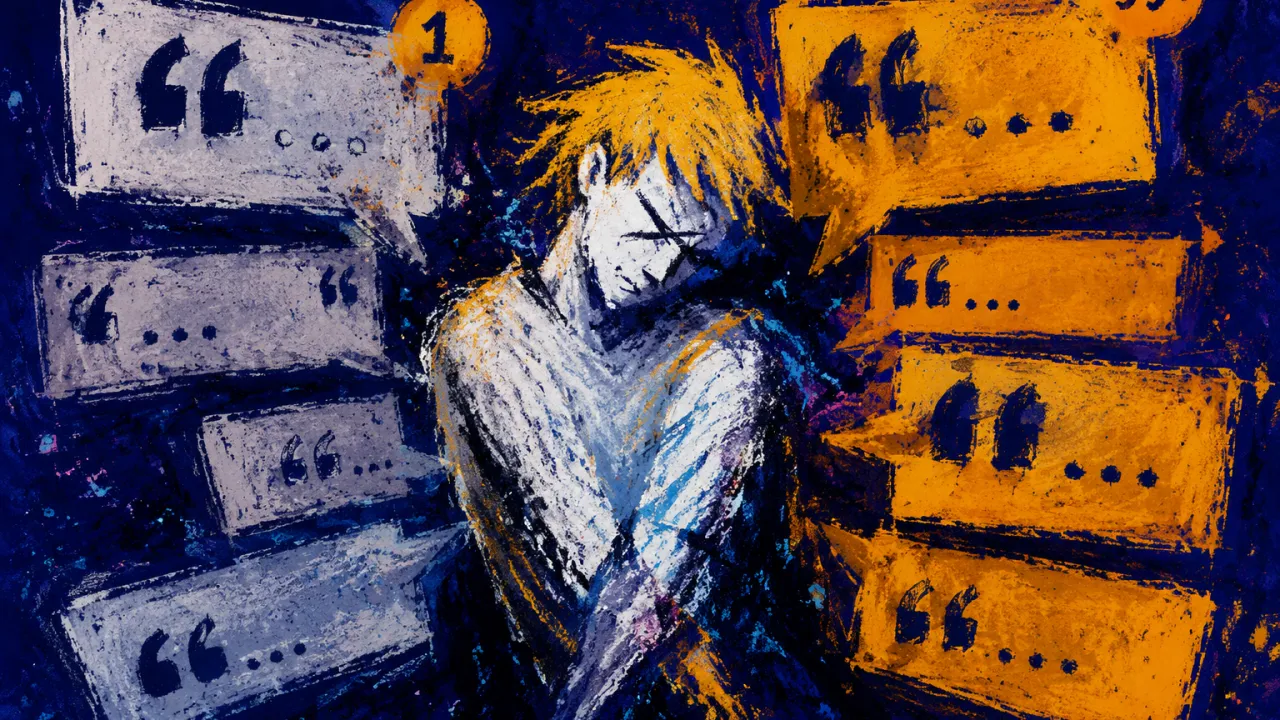
What is this situation?
Ambiguous Text Escalation starts with a message that looks ordinary on your screen and lands differently at the other end. Maybe it is “sure, that’s fine,” sent while you are between errands, or a short answer posted late at night when neither of you has the other’s voice, expression, or immediate context. The reply comes back: “What is that supposed to mean?” You clarify that you meant the words literally, but the explanation is read as dismissive; a sentence gets pulled into a quote reply, punctuation is examined, and each new message is treated as evidence about the previous one. The original topic—a plan, a delay, a changed detail—drops out of view while the thread shifts toward whether you were rude, whether the response was justified, or what this “says” about the relationship. One person’s reading of the message begins setting the terms, leaving you to answer for an intention already assigned to you. You type, delete, rewrite, and send another paragraph, only to watch one phrase get isolated from the rest. The typing bubble appears, disappears, and returns; then a long pause leaves the exchange unresolved while the entire transcript remains visible. By bedtime, your shoulders are still raised, your hand keeps returning to the phone, and an everyday exchange has taken over the evening. What began as a few context-poor words has become a crowded contest of crossed messages, much like the Five of Wands, where raised staffs overlap and each figure moves against the others.
Why it's not you?
The problem is not that you failed to invent a flawless sentence. Text removes voice, expression, and shared timing, and the exchange escalates when one possible reading is treated as settled intent. Requiring you to keep defending that assigned meaning is a feature of the interaction, not proof that your original words carried everything later attached to them.
Ambiguous Text Escalation in Tarot Cards
Ambiguous Text Escalation takes shape when a short line loses its surrounding cues, is treated as settled intent, and expands into an argument about tone. The raised shoulders and hand repeatedly returning to the phone show how the thread keeps occupying the evening. This is an environmental and structural communication dynamic built from missing cues, isolated quotes, response timing, and one person controlling what the words are allowed to mean. The Tarot Cards below mirror the visible contours of that exchange.
Ambiguous Text Escalation in Tarot Card Reading Insights
People who have watched an ordinary message turn into an argument over tone have brought Ambiguous Text Escalation into their readings. The articles below gather Tarot Reading Insights from sessions shaped by that kind of exchange.

When Every Family Fight Feels Final: Making the Next Step Reversible
Topic:Direction Tarot Reading
Struggle:Binary Choice Lock
Context:Family Boundary Negotiation
Oversharing with New Friends After Moving: Choosing a Slower Pace
Topic:Social Tarot Reading
Struggle:Accelerated Intimacy Trap
Context:Community Integration Trial

Long-Distance Reassurance Checking: From Repeated Texts to One Request
Topic:Love Tarot Reading
Struggle:Clarity-Exposure Split
Context:Direct Communication Trial

When Privacy Feels Like Rejection: Asking for Connection, Not Access
Topic:Love Tarot Reading
Struggle:Projection-Connection Split
Context:Relationship Privacy Negotiation

Limerence Relapse After One Old-Flame Text: Loosening the Checking Lo
Topic:Love Tarot Reading
Struggle:Ambiguity Dependence
Context:Old Flame Reentry

One Vague Text Became an Imagined Romance, Then a Three-Line Note
Topic:Love Tarot Reading
Struggle:Chosen-Worth Bind
Context:Mixed Signal Limbo

A Late-Night Ex Text Reopened the Loop; a Note Made Room to Choose
Topic:Choice Tarot Reading
Struggle:Relational Boundary Drift
Context:Breakup Closure Limbo
When "Sometime" Sounds Like a Promise: Weighing Words and Hope
Topic:Love Tarot Reading
Struggle:Clarity-Exposure Split
Context:Situationship Ambiguity

When a Dry Reply Feels Like a Verdict: Reading Patterns Over Time
Topic:Friendship Tarot Reading
Struggle:All-or-Nothing Belonging
Context:Friendship Whiplash

Rightmove Tabs and a Tight Chest Lead to a 48-Hour Readiness Pause
Topic:Timing Tarot Reading
Struggle:Binary Choice Lock
Context:Cohabitation Trial