No Room Feels Private

Explore the exposed-room pressure of shared living, with related tarot cards and tarot reading insights for clearer pattern recognition.

Domestic Exposure Pressure
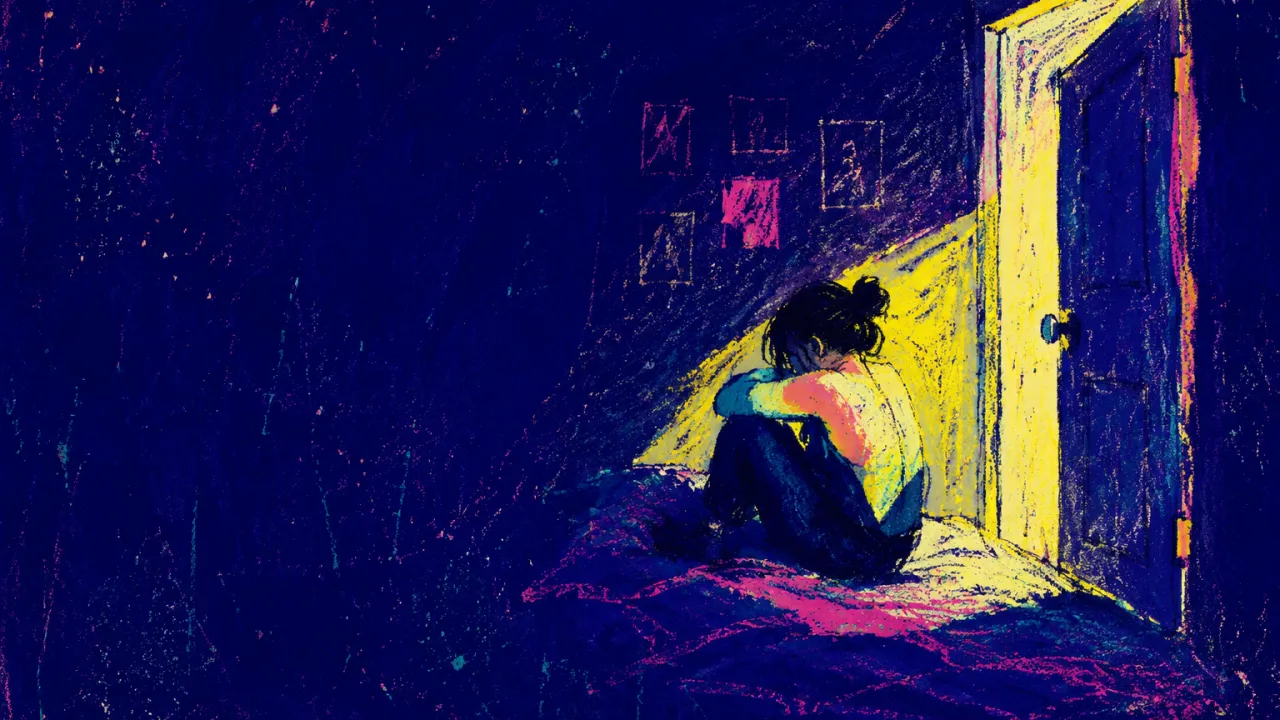
A solitary figure in a small room as hallway light pushes through half-open doors, leaving sharp lines across tucked-in arms

What is this situation?

Domestic Exposure Pressure — you come home, close the door behind you, and still feel like you have not fully arrived anywhere private. It may be a shared flat, a family house, a partner's place, or a room where the walls are thin and every call, delivery, late night snack, outfit, mood, screen, or visitor can become visible to someone else. You start planning ordinary things around other people's presence: waiting until the kitchen is empty, lowering your voice on the phone, angling your laptop away, changing tabs when footsteps pass, explaining why you are going out, why you are staying in, why you look tired, why you spent money, why you did not reply. Nothing has to be dramatic for the pressure to build; it is the daily fact that your private life keeps being treated as shared information. The people around you may call it concern, curiosity, house rules, or just living together, but the effect is that your body learns the timetable of other people before it can follow its own. You become skilled at moving quietly, editing what can be seen, and saving the most honest parts of your life for moments when the hallway goes silent. Over time, the home stops functioning as a reset point and becomes another place where you have to manage access to yourself, much like the figure on the Nine of Swords, sitting upright in bed while a row of blades hangs over the one space that should have felt untouched.

Why it's not you?

The issue is not that you are being too guarded or making normal shared living feel bigger than it is. Constant visibility, repeated questioning, thin boundaries, and interrupted privacy create a pressure field around everyday life. When home keeps turning private choices into public material, the strain belongs to that setup, not to your need for space.

Domestic Exposure Pressure in Tarot Cards

Domestic Exposure Pressure turns the home into a place where privacy has to be defended in small, repeated moments. The raised shoulders, the paused phone call, the half-closed laptop, and the door you keep checking are not random reactions; they match an environmental, structural dynamic where shared space keeps crossing into personal space. The Tarot Cards below reflect the outline of that pressure without telling you what choice to make. They show the shape of a room that never fully lets you disappear from view.

The High Priestess
Upright
The High Priestess sits between black and white pillars, with a veil covering the space behind her and a scroll held close to the body. The physical arrangement makes a boundary between what can be seen and what remains deliberately protected. You may keep your real reactions, plans, moods, and identity experiments behind an internal veil because the home offers no dependable private container. The structure clarifies that guardedness can be an adaptation to repeated exposure: your inner life needs a protected threshold even when the surrounding household treats access as ordinary.
The Emperor
Reversed
An armored ruler sits on a heavy stone throne marked by ram heads, with a barren mountain landscape behind him. Reversed, the fortress-like seat becomes an image of authority that has hardened into control over the territory and the people inside it. You may be asked to account for your spending, appearance, schedule, screen, visitors, mood, or decision to stay out. The structure explains why the pressure feels larger than ordinary curiosity: family hierarchy turns shared housing into a system where privacy can be interpreted as a challenge to authority.
The Lovers
Reversed
The two figures stand apart beneath the angel, with distinct trees and symbols marking separate bodies inside a shared scene. In reversed orientation, that visible pairing becomes a picture of intimacy whose boundaries have not been aligned. You may be living with a partner who reads shared space as shared information, while you experience privacy as necessary for remaining an individual within the relationship. The structure locates the friction in an unnegotiated domestic contract: closeness has expanded into access without establishing what remains yours alone.
The Hanged Man
Upright
A figure hangs motionless from one foot on a living tree, with the surrounding landscape held in a strange, suspended stillness. The body is not moving through its own schedule; it is physically fixed while waiting for the conditions around it to change. You may postpone a shower, meal, phone call, outfit, visitor, or honest conversation until the hallway goes quiet. The image distinguishes deliberate reflection from externally imposed suspension, showing how the household's timetable can take over the timing of your private life.
The Moon
Upright
A narrow path runs between two towers beneath a large moon, while a dog, a wolf, and a creature emerging from the water face the same uncertain distance. The scene is familiar but unreadable, with every movement carrying more than one possible meaning. You may listen for footsteps, interpret a change in tone, or hide a screen before anyone has actually asked for access. The structure shows how a home without reliable privacy can fill the mind with constant signal-checking; the uncertainty is produced by the environment's unstable boundary, not by a personal failure to relax.
Two of Cups
Reversed
Two figures face one another while each holds a cup toward the other, with the caduceus and winged lion joining the exchange above them. Reversed, the paired ritual shows a connection whose symbols are present but whose terms no longer line up. You may be offering partnership while receiving inspection, questioning, or unrestricted access in return. The image frames domestic exposure as a failed reciprocity pattern: one person experiences shared life as mutual trust, while the other experiences it as a claim on every private detail.
Four of Pentacles
Upright
The seated figure presses one pentacle to his chest, braces two beneath his feet, and holds another above his head. Every major point of contact is occupied, creating a physical picture of someone securing resources against unwanted access. You may start treating your room, screen, spending, schedule, and emotional state as assets that need constant protection. The card exposes the domestic structure behind that posture: when private choices are repeatedly claimed as shared information, holding back becomes the only immediately available form of control.
Ten of Pentacles
Upright
An older figure, a couple, a child, two dogs, an archway, and many pentacles fill the same enclosed household scene. The image presents family life as a connected system in which people, property, resources, and histories are all placed within one visible network. You may receive housing or practical support while finding that your choices are treated as family material rather than personal information. The structure makes the exchange legible: a home can be secure and still leave little room for an adult identity that is not continuously observed, discussed, or interpreted by relatives.
Two of Swords
Upright
A blindfolded figure sits before dark water with two swords crossed tightly across the chest. The closed posture holds two possible directions in equilibrium, making the decision itself a barrier to movement. You may be weighing the cost of confrontation against the cost of continued self-editing, with relocation adding another serious option to the same field. The scene shows a domestic choice constrained by access and dependency: none of the paths is abstract, because each changes who can see, question, or interrupt your life.
Seven of Swords
Upright
A figure walks away from a camp carrying several swords while leaving others behind, his body turned back toward the people and space he is avoiding. The image gives ordinary movement a furtive quality: access to the shared environment is negotiated by staying quiet and taking only what can pass unseen. You may begin editing your routines in the same way, moving calls, clothes, screens, food, and visitors out of the sightline of the household. The structure shows how domestic exposure turns privacy into a tactical resource and makes you responsible for hiding what the home should have been able to contain.
Nine of Swords
Upright
At the edge of the bed, the seated figure faces a row of swords fixed across the wall, while the dark room offers no visible relief from their presence. The bed is supposed to be the most private point in a home, yet the image places pressure directly above that protected space. You may be physically home while still arranging sleep, calls, food, and movement around the possibility of being noticed. The swords become the repeated questions, footsteps, thin walls, and interruptions that keep ordinary life from fully resetting. The pressure belongs to the domestic arrangement that keeps private activity exposed, not to your need for a room of your own.
Page of Swords
Reversed
A young figure stands with a sword raised and turns his head toward the space behind him, while wind moves through the open landscape. Reversed, the alert posture reads as observation without containment: attention is directed toward what other people are doing rather than toward a clear shared exchange. You may change tabs when footsteps pass, lower your voice, or prepare explanations before a family member has asked a question. The scene connects those habits to an information system in which domestic details travel quickly and private life becomes material for family commentary.
Five of Wands
Upright
Five figures raise wands across the same patch of ground, with the staffs crossing into one another and no central organizer visible. The crowded composition makes interference itself the subject: several individual agendas are occupying one shared physical field. You may begin planning food, calls, clothing, rest, and movement around collisions that other people consider ordinary. The image connects the pressure to an overcrowded household rhythm, where repeated low-level friction makes privacy feel like a scarce lane rather than a normal feature of home.
Seven of Wands
Upright
A lone figure stands on higher ground with one wand while six others rise toward him from below. The uneven terrain and repeated upward pressure create a clear picture of a boundary that is visible, necessary, and continually tested. You may have to defend a closed door, a late-night routine, a phone call, or a decision not to explain yourself. The scene keeps the focus on the structure of repeated access attempts: privacy is available only as long as you keep occupying the defensive position.

Domestic Exposure Pressure in Tarot Card Reading Insights

Domestic Exposure Pressure is the kind of situation people bring into readings when home has stopped feeling like a private base. The shift from cards to readings shows how others have sat with this same exposed-room feeling and looked for clearer language around it. Tarot Reading Insights from sessions are gathered below.
Psychological Contexts Related to Domestic Exposure Pressure