Who Let Them In?

A grounded look at sudden visitor pressure, relevant tarot cards, and tarot reading insights about interrupted privacy and access.

Surprise Drop-in Pressure
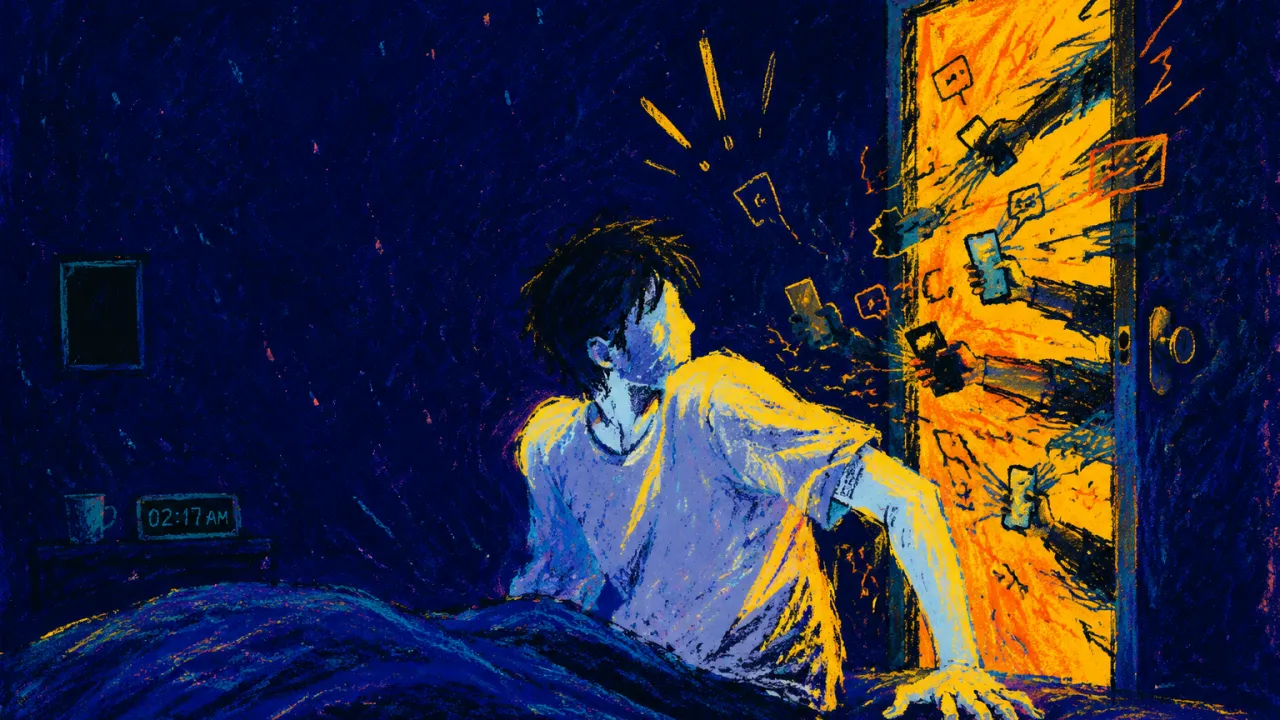
A solitary figure half-rising in a room as hands and buzzing light press through a doorway, leaving bright marks at the edge

What is this situation?

Surprise Drop-In Pressure — you are finally home, halfway through making food, changing clothes, studying, gaming, resting, or just letting the day stop touching you, and then the knock comes, the intercom buzzes, or the message lands: "I'm nearby, can I come up?" It might be a parent who assumes your place is always open, a friend who treats spontaneity as intimacy, a roommate's guest who appears without warning, or someone who says they will only stay for a minute and then settles in like the evening has already been decided. The whole room changes before you even answer; the dishes on the counter become visible, your clothes feel wrong for company, your plans shrink, and your body moves faster than your consent does. You start calculating whether saying no will sound rude, whether ignoring it will make things awkward, whether opening the door means you have to host, listen, smile, explain, feed, entertain, or prove you were not doing anything "important." The pressure is not the visit alone; it is the sudden transfer of responsibility, where someone else's convenience becomes your immediate task and your private time has to defend itself in real time. Even after they leave, the space can feel less like yours, because the boundary was tested at the exact moment you had dropped your guard, much like the Seven of Wands, where one figure is forced to brace against wands rising from outside the frame before he has even had time to stand evenly.

Why it's not you?

The issue is not that you are cold, difficult, or bad at being spontaneous. Surprise drop-ins create pressure because they turn private time into an instant social obligation without giving you the basic chance to choose. When someone treats access to you as automatic, the strain belongs to that demand, not to your need for notice.

Surprise Drop-in Pressure in Tarot Cards

Surprise Drop-In Pressure turns your private room, flat, or shared space into a place where other people's timing suddenly takes over. The shoulders lifting at the knock and the hand freezing over the phone are not random details; they show how quickly the body has to switch from off-duty to available. This is an environmental and structural dynamic shaped by access, expectation, and the assumption that your space can be entered on someone else's schedule. The Tarot Cards below reflect the outline of that sudden boundary demand.

Two of Pentacles
Reversed
The figure works to keep two pentacles moving while ships pitch across uneven water behind him. Reversed, the continuous loop captures what happens when a planned study block is suddenly forced to accommodate conversation, hosting, noise, and uncertainty about when the visitor will leave. Your books may remain open, but the conditions required for sustained attention have been removed. The card locates the difficulty in competing external demands rather than in a lack of discipline: study time cannot remain structurally protected when another person can convert it into available social time without notice.
Two of Swords
Upright
The blindfolded figure holds two swords across her body while a rocky shoreline and unsettled water sit behind her. The crossed blades create a temporary barrier, but the blindfold shows how little information is available when a visitor is already downstairs and an answer is expected immediately. The scene names a choice made under compressed social pressure rather than a freely considered invitation. You are weighing privacy against anticipated awkwardness while the visitor's timing makes delay feel like a decision in itself; the crossed swords preserve a pause in which opening the door, refusing the visit, or offering another time remain distinct options.
Four of Swords
Reversed
A recumbent figure lies inside a quiet stone chamber beneath three suspended swords, with a fourth resting beside the body. Reversed, the physical shelter remains present but no longer functions as protected recovery space; the knock, intercom, or incoming message reaches into the room and puts the resting person back on social duty. The scene distinguishes being physically at home from actually having access to rest. You may have stopped working and withdrawn from public demands, yet an assumed right of entry makes that pause conditional. The interruption exposes a recovery system that depends on other people recognising the door as a boundary rather than treating presence at home as availability.
Seven of Wands
Upright
The person above the embankment holds one staff against six that enter from below, with mismatched shoes signalling how suddenly the defence became necessary. In a family system, the image closely reflects relatives who treat kinship, parental status, or past access to the home as standing permission to arrive. The higher ground represents adult control over the present household, even when older family roles are activated by the knock. You may be pushed back into the role of compliant child or automatic host, but the physical boundary exposes a structural fact: family connection does not erase the resident's authority over entry, timing, and domestic capacity.
Eight of Wands
Upright
Eight wands travel rapidly through an open sky toward the ground, with no visible person positioned to slow or redirect them. The unobstructed movement mirrors the message that someone is already nearby: travel, contact, and expectation have been compressed into a single fast-moving event before the resident has agreed to receive it. The card makes the speed of the request visible without declaring that speed authoritative. You have received a clear timing signal, but the visitor's momentum is not the same as mutual scheduling. The arrival can be understood as information requiring a response, rather than as a decision that has already been made on your behalf.
Ten of Wands
Upright
Ten bundled wands obscure the carrier's view as he bends forward toward a nearby town. The load resembles the cluster of tasks that appears after the door opens: clearing surfaces, changing clothes, making drinks, listening, feeding, entertaining, and eventually restoring the room after the visitor leaves. The burden is concrete because the visit transfers operational responsibility without negotiation. You are not only receiving company; you are being assigned an unplanned hosting shift whose endpoint and workload were set by someone else's convenience. The visible bundle separates the labour of the visit from the cultural story that spontaneity should feel effortless.
Knight of Wands
Reversed
The Knight leans forward on a rearing horse, carrying his wand through a dry landscape with momentum concentrated around his own movement. Reversed, the arrival energy becomes poorly coordinated with the people expected to receive it: spontaneity is centred as the visitor's freedom while the social and domestic cost is exported to the host. The image identifies an access pattern driven by impulse rather than mutual planning. You are dealing with someone whose enthusiasm or convenience may be genuine, but whose arrival bypasses the coordination that would make the interaction reciprocal. The pressure comes from being expected to convert their momentum into immediate hospitality.

Surprise Drop-in Pressure in Tarot Card Reading Insights

Surprise Drop-In Pressure is the kind of situation people bring into readings when an unexpected knock, text, or visit keeps overriding their own timing. The shift here is from the cards themselves to the readings where this pressure has already been placed on the table. Tarot Reading Insights from sessions on sudden access, interrupted privacy, and the need to hold a line.

Psychological Contexts Related to Surprise Drop-in Pressure