Doing the Unpaid Smoothing?

Map the unpaid workplace smoothing, the tarot cards that mirror it, and reading insights from similar pulls.

Soft Skills Tax
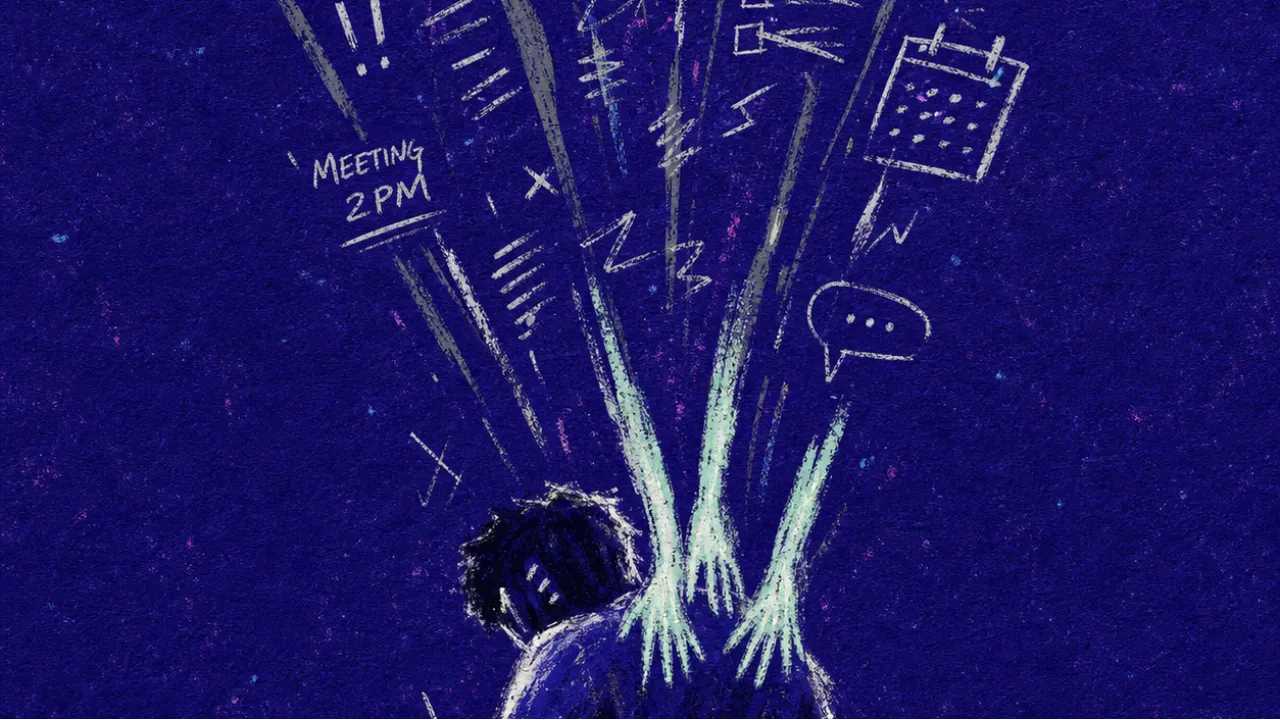
A solitary figure hunched over a desk as extra hands press into the upper back and papers pile in deep indigo space

What is this situation?

Soft Skills Tax - you step into a job that was supposed to be about your role, your skills, your output, and then the invisible add-ons start attaching themselves to your day. In the meeting, you are the one asked to take notes because you are "organized," even though everyone else has a laptop open. When a new hire looks lost, their manager points them toward you because you are "good with people." When two teammates talk past each other, the room turns in your direction, waiting for you to translate, soften, summarize, and make it usable again. Your calendar fills with check-ins that were never part of the job description, your Slack messages carry other people's uncertainty, and your name keeps landing beside work that sounds easy only because it disappears when done well. The power dynamic is quiet but steady: the same managers who praise your communication skills measure promotions through shipped work, visible wins, and numbers that do not include the emotional maintenance keeping the team functional. You start opening meetings with your shoulders already high and your jaw set, because you know the official agenda is only half the work; the rest is making the room feel smooth enough for everyone else to proceed. By the end of the day, your main tasks are still waiting, but the room has been steadied, the notes have been shared, the tense message has been rewritten, and the credit has evaporated, much like the figure on the Ten of Wands, bent forward under a bundle of staffs so large it blocks the road ahead.

Why it's not you?

The problem is not that you are naturally the room's emotional utility person; the role has quietly expanded around labor the organization does not count. When note-taking, smoothing conflict, mentoring, and translating tone are expected without time, title, or credit, that is an external workload being disguised as personality.

Soft Skills Tax in Tarot Cards

The Soft Skills Tax shows up in the extra layer around your role: the notes, the smoothing, the mentoring, and the tone-checking that never appears in the promotion rubric. When your jaw locks before another meeting and your shoulders rise as the room turns toward you, your body is registering a workload the calendar barely names. This is an environmental, structural dynamic, not a private failure of focus or professionalism. The Tarot Cards below mirror the shape of that added, uncredited work.

Justice
Reversed
The sword, scales, and seated institutional authority lose their stable axis when the scene is reversed. You may receive positive feedback for being organised, diplomatic, and good with people, yet the evaluation system excludes the hours and judgement those qualities contribute to team performance. The obstruction sits in the measurement structure: managers decide what counts, and visible delivery is weighed without the maintenance that enabled it. Your review can therefore appear procedurally neutral while reproducing a material imbalance between the work the organisation uses and the work it rewards.
Temperance
Upright
Liquid passes continuously between two cups as the figure holds one foot on land and one in water. You perform the workplace equivalent when conflicting messages, uncertain colleagues, and tense conversations are routed through you to be translated into something the room can use. The upright flow shows that the integration works: meetings become calmer, messages become clearer, and colleagues can proceed. Precisely because the intervention leaves a smooth surface, the organisation can overlook the judgement and time required to produce it, treating skilled mediation as ambient helpfulness rather than accountable work.
King of Cups
Upright
The king's seat remains steady amid rough water, with a ship and sea creature moving through the turbulence around him. You are treated as the stable point in meetings where other people's uncertainty, frustration, or poor communication would otherwise disrupt the work. The upright composure reflects a genuine and usable skill, but the surrounding waves show that calm is being actively maintained rather than passively possessed. When management repeatedly routes turbulence toward you because you handle it well, emotional steadiness becomes an extra job function without the title or capacity that function requires.
Two of Pentacles
Upright
Two pentacles rotate inside an infinity loop while ships rise and fall on the water behind the juggler. You are being asked to keep formal output and informal team maintenance in continuous motion, even though both streams draw from the same finite attention and working hours. The upright stance shows real coordination skill: tasks keep moving because you are actively sequencing, translating, and absorbing disruption. That visible adaptability can become the trap, since management reads successful juggling as proof that the extra workload has no cost and therefore needs no formal owner.
Three of Pentacles
Reversed
Three figures gather beneath a carved institutional arch with plans in hand, but the reversed structure no longer holds their roles in a stable working relationship. You become the person filling the coordination gaps when managers fail to onboard, clarify ownership, or help colleagues understand one another. The craftsmanship remains present in the image, yet the route from contribution to institutional recognition is obstructed. Your collaboration keeps the project usable, but the organisation can record the final output without recording who repaired the teamwork required to produce it.
Six of Pentacles
Reversed
A standing figure controls both the scales and the distribution of coins while two others receive from below; reversed, the same hierarchy turns resource allocation into an uneven dependency. You are expected to distribute attention, reassurance, mentoring, and conflict repair, but the organisation does not return equivalent time, pay, authority, or career credit. The blocked balance is structural rather than personal. Managers retain the power to define valuable output while drawing on your interpersonal resources to keep that output possible, creating an exchange in which the team receives the benefit and your formal record absorbs the cost.
Eight of Pentacles
Reversed
The craftsperson's bench, working tool, and ordered row of finished pentacles form a clear production system; reversed, access to that concentrated workflow is disrupted. You may possess the skill and discipline required for your assigned role, yet repeated mentoring, mediation, and meeting administration prevent sustained contact with the work that produces visible evidence. The completed pentacles remain in the scene, so the blockage is not a lack of capability. It is a career system that consumes your attention elsewhere and then evaluates you against output requiring uninterrupted craft, making the consequences of invisible labour appear as an individual delivery gap.
Six of Wands
Reversed
The laurel-crowned rider, elevated staff, and surrounding crowd are built around public recognition; reversed, those symbols remain present while the pathway that converts contribution into status is obstructed. You can be repeatedly praised as the colleague who keeps everything together without seeing that praise become stronger assignments, compensation, or promotion. The crowd also shows how recognition is socially distributed rather than automatically attached to effort. When your best work removes friction before it becomes visible, the team experiences a successful outcome while the person who produced the conditions for that outcome disappears from the achievement story.
Nine of Wands
Upright
A bandaged figure watches from in front of a dense row of staffs, braced for another demand before it arrives. You may enter routine meetings with raised shoulders and a set jaw because experience has taught you that the official agenda rarely includes all the labour the room will ask you to absorb. The upright stance preserves awareness and capacity, but it also shows how repeated role expansion becomes stored in the body as preparation. The internal strain is therefore linked to a visible workplace pattern: every successfully handled request increases the expectation that you will be ready to handle the next one.
Ten of Wands
Upright
Bent beneath ten staffs, the carrier can still reach the town, but the bundle blocks both his sightline and posture. You are still helping the team function, yet note-taking, mentoring, translation, and conflict smoothing have been stacked onto your role as if competence created spare capacity. The open road makes the upright orientation important: the work is getting through because you keep carrying it, so management can mistake continuity for low cost. Your assigned output then falls behind while the labour that enabled everyone else's output remains outside the promotion ledger.

Soft Skills Tax in Tarot Card Reading Insights

People bring the Soft Skills Tax into readings when the extra workplace layer starts taking up as much room as the job they were hired to do. These Tarot Reading Insights trace what surfaced when that kind of uncredited smoothing, mentoring, and room-management appeared in a spread.

Psychological Contexts Related to Soft Skills Tax