Leaving Without a Scene

A grounded look at quiet social exit, related tarot cards, and reading insights from similar group dynamics.

Strategic Social Exit
What is this situation?

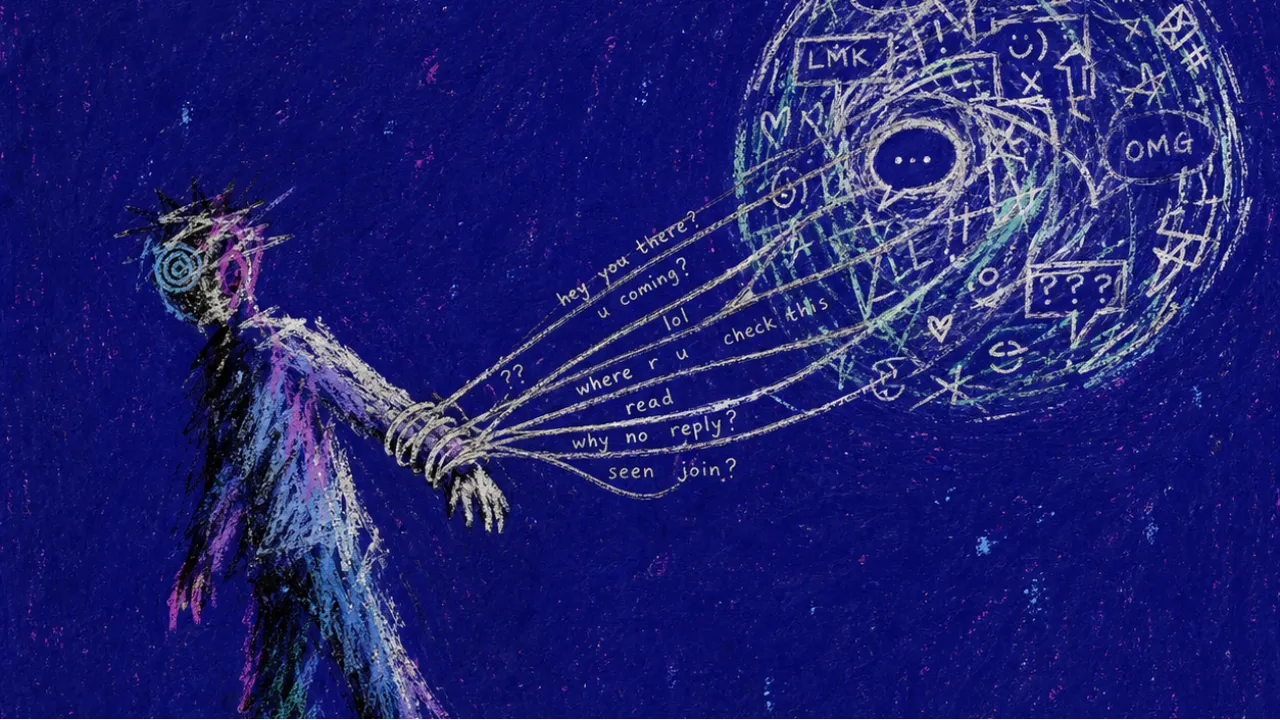
Strategic Social Exit — you notice it first when you open the group chat and your thumb stops above the keyboard, because the thread has already shifted from making plans to tracking who said what, who liked which post, who stayed silent, and who is now expected to explain themselves. It might be a friend group, a local scene, a gaming circle, a campus crew, a creative community, or a long-running set of mutuals where access used to feel easy and now feels monitored. Someone makes a joke that lands like a test, someone else screenshots context from three weeks ago, and a simple no to drinks becomes a topic for the next side chat. No one has to name themselves as in charge for a power structure to form; the loudest people set the tone, the most connected people decide what counts as loyal, and everyone else learns to answer carefully. You start planning your replies instead of sending them, keeping some details out of the chat, leaving messages unread until you know you can handle the possible follow-up. The exit does not arrive as one dramatic announcement. It begins as a set of quiet moves: fewer explanations, slower replies, less access, declining plans without leaving an opening for debate, and protecting the few connections that still feel clean while stepping back from the field that keeps turning every object into evidence. The cost is not just social awkwardness; it is the way your body braces before a notification, the way your shoulders tighten before a casual hangout, the way your private life starts being shaped by people who have made attention feel like a scoreboard. By the time you choose distance, it is not about winning the argument anymore. It is about getting your body out of a circle where every sword has become a receipt, much like the Six of Swords, where the boat moves quietly away from the shore while the swords still travel with it.

Why it's not you?

The problem isn't that you are cold, difficult, or bad at friendship; the problem is that the circle has started treating access, timing, and replies as leverage. When a group rewards scorekeeping and public interpretation, staying available can keep feeding the same machinery. That pressure belongs to the setup, not to your character.

Strategic Social Exit in Tarot Cards

In a Strategic Social Exit, the moment your thumb hovers over the keyboard and your shoulders go tight is tied to a circle where every reply can be treated as evidence. The pressure is environmental, structural, and dynamic: access is being managed by the group's rules, not by a single honest conversation. The cards below do not decide who is right or wrong; they reflect the visible shape of stepping away when the field keeps pulling you back. Here are the Tarot Cards that mirror this kind of controlled departure.

Five of Swords Upright
The two background figures do not keep arguing; they turn away and move toward the edge of the scene. Their exit is not dramatic, but it is physically clear, with distance becoming the only available protection after the swords have already done their work. In a friendship context, this describes the quiet decision to leave a draining bond or friend group without staging one more public confrontation. The card gives that exit a structure: stepping back is not avoidance when the field is organized around repeated defeat, it can be the first act of reclaiming social room.
Six of Swords Upright
The boat is already angled out of the scene, but the movement is controlled by a long oar rather than a collision or a public rupture. The passengers do not stand up to argue with the shore; they are being moved away with the weight of the swords still on board. That visual logic fits a strategic social exit from a friendship or circle that has become too costly to remain inside. The aim is not to win a final debate or make everyone understand the decision; it is to leave in a way that protects energy, privacy, and future room to breathe. The six swords matter because the exit does not pretend the past was weightless. You carry evidence, memories, and lessons forward, but the boat's direction shows that clarity sometimes comes from changing the social setting before the old pattern can pull you back into performance.
Seven of Swords Upright
Five swords gathered against a moving body, two left planted at the camp's edge, create a picture of partial removal rather than clean departure. In a friendship network, that matches the kind of exit where access is reduced before an announcement exists: fewer replies, fewer plans, quieter availability, and a private route away from a group that no longer operates with enough reciprocity. The dusk setting matters because the movement is happening at the edge of visibility. You are not being shown a dramatic rupture; you are being shown a route that becomes possible when open negotiation would expose too much too soon. The card links Strategic Social Exit to the moment when distance becomes a boundary tool, even before the friendship has an agreed name for what is changing.
Eight of Swords Upright
One foot touches water while the other holds muddy ground, and the swords leave narrow spaces that can be crossed with care. The card does not show a clean doorway; it shows a difficult exit route that exists only when the whole terrain is read soberly. A strategic social exit appears when a friendship or group has become too restrictive for direct spontaneity, but not so simple that a dramatic break would clarify everything. You are looking at the social architecture of departure: timing, visibility, shared circles, and the cost of leaving without letting the old enclosure define the next move.
Ten of Swords Reversed
The river is calm, and the far bank is visible, but the body in the foreground shows that leaving is not a clean aesthetic choice. The card places an exit route beside the evidence of what staying inside the current social field has already cost. A strategic social exit begins when a circle has become too costly to keep negotiating from within. The structure is not about disappearing for drama; it is about recognizing that the path to clearer connection may require leaving the ground where the old verdict keeps pinning you. The horizon gives the exit a coordinate, not a guarantee. You are looking for a route that restores movement, privacy, and choice, while staying honest about the damage that made the exit necessary.
Knight of Swords Upright
The white horse driving through open wilderness gives the scene a narrow, decisive vector. Rider, reins, blade, and weather all point toward movement rather than lingering at the edge of the same argument. You can locate a social exit in that momentum when a friendship role has become too costly to keep renegotiating in place. Strategic Social Exit fits when leaving the group chat, stepping back from a draining friend, or ending a one-way support role is less about avoidance and more about choosing the only route that still preserves clarity and agency.
Queen of Swords Upright
The Queen is not rushing from the throne; she is already positioned at a distance, with her gaze fixed beyond the immediate scene. Her raised sword and regulated hand show a departure that is planned through clarity rather than driven by a dramatic social rupture. In friendship, this image maps onto a quiet exit from a dynamic that has become too one-sided, performative, or costly to keep repairing in the old way. You may still care about the people involved, but the card shows that access can be reduced with precision instead of being left to resentment. Strategic Social Exit fits because the Queen of Swords holds both discernment and restraint. The card frames leaving as a structured boundary move, not as a public verdict on everyone in the circle.
Two of Wands Upright
One wand is in the man’s hand, while the other remains fastened to the castle wall. The body has not left the structure yet, but the gaze and the globe have already moved toward a wider field. That is the architecture of a strategic social exit. In friendship, it appears when you are still inside a group chat, old routine, or long-running bond, but you are already calculating how much of your access, attention, and identity you need to withdraw. The card’s power is in the pause before movement. It shows that leaving a social structure does not have to become a spectacle; it can begin as a private reclamation of timing, boundaries, and the right to choose which connections still deserve a place in your life.
Three of Wands Upright
Standing beyond the two rear wands, the figure has already crossed a threshold while still keeping one hand on a grounded staff. The scene is not a dramatic break; it is a controlled position on the edge of known land, where distance, timing, and reputation all matter. In friendship, that visual structure maps to a strategic exit from a group or role that no longer fits. You are not necessarily burning the bridge; the pressure is to recognize which connections can travel with you and which ones only function while you stay inside the old arrangement.
Eight of Wands Upright
The wands cross a wide sky toward land, with a small house visible on the hill below. The image carries movement toward an endpoint, but it is not a collapse, a rupture, or a scene of dramatic departure. That is why the card can describe a strategic social exit in friendship. You may be leaving a role, a group chat, a one-sided support pattern, or an old version of a bond, but the clean line of movement suggests that timing and direction matter more than spectacle. The distant house keeps the exit practical. There is somewhere for the energy to land after leaving the current airspace. The structure asks what kind of exit preserves dignity, reduces unnecessary escalation, and lets the friendship field reorganize without requiring You to stay available forever.
Nine of Wands Upright
The front wand acts as both staff and boundary marker, while the figure's feet remain on flat, square ground. The scene has pressure, but it also has enough structure for a deliberate move rather than a chaotic break. In social life, this fits the moment when a circle has become too costly but a dramatic exit would create more fallout than clarity. You are looking for the clean line, the timing, and the minimum explanation that keeps your agency intact. The Nine of Wands supports a strategic exit because the boundary is already visible and the body is already positioned at the edge. The card turns leaving into a structural adjustment, not a performance of rejection.
Ten of Wands Reversed
The figure is close enough to a destination for the task to have an endpoint, but the bowed head and locked arms make the route feel mechanically constrained. The wands are not scattered; they are still held together, which means the exit has to be managed rather than impulsively dropped. This is the social moment where leaving is not as simple as disappearing. You may need to step back from a group chat, a draining circle, a recurring role, or a community obligation while preserving the few connections that still matter. The card frames exit as a structural move: identifying what must be delivered, what can be set down, and where the path becomes yours again.

Strategic Social Exit in Tarot Card Reading Insights

When a Strategic Social Exit begins through slower replies, fewer plans, and a quieter route out, other people have brought the same social field into readings. The focus shifts from the card images to what surfaced when someone sat with the pull of a group that kept costing more than it returned. Tarot Reading Insights from related sessions.
Psychological contexts related to Strategic Social Exit