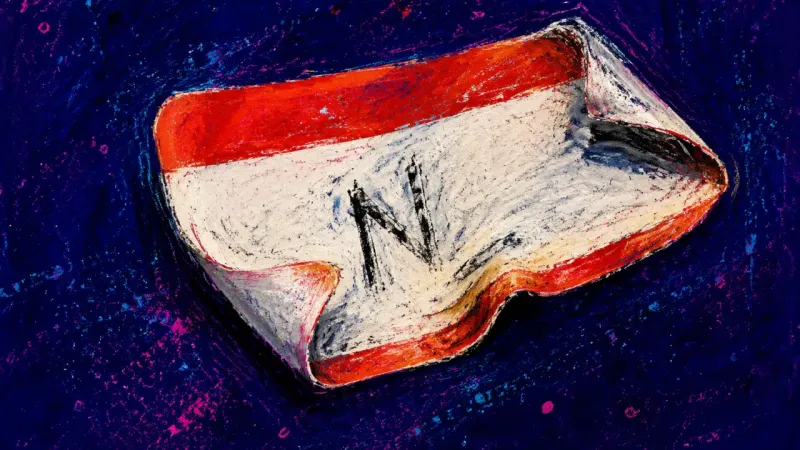
Finding Clarity in the Blank Name Tag Moment
You rehearse three elevator pitches in your Notes app on the way there, delete all of them, and walk in pretending you’re “just grabbing a drink” instead of joining a group.
Jordan said that to me like it was a personality flaw they’d finally gotten tired of defending. They were 27, early-career in Toronto, and technically employed—yet the second a party handed them a blank sticker and a Sharpie, their body reacted like the bouncer had asked for proof-of-worth.
In my studio, I watched their hands do the same thing they described: thumb rubbing the edge of an imaginary name tag, as if the plastic could cut. Their shoulders rode up toward their ears. Their throat tightened on an inhale that didn’t finish. Shame didn’t look dramatic on them—it looked like contraction. Like a hoodie pulled over a bright shirt at the last second.
“It’s stupid,” they said, immediately correcting themselves. “Not stupid. Just… it feels like if I write my name and it’s not attached to something impressive, I’m basically signing up to be evaluated.”
That sentence carried the core contradiction I hear constantly in major-city rooms: Wanting to be seen and connect authentically vs fearing you’ll be exposed as not legitimate the moment you put a name to yourself.
Jordan described the condo party on King St. W like a little horror vignette: bright kitchen LEDs, the Sharpie squeaking on sticker paper, bass thumping through the floor, and their phone screen warming their palm while they pretended to be busy. They could talk to anyone once they were already in a conversation. It was the doorway that broke them—the name-tag table that turned them into a statue.
In my head, I pictured the moment they’d told me: marker uncapped, stomach dropping, the internal commentary starting up like a playlist you didn’t choose. Shame has a sound to it, by the way. It’s not loud. It’s a tight, high, constant tone—like feedback that’s just below the volume where other people can hear it.
“Okay,” I told them, keeping my voice steady the way I do on-air when a caller is about to cry but doesn’t want to. “We’re not here to force you into some ‘just be confident’ act. We’re here to figure out what’s driving the impostor syndrome spike—especially in social-professional spaces where identity feels like a performance. Let’s try to draw a map through the fog. A journey to clarity, not a verdict.”

Choosing the Compass: The Celtic Cross · Context Edition
I invited Jordan to take one slow breath—not to “cleanse energy” in a dramatic way, but to give their nervous system an on-ramp. Then I shuffled my well-worn Rider–Waite deck the way I cue a song: deliberately, with enough time for the mind to stop sprinting ahead.
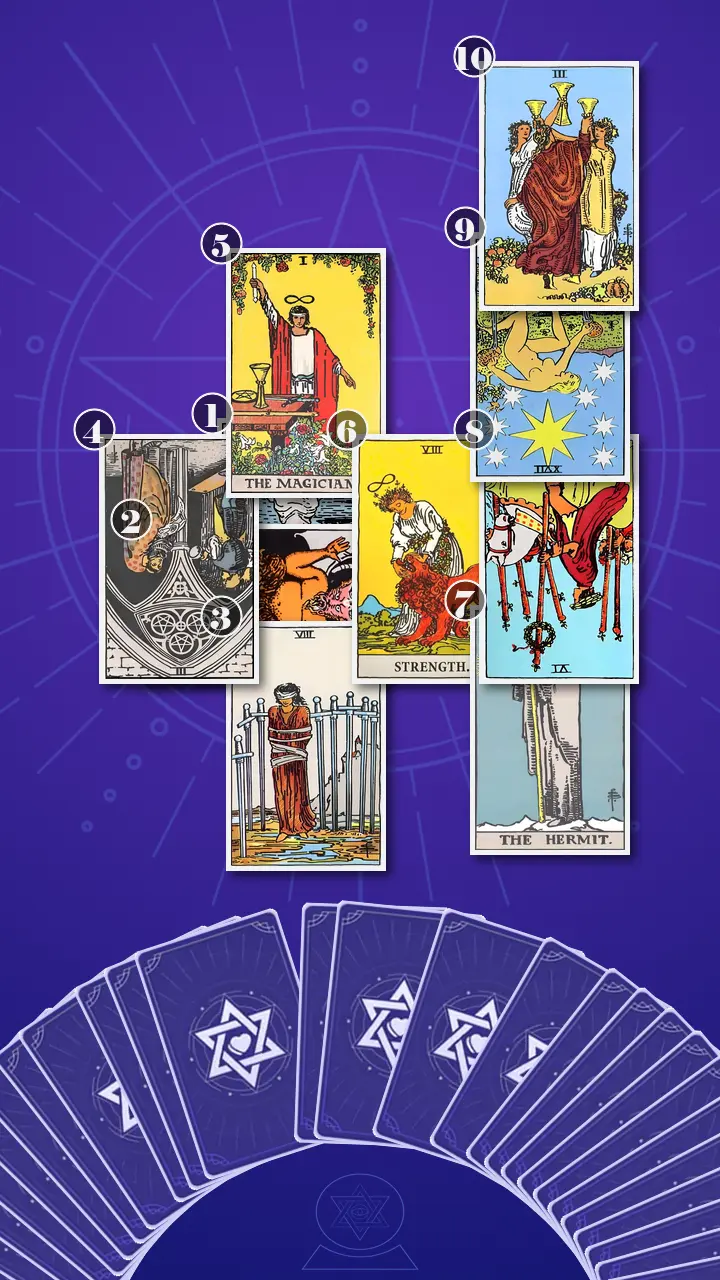
“Today we’ll use a spread I call the Celtic Cross · Context Edition,” I said. “It’s based on the classic Celtic Cross, but with two tweaks that matter for your question: we’ll treat the environment position as your status-cue perception, and the outcome as an integration direction—a healthiest orientation, not a guaranteed prediction.”
For anyone reading who’s ever googled how tarot works and gotten lost in mystical fog: this is the practical version. A spread is basically a structured set of questions. It helps us follow a chain—present behavior → deeper root belief → current pressure → near-term pivot → actionable next steps. It’s a decision-fatigue antidote because it stops the mind from looping the same few fears in circles.
“Here’s what we’ll pay the most attention to,” I continued. “Card 1 will show your presenting behavior in the moment—the freeze script at the party. Card 2 will reveal the challenge that intensifies it—what tightens the knot. Card 3 goes under that, the root belief system. And then we’ll watch for the turning point in Card 6—the most accessible shift you can practice soon.”
Jordan nodded like they were bracing for impact but also relieved to have a map.
Reading the Map: Card Meanings in Context (Not in the Abstract)
Position 1 — The Freeze Script at the Name-Tag Table
“Now we turn over the card representing your presenting behavior in the moment: what you do at the party that reveals the impostor pattern.”
Two of Swords, in reversed position.
Before I even explained, Jordan gave a short laugh—sharp, almost amused, but it landed with that bitter edge people get when they feel seen too accurately. “That’s… kind of brutal,” they said. “Even the picture looks like me trying to disappear.”
I nodded. “This is the card of stalemate, but reversed it’s the stalemate cracking under pressure. In real life, it’s you at the name-tag station: you pick up the marker, hover, put it down, re-read other people’s tags like they’re grading rubrics, and tell yourself you’ll fill yours in ‘in a minute.’”
I used the phrase I keep for moments like this—direct, but not shaming. “A blank name tag is still a choice—just the one that keeps you untestable.”
Jordan’s eyes flicked down and back up, like something in them recognized the trade-off.
Energetically, the reversed Two of Swords is blockage. It’s mental guarding that becomes a literal wall between you and connection. You want safety, so you avoid any label that could be judged. But the cost is you don’t collect evidence of acceptance. You leave feeling invisible, and the mind uses that as ‘proof’ you don’t belong.
“Can I ask you something that’s a little… me?” I said, because my practice isn’t just tarot. “On the way to these events, what are you listening to?”
They blinked. “Uh. A mix. Lately it’s been like… sad girl indie. And then something aggressive to hype myself up. Then I end up in silence.”
I leaned in. “That pattern is what I call Music Pulse Diagnosis. Your recently played songs are a stress graph. The swing from ‘sad and small’ to ‘aggressive hype’ to silence tells me your system is trying to force confidence instead of building steadiness. Silence isn’t failure—it’s the freeze. It matches this card: a mind that thinks the right track, the right line, the right label will make the risk go away.”
Jordan exhaled through their nose, slow. Their hand finally stopped rubbing the imaginary sticker.
Position 2 — The Force That Tightens the Knot
“Now we turn over the card representing your primary challenge: the force that intensifies impostor syndrome in social spaces.”
The Devil, upright.
Jordan’s face did that half-wince people do when they feel called out. “Yeah,” they said, not quite laughing now. “That tracks.”
“In this context,” I said, “The Devil isn’t about you being ‘bad.’ It’s about attachment—external validation grip. The soft chain of comparison. Nothing is literally forcing you, but it feels locked the moment you believe you have to earn belonging through impressing people.”
I let the modern analogy land the way it always does. “It’s like the party turns into a live LinkedIn feed in your head. Every introduction becomes a post you can’t edit afterward. You start scanning: ‘Who here is important?’ ‘What should I say so I don’t look behind?’”
Jordan’s shoulders tightened again, then they caught themselves. “I literally do that. I see someone confident and my brain is like, okay—rank yourself.”
“Scoreboard brain isn’t the truth,” I said gently. “It’s a filter.”
Energetically, The Devil is excess: too much power given to status cues. A name tag becomes a ranking symbol instead of a simple door-opener. And when shame is in the driver’s seat, the Two of Swords freeze makes perfect sense: you’d rather stay unpinnable than risk being judged.
Position 3 — The Rule-Cage Under the Floorboards
“Now we turn over the card representing the root cause: the underlying belief system that makes the blank name tag feel safer than being known.”
Eight of Swords, upright.
“This is the invisible Terms & Conditions card,” I said. “It’s the belief that there are rules everyone else agreed to—rules you must follow to be acceptable—but no one actually announced them.”
I watched Jordan’s eyes soften into that far-away focus people get when the past connects to the present. The Eight of Swords is a mental cage: thoughts and assumptions forming a perimeter that feels external even when it’s maintained internally.
“In real life,” I continued, “it’s you assuming everyone else has a clean, impressive story—and that one ‘wrong’ sentence will permanently label you as not belonging. Like you’re in a Slack channel where you’re afraid to speak because you assume you’ll be judged, so you keep yourself in read-only mode.”
Energetically, this is deficiency of choice. Not because you don’t have options—because you’ve decided only one option is safe, and you don’t know what it is. So you choose nothing.
Jordan swallowed. “I hate how accurate that is,” they murmured. “It feels like if I don’t have the perfect intro, I shouldn’t talk at all.”
Position 4 — The Evaluation Hangover You Brought With You
“Now we turn over the card representing your recent influence: what happened recently that primed this sensitivity to evaluation and belonging.”
Three of Pentacles, in reversed position.
“This is the ‘workshop of evaluation,’” I said. “Reversed, it’s a wobble around competence—feeling overlooked, compared, or not fully recognized for what you contribute.”
Jordan’s eyes narrowed like they were replaying a meeting. “I got feedback two weeks ago,” they admitted. “It wasn’t even that harsh. But I’ve been hearing it on loop.”
“That’s exactly how this card behaves,” I said. “You carry one work moment into unrelated rooms. The party hasn’t judged you yet, but your nervous system shows up expecting a performance review.”
Energetically, this is blockage in Earth: worth tied to output and approval. And it feeds the Eight of Swords rule-cage: ‘I must be perfectly positioned before I’m allowed to be visible.’
Position 5 — The Urge to Engineer the Perfect Version of You
“Now we turn over the card representing your conscious aim: what you think you need in order to feel secure and confident at the party.”
The Magician, upright.
Jordan actually smiled at this one—small, fond, like they recognized their own obsession. “That’s me trying to control everything,” they said.
“Exactly,” I said. “The Magician is the part of you that believes the right tools—words, title, story—will guarantee acceptance. So you treat introductions like product copy: draft intro v1 / v2 / v3 in Notes, delete all of them, and arrive early so you can pretend you’re ‘just grabbing a drink’ instead of joining a group.”
Energetically, this is excess of Air-meets-agency: over-creation, over-scripting. The Magician isn’t wrong—it’s powerful. But in this question, it’s being used to try to outrun vulnerability.
“What if,” I asked, “you used Magician energy for clarity and presence instead of self-marketing?”
Jordan’s eyebrows lifted, like they’d never considered that the skill could be repurposed.
When Strength Calmed the Lion: The Turning Point for Impostor Syndrome
Position 6 — The Most Accessible Shift You Can Practice Soon
I let the room get quieter on purpose. Even my shuffle slowed, like I was lowering the fader on background noise. “Now we turn over the card representing your near-term turning point: the inner shift you can practice soon to change how you show up.”
Strength, upright.
Jordan stared at it longer than the others. Their shoulders were still raised, but not as rigid—like the muscles had started to consider letting go.
Here’s the setup I named out loud, because sometimes naming the moment is the gentlest thing you can do: “You’re standing at the name-tag table, marker uncapped, throat tight—trying to invent a line that proves you deserve to be in the room.”
Stop trying to ‘earn’ your right to be here with a flawless name tag; choose gentle courage and step forward like Strength calming the lion.
I stopped speaking for a beat and let it hang in the air the way a chorus hangs after the drums drop out.
Jordan’s reaction came in a chain—three micro-moments I’ve learned to watch for the way I listen for a key change in a song.
First: a brief freeze. Their inhale caught halfway. Their fingers went still on their knee.
Second: the cognition seeped in. Their gaze unfocused slightly, like they were replaying the condo-kitchen LEDs and the Sharpie squeak and the warm phone screen. Like they were seeing themselves from the outside without the usual cruelty.
Third: the release. A long exhale left their chest—audible, involuntary. Their shoulders dropped a fraction. Not relaxed, not cured—just less clenched. Their eyes shined, and they blinked hard once.
“But if I do that,” they said, and there was a flash of defensiveness—anger, almost—“doesn’t it mean I’ve been doing it wrong? Like… I’ve been making this harder for myself.”
I held the moment the way Strength holds the lion: not by overpowering it, but by staying steady with it. “It means you’ve been protecting yourself,” I said. “You used a strategy that made sense when visibility felt dangerous. We’re not here to shame the strategy. We’re here to update it.”
Then I made it practical, because Strength is not a vibe—it’s a skill. “Confidence isn’t a perfect label—it’s staying kind to yourself while you’re visible. And that’s a nervous-system practice, not a branding exercise.”
I leaned in. “Now, with this new lens, I want you to think back to last week. Was there a moment—at work, on a call, in a group chat—when you felt that throat-tightening ‘I’m about to be judged’ feeling? If you’d chosen gentle steadiness instead of perfect performance, how would that moment have felt different?”
Jordan looked down, then back up. “I would’ve answered in one sentence,” they said quietly. “Instead of apologizing for existing.”
That was the shift right there: from shame-driven contraction toward small, awkward courage—and the first flicker of self-trust.
Because the bigger emotional transformation in this reading wasn’t “become fearless.” It was moving from self-doubt and hyper-analysis toward grounded steadiness: the beginning of staying kind to yourself while you’re visible.
The Rest of the Ladder: How You Move From Performance to Belonging
Position 7 — The Role You Put Yourself In (Without Noticing)
“Now we turn over the card representing your self-position: the role you put yourself in at the event and how it shapes your choices.”
The Hermit, upright.
“You’re observant,” I told Jordan. “Thoughtful. You notice who’s safe. You’re not built to ‘work the room’ like it’s a sport—and that’s not a flaw.”
In modern life, Hermit energy can look like standing near the wall, cup held with both hands, waiting for the ‘right moment.’ But used intentionally, it becomes discernment: choosing one person or small pocket that feels real.
“The lantern isn’t about isolating,” I said. “It’s about a small, honest light. One genuine connection is worth more than a flawless group performance.”
Position 8 — The Room as a Scoreboard (Even When It Isn’t)
“Now we turn over the card representing context cues: how the social environment and comparison triggers are being perceived and interpreted by you.”
Six of Wands, in reversed position.
“This is fear of public visibility,” I said. “Reversed, recognition feels like exposure. The room starts to feel like a scoreboard—titles, insider talk, promotions, side projects.”
Jordan nodded quickly, almost too quickly. “I hear one person say ‘Senior’ and my stomach drops,” they said.
“That’s the card,” I replied. “And it’s also important: this position doesn’t say the room is a tribunal. It says your system is reading it that way.”
As a radio host, I think in mixes: foreground, background, signal, noise. “Right now,” I told them, “your brain is boosting the ‘applause channel’ and muting the ‘human channel.’ Strength will help you re-balance the mix.”
Position 9 — The Hope That Feels Too Fragile to Touch
“Now we turn over the card representing your hopes and fears: what you secretly long for socially, and what you fear it would mean if you don’t get it.”
The Star, in reversed position.
Jordan’s expression softened into something sad and familiar. “Yeah,” they whispered. “I dim myself before anyone even gets a chance.”
“This is the wounded optimist,” I said. “You want to belong. You want it so badly that part of you pre-emptively shrinks—smiles less, speaks less, decides the event is ‘stupid’ as armor—because disappointment feels like proof.”
I paused. “Aim for one honest connection, not instant validation.”
Energetically, Star reversed is deficiency of hope—not because you’re cynical, but because hope feels unsafe. Strength doesn’t demand you become sparkly and open overnight. It asks for one gentle act of visibility held with kindness.
Position 10 — The Integration Direction: A Circle, Not an Audition
“Now we turn over the card representing your integration direction: the healthiest orientation to aim for if you choose self-trust over performance.”
Three of Cups, upright.
The shift in the room was subtle but real. Even Jordan’s breathing changed—less held.
“This is the end point to aim for,” I said. “Belonging through shared humanity, not credentials. The party becomes a circle, not an audition.”
And because they were in Toronto, I gave them a montage that felt local and doable: “You laugh with someone about TTC delays. You get introduced to a friend-of-a-friend. You make one warm moment in the kitchen while someone complains about the rent. You realize the room isn’t a tribunal—it’s mostly people hoping someone will make it easy to be human for a minute.”
The One-Page Plan: Actionable Advice for Your Next Event
I gathered the whole spread into one coherent story, the way I’d summarize a segment before a commercial break.
“Here’s what your cards are saying, in plain language,” I told Jordan. “You freeze at visibility (Two of Swords reversed) because deep down you believe there’s a correct way to present yourself that you haven’t earned yet (Eight of Swords). Status anxiety turns the room into a live LinkedIn feed (The Devil), and a recent competence wobble makes you expect judgment everywhere (Three of Pentacles reversed). Your mind tries to solve it with better tools and tighter control (The Magician), but the pivot isn’t a better label—it’s Strength: kindness and steadiness while you’re seen. From there, your natural style (The Hermit) becomes discernment instead of hiding, and you shift from scoreboard cues (Six of Wands reversed) and fragile hope (Star reversed) toward real community metrics (Three of Cups).”
“Your cognitive blind spot,” I added, “is thinking you need to feel legitimate before you connect. But your transformation direction is the opposite: connect first through curiosity and simple truth, and let competence reveal itself over time.”
Then I offered the smallest next steps—the kind you can actually do when your throat is tight and your brain is writing resumes in real time.
- First-Name-Only EntryAt your next event, write only your first name on the tag. No title. No company. If you can’t do it on the sticker yet, write “Jordan” in your Notes app before you walk in and treat that as the practice rep.If your brain says “first name only is cringe,” label it: “performance mode.” Lower the difficulty—Notes app first. Your goal is contact, not a perfectly defended identity.
- Two-Sentence Answer + Curiosity PivotWhen someone asks “So, what do you do?”, answer in two sentences max: “I work in a corporate role in Toronto—still figuring out what I want to grow into.” Then immediately ask a curiosity-first question: “How do you know the host?” or “What’s been taking up your brain lately?”If you feel the urge to over-explain, pause and ask yourself: “Am I trying to connect—or trying to pre-defend myself?” Two sentences is your boundary.
- The 7-Minute Strength Check (Breath Soundtrack)Right before you enter (or in the bathroom or hallway), set a timer for 2 minutes. Hand on chest/collarbone if it feels okay. Inhale for 4 counts, exhale for 6 counts—like a slow drum pattern. Then type one name-tag version in Notes: “Jordan.” Then type one opener you’ll actually use.This is my “Breath Soundtrack” technique: you’re not trying to think your way into confidence—you’re setting a steadier rhythm so your voice has somewhere to land.
- BGM Prescription (3 Tracks for the Commute + Reset)On the TTC/ride-share, play a short, intentional sequence instead of spiraling in silence: (1) a low-stimulation ambient track around ~432 Hz or a soft drone (for downshifting), (2) a steady lo-fi beat around 60–70 BPM (for grounded pacing), (3) a familiar song that makes you feel like yourself (for warmth, not hype). Keep it to 10–15 minutes total.If you start feeling flooded, use “White Noise First Aid”: 60 seconds of rain/white noise at low volume while you breathe out longer than you breathe in. It’s not magic—it’s nervous-system triage.
- Effort-Based Debrief (Not Outcome-Based)After the event, rate yourself on effort: “Did I say my name?” “Did I ask one real question?” “Did I do a one-person entry?” Do not rate yourself on whether you felt impressive or whether everyone liked you.You’re collecting evidence, not chasing a feeling. If shame shows up, make the review tiny—60 seconds is enough.
Jordan raised an eyebrow at the music part. “You really think a playlist matters?”
“I think your brain is already using sound,” I said. “Right now it’s using the sound of the room—bass, clinking ice, loud laughter—as proof of danger. We’re giving you a counter-signal. Steadiness is a social skill.”

A Week Later: The Quiet Proof
Eight days later, I got a text from Jordan while I was prepping for my radio segment—levels set, mic tested, the soft hush of the booth around me.
“I did it,” they wrote. “First name only. My hand shook a bit but I did the 4-in/6-out thing in the hallway first. I talked to one person in the kitchen. We bonded over TTC being cursed. I left without replaying the whole night like security footage.”
Then, a second message: “I still felt weird. But it wasn’t… a verdict.”
That’s the kind of clarity tarot is good for—especially at a career crossroads or in any situation that triggers feeling stuck. Not the fantasy of becoming immune to judgment. The reality of choosing one small, honest action, and letting your body learn: visibility doesn’t have to cost you belonging.
When you’re holding a blank name tag, it’s not that you don’t have an identity—it’s that some part of you believes being clearly seen could cost you belonging, so your body tightens and your mind tries to keep you unpinnable.
If you didn’t have to prove anything first, what’s one small, honest way you’d let yourself be seen—just enough to start a real conversation?
This story is adapted from psychological research, written so that those in a similar struggle can see their own pattern in it — and find their next step clearly.These insights are not a substitute for professional psychological, medical, legal, or financial advice.
Learn more about our Journey to Clarity.
How did this insight land for you?
🫂 This Resonates Deeply
🌀 Living This Story
✨ Now I See Clearly
🌱 Seeing New Possibilities
🧰 Useful Framework
🔮 The Confirmation I Needed
💪 Feeling Empowered
🚀 Ready for My Next Step
Author Profile
 AI
AI“Through ten years of sound energy research, I’ve found that when we struggle, it's usually just our internal rhythm falling out of sync under pressure. I know firsthand the frustrating helplessness of wanting to move forward but feeling paralyzed. Without overwhelming theories, I want to be the soothing background track that helps you recalibrate, turning your heavy burdens back into a light, effortless, and harmonious melody.”
In this Introspection Tarot Reading :
Core Expertise
- Mental Noise Cancellation: Diagnosing severe internal friction not as a moral failing, but as a chaotic overlapping of incompatible psychological frequencies.
- Resonance Healing Calibration: Identifying the 'dissonant baseline' of your chronic anxiety and calculating the specific acoustic or rhythmic input needed to soothe it.
Service Features
- The Frequency Reset Pause: A customized rhythmic breathing or acoustic grounding technique to forcefully lower your brainwave state from a frantic beta frequency to a restorative alpha state.
Also specializes in :
Explore Related Patterns:
External ValidationJordan says that writing their name without something impressive attached feels like signing up to be evaluated. That sentence makes the approval mechanism visible: the name is not treated as identity, but as a claim that needs outside validation before it feels safe. The cognitive pattern is an externalized worth filter. Instead of letting belonging develop through conversation, Jordan tries to secure it in advance through the right title, the right wording, or a version of themselves that cannot be dismissed. The party becomes less about meeting people and more about passing an imagined legitimacy check. External Validation fits because the story keeps showing worth outsourced to the room. You can see it in the status scanning, the fear of being behind, and the belief that acceptance must be earned through impressiveness. The shift is to notice when approval has become the gatekeeper, then bring the focus back to contact, curiosity, and self-trust.
Imposter SyndromeJordan's body contracts at the name-tag table before anyone has asked a real question: the shoulders rise, the throat tightens, the marker hovers, and the blank sticker starts to feel like proof-of-worth. That reaction is not random shyness. It shows a legitimacy threat getting attached to a tiny act of visibility. The cognitive mechanism is a fusion between identity and performance. Jordan does not read the name tag as a simple opener; they read it as a public claim that must be backed by an impressive title, clean story, or flawless introduction. Once the room becomes an audition, every casual cue starts feeding the same inner audit: do I deserve to be here, and will they find out I do not? That is why Imposter Syndrome fits the story so directly. The pattern is not just feeling insecure; it is the repeated attempt to earn the right to be seen before allowing connection to happen. The useful shift is not pretending to be confident, but separating visibility from verdict so You can be present without turning every introduction into a trial.
Social ComparisonJordan hears one person say Senior and their stomach drops. The party starts to look like a live LinkedIn feed, where titles, promotions, insider talk, and side projects become ranking signals instead of ordinary conversation details. The cognitive mechanism is selective attention under comparison pressure. Jordan's mind boosts the status channel and mutes the human channel, so every visible marker of other people's success becomes evidence about their own position. That filter makes the room feel competitive even before anyone behaves competitively. Social Comparison is therefore one of the drivers behind the impostor spike. You are not just reacting to the party; You are reacting to a ranking system your brain overlays onto the party. Once that scoreboard filter is named, it becomes easier to challenge it and look for human cues that were being screened out.
Visibility AvoidanceJordan picks up the marker, hovers, puts it down, checks other people's tags, and tells themselves they will fill theirs in later. The blank name tag becomes a behavioral compromise: it avoids the immediate risk of being evaluated, while quietly blocking the chance to be met. The defense mechanism is avoidance coping around visibility. By staying unlabelled, busy-looking, and slightly outside the group, Jordan keeps themselves untestable. The cost is that the mind never receives new evidence that a first name, an imperfect answer, or a normal conversation can be enough. Visibility Avoidance names that protective loop. You are not avoiding people because connection has no value; the story shows the opposite. The avoidance exists because being clearly seen has been coded as exposure, so the system chooses invisibility as short-term safety even when it creates longer-term isolation and reinforces the impostor story.
Analysis ParalysisJordan rehearses three elevator pitches in Notes, deletes all of them, and then walks in pretending they are only grabbing a drink. The planning is active, but it does not convert into movement; the more they try to solve the introduction in advance, the harder the doorway becomes. The defense is over-analysis used as emotional control. Jordan keeps searching for the line that will make visibility safe, but the search itself becomes the freeze script. The mind treats more preparation as protection, even though each new draft raises the stakes and delays contact. Analysis Paralysis fits because the issue is not a lack of intelligence or effort. You can see a capable mind getting stuck in decision loops because no option feels safe enough to enact. The pattern loosens when action is made smaller than the fear, like first name only, one sentence, one curiosity question.
PerfectionismJordan drafts three elevator pitches, deletes them, and still walks in without a usable line. Later, they name the rule directly: if they do not have the perfect intro, they feel like they should not talk at all. The mechanism is perfectionism as a safety strategy. The mind tries to remove social risk by designing the flawless self-presentation, but the standard is so narrow that ordinary speech starts to feel dangerous. Instead of helping Jordan connect, the preparation loop turns a normal introduction into a pass-fail test. Perfectionism fits here because the story is not about high standards in the abstract; it is about all-or-nothing legitimacy. You can see the pattern in the deleted pitches, the pressure to attach the name to something impressive, and the later realization that a one-sentence answer would have been enough. The work is not to care less, but to let an imperfect sentence count as real participation.
Mind ReadingJordan assumes everyone else has a clean, impressive story and that one wrong sentence could permanently mark them as not belonging. The story is explicit that the room may not be a tribunal, but Jordan's system reads it that way before real evidence arrives. The cognitive distortion is mind reading. Jordan fills in other people's judgments, standards, and reactions without direct data, then responds to those imagined verdicts as if they are already confirmed. This turns neutral strangers into internal evaluators. Mind Reading helps explain why the impostor feeling spikes so quickly. You are not only afraid of what people might think; the mind is acting as if it already knows. That creates a false certainty that narrows behavior, making silence and avoidance feel rational even when the actual room has not delivered the rejection.
Self-SilencingJordan describes dimming themselves before anyone gets a chance: smiling less, speaking less, and deciding the event is stupid as armor. That contraction is a relational move, not just a mood. It reduces the risk of disappointment by reducing the amount of self that is available to be received. The defense mechanism is self-protective inhibition. If hope feels unsafe, shrinking first can feel like control; You cannot be rejected for the fuller version of yourself if You never fully show it. But the protection also blocks the very connection Jordan wants. Self-Silencing fits because the story repeatedly shows expression being reduced before the environment has actually responded. The pattern is not weakness; it is a learned strategy for limiting exposure. The update is to make visibility small enough to tolerate, rather than waiting until it feels completely risk-free.
RuminationJordan received feedback two weeks ago, says it was not even that harsh, and still hears it on loop. By the time they reach the party, the room has not evaluated them, but their nervous system arrives as if a performance review is already underway. The cognitive mechanism is repetitive threat rehearsal. A single competence wobble gets replayed until it becomes a portable filter, carried from work into a social setting that is not actually asking for the same kind of proof. Rumination turns one moment of feedback into a background soundtrack of anticipated judgment. Rumination matters here because it keeps the impostor spike alive between events. You are not only dealing with the party in front of You; You are dealing with the replay of an earlier evaluation that has not been metabolized. Naming the loop helps separate useful feedback from the mental habit of re-trying the same emotional trial.
Explore Related Struggles:
Inner Tribunal LockThe condo party has not rejected Jordan, but Jordan arrives as if the verdict is already waiting. Bright kitchen lights, the Sharpie squeak, the warm phone screen, and the name-tag table all get pulled into the same courtroom feeling: one wrong sentence could become permanent evidence. You are carrying an evaluator inside the room before anyone else has had a chance to meet you. That inner tribunal makes every introduction feel irreversible, every title comparison feel prosecutorial, and every pause feel like proof that you failed the social test. The impostor spike grows because the threat is no longer only outside you. The judging structure has moved inward, so even neutral spaces can feel like places where you must defend your right to be visible.
Perfect Readiness TrapJordan drafts three elevator pitches in the Notes app, deletes them all, and walks in pretending they are just grabbing a drink. The preparation does not create steadiness; it keeps moving the threshold for entry farther away, as if the right wording could make vulnerability unnecessary. You can see the trap in the way the introduction becomes product copy. The mind keeps asking for one more edit, one more safer version, one more proof that the self being presented will not be rejected. By the time the room is actually available, the performance has consumed the action it was meant to support. This is readiness turned into a locked gate. The struggle is not a lack of intelligence or preparation; it is the belief that you must feel fully legitimate before you are allowed to begin, even though connection can only give you new evidence after you step in.
Status-Belonging FusionThe party keeps turning into a live LinkedIn feed in Jordan's head. A name tag stops being a simple door-opener and becomes a ranking symbol, while titles, seniority, side projects, and confident entrances start to feel like proof that everyone else has already earned the room. You get pulled into a structure where belonging seems conditional on visible status. Instead of asking, "Can I make one real connection here?" the mind starts asking, "Do I look impressive enough to be allowed into this circle?" That shift makes every ordinary introduction feel like a public comparison point. The pressure driving the impostor spike is the fusion between social safety and external rank. When status cues become the gatekeeper for belonging, your body reacts to a blank sticker as if it has to produce legitimacy on demand.
Visibility-Connection SplitJordan can talk once they are already inside a conversation, but the doorway breaks them. The marker, the blank sticker, and the choice to write only a name turn a normal party ritual into a moment where being seen feels like submitting evidence about whether they deserve to be there. You are not just avoiding a sticker in this pattern. You are caught between the wish to be reachable and the reflex to stay unpinnable, because visibility seems to carry a hidden cost. The blank tag protects you from immediate judgment, but it also blocks the ordinary evidence that people can meet you without requiring a flawless credential first. That is why the core friction is not shyness by itself. The struggle lives in the split between connection and exposure: the part of you that wants one honest conversation has to move through the part of you that believes being clearly seen could threaten belonging.
Performance-Worth FusionJordan says that writing a name without something impressive attached feels like signing up to be evaluated. A piece of work feedback from two weeks ago keeps looping, then follows them into a party that was never supposed to be a performance review. You are being asked for a simple social signal, but the body reads it as a worth audit. A first name feels too exposed because it is not padded by title, output, approval, or a polished story. The self has to arrive with proof, or it feels unfinished. That is the fusion underneath the shame spike: performance starts carrying the weight of worth. When social presence has to be justified by competence, even a casual introduction can feel like standing in front of a panel with no slides prepared.
Competence-Connection SplitThe recent feedback at work was not even that harsh, but Jordan has been hearing it on loop. By the time they reach the party, the social room is already contaminated by workplace metrics: titles, seniority, being behind, being impressive enough to speak. You are trying to enter a human conversation with a competence framework built for evaluation. The same mind that wants to connect starts packaging the self like a professional pitch, because it assumes warmth will only be available after capability has been proven. This is where connection and competence stop cooperating. A party asks for presence, curiosity, and small shared moments, but the imported performance frame keeps demanding credentials before you can let the conversation be ordinary.
Explore Related Emotions:
Belonging ShameJordan wants to connect authentically, yet the moment connection requires being named, seen, and approached, they shrink before anyone else has moved toward them. The story repeats this pattern through the blank tag, the phone held as a prop, and the decision to dim themself before the room has a chance to respond. Belonging Shame fits because the pain is not only about being judged. It is about wanting a place in the room while secretly treating that wanting as evidence of not being enough for it. You can feel the trap in the aftermath: staying invisible protects Jordan from direct rejection, then the mind uses that invisibility as proof that they never belonged. The emotion feeds on its own protective maneuver until being unseen starts to feel like confirmation.
Cautious Self-TrustEight days later, Jordan writes first name only, does the hallway breathing practice, and talks to one person in the kitchen. Their hand still shakes, and the experience still feels weird, but they leave without replaying the whole night like security footage. Cautious Self-Trust fits because the shift is built from evidence, not hype. Jordan does not become immune to judgment; they learn that a small visible action can happen without the self collapsing into a verdict. This is a steadier kind of confidence: one that lets the body learn through repetition that contact can come before full legitimacy, and that competence can reveal itself over time rather than being proven at the door.
Exposure DreadJordan's throat tightens on an inhale that does not finish, and their shoulders climb as the blank name tag asks them to become readable. The body reacts before the conversation begins, as if being recognized would remove the last layer of cover. Exposure Dread captures the specific charge around being visible, not just being social. Recognition feels less like warmth and more like inspection, so a simple sticker becomes a surface where Jordan imagines other people can judge legitimacy, competence, and rank. The important detail is that the dread gathers at the threshold. Once Jordan is already inside a conversation, they can speak; it is the first act of being clearly seen that carries the threat, because visibility has been fused with possible loss of belonging.
Impostor AnxietyJordan treats a blank sticker and a Sharpie like they are asking for proof-of-worth, not just a first name. The Notes app drafts, the deleted elevator pitches, and the urge to attach the name to something impressive all show a mind trying to make visibility feel legally defensible before contact begins. That is the emotional logic of Impostor Anxiety here: the room becomes a legitimacy test before anyone in it has actually tested them. You can see how the body joins the belief system, with the throat tightening, the shoulders rising, and the marker hovering as if a simple label could expose a lack of credentials. The feeling is not about lacking an identity. It is about believing identity must be proven before it can be safely shown, which makes every introduction feel like a public audit of whether you deserve to be there.
Performance FreezeJordan can talk once a conversation is already moving, but the doorway breaks the flow. At the name-tag table, the marker is uncapped, the hand hovers, other people's tags become grading rubrics, and the body chooses stillness before the room has even asked a real question. Performance Freeze names the moment when preparation stops being support and becomes a lock. You are not seeing simple hesitation here; you are seeing a body pause at the exact point where identity would become visible and socially readable. The blank tag keeps Jordan untestable, but it also keeps them outside the evidence they actually need: evidence that a first name can be enough to start contact, and that connection does not require a flawless pitch first.
Rulebook ShameJordan talks as if the party has hidden Terms and Conditions: the right intro, the right title, the right amount of confidence, the right way to sound legitimate. No one announces these rules, but Jordan behaves as though everyone else has already agreed to them. Rulebook Shame names the sting of feeling disqualified by rules you cannot see. You can hear it when one wrong sentence seems capable of permanently labeling them as not belonging, so the safest move becomes choosing nothing. The shame is not loud or theatrical in this story. It shows up as contraction, self-correction, and the private belief that if the perfect script is missing, the self should stay in read-only mode.
Self-Audit AnxietyJordan rehearses three elevator pitches in the Notes app, deletes them, and enters the party under the cover story of just grabbing a drink. Before anyone else has asked who they are, they have already put their own language through a private review process. Self-Audit Anxiety is the pressure of becoming both the person trying to connect and the evaluator deciding whether that person is acceptable. Every possible sentence gets inspected for weakness, status, and future embarrassment. The emotional cost is that contact gets delayed by pre-defense. Instead of letting a first name create an opening, Jordan's mind keeps trying to submit a cleaner version of the self for approval before the self is allowed to arrive.
Status AnxietyThe party turns into a live LinkedIn feed in Jordan's head, with titles, promotions, side projects, and insider talk arranged like ranking signals. Even one person saying Senior is enough to make their stomach drop, as if the room has started sorting everyone by visible achievement. Status Anxiety is the inner weather created when ordinary social cues get processed as hierarchy data. The name tag stops being a door-opener and becomes a scoreboard slot, a place where Jordan imagines they must declare their value before they can be treated as a person. This matters because the room is not shown as an actual tribunal. The pressure comes from the perception filter: the human channel gets muted, the applause channel gets boosted, and connection becomes harder to hear under the noise of comparison.
Verdict DreadJordan carries one work feedback moment into unrelated rooms, so the party has not judged them yet, but the body arrives as if a performance review is already scheduled. Writing the name feels like signing up for evaluation, and every introduction starts to carry the weight of a final assessment. Verdict Dread names that atmosphere of waiting for a judgment that has not happened. It is sharper than general worry because the imagined outcome feels conclusive: one sentence, one title, one blank tag could supposedly decide whether Jordan belongs. The later text message matters because it loosens that verdict structure. Jordan still feels weird, but the night is no longer treated like a ruling on who they are, which shows exactly what this emotion had been doing before: turning ordinary visibility into a final answer.
Grounded BelongingJordan's most workable path into the room is not a better credential line; it is one ordinary human exchange in the kitchen. The story moves toward laughing about TTC delays, meeting a friend-of-a-friend, and letting a first name create a small point of contact. Grounded Belonging names the feeling that appears when connection is measured through shared humanity instead of social proof. The room becomes less like an audition and more like a circle, not because every cue is safe, but because Jordan has another way to read the room. For you, this emotion is the counterweight to the impostor spike. It suggests belonging can start at the level of simple truth, local warmth, and one real question, before the mind has finished building a case for why you are impressive enough.
Explore Related Contexts:
LinkedIn Performance LoopThe party is described as a live LinkedIn feed in Jordan's head, where every introduction feels like a public post that cannot be revised. A senior title, insider language, or a side project stops being background detail and becomes a signal Jordan uses to rank their own position. LinkedIn Performance Loop names the platform logic leaking into an offline room. You are standing at a party, but the environment is being processed like a career feed: profile, headline, status cue, comparison, impression management. The name tag matters because it looks like a miniature profile card in a room where belonging seems tied to career legibility.
Performance Criteria Black BoxJordan rereads other people's tags like grading rubrics and carries a recent work feedback moment into a party that has not evaluated them yet. The casual room begins to resemble a performance review, with no clear standard for what would count as enough. Performance Criteria Black Box captures that leak between workplace evaluation and social visibility. You are not responding to one harsh judge in the room; you are dealing with undefined criteria for competence, legitimacy, and being worth talking to. When the rules of being seen are opaque, even a first name can feel like an incomplete submission.
Personal Brand PerformanceJordan does not only hesitate over a name; they hesitate over whether that name has an impressive enough title, story, or growth arc attached to it. The introduction gets treated like product copy, something that must be polished before it can safely go public. Personal Brand Performance is the outer context where early-career identity has to be packaged for social consumption. You are being asked for human contact, but the room seems to demand a compact brand statement. That pressure turns the name tag from a doorway into a pitch deck, and it makes ordinary visibility feel underdeveloped.
Social Performance LoopJordan drafts three elevator pitches in Notes, deletes them, and walks in pretending to be there for a drink instead of joining the group. At the table, the marker hovers, the tag stays blank, and the phone becomes a prop that keeps the first move delayed. Social Performance Loop fits because the event turns an ordinary introduction into a repeated cycle of scripting, editing, delaying, and self-monitoring. You are trying to enter a room while also producing a version of yourself that cannot be criticized, so the social action never becomes simple contact; it keeps becoming rehearsal.
Status Anxiety CircleJordan reaches the condo party with elevator pitches already drafted and deleted, then meets a blank sticker as if it were a checkpoint for legitimacy. The room starts sorting itself through titles, seniority cues, promotions, side projects, and the imagined importance of whoever is standing nearby. Status Anxiety Circle names the external ranking field that forms before any real connection has happened. You are not only deciding what to write on a tag; you are being pulled into a status economy where visibility seems to require proof, and the blank label becomes a way to avoid being placed on the board.
Unspoken Social RulesJordan names the hidden rule cage as the invisible Terms and Conditions of the room: everyone else appears to know what counts as acceptable, while one wrong sentence seems capable of marking them as not belonging. The blank tag protects them from choosing the wrong script, but it also keeps them outside the exchange. Unspoken Social Rules fits because the pressure is not coming from a posted rule; it comes from an environment where the standards of entry are inferred through tags, titles, tone, and who seems already fluent. You are trying to participate while scanning for a rulebook that no one has handed you, which makes silence feel safer than an ordinary first sentence.