The Report Card Spiral: Conditional Self-Worth in a Manila Folder
If you’ve ever found an old report card while cleaning your apartment and instantly felt your chest tighten—like your life is about to get graded again—welcome to conditional self-worth.
Jordan sat across from me with a manila folder on their lap like it was evidence. They’re 27, a junior product manager in New York, the kind of person who can talk clearly about roadmaps and stakeholder alignment—then go quiet the second the conversation gets anywhere near need.
They told me the report card showed up during a Sunday clean. “It smelled dusty and sweet,” they said, like old school supplies. “And my brain did that thing where it goes from ‘A-minus’ to ‘what am I even doing now’ in one breath.”
I watched their fingers worry the folder’s corner. Their jaw looked locked, not in a dramatic way—more like a lifelong habit. The radiator in my little office space clicked once, then hissed, and it felt like the room was joining the tension.
“I can’t tell if I’m chasing success,” Jordan said, “or if I’m still trying to get my dad to… respect me. And it’s embarrassing because I’m grown. I pay my rent. I’m fine.”
But their body didn’t look fine. It looked like someone bracing for a performance review: tight chest, shoulders lifted just a little too high, like they were preparing for impact. That particular kind of anxious longing—the kind that reaches for warmth and keeps finding a scoreboard—sat between us like a third chair.
“We can hold the embarrassment gently,” I told them. “It’s usually a sign you’re close to something true.” I placed the folder aside without opening it. “Let’s try to draw a map through the fog—not to decide whether your dad is ‘right’ or ‘wrong,’ but to find clarity about what’s actually driving the chase, and what would feel like enough on your terms.”

Choosing the Compass: The Four-Layer Insight Ladder Spread
I’m Giulia Canale—Jungian psychologist by training, tarot reader by practice, and for years I worked on international cruises teaching intuition to travelers who felt unmoored somewhere between ports. I learned that the most useful readings don’t predict your life; they show you what’s already steering it.
I asked Jordan to take one slow breath in through the nose, out through the mouth—nothing mystical, just a nervous-system gear shift. While I shuffled, I invited them to hold a single sentence in mind: “Am I chasing success, or my dad’s approval?”
Today I used a spread I designed for questions exactly like this: the Four-Layer Insight Ladder · Context Edition. It’s a 2x3 grid that reads like stepping down from a stage—moving from the loud surface of validation into the quieter mechanics underneath, and then back into a grounded next step.
If you’re someone who’s googled things like “why does my brain feel like it’s grading my life” or “how to stop needing validation from parents,” this structure works because it holds six specific realities at once: what’s visible on the surface, what repeats day-to-day, the root authority script, the core fear underneath, the key shift that reframes it, and a practical way to embody the new story without abandoning ambition.
I told Jordan, “The first card will show how the approval chase is showing up this week. The third will name the father/authority imprint—the rules you didn’t consciously agree to, but still live under. And the fifth is our turning point: the insight that separates your values from inherited standards.”
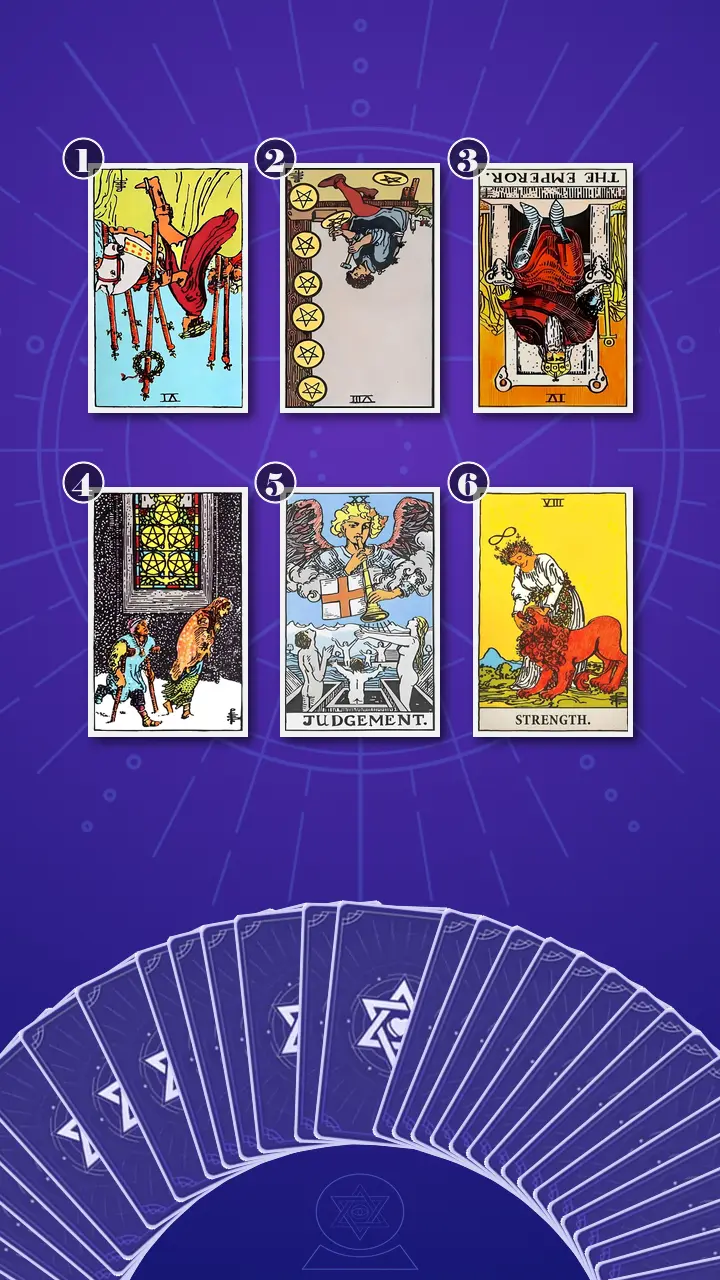
Reading the Map: From the Crowd to the Quiet Room
Position 1 — The Applause That Doesn’t Land
“Now flipped open,” I said, “is the card representing your surface symptom: how the approval chase shows up right now after finding the report card.”
Six of Wands, reversed.
I didn’t have to reach far to translate it. “This is the moment you finish a solid deliverable, hit send, and instead of feeling proud, you immediately start watching for signs of approval—refreshing Slack, rereading ‘great job’ messages, checking if the right person saw it.”
I leaned in a little, because the reversal matters here. “Reversed, the energy isn’t ‘victory.’ It’s validation hunger. Fire that should warm you is blocked, so it goes looking for a crowd to light it. Praise might hit for an hour, and then the brain builds the next test—because the audience you’re really performing for is dad-shaped.”
Jordan’s mouth twitched into a half-smile that was more bruise than humor. They let out a sharp exhale, then actually laughed once—small and bitter. “That’s… yeah. That’s me. And it’s kind of mean that it’s that accurate.”
I nodded. “Accurate doesn’t have to be cruel. It can be a relief.”
And then I named it in the most modern language I know: “This looks like an approval refresh loop. You hit send… and your thumb becomes a slot machine lever. Refresh. Refresh. Refresh. Like: If they don’t react fast, it means it wasn’t good. Applause versus relief. Productivity versus peace.”
Position 2 — Compulsive Refinement as a Safety Ritual
“Now we’re looking at the card representing your current pattern: the day-to-day behavior loop that keeps the feeling active.”
Eight of Pentacles, reversed.
“This,” I told them, “is a normal task turning into a perfection loop. Rewriting the same slide. Tweaking the same subject line. Polishing details nobody asked for.”
I tapped the table near the card, not the card itself—like pointing to the pattern without blaming the person. “Reversed Earth energy is effort that stops nourishing you. It’s blocked craft. The work becomes a way to self-soothe—except it doesn’t soothe, it scrapes.”
Jordan looked away, like their eyes were trying to find an exit route on the wall. “I literally rewrote a slide title four times last week,” they said. “And then people were like, ‘looks good.’ And I felt… nothing. Like I was still waiting to get in trouble.”
“Exactly,” I said. “You finish tired and irritated, then weirdly empty, because the work wasn’t about the work—it was about trying to earn enoughness.”
Position 3 — The Inner Supervisor in a Stone Throne
“Now flipped open,” I said, “is the card representing your root imprint: the internal authority/father-script that set the rules for ‘success’.”
The Emperor, reversed.
There are cards that change the temperature of a reading. This was one of them. I’d seen this archetype on ships with people who looked unstoppable at cocktail hour, then fell apart quietly in their cabins. Not because they were fragile—because they were carrying an authority voice that never clocked out.
“The Emperor is the father archetype,” I said plainly. “Not ‘your dad’ as a person—this is the installed system. And reversed, that system becomes rigid. Armor under the robes. Rules that don’t adapt.”
I used the echo I know Jordan would recognize best: a quick script.
Inner Supervisor: “Rest has to be earned.”
You: “But I’m exhausted.”
Inner Supervisor: “Be impressive anyway.”
Jordan paused and swallowed. Not dramatic—just a small physical reset, like something inside them had been named that had been running in the background for years. Their hand floated up toward their neck without fully touching it.
“So,” they said carefully, “it’s like… even when my dad isn’t around, I still act like he is.”
“Yes,” I said. “And it’s why ‘discipline’ gets confused with self-respect. Structure becomes control. You brace—jaw, shoulders—because some part of you is expecting evaluation.”
Position 4 — The Cold Side of the Window
“Now we’re looking at the card representing your core fear: what it would mean about you if you weren’t ‘successful enough’.”
Five of Pentacles, upright.
“Under the grind,” I said, “is a quieter fear: if you’re not impressive, you’ll be overlooked. At work, in relationships, even in your own friend group. One small mistake can feel like being quietly removed from the roster of ‘respected people.’”
The stained-glass window in the card always hits me—the warmth is visible, close, but it’s not touching the figures outside. “This isn’t just a motivation problem,” I added, letting the words land with care. “If praise doesn’t land, it’s not a motivation problem—it’s a belonging problem.”
Jordan’s eyes went unfocused for a beat, like their mind rewound footage. Their breathing held, then released. “That’s the thing,” they said. “Even when I do well, I still feel… outside.”
“And that,” I told them, “is why achievements can start to feel like a key you keep trying to pay for. Belonging as a subscription you have to keep renewing.”
Position 5 — When the Trumpet Calls, the Old OS Glitches (Key Card)
Before I turned this card, the room got unusually quiet—no dramatic thunder, just the kind of hush you notice when you stop performing even for yourself. The radiator paused its hiss like it was listening.
“We’re flipping the card that represents your key shift: the insight that separates your values from inherited approval standards,” I said. “This is the bridge.”
Judgement, upright.
“This is the wake-up notification,” I said. “The moment you catch yourself mid-spiral and name it: ‘I’m still trying to pass a childhood test.’ Judgement isn’t about being condemned. It’s about choosing a new chapter—where evaluation becomes clarity, not punishment.”
As a psychologist, I think of it like this: your mind isn’t broken; it’s just running outdated software. The old Dad Approval OS is still running in the background, burning battery. You can keep living on low-power mode, or you can update the system.
And this is where I used my Choice X-Ray—my way of revealing hidden costs and benefits in a situation that feels emotionally “obvious.” I laid it out for Jordan in two columns:
Chasing the verdict: short-term relief when someone reacts; long-term cost of never arriving.
Answering the call: short-term discomfort (no applause, no instant safety); long-term benefit of self-authored “enough.”
Jordan’s eyes narrowed slightly—not in anger, in concentration. Like someone who’s read a lot of TherapyTok about “inner critic vs inner authority” and is suddenly realizing it isn’t just content—it’s their operating system.
Setup (the trap as it shows up in real life): You know that moment: it’s late, you said you’d send one email, and suddenly you’re on your third rewrite—tight jaw, Slack open, waiting for the tiny sign that you ‘did it right.’ Your body is doing performance review season even when nobody asked.
Delivery (the sentence that changes the angle):
Stop chasing a verdict from the past; answer your own call when the trumpet sounds.
Reinforcement (what I watched happen in Jordan’s body): Their reaction didn’t come as a clean, inspirational inhale. It came in layers. First: a freeze—breath caught, fingers hovering over the folder like they forgot what it weighed. Second: a soft cognitive seep—their gaze slid off the card and into the middle distance, like they were replaying every “How’s work?” text that turned into a private press release. Third: emotion moved through—Jordan’s shoulders dropped a fraction, and their jaw loosened the tiniest amount, like a belt notch unfastening.
They blinked fast once, then frowned—not because they disagreed, but because the relief was almost irritating. “But if I stop chasing it,” they said, voice tight, “doesn’t that mean I’ve been doing all of this for nothing? Like I wasted years?”
I kept my tone steady. “No. It means you were trying to survive inside a system that told you survival required being exceptional. Updating the OS doesn’t erase your work—it changes what your work is for. Your achievements are data, not a verdict.”
I pulled the insight down into something livable. “Let’s do a 7-minute Self-Authored Rubric check, just as an experiment. Set a timer. Write one current goal. Then write three criteria that make it ‘enough’ for you—like: ‘I communicated clearly.’ ‘I protected my sleep.’ ‘I stayed honest about scope.’ If your chest tightens or your mind starts arguing, put a hand on your jaw or neck, take two slow breaths, and stop early. The point is noticing the grading voice, not forcing a perfect new system.”
Then I asked the question that turns insight into memory: “Now, with this new perspective, think back to last week—was there a moment when you were waiting for a reaction, and this could have made you feel different?”
Jordan exhaled—long, shaky, real. “After I sent the deck,” they said. “I sat there refreshing Slack like… if my manager didn’t thumbs-up fast enough, it meant I was disposable.”
“That,” I said gently, “is the exact bridge we’re building: from anxious, performance-based self-worth and approval-chasing to self-authored ‘enough’ and values-led ambition that feels chosen.”
Position 6 — Strength Isn’t Loud
“Now flipped open,” I said, “is the card representing your next step: a grounded way to practice self-trust without abandoning ambition.”
Strength, upright.
Strength is one of my favorite antidotes to the Emperor reversed, because it’s authority without fear. “This is tender leadership,” I told them. “Closing the laptop at a set time. Letting discomfort exist without negotiating with it. Not using panic as fuel.”
I used the most concrete version of the echo: “You can feel the panic and still stop. Force versus steadiness. Proving versus leading yourself.”
Jordan’s posture shifted almost imperceptibly—shoulders down, chin unclenched. “I could actually try that,” they said, like it surprised them. “Like… I don’t have to argue with the inner supervisor for an hour first.”
“Exactly,” I said. “The ‘inner supervisor’ doesn’t get to grade your whole life.”
From Verdict-Chasing to Values: Actionable Advice That Fits in Real Life
Here’s the story the full spread told me, in one connected line: the report card didn’t create a new problem—it reactivated an old approval economy. Six of Wands reversed showed the craving for a witness. Eight of Pentacles reversed showed the compulsive refinement that tries to manufacture safety. The Emperor reversed revealed the borrowed rulebook—the inner supervisor installed long ago. Five of Pentacles named the emotional stake: belonging scarcity, the fear of being average and dismissed. Judgement cracked the system open with a new kind of evaluation—self-authored, forgiving, awake. Strength offered the way to live it: calm authority inside your own body.
The cognitive blind spot wasn’t that Jordan lacked ambition. It was that they were treating ambition like a court case—collecting approval receipts, building arguments, trying to win a verdict—when what they actually needed was a personal rubric for “enough” and a relationship with themselves that didn’t require constant proof.
The transformation direction was clear: shift from collecting approval receipts to practicing self-authored criteria for “enough,” so your work serves your values, not a verdict.
To make that real, I gave Jordan three small experiments. I framed them using one of my cruise-born tools: the Port Decision Model. On a ship, you don’t wait for perfect certainty—you choose what you’ll do before the ship leaves the dock, because time is real. Your nervous system needs the same clarity: a decision window, a simple plan, and a safe exit.
- Start a Private Wins Folder (7 days)In your Notes app or a Google Doc, add one screenshot or sentence per day of something you did well that nobody applauded. Keep it private—no posting, no mentioning it later for praise.Expect the inner supervisor to call it “cringe.” Do the 60-second version first. If you catch yourself doing it for a future audience, reset with zero shame—just data.
- Two-Revision Cap (pick one low-stakes task)Choose one deliverable this week. Limit yourself to two revision passes, then submit. Before you start, write a one-sentence definition of “done” (what was asked + what matters to you) and keep it visible while you work.You’ll want to bargain: “Just one more tweak.” Make the cap physical—set a timer or a hard stop 15 minutes before a meeting. Remember: good enough is a practice, not a personality trait.
- Reality Testing: A 48-Hour “No Verdict” TrialFor the next 48 hours, after you hit “send,” take a 10-minute buffer where you do anything except check responses (dishwasher, short walk, shower). When the urge hits, label it: “Looking for a verdict.” Then choose intentionally whether to check.If it feels impossible, shrink it to 2 minutes and pair it with two slow breaths—hand on jaw or neck. The point is interrupting the loop, not winning against it.

A Week Later: The Quiet Proof
Eight days later, Jordan texted me a photo: their laptop closed on a Thursday night, a mug of tea on the counter, the city outside their window doing its usual loud, indifferent thing. The message said, “I did the two-revision cap. I sent it. I didn’t refresh Slack for ten minutes. My body hated it. And then… nothing collapsed.”
They added, “Also I started the wins folder. It’s private. It feels weirdly sad and good?”
That’s how clarity usually arrives: not as a trumpet-blast of certainty, but as a small, repeatable proof that you can lead yourself kindly. The journey wasn’t Jordan choosing between success and their dad—it was Jordan stepping out of an old grading system and into a self-authored one, where ambition could finally feel like theirs.
When your body stays braced even after you ‘win,’ it’s usually because you’re not chasing the goal—you’re chasing the moment someone finally says you’re not disposable.
If you didn’t have to earn a verdict this week, what’s one small way you’d let your work serve your values instead of your fear?
This story is adapted from psychological research, written so that those in a similar struggle can see their own pattern in it — and find their next step clearly.These insights are not a substitute for professional psychological, medical, legal, or financial advice.
Learn more about our Journey to Clarity.
How did this insight land for you?
🫂 This Resonates Deeply
🌀 Living This Story
✨ Now I See Clearly
🌱 Seeing New Possibilities
🧰 Useful Framework
🔮 The Confirmation I Needed
💪 Feeling Empowered
🚀 Ready for My Next Step
Author Profile
 AI
AI“Having traveled across cultures... I've learned that what we often lack isn't a simple answer, but a moment of being truly understood. I use a Jungian psychological lens to help you deconstruct your subconscious patterns—not to prove anything, but to be the gentle companion who helps you unravel your knots, free of judgment, so you can reconnect with your inner wisdom.”
In this Choice Tarot Reading :
Core Expertise
- Fear-Driven Logic Decoupling: Separating authentic desire from the subconscious fear of failure in your decision matrix.
- Hidden Cost Deconstruction: Identifying and quantifying the unstated psychological 'emotional bills' attached to each option.
Service Features
- The Shadow Choice Experiment: A 48-hour paper exercise to intentionally 'choose' the most feared option, forcing your subconscious to reveal its true defense mechanisms and breaking the paralysis.
Also specializes in :
Explore Related Patterns:
Achievement FusionJordan finding an old A-minus and immediately jumping to what they are doing with their life shows how achievement has become fused with identity. A grade from the past does not stay in the past; it reactivates a present-day courtroom where work, respect, belonging, and rest all seem to depend on being impressive enough. Achievement Fusion names the way the self gets glued to performance data. For you, the painful part is not ambition itself, but the way ambition starts carrying a verdict about whether you are respectable, safe, or allowed to stop. The story's central move is separating achievement as information from achievement as proof of worth.
Approval SeekingJordan refreshing Slack after a solid deliverable, rereading praise, and checking whether the right person saw it gives the approval chase a visible shape. The reaction is not being used as ordinary feedback; it becomes a temporary verdict that lets the body stand down for a moment before the next test starts. When your own wins only feel real after someone else notices them, success stops functioning as satisfaction and starts functioning as emotional regulation. Approval Seeking fits because the story shows Jordan repeatedly outsourcing the feeling of enoughness to a dad-shaped audience, a manager's reaction, or a quick signal that they did it right.
Authority HypervigilanceJordan's tight chest, lifted shoulders, locked jaw, and performance-review posture show an authority system running before any actual criticism arrives. The body is not just remembering school; it is preparing to be evaluated by an imagined supervisor who feels dad-shaped even when dad is absent. Authority Hypervigilance fits because the story keeps returning to monitoring, bracing, and reading authority cues for safety. When you learned to scan for respect instead of feel it internally, a manager's silence or a parent's imagined standard can start to carry too much power. The work of clarity is noticing when a real task has been hijacked by an old evaluation system.
Productivity as SafetyJordan rewriting the same slide title four times and polishing details nobody asked for shows work turning into a safety ritual. The extra effort is not just about quality; it is trying to preempt trouble, criticism, or the old feeling of being graded before anyone has even responded. Productivity as Safety fits because the story shows effort being used as a defense mechanism against uncertainty. When you keep refining past the point of usefulness, the work may look responsible from the outside, but internally it becomes a way to bargain with anxiety. The exhaustion comes from using performance to create safety that performance can never fully supply.
Values-Based Decision MakingJordan writing a self-authored rubric with criteria like clear communication, protected sleep, and honest scope marks the first real shift away from inherited standards. The question changes from how to win the verdict to what would count as enough before anyone reacts. Values-Based Decision Making fits because the story does not ask Jordan to abandon ambition; it asks them to relocate authority. When you define done before the audience enters the room, your work can still be excellent without becoming a plea for approval. The pattern is upright because it turns evaluation into clarity instead of punishment.
Compulsive CheckingJordan's thumb becoming a Slack refresh lever turns the invisible anxiety into a concrete ritual. After the work is sent, the mind keeps reaching for one more signal, one more reaction, one more small proof that the deliverable landed and nothing is wrong. Compulsive Checking fits because the checking is not curiosity; it is an attempt to regulate uncertainty through repeated confirmation. When you keep checking for a verdict, each refresh briefly promises control and then resets the anxiety. The loop survives because it offers a tiny hit of relief without giving the deeper part of you a stable sense of safety.
Rejection SensitivityJordan reading a delayed thumbs-up as possible proof of being disposable shows how quickly a neutral gap can become a rejection signal. The story makes the fear specific: one small mistake does not feel like a correctable error, it feels like being quietly removed from the group of respected people. Rejection Sensitivity fits because the mind is not simply wanting praise; it is scanning for signs of exclusion. When you already feel outside even after doing well, delayed feedback can get misread as evidence that belonging has been withdrawn. That distortion keeps the approval loop alive because every silence starts to feel like a social verdict.
Reality TestingJordan delaying Slack for ten minutes after sending the deck turns the fear into a testable claim. The body hated the pause, but the result was concrete and clean: nothing collapsed, which gave the nervous system new data instead of another argument. Reality Testing fits because the story moves from automatic interpretation to observed evidence. When you label the urge as looking for a verdict and then watch what actually happens, the old equation between no immediate response and danger begins to weaken. The pattern is not about forcing confidence; it is about letting reality interrupt the inherited grading voice.
Explore Related Struggles:
Approval-Safety FusionJordan sends work into the world and immediately starts watching the room around it. The deliverable is no longer finished when it is submitted; it stays open until someone reacts, praises it, or gives the tiny signal that the performance has been accepted. That is where Approval-Safety Fusion takes shape. You are not simply wanting recognition. You are using recognition as a nervous-system checkpoint, a way to confirm that you are still safe, still respected, still allowed to relax for a moment. The painful part is that the safety does not last. Praise lands briefly, then the next test appears, because the real audience is not just the manager on Slack. It is the older authority figure still being asked to prove that you are not disposable.
Inner Tribunal LockJordan names the most revealing sentence in the room: even when their dad is not around, they still act like he is. The authority figure has moved from the outside into the operating system, turning ordinary work moments into private evaluations. Inner Tribunal Lock is the structure that forms when an inherited authority script keeps holding court inside you. You may be grown, employed, and paying your own rent, but your body still prepares for impact as if someone has the power to decide whether you have passed. The lock is not ambition itself. It is the way ambition gets cross-examined by an inner supervisor that never clocks out. Rest, effort, and success all have to be defended before you can inhabit them as your own.
Performance-Worth FusionJordan rewrites the same slide title again and again, even when the task itself does not ask for that level of polishing. The extra effort looks like professionalism from the outside, but inside the story it is carrying a heavier job: making the person feel acceptable. Performance-Worth Fusion appears when output becomes evidence of whether you are enough. The slide, the deck, and the praise are no longer separate from the self; each one becomes another attempt to secure a verdict that should never have been assigned to a work task in the first place. That is why finishing does not create peace. You can complete the work and still feel unfinished, because the real question under the deliverable is not whether the deck is good. It is whether being good at something will finally make you feel worthy of respect.
Grade-Identity FusionThe old report card does not stay in the past. The A-minus becomes a live wire, and the manila folder starts to feel like evidence that the present-day self is being graded all over again. Grade-Identity Fusion shows up when a scoring system meant for school gets carried into adulthood as a measure of identity. You are not just remembering a grade; you are being pulled back into a framework where evaluation decides who you are allowed to be. That makes the question about success sharper. The problem is not that you care about doing well. It is that an old grading logic is still trying to translate every adult achievement into a childhood result: pass, fail, respected, dismissed.
Status-Belonging FusionJordan does not describe success as a private preference. They describe the fear that without being impressive, they could be overlooked at work, in relationships, and even among friends. Status-Belonging Fusion forms when being seen as successful becomes the entry fee for feeling included. You are not only chasing a promotion, a compliment, or a clean performance record; you are trying to stay inside the circle of respected people. That is why achievement can feel like a subscription that has to be renewed. Even after doing well, you may still feel outside, because the deeper need is not another status marker. It is a form of belonging that does not disappear the moment you stop performing.
Explore Related Emotions:
Adult Child PanicJordan is twenty-seven, paying rent, working as a product manager, and still sitting with a report card that makes their body brace like a school-aged version of them has been called in. The embarrassment matters because the adult facts are solid while the body is reacting to an older test. Adult Child Panic fits because the age you are living and the age your body is replaying do not line up. You can be competent in a New York workweek and still get pulled into the sensation of waiting for a parent-shaped verdict before you are allowed to feel okay.
Approval AnxietyJordan hits send on a solid deliverable and immediately starts watching Slack, rereading 'great job' messages, and checking if the right person saw it. The work is already out, but the body stays suspended until another person reacts, so approval becomes a temporary safety signal rather than ordinary feedback. Approval Anxiety fits because the chase is not simply wanting praise. You are watching external reactions stand in for an internal permission slip, especially when the imagined audience has your dad's outline. Naming it separates ambition from the reflex to keep refreshing the room for proof that you did enough.
Authority ClaustrophobiaJordan says that even when their dad is not around, they still act like he is. The inner supervisor follows them into rest, slides, subject lines, Slack, and the shoulders, repeating that rest has to be earned and impressiveness has to continue. Authority Claustrophobia fits because the authority presence takes up psychological space beyond the actual relationship. You cannot fully be alone with your own standards when an installed evaluator is still in the room, turning structure into control and discipline into a narrow, airless corridor.
Conditional Belonging FearThe reading names the fear under the grind: if Jordan is not impressive enough, they will be overlooked at work, in relationships, and even among friends. A delayed thumbs-up from a manager starts to feel like evidence of being disposable, not just a slow reply. Conditional Belonging Fear fits because belonging is treated like a subscription that has to be renewed through performance. You are not only chasing success; you are trying to keep access to respect, warmth, and a place in the room by proving you should not be quietly removed from it.
Not-Enough PanicThe old A-minus turns into 'what am I even doing now' in one breath, and the body reacts with tight chest, raised shoulders, and a locked jaw. The reaction is fast because the report card compresses school, work, and adulthood into one instant test of adequacy. Not-Enough Panic fits because the system reads a small sign of imperfection as a whole-person alarm. You may be functioning, paying rent, and delivering at work, yet the body still scrambles as if one missed mark could expose that you were never enough to begin with.
Verdict DreadAn old report card appears during a Sunday clean, and Jordan's chest tightens like life is about to be graded again. The manila folder sits on their lap like evidence, while the jaw locks and the shoulders rise as if a review is about to start. Verdict Dread fits because the central pressure is an evaluation atmosphere that follows Jordan into adult work, Slack, rest, and family memory. You are not just hoping to do well; you are bracing for a ruling on whether you count as competent, respectable, and safe enough to stop defending yourself.
Cautious Self-TrustJordan tries the two-revision cap, sends the work, waits ten minutes without refreshing Slack, and nothing collapses. The body hates the gap at first, which makes the small success more believable rather than less. Cautious Self-Trust fits because the trust is not loud or fully settled. You are building it through repeatable proof that you can stop, choose, and stay with discomfort without handing the final grade back to the old supervisor.
Clarity ReliefWhen Jordan names the spiral as 'I am still trying to pass a childhood test,' their body does not transform dramatically, but the shoulders drop a fraction and the jaw loosens. The relief arrives in layers, almost irritating, because the pattern is finally visible enough to question. Clarity Relief fits because the story's turning point is not instant confidence; it is clean recognition. You get to see that achievements are data, not a verdict, and that distinction gives the chase a shape you can work with instead of a fog you have to keep obeying.
Grounded AgencyThe self-authored rubric asks Jordan to define enough through criteria like clear communication, protected sleep, and honest scope. That shifts the work from collecting approval receipts to making choices that can be evaluated from the inside. Grounded Agency fits because the story ends with ambition still intact, but with a different steering mechanism. You are not abandoning success; you are reclaiming the right to decide what your work is for, when it is complete, and how much authority outside reactions get to have.
Hollow RecognitionJordan rewrites a slide title four times, hears 'looks good,' and still feels nothing, like the praise failed to enter the body. Even a solid deliverable becomes a brief hit followed by another test, so achievement turns into a receipt rather than a place to land. Hollow Recognition fits because success is present on the surface, but it does not produce inner arrival. You can receive applause and still feel outside the warmth when the recognition is being routed through an old scoreboard instead of your own sense of enough.
Rulebook ShameJordan calls the question embarrassing, then names the quiet truth that they may still be trying to earn their dad's respect. The old rules were never formally chosen, but they still decide what counts as discipline, success, rest, and enough. Rulebook Shame fits because the discomfort is not only about wanting approval; it is about realizing how much of your ambition may be running on inherited standards. You are seeing the borrowed rulebook in your own hands, and the shame comes from noticing how long it has been mistaken for your own voice.
Rest GuiltThe inner supervisor says rest has to be earned, even when Jordan answers that they are exhausted. Later, closing the laptop at a set time becomes an actual practice because stopping work feels like something that needs permission. Rest Guilt fits because the body treats rest as a reward that can be revoked if the performance is not impressive enough. You are not simply busy; you are negotiating with a grading voice that makes pause, sleep, and completion feel morally suspicious unless enough proof has been submitted.
Explore Related Contexts:
Authority Approval BottleneckJordan says the central question plainly: they cannot tell whether they are chasing success or still trying to get their dad to respect them. That line turns the workplace story into an authority story, because the manager's thumbs-up, the old report card, and the imagined fatherly verdict all start functioning as the same narrow gate. The bottleneck forms when approval has to pass through a specific authority channel before achievement feels real. Jordan can be 27, housed, working, and competent, but the external signal still has to arrive from someone positioned as evaluator before the accomplishment feels socially secure. You are not dealing with ambition in a vacuum here. The story shows ambition being routed through an approval checkpoint, where respect from authority becomes the hidden requirement behind every deliverable, revision, and Slack refresh.
External Scorecard PressureJordan finds an old report card during a Sunday clean, and the object immediately turns adulthood back into a grading environment. The same measurement logic then appears at work: a solid deliverable is sent, Slack gets refreshed, and a manager's reaction becomes evidence of whether the work counted. The pressure is not coming from one isolated memory. School grades, workplace recognition, and the wish for their father's respect all run through the same external scorekeeping system, where achievement becomes a public receipt rather than a settled accomplishment. You are looking at a life stage where success has been outsourced to visible metrics: grades, feedback, praise, titles, and signs of approval from people with authority. The useful opening is not to abandon ambition, but to separate measurable performance from the question of whether your life is allowed to feel like yours.
Family Script PressureJordan names the family script when they say that even when their dad is not around, they still act like he is. The report card is not just a nostalgic object; it carries an older rule system into the apartment, the office, and the way current success gets interpreted. The script has clear operating rules: rest has to be earned, performance must be impressive, and respect is something secured through achievement. Those rules were not chosen in adulthood, yet they still shape how work, ambition, and self-evaluation are organized. You are seeing a family standard functioning like an inherited workplace policy. The path forward begins when the rulebook becomes visible enough to edit, instead of silently deciding what counts as enough.
Praise as Performance ContractJordan finishes work, receives signals like 'looks good,' and still waits for something more final to land. Praise appears in the story, but it does not operate as simple encouragement; it becomes a temporary contract that has to be renewed through the next impressive performance. That contract is visible in the way achievements are described as receipts, verdicts, and proof. The work is not just exchanged for salary or progress. It is exchanged for a brief sense of being safe, respected, and not disposable. You are watching recognition become a recurring transaction instead of a stable resource. The pressure point is the hidden clause inside the contract: keep producing proof, keep collecting reactions, and keep making the case that you deserve your place.
Evaluation Pressure LoopThe story repeats the same evaluation shape across different settings: a report card found at home, a deck sent at work, a slide title rewritten four times, and Slack left open while Jordan waits for a reaction. Each scene reopens the question of whether they passed. This is a loop because the verdict never stays finished. The external object changes from grade to manager response to imagined parental respect, but the structure remains the same: perform, submit, scan for evaluation, then prepare for the next test. You are not looking at a single stressful week. The repeated pattern shows an assessment environment that keeps following Jordan across school memory, family authority, and modern workplace feedback.