Does Familiar Mean Better?
See why recognition can outrank evidence, which tarot cards reflect that pull, and how it appears across reading insights.

Familiarity Bias

What is this really?
You follow a cognitive shortcut toward the app, route, person, opinion, or role you already know, while unfamiliar options can feel wrong before you examine them. Repetition makes familiar choices easier for your mind to process, so recognition offers predictability when uncertainty is already taking up space. Yet the relief arrives before the evidence does: your shoulders loosen around what you recognize while better-fitting possibilities stay unopened, much like the Four of Pentacles figure sitting outside the city, clasping one pentacle to his chest and pinning two beneath his feet.
Why did it happen?
During earlier situations when you had to decide quickly or with limited information, returning to what you had seen before reduced the unknowns and let your body settle enough to move. Now that same inner pattern can treat recognition as evidence: the known option brings immediate relief, while an unfamiliar one tightens your chest before its fit has been checked, creating a subconscious loop of choosing, repeating, and trusting what is already familiar.
How does it feel?
- When ordering lunch on your phone, you scroll past three unfamiliar dishes, hover over their photos, then tap your usual meal and close the menu. As the confirmation screen appears, your shoulders drop and your grip softens before you have checked whether you wanted it; you can notice that release and let it remain for a moment.
- During a team discussion, you hear a new workflow, press your lips together, reopen last quarter's template, and angle your laptop toward the old version. In the pause before you speak, your chest feels firm and your breathing turns shallow, then eases when the familiar file fills the screen; uncertainty can stay unresolved for now.
- When someone you recently met offers an opinion that differs from your friend's, your eyebrows lift, your eyes flick toward your friend, and you wait for their reaction before answering. In that half-second, your jaw holds still and your palms warm, as though your response has started before the words arrive; it is okay to leave the moment open.
- While checking a claim online, you pause on a sentence whose wording you recognize, nod once, and save it while the less familiar source remains open in another tab. A faint pressure gathers behind your eyes, then fades as soon as the known phrasing returns; you can allow the pause without deciding what it means.
- At home, you scroll through several new shows, rub your thumb along the remote, and restart an episode you can nearly quote. When the opening music begins, your fingers unclench and your exhale arrives on its own, even if a flat feeling follows; both sensations are allowed to be present.
Familiarity Bias in Tarot Cards
Familiarity Bias shows up in the reflex to reopen the old template or order the usual meal before checking whether it still fits, followed by the moment your shoulders drop at the confirmation screen. Jungian archetypal theory provides a conceptual lens for this pattern. The Tarot Cards below mirror the unconscious dynamics beneath that reflex; here are the cards connected to Familiarity Bias.
Familiarity Bias in Tarot Card Reading Insights
That reflex to trust what feels known before checking whether it still fits is something others have brought into readings with these cards. Below are Tarot Reading Insights connected to Familiarity Bias.

An Automatic RTO Yes Was Interrupted by Evidence and One Question
Topic:Direction Tarot Reading
Struggle:Sunk Cost Paralysis
Context:Work Life Boundary Creep

Repeating Childhood Scripts in Big Decisions: Naming the Rule First
Topic:Introspection Tarot Reading
Struggle:Permission Paralysis
Context:Values Alignment Crossroads

Why You Keep Saying Yes to Your Ex's Friend Group: Testing Present Fit
Topic:Choice Tarot Reading
Struggle:Belonging-Authenticity Split
Context:Nostalgia Timing Trap
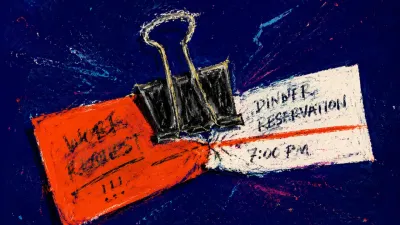
From the Familiar-Choice Burnout Loop to Self-Trust: Pause First
Topic:Personal Growth Tarot Reading
Struggle:Binary Choice Lock
Context:Overcommitment Spiral

Keeping Friday Dinner: From a Chemistry Rush to Grounded Choice
Topic:Love Tarot Reading
Struggle:Reciprocity Deficit
Context:Sexual Chemistry Trap

A Green PR at 11:47 p.m.: From Founder Rewrites to Shared Ownership
Topic:Career Tarot Reading
Struggle:Control Lock
Context:Founder Mode Overreach

An Unsent Note, Three Advice Tabs, and One Request Spoken Aloud
Topic:Love Tarot Reading
Struggle:Caretaker Role Lock
Context:Direct Communication Trial

A Blank Saturday in Relationship Limbo, Then a Conversation Was Booked
Topic:Love Tarot Reading
Struggle:Ambiguity Dependence
Context:Situationship Ambiguity