Keeping Friday Dinner: From a Chemistry Rush to Grounded Choice

The 12:40 a.m. Screenshot That Made Chemistry Feel Like Intimacy
I knew I was sitting with the evidence-minded product designer who could defend every UX decision at work but became a group-chat detective after one high-chemistry Toronto date when Alex (name changed for privacy) placed their phone between us. The screen showed one affectionate sentence enlarged above an unanswered question about when they might meet again.
The screenshot had been taken at 12:40 a.m. on a Wednesday. As Alex described the scene, I could picture them lying sideways across the bed in their waterfront condo, tomorrow's work laptop still glowing while its fan hummed into the cold room. Blue light cut across the dark, the phone felt warm in their palm, and their thumb kept dragging upward through a conversation they already knew by heart.
“I know it is early, but this feels different,” Alex told me. “And if I have to ask where I stand, I worry I will ruin it. The calm connections feel flat, and the chaotic ones feel real.” They wanted lasting intimacy, yet they kept treating sexual intensity, urgency, and preoccupation as proof that intimacy had already arrived.
I heard intense longing in their words, but I saw it more clearly in their body: heat rising through the neck after contact, then a chest that seemed to seal around every silence. Their longing behaved like perfume sprayed too heavily into an unventilated room. One note had reached every surface, leaving no clean air in which to tell desire from evidence.
“Nothing here requires us to call the attraction fake,” I said. “I am also not going to predict what this person feels or where the relationship will go. Let us use the cards to map what happens inside your choices after the spark, then find the point where you can choose differently without shutting desire down.”

Choosing the Circuit Board: The Transformation Path Grid
I invited Alex to place both feet on the floor, take one unforced breath, and hold a precise question in mind: “How can I recognise when chemistry is becoming intimacy, rather than assuming it already has?” I shuffled slowly. I treat this small ritual as a transition for attention, not a performance of mystery. It helps the mind stop chasing ten possible answers long enough to examine one pattern.
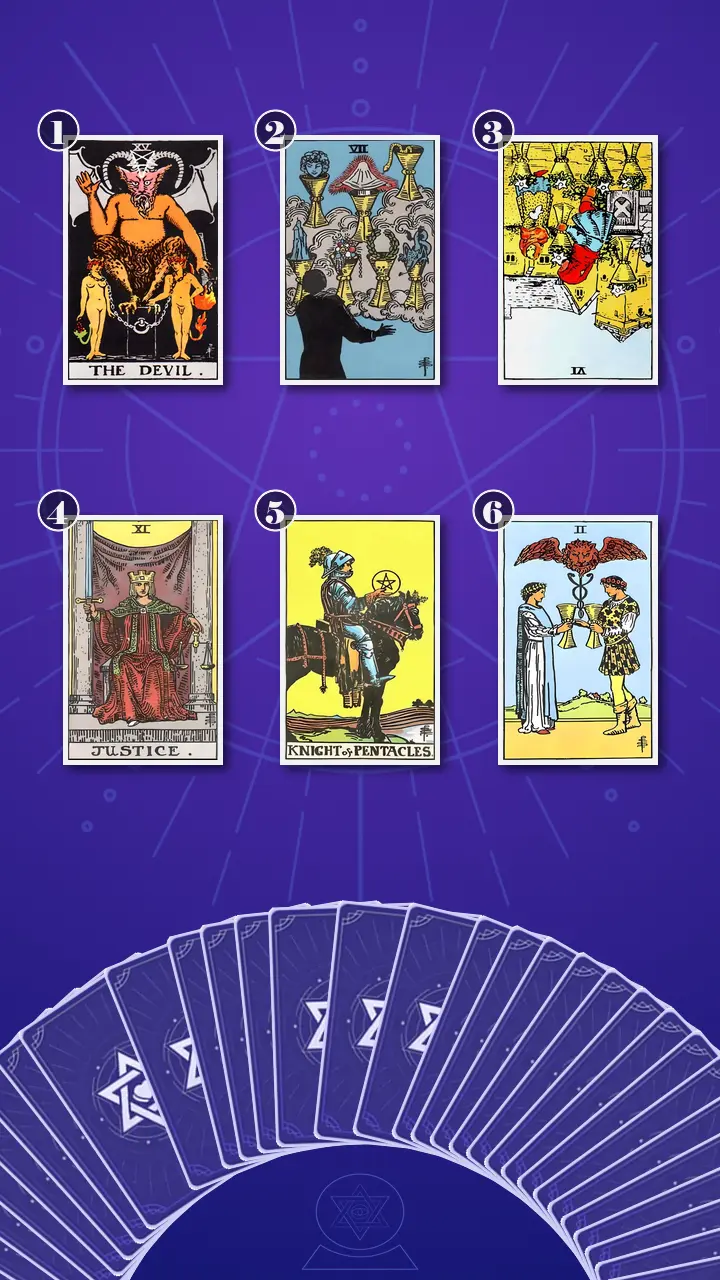
I chose the Transformation Path Grid · Context Edition, a six-card chemistry-versus-intimacy tarot spread. I arranged the cards in two rows of three, like a compact circuit board. The upper row would show the visible pattern, the projection blocking clear perception, and the familiar emotional rhythm sustaining the loop. The lower row would reroute that current through a pivotal awareness, a repeatable pacing experiment, and a grounded definition of reciprocal intimacy.
For anyone wondering how tarot works in a question like this, the spread matters because Alex was not asking me to uncover a date's secret intentions. They were asking why the same interpretive sequence kept repeating. A relationship spread would have placed too much emphasis on the other person, while a larger outcome spread would have introduced predictions we did not need. This six-card grid kept the focus on Alex's pacing, evidence standards, boundaries, and agency.
I told Alex that the first card would reveal where desire was already influencing access and meaning. The second and third would separate projected possibility from familiar emotional memory. The pivotal fourth card would show how to restore proportion, while the final two would turn that insight into observable next steps and a two-person standard for intimacy.
The Loose Chain and the Saturday Kept on Hold
Position One: The Devil, Upright
I turned over the card representing the visible pattern: the point where Alex treated sexual intensity as immediate evidence of relational depth and accelerated investment before intimacy had been demonstrated. It was The Devil, upright.
I directed Alex's attention away from the looming figure and toward the chains around the two people below. The chains looked binding, but they were loose enough to remove. That distinction mattered. The Devil did not accuse Alex of wanting too much or having sex too soon. It showed desire becoming a felt command while choices about pace, calendar access, and meaning were still available.
“Imagine the Thursday date again,” I said. “The attraction is intense. On Friday, they send, 'Might be free later tomorrow.' You leave Saturday open, even though no plan exists. The affectionate message creates warmth, the vagueness tightens your chest, and the inner script says: 'I know we have not discussed this, but if I protect the possibility hard enough, maybe it will become real.'”
The Devil's energy was operating in excess as urgency and compulsive availability. At the same time, Alex's awareness of choice had become blocked. The attraction was real, but it could not physically cancel dinner with a friend, soften a boundary, or assign itself a future. Those were small decisions made under the pressure of the attraction.
Alex gave a brief, bitter laugh. “That is so accurate it feels a little rude.” Their hand moved toward the phone, stopped, and returned to their lap.
“Accuracy is not an indictment,” I replied. “The card is not putting desire on trial. It is showing you the loose-chain moment, the instant before a feeling becomes control of your calendar. After your last charged date, what changed within forty-eight hours: your availability, your sexual pace, your standard for clarity, or the amount of future meaning you assigned?”
Alex looked down. “All four, honestly. I called it spontaneous, but I was reorganising my life around a maybe.”
I placed one sentence beside the card: A spark is information, not a verdict. The purpose was not to weaken the spark. It was to restore the person who still got to decide what the spark meant.
Seven Future Tabs Open From One Text
Position Two: Seven of Cups, Upright
I turned over the card representing the immediate blockage: the way limited information became an elaborate story of specialness, making present evidence difficult to weigh. It was the Seven of Cups, upright.
Seven cups floated in clouds, each holding a different promise, fear, or dazzling image. I described the card as the relationship version of opening seven future tabs after one intense night: exclusivity, emotional depth, a summer trip, meeting friends, sharing a home, repairing conflict beautifully, and finally finding a lasting partnership. None of those possibilities was ridiculous. The problem was that none had loaded yet.
“At 12:40 a.m.,” I said, “you enlarged 'I have not felt this comfortable with someone in ages.' Your unanswered next-date question was directly below it, but outside the crop you sent to the group chat. The thought sequence became: 'They said this, so maybe it means emotional depth. If that is true, exclusivity could be coming. If that is coming, this might be the relationship I have been waiting for.'”
The water energy of the Cups had moved into excess. Emotion was not the problem; multiplication was. Possibility had acquired the emotional weight of something mutually demonstrated. The imagined relationship was generating more data than the actual connection.
“Projection turns unknown into almost promised,” I said. “Which part of this connection has been discussed or repeatedly shown, and which part currently exists as a vivid tab in your mind?”
Alex's thumb rubbed the edge of the phone. Their gaze left the cards and fixed on the rain against the window, as though they were mentally placing the affectionate sentence back above the unanswered question. “The comfort was said,” they answered. “The future was mine.”
I nodded. I wanted the sting of that distinction to stay clean, without becoming shame. Future projection is often an attempt to make uncertainty more bearable. It may create temporary certainty, but it cannot establish compatibility, exclusivity, or emotional safety on behalf of two people.
The Familiar Rush Wearing a New Face
Position Three: Six of Cups, Reversed
I turned over the card representing the root mechanism: the familiar emotional rhythm being replayed and mistaken for present-day compatibility. It was the Six of Cups, reversed.
In the upright image, one figure offers another a cup filled with flowers. Reversed, the comforting exchange became a question. Was Alex receiving a new person as they were, or placing an emotionally familiar script over them before enough present behavior was visible?
I asked Alex to compare two recent experiences. In the first, a calm date had confirmed the plan, asked thoughtful questions, and accepted a boundary without making it awkward. Alex went home and told a friend, “They were great, but I did not feel that thing.” Ten minutes later, they reopened the profile of someone whose inconsistency produced the familiar sequence: heat during contact, mental replay afterward, then a sudden drop when communication slowed.
The reversal showed blockage around familiarity. Alex's body recognised a rhythm and their mind labelled it important before they knew whether the person was kind, compatible, or reliable. I did not invent a childhood explanation or tell Alex that every powerful attraction came from a wound. The card required less certainty than that. It simply asked us to compare the emotional echo with current behavior.
“Familiar is a feeling; compatible is a pattern of behavior,” I said. “What felt familiar in this latest connection: the person, or the sequence of rush, ambiguity, checking, and deflation?”
Alex inhaled, held the breath, and slowly released it. Their fingers tightened once around the sleeve of their sweater, then loosened. “The sequence,” they said quietly. “I keep calling the person different, but the sequence is almost identical.”
I also named the overcorrection available in this card. Alex did not need to treat every strong spark as a warning or force themselves to pursue every calm date. Compulsive rejection would still allow fear to set the pace. Our task was to make room for observation, so that neither familiarity nor unfamiliar calm had to decide the relationship in advance.
When Justice Let the Scent Breathe
Position Four: Justice, Upright
The room seemed to quiet as I moved to the lower row. The rain had thinned, and the lamp caught the silver blade on the next card before I named it. I turned over the card representing the pivotal awareness capable of changing the direction of the pattern: separating the reality of attraction from conclusions about intimacy through a balanced review of reciprocity, consistency, boundaries, and directness.
It was Justice, upright.
I returned Alex to the moment Justice was challenging: at 12:40 a.m., their work laptop was open, one affectionate line filled the phone, the next-date question had no answer, and their tight chest kept insisting that a feeling this strong must already have a destination.
Justice held level scales in one hand and an upright sword in the other. I saw an evidence review, not a cold verdict. Desire belonged on one side of the scales because it was genuine information. Repeated behavior belonged on the other because it answered different questions. The sword separated what Alex felt, what the other person said, what they actually did, and what still remained unknown.
Fifteen years at a perfumer's bench have taught me not to confuse first impact with full structure. A top note can be startling, seductive, and completely real, yet it cannot tell me how the fragrance will unfold through its heart and base, or how it will wear after several ordinary hours on skin. Time and air do not invalidate the first inhale. They make the composition legible.
I call the relational version of this Intimacy Distance Calibration. Too much immediate closeness can saturate perception until intensity is the only note available. Too much distance can leave a connection cold and unknowable. The useful distance is the amount of breathing room that lets attraction remain present while consistency, respect, and everyday behavior begin to emerge.
Justice's sword also gave me a Boundary Permeability Assessment. I asked: “Where does your experience end and the other person's participation begin? The heat in your body is yours. The future story is yours unless it has been discussed. Whether they answer directly, make a plan, respect a no, or return to a difficult conversation belongs to them. Intimacy can grow where those two realities meet, but you cannot perform both sides of the exchange.”
I looked at Alex and said, “Chemistry tells you desire is happening; intimacy is what two people repeatedly make observable.”
You do not need to treat the rush as a verdict; weigh desire beside consistency and reciprocity, as Justice holds the sword of truth above balanced scales.
I let the sentence remain between us without rushing to explain it.
I watched Alex's breath stop. Their fingers hovered above the phone as though the familiar checking motion had been interrupted halfway through. Their pupils widened, then their gaze lost focus; I could almost see them replaying cancelled dinners, cropped screenshots, and explanations written for people who had not offered their own. Their mouth tightened before their shoulders dropped a fraction. Then resistance arrived. “But does that mean I have been wrong every time?” they asked, the words sharper than anything they had said so far. Their eyes reddened, not quite with tears, but with the exposed feeling of discovering that clarity creates responsibility. After another pause, their fist slowly opened against their knee. A breath came from deep in their chest, shaky and relieved, followed by a small, almost disoriented laugh. “I do not have to prove the spark is fake,” they said. “I just have to stop asking it to answer every question.”
“Exactly,” I replied. “And seeing the pattern now does not make your previous self foolish. That version of you was trying to protect belonging by making uncertainty feel complete. We are giving that effort a better tool.”
I invited the real-life comparison the card required. “Now, with this new perspective, think back to last week. Was there a moment when weighing desire beside behavior might have changed how the experience felt?”
Alex remembered Friday at 4:18 p.m. in a Liberty Village coworking space. A design review had been open on one monitor when “might be free later” appeared on the other screen. They had cancelled dinner, then spent the evening waiting for a plan that never became specific. “I thought keeping the night open proved I cared,” they said. “Now I can see it only proved I was available.”
I showed Alex a seven-minute Three-Signal Intimacy Check. In a private note, I asked them to create three headings: Reciprocity, Consistency, and Boundary Respect. Beneath each, they would record one thing the person had actually done, using observable facts only. Where evidence was missing, they would write “unknown.” Unknown was a valid result, not an invitation to inspect a dating profile or decode another punctuation mark.
I made the safety boundary equally clear: the note was not a test to use against another person, and Alex did not need to send a message or make a major relationship decision from one exercise. If the check increased the heat, tightness, or urge to investigate, they could close it and return later. The minimum version was one fact and one unknown.
This was the spread's decisive crossing: a first move from limerence-driven urgency and projected certainty toward grounded openness based on observable reciprocity. Justice did not promise certainty. It restored proportion, which was enough to make choice possible again.
The Stationary Horse That Kept Friday Dinner
Position Five: Knight of Pentacles, Upright
I turned over the card representing the practical experiment: slowing escalation, preserving existing commitments, asking a direct question, and observing follow-through over time. It was the Knight of Pentacles, upright.
The knight sat on a stationary black horse, holding one pentacle carefully at eye level. I explained that stillness was not passivity here. The early spread had carried heat and clouded water; this card supplied the underused earth energy of pacing, repetition, and observable behavior.
“This is you keeping your pre-existing Friday dinner when a message still says 'might be around,'” I said. “It is you asking, 'I am enjoying this. What kind of connection are you open to right now?' Then it is you observing whether plans become specific, words match actions, and a boundary remains respected outside the sexually charged setting.”
I compared the card to keeping both feet on the TTC platform when a dating-app notification arrives, instead of sprinting toward every possible opening. Alex did not have to delay replies artificially or pretend to be unavailable. They only had to let a connection meet them inside a life that already existed.
“But what if slowing down kills it?” Alex asked. Their voice had softened, but one hand had returned to the edge of the phone.
“Then the slower pace has revealed information; it has not destroyed intimacy,” I said. “If keeping dinner with a friend makes the connection disappear, your availability may have been holding more of it together than mutual intention was. That can hurt, but it is not evidence that you should abandon your life faster next time.”
Alex nodded once. Their hand moved away from the phone. “If they lose interest because I kept dinner with my friend, that information matters too.”
The Knight's energy was balanced: neither the excess of rushing nor the deficiency of withholding. It offered active observation. Ordinary scheduling, one clear question, and one respected limit could reveal more about lasting intimacy than another night of heightened chemistry followed by digital silence.
The Equal Cups and the Two-Person Verbs
Position Six: Two of Cups, Upright
I turned over the card representing integration: a new criterion for intimacy based on mutual participation and present-tense reciprocity rather than one person's intensity or projected future. It was the Two of Cups, upright.
Two people faced each other and exchanged cups at equal height. I asked Alex to notice the symmetry. Neither figure carried both cups. Neither stood alone writing the entire meaning of the relationship and hoping the other person would eventually sign it.
“In ordinary life, this looks like both people asking follow-up questions, initiating plans, naming what they want, respecting a no, and returning to a difficult conversation,” I said. “You can feel a great deal and still ask what is moving toward you.”
The water energy had returned, but now it was held in balance. The spread was not asking Alex to become detached. It was showing emotion transformed from fantasy water and memory water into reciprocal water: feeling exchanged in the present rather than projected into an imagined future.
I gave Alex the phrase I use when a relationship story has become too dependent on one person's inner world: Intimacy uses two-person verbs. Ask. Answer. Plan. Respect. Initiate. Repair. Those behaviors do not have to appear in perfectly equal quantities or on an artificial schedule, but both people need to be visible in the edit history.
“The Two of Cups is not a promise that this particular connection will become a relationship,” I added. “It is a standard you can carry into any connection. If only you are supplying the plans, explanations, emotional labor, and future meaning, that imbalance is current information. It is not an instruction to try harder, and it is not a verdict on your worth.”
Alex looked at the equal cups for a long moment. Their face held both relief and a faint grief for the stories they had carried alone. “I have been measuring intimacy by how much I could feel,” they said. “I have not been asking what we were both participating in.”
I saw their posture change, not dramatically, but enough. Their shoulders no longer seemed to be reaching toward the phone. The hope in the room was quieter than the rush they had described, and therefore easier to trust.
From a Chemistry Spike to Observable Next Steps
I read the full grid back to Alex as one connected story. The Devil showed the moment a real appetite began directing access and pace. The Seven of Cups showed projected possibilities multiplying faster than facts. The Six of Cups reversed revealed why those possibilities felt convincing: the rhythm of heat, ambiguity, checking, and deflation was familiar enough to be mistaken for compatibility. Justice restored proportion, the Knight of Pentacles made time and ordinary behavior visible, and the Two of Cups replaced one-person intensity with mutual participation.
The layout resembled a circuit board because the lower row did not erase the current in the upper row; it rerouted it. Justice did not cancel The Devil's desire. It returned choice to it. The Knight did not shame the Seven of Cups for imagining. It gave possibility a reality-testing period. The Two of Cups did not reject the longing inside the reversed Six. It redirected that longing toward an exchange occurring between two people now.
I named the cognitive blind spot directly. Alex had been giving bodily intensity the authority to answer questions that only repeated interaction could answer. They also assumed that slowing the pace would kill the chemistry, even though constant availability was preventing them from discovering whether the connection could survive a boundary, an ordinary Tuesday, or a direct conversation.
The transformation direction was specific: after the next chemistry spike, pause escalation long enough to notice reciprocity, consistency, and boundary respect before assigning the connection a larger meaning. Attraction could remain welcome. Unknowns could remain unknown. Alex, not the loudest sensation and not the cards, would choose the next pace.
I turned the six-card Transformation Path Grid into two small experiments. Neither required Alex to become guarded, suppress sexual autonomy, play hard to get, or monitor another person's online activity.
- Run the Seven-Minute Three-Signal Intimacy Check Within ten minutes after the next chemistry spike, open a private phone note with the headings Reciprocity, Consistency, and Boundary Respect. Record one observable fact under each, then add “unknown” wherever evidence is missing. Before telling a friend the connection is exceptional, say three separate sentences: “I felt...”, “They did...”, and “I do not know yet...” Tip: If this starts to feel like a spreadsheet for attraction, use the minimum version of one fact and one unknown. Stop if you notice yourself opening their profile to manufacture more data.
- Use the Blank Space Protocol Once This Week When a new invitation is vague, keep one existing dinner, class, gaming night, or solo plan instead of clearing your calendar. Before increasing logistical investment, allow a twenty-four-hour pause and ask one proportionate question in your normal voice, such as: “I am enjoying this. What kind of connection are you open to right now?” The blank space gives ordinary behavior room to become visible. Tip: This is not strategic scarcity. Do not delay replies or perform disinterest. Preserve one real commitment, ask one clear question, and observe. If directness feels unsafe or a stated boundary is pushed, stepping back is already available.
I explained the scent logic behind the Blank Space Protocol. In perfumery, empty air is not an absence of composition; it is what allows distinct notes to diffuse without suffocating one another. In dating, a little unclaimed space lets Alex notice where their identity ends, where the other person's choices begin, and whether mutual movement occurs without Alex carrying the whole connection forward.

A Week Later: The Quiet Proof
Six days later, I received a message from Alex. A familiar “might be free Friday” text had arrived while they already had dinner planned with a friend. They felt the rush, opened the Three-Signal note, recorded one act of reciprocity, one respected boundary, and “not answered yet” under consistency. Then they kept dinner.
The vague invitation never became a concrete plan. Alex did not write an explanation for the other person, inspect their profile, or turn the silence into evidence of a hidden bond. “I was disappointed,” they wrote, “but I did not spend the whole night auditioning theories. I had noodles with Maya, and my phone stayed in my bag for almost an hour.”
That night, they slept through. Their first thought over breakfast was, “What if I let something rare go?” Then they noticed the coffee was still hot, smiled once, and left the phone face down in the morning light.
I did not read that message as proof that Alex had solved dating or would never future-project again. I read it as the first credible evidence of change: urgency had appeared, but it had not been given total authority. Alex had kept one promise to their existing life long enough to see what the new connection would do on its own.
That was the real Journey to Clarity. The tarot cards had not selected a partner, exposed someone else's feelings, or guaranteed lasting intimacy. They had helped Alex separate sensation from conclusion, recover a boundary around their time, and recognise that intimacy uses two-person verbs. The agency belonged to Alex every time they chose to look at the whole picture.
I know that when a rush makes your whole body lean toward someone while your chest tightens around every silence, it can feel safer to protect the imagined bond than to discover whether it can actually hold your need for belonging. If that is where you are tonight, simply noticing the difference between the scent filling the room and the person meeting you inside it means you are no longer at the beginning.
If you let the spark stay real without deciding its future tonight, which small two-person verb would you be curious to see become observable next: ask, answer, plan, respect, initiate, or repair?