Does familiar mean ready?

Define the pattern, see the tarot cards that mirror it, and browse reading insights around borrowed confidence.

Illusion Of Competence
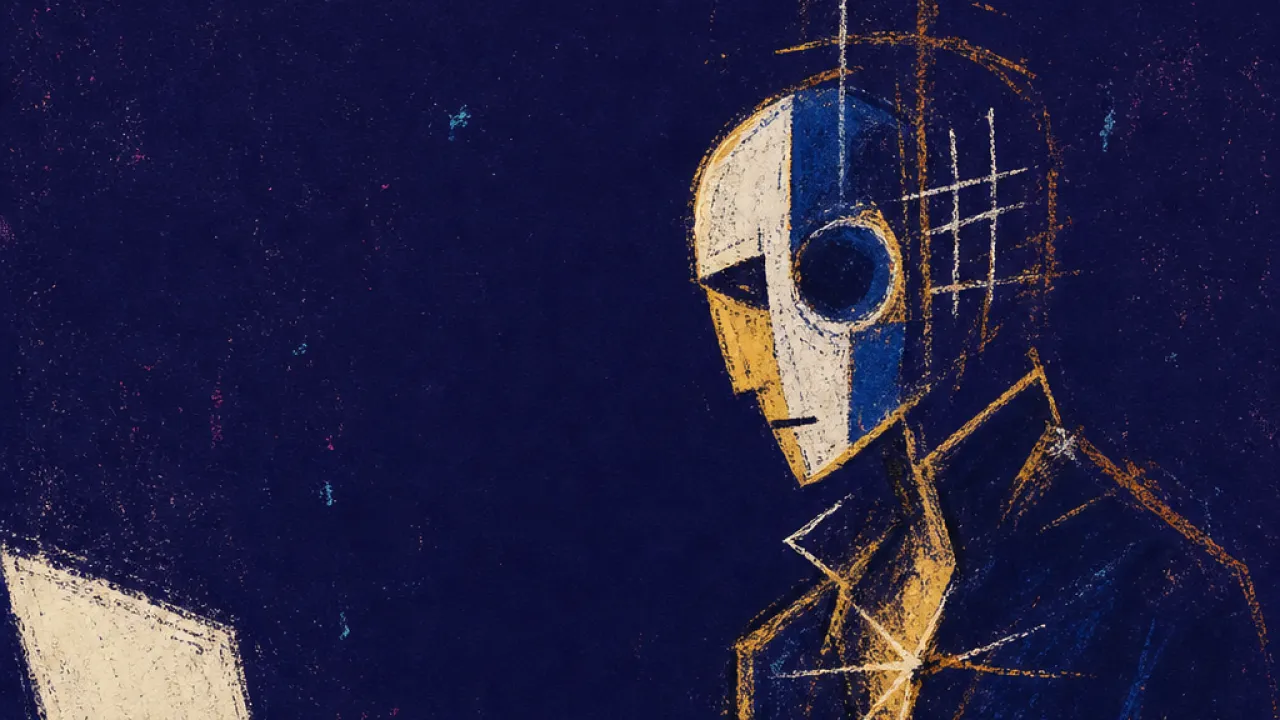
A rigid figure beside a blank setup screen, fingers hovering over keys, amber line at the collarbone against cold blue.

What is this really?

You read the summary, watch the tutorial, recognize the vocabulary, and let cognitive fluency feel like competence while your voice steadies before your hands have actually tested the skill. Underneath, staying sure can protect you from the exposed feeling of being new, slow, or visibly unsure; it gives you a clean role to stand in when uncertainty would make the room feel too bright. Yet the more you protect that capable image, the more your private doubt has to hide underneath it, so feedback lands like a drop through the floor and you find yourself defending knowledge you have not fully earned, much like the figure in the Seven of Cups facing glowing images in the air before anything has weight in the hand.

Why did it happen?

At some point, sounding sure may have helped you move through rooms where hesitation drew impatience, teasing, or lost chances, so your body learned to grab the first clean explanation and stand behind it. Now that inner pattern can turn recognition into certainty before practice has caught up; the subconscious loop feels smooth in the moment, then leaves a flat, wired exhaustion when feedback asks for details you never had to test.

How does it feel?

  • In a meeting or class, you nod before the question is finished, say "Yeah, I can handle that," and keep your face still while you add the task to your notes. A few minutes later, when the first step is yours to take, heat gathers under your collar and your breath goes shallow. You can let that pause exist before you turn it into an answer.
  • When you're learning something new, you watch the tutorial at 1.5x, drag the progress bar past the practice section, and close the tab with a small satisfied exhale. Later, the same screen looks oddly blank, your eyes skim faster, and your stomach gives a quick drop. It's okay for recognition to stay unfinished for a moment.
  • When someone asks what you actually want, you answer with a polished take about what would make sense, smoothing your sleeve as you talk. When they wait for the personal answer, your chest tightens and your eyes flick to the side. Not having the clean sentence yet is allowed.
  • At work, you volunteer for the tool because you've seen the dashboard before, then sit down and click through the menus with your shoulders held high and rigid. When the setup screen stops being familiar, your fingers hover above the keys and your jaw locks for a second. That hesitation can be present without needing to be hidden.
  • Alone at your desk, you reorganize notes, rename files, and line up tabs until the project looks neat enough to show. When the blank page asks for your own version, your hand moves to your mouth, your forehead tightens, and the polished feeling drains out. You can notice the shift without forcing a verdict on yourself.

Illusion Of Competence in Tarot Cards

When familiarity starts to feel like mastery, the body often reports it first: heat under your collar, breath going shallow, the answer arriving before the skill has been tested. From a Jungian archetypal theory lens, this is the capable image pulling away from the private part of you still learning. The cards below reflect the unconscious dynamics of that split without turning it into a verdict. Here are the Tarot Cards that mirror this pattern.

The Fool
Reversed
The Fool's foot nears the edge while his gaze remains lifted above the path, and the bundle on his shoulder contains only what he assumes he will need. The scene captures a choice made from confidence before the conditions underfoot have been inspected. You may understand an option in broad strokes and then treat that overview as proof that you can manage its practical consequences. The dog, cliff, and mountains create three distinct reality signals: immediate warning, present limit, and future difficulty. In this reversed expression, those signals become easy to minimize because examining them would reopen the exposed feeling of being inexperienced. The card makes the hidden trade visible: preserving decisiveness now can transfer uncertainty into the first moment when the choice must be enacted.
The Magician
Reversed
The Magician stands within a complete symbolic display, directing attention through a confident gesture while every tool of potential lies within reach. The image can resemble a growth performance built from the right language, practices, and visible signals of self-awareness. You may sound integrated and intentional while still avoiding the situations in which those capacities would have to operate without a script. The table presents resources in finished order, concealing the awkward sequence through which skill becomes embodied. In this reversed quality, the identity of someone who is evolving can offer the same protection as any other competence claim, especially when slow practice threatens the polished narrative. The card exposes performance and potential as real but incomplete, creating room to measure growth through repeated behavior rather than symbolic possession.
The Tower
Upright
Lightning opens the tower from its crowned top, sending fire through the windows and figures out into exposed space. The rigid structure can represent a capable identity built high enough that corrective evidence feels catastrophic rather than specific. You may collapse into shame or frantic defensiveness when feedback proves one claim wrong because the claim had been supporting a much larger story about who you are. The broken crown shows authority being separated from the structure that could no longer support it. What falls is the equation between sounding certain and being secure, not the underlying capacity to learn, practise, and rebuild knowledge on evidence. The card gives disconfirmation a bounded meaning: it reveals where confidence exceeded testing and where a more flexible competence can begin.
Seven of Cups
Upright
Seven cloud-borne cups offer the figure fully formed images without showing the work needed to bring any of them into material life. The scene captures how insight, aspiration, and exposure to new ideas can feel like completed transformation. You may recognize a psychological pattern, learn its vocabulary, and then experience that conceptual clarity as proof that your behavior has already changed. The figure's empty hands preserve the central discrepancy between seeing and embodying. A growth identity can become another capable image that protects you from the slower and more public process of practicing a different response. The card allows insight to retain its value while placing it accurately: recognition can open the process, but it cannot serve as evidence that the process is complete.
Three of Pentacles
Reversed
The craftsperson stands on a bench beneath the cathedral arch while two other figures hold plans and examine the work. Skill, specification, and outside review occupy the same visible scene, making competence something negotiated through evidence rather than privately declared. You may feel composed while working alone yet become rigid when colleagues ask how the result matches the plan or request a demonstration of the process. The unfinished architectural setting shows that quality is still being established through collaboration. In this reversed quality, review can feel like exposure because it interrupts the protective equation between knowing the language of the task and being able to execute it. The image locates the actual tension at the feedback boundary, where concealed uncertainty can either become defensiveness or usable information about the skill gap.
Eight of Pentacles
Reversed
The craftsperson remains seated with tools against the pentacle, surrounded by a visible record of repeated work. Nothing in the scene allows competence to remain purely conceptual; development is shown as contact between hand, material, error, and another attempt. You may resist this stage when being visibly unskilled conflicts with a self-image built around learning quickly or understanding immediately. The repeated symbols make imperfection measurable, which is precisely what the defensive loop tries to avoid. In this reversed quality, growth becomes stalled by the need to appear beyond basics, even though basics are where cognition is converted into behavior. The card reframes novice discomfort as information about identity protection, not evidence that the practice is beneath you or that your potential was false.
Page of Pentacles
Reversed
The Page holds a pentacle at eye level while standing amid fertile ground, with a plowed field and distant mountains extending behind him. His concentrated gaze can become absorbed in the object as an idea while the surrounding terrain represents the work through which its value would be developed. You may study the visible concept closely yet avoid the exercise that would require you to produce, calculate, recall, or build something with it. The field and mountains place learning inside a longer process than the single held symbol suggests. In this reversed quality, attention to the resource becomes a substitute for cultivating it, so watching another lesson feels productive even when no independent attempt follows. The image reveals how sincere interest and inflated self-assessment can coexist without turning either into a character judgment.
Page of Swords
Reversed
The Page raises a sword while standing on uneven ground, his head turned alertly as wind moves the trees and clouds around him. The pose conveys quick mental responsiveness, but the unstable footing suggests that verbal confidence may be advancing ahead of grounded understanding. You may answer before a question is finished because immediate fluency preserves the feeling of being knowledgeable. The birds overhead and active air suggest ideas moving rapidly without yet settling into tested form. In this reversed quality, speed can conceal the difference between having encountered a concept and being able to reason through it independently. The scene identifies the protective maneuver clearly: a fast answer closes the exposed pause in which uncertainty, curiosity, and actual learning would otherwise become visible.
Knight of Swords
Reversed
The armored knight drives his horse forward with a raised sword while clouds, trees, and the horse's mane are swept by the force of the charge. The speed leaves little room for calibration between conviction and contact with changing conditions. You may act as soon as an explanation feels coherent, allowing mental momentum to stand in for evidence that the skill is ready for unsupervised use. The knight's fixed forward posture turns hesitation into something to overpower rather than information to examine. In this reversed quality, moving early protects you from the vulnerable pause in which questions, practice, or correction could expose uncertainty. The scene distinguishes timely commitment from a defensive rush whose main function is to secure the role of the person who already knows.
King of Swords
Reversed
The King sits upright on a stone throne with his sword held vertically before him, presenting a controlled and unmistakable image of intellectual authority. The elevated seat and rigid blade can mirror the social position you occupy when sounding certain feels safer than revealing that your knowledge has not been fully tested. A question may then register less as shared inquiry and more as a challenge to the role that is holding your composure together. The throne's carved symbols and the King's formal posture make authority visible before any active demonstration occurs. In this reversed quality, status can become a substitute for verification, encouraging you to defend conclusions because they are attached to your credibility. The image supports a precise audit of whether certainty comes from evidence or from the pressure to remain the most composed person in the room.
Seven of Wands
Upright
The figure stands on elevated ground gripping a wand against six others rising from below, his stance strained and his footwear mismatched. The image captures the bodily logic of defending a position once it has become publicly associated with you. When colleagues challenge your expertise, you may protect the professional claim before determining whether their questions contain accurate evidence about what you have not yet mastered. The height advantage provides temporary authority, but the multiple wands keep the figure occupied with resistance rather than examination. Your capable image can become the hill being defended, turning clarification into combat and feedback into a status threat. The mismatched shoes quietly preserve another fact: a confident stance and incomplete preparation can coexist, and noticing both reduces the need to make either one the whole story.

Illusion Of Competence in Tarot Card Reading Insights

For anyone who has watched familiarity turn into certainty before practice catches up, others have brought that same tight pause into readings. The shift from card images to readings shows how this pattern can sound when someone sits with it out loud. Below are Tarot Reading Insights that speak to this pattern.
Psychological Patterns Related to Illusion Of Competence