When the Planned Path Closes

See how an academic rejection reshapes daily plans, with relevant tarot cards and reading insights from others facing the same fallout.

Academic Rejection Fallout
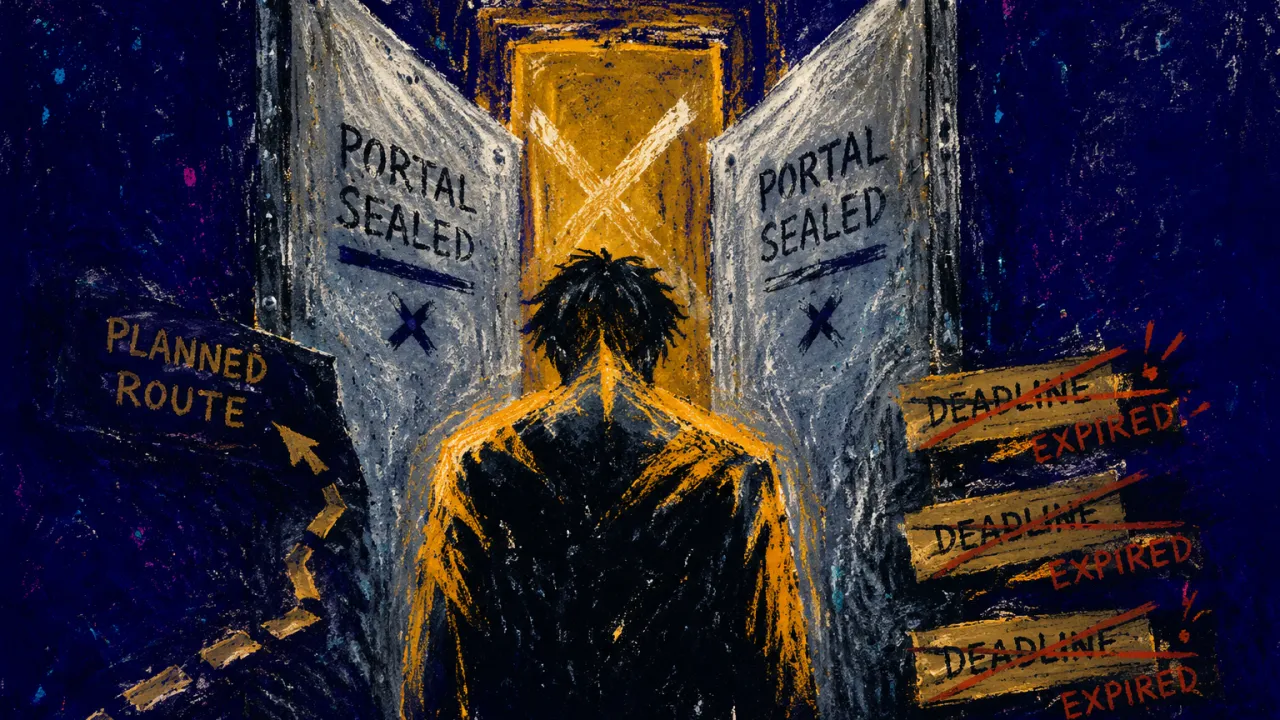
A solitary figure stands at a sealed portal, shoulders angled inward as silver panels narrow around the torso.

What is this situation?

Academic Rejection Fallout begins when the email or application portal finally updates after months of forms, transcripts, references, drafts, fees, interviews, and waiting: 'We regret to inform you.' The message is brief and the decision is final, but the path built around it was not; you may already have mapped out a move, funding, a research schedule, next semester, or the answer you expected to give everyone who kept asking what came next. The institution gives little or no usable feedback, leaving you with a polished template while admissions staff, reviewers, supervisors, or funding panels remain out of reach. Then the consequences keep arriving on ordinary days: backup deadlines have passed, recommenders need another request, application costs restart, your current course or job needs a revised plan, and peers' acceptance posts make the same decision reappear on your screen. Conversations become repetitive as lecturers, relatives, classmates, or coworkers ask what happened, and you have to condense months of work into one sentence while the people who decided it never have to explain the criteria in the same detail. You reopen the portal to check the wording, scan forums for clues, and compare timelines because the process has closed a door without showing which part of the key failed; your shoulders tighten each time a new university email lands, even when it is unrelated. What was one decision becomes a chain of delayed plans, awkward updates, narrower options, and another round of proving yourself to a different panel, much like the Five of Cups, where a cloaked figure stands before three spilled cups while two upright cups remain behind them.

Why it's not you?

The problem is not that you planned ahead or failed to work hard enough. Academic selection systems use limited places, shifting funding, partly disclosed priorities, and compressed review decisions that can redirect months of preparation without offering usable feedback. The disruption comes from that opaque process, not from a personal failure the decision itself does not prove.

Academic Rejection Fallout in Tarot Cards

Academic Rejection Fallout extends beyond one no: the closed portal leaves backup deadlines, plans, and explanations stacked behind it. The way your shoulders tighten at each new university email is a physical trace of that repeated interruption. It is an environmental and structural dynamic shaped by one side holding the criteria, timing, and final decision while the other absorbs the consequences. The Tarot Cards below mirror the visible contours of that situation without deciding what you should do next.

Wheel of Fortune
Reversed
A large wheel turns between four corner figures while other figures occupy changing positions around its rim. In the reversed view, the machinery of movement reads as a cycle that has turned against the timetable built around an academic application. Admissions decisions are shaped by annual cohorts, limited funding, shifting priorities, and compressed review windows that can redirect a carefully prepared plan without matching the applicant's calendar. A rejection that arrives after backup deadlines or move planning has passed is not only an outcome; it is a timing event with cascading administrative costs. The inverted wheel makes the external cycle visible. You can distinguish institutional rotation from personal readiness and name how a delayed or badly aligned decision narrowed the available study routes.
Justice
Reversed
The seated judge's sword and scales appear inverted between stone pillars; the formal frame remains intact, but balance is no longer legible from the applicant's side. The image gives physical form to a polished decision whose governing criteria cannot be inspected. Admissions and funding panels can compress scarce-place decisions into a template while leaving criteria, reviewer weighting, and usable feedback outside reach. That makes months of academic labor impossible to map cleanly onto the outcome, especially when a new panel will demand another round of proof. The reversed courtroom structure names an auditability problem rather than a personal deficiency. You can separate the institution's limited and opaque process from the quality of the work, while tracking which practical consequences require a new academic plan.
The Moon
Upright
A winding path runs between two towers beneath a moon with a face, while a dog and wolf call from opposite sides and a crayfish rises from the water. The scene turns an opaque academic process into an environment where the route is visible but the signals around it are incomplete and contradictory. The rejection email provides an outcome without showing the criteria, so forums, peer timelines, and small wording differences become improvised evidence. That uncertainty can make every new university message feel connected to the original decision, even when the external information does not actually resolve it. The upright moon keeps ambiguity in the environment rather than assigning it to a defective self. You can identify which facts came from the institution, which interpretations came from comparison, and which parts of the academic route remain genuinely unknown.
Five of Cups
Upright
Three cups lie spilled in front of a cloaked figure while two remain upright behind them, and a bridge still leads toward the distant castle. The composition holds the specific study fallout of a rejected application: the visible loss occupies the foreground while viable academic routes remain materially present but easy to overlook. You have invested forms, fees, references, drafts, and months of waiting into a selection system whose final template does not identify the failed criterion. In the study system, that information gap becomes delayed enrollment, repeated applications, and a forced rewrite of the next semester rather than proof that the work had no value. With the two remaining cups and the bridge still in view, the scene separates a panel's scarce-place decision from the full academic path. You can audit which credits, supervisors, funding routes, and deadlines remain available while naming the administrative cost of starting another round.
Ace of Pentacles
Reversed
A hand extends a single pentacle above a garden, an archway, and a winding path; in the reversed view, the offered opening points away from a stable landing. The physical contrast fits an academic place, fellowship, or funded route that was visible, prepared for, and then withheld. Application fees, relocation plans, research schedules, and funding assumptions give the opportunity material weight beyond its symbolic prestige. When the institution rejects it without usable feedback, the immediate loss includes access, calendar space, and the resources needed to make another attempt. The reversed pentacle does not erase the garden or the path. It identifies an opportunity that cannot currently be planted into the life structure already prepared for it, allowing the fallout to be measured as restricted access and renewed resource gathering rather than as proof of personal inadequacy.
Two of Pentacles
Upright
A figure keeps two pentacles in motion beneath an infinity loop while ships pitch on rough water behind them. The image captures a daily life system forced to carry current study or work, application administration, fees, recommendation requests, and a revised academic route at the same time. A rejection does not remove existing commitments; it adds another round of forms, deadlines, explanations, and financial decisions to the schedule already in use. The moving loop shows why ordinary routines can feel unstable when a supposedly finished application continues generating tasks and choices. The upright figure is still coordinating competing demands, even with the water unsettled. You can see the practical load as a capacity and calendar problem, separating the need to redesign the week from any claim that the rejected outcome measures personal discipline.
Three of Pentacles
Reversed
A craftsperson stands beside visible stonework while two observers inspect the structure inside a cathedral; seen reversed, the work remains present while coordination between the maker and evaluators appears disrupted. The scene fits an application assembled through drafts, references, supervisor input, and panel review. Academic selection depends on multiple people interpreting the same work through criteria that may never be fully disclosed. When the panel returns a template instead of usable feedback, the applicant cannot tell whether the gap came from fit, capacity, reviewer weighting, funding, or a mismatch between the work and the institution's current priorities. The reversed workshop does not declare the stonework worthless. It names a broken feedback loop between preparation and evaluation, leaving you able to separate the quality of the visible work from the institution's failure to explain how it was assessed.
Five of Pentacles
Upright
Two figures move through snow beneath a brightly lit stained-glass window, visibly close to an institution while remaining outside its shelter. The image gives a concrete social form to rejection from a program or funding network: academic belonging is displayed nearby but not made available to you. Acceptance posts, cohort conversations, and repeated questions from classmates or lecturers turn the decision into a public comparison. The institution's brief message offers no shared language for the exclusion, so you must explain the outcome while peers appear to be entering the room you had prepared to join. The lit window and the passing figures show that the problem is not a lack of academic society in the abstract, but restricted access to a specific community and its resources. You can name the social cost of the decision without treating exclusion from one cohort as evidence that you do not belong anywhere in academic life.
Seven of Pentacles
Upright
A figure leans on a hoe and studies pentacles growing on a vine, pausing between sustained work and an uncertain harvest. The garden creates a direct image of months spent assembling an academic application before a result arrives too late to preserve the surrounding timetable. The preparation cycle contains visible inputs but no guaranteed return: drafts, transcripts, references, fees, interviews, and waiting can all be completed while the selection system changes its priorities. When the decision finally comes, backup deadlines may have passed and the same labor must be assessed against a new calendar. The upright pause holds both investment and review in the same frame. You can read the timing cost as a mismatch between institutional cycles and the schedule built around them, rather than as evidence that the original preparation was pointless.
Two of Swords
Upright
A blindfolded figure holds two crossed swords before dark water, with rocks closing the shoreline behind them. The composition mirrors an applicant facing reapply, defer, switch programs, remain in the current course, or change direction without access to the criteria that would make those options comparable. The rejection is final, but the next decision is not. Because the panel does not show which part of the application failed, every route carries uncertainty, while passed backup deadlines and renewed fees make indecision materially expensive. The upright crossed swords keep the conflict visible rather than resolving it into a false binary. You can map the unavailable information and the remaining choices as separate parts of the decision structure, preserving room for a third route when the original academic plan no longer fits the calendar.
Eight of Swords
Upright
A bound, blindfolded figure stands inside a ring of swords, with a castle visible behind the enclosure. The image gives a precise shape to repeated portal checks and forum searches: the decision creates a field of explanations that feels closed even though the wider academic landscape remains visible. When feedback is absent, the mind has to supply the missing link between months of preparation and the final template. Every new university email can become another possible clue, while comparison with other applicants makes the unanswered question feel like a personal lock rather than an institutional information gap. The upright enclosure names restricted visibility, not permanent incapacity. You can separate the observable facts of the rejection, the assumptions added afterward, and the practical information still unavailable from the panel.
Six of Wands
Reversed
A rider raises a wand with a laurel wreath before a watching crowd; in the reversed view, the public victory scene places recognition out of reach while keeping the audience visible. The image mirrors acceptance announcements that turn a private academic decision into a social display of who advanced. Peers' posts, cohort conversations, and questions from classmates or relatives create an external scorecard around the rejection. You may have to summarize months of preparation in a sentence while other applicants receive visible confirmation, making the institution's selective decision repeat itself through ordinary social media and group contact. The reversed wreath names missing recognition without proving missing ability. The crowd shows how status is socially circulated, while the absent victory separates the institution's public selection signal from the full value of the work or the legitimacy of a different academic route.
Ten of Wands
Upright
A bent figure carries ten wands toward a visible town, with the road ahead still open but the load blocking the body's view. The image captures how an academic rejection adds another bundle of administration to a life that already contains coursework, paid work, deadlines, and ordinary maintenance. The next round may require new references, fees, drafts, interviews, and explanations while the current course or job continues without pausing. What looked like one closed application therefore becomes a physical scheduling burden that follows you into the week, the commute, the inbox, and the next semester plan. The upright road and town show that the route has not vanished, but the burden has become poorly distributed across available time and energy. You can identify the workload created by the selection system without confusing the amount you are carrying with evidence that you should have carried it effortlessly.

Academic Rejection Fallout in Tarot Card Reading Insights

Others have brought Academic Rejection Fallout, from the closed portal to revised plans and repeated explanations, into their readings. The articles below collect Tarot Reading Insights from those sessions.