Study-Group Rejection Is One Event: Testing a Separate Route
The 8:40 p.m. Whiteboard Photo
I have met enough full-time undergrads in high-enrolment Toronto courses to recognise the moment when one unanswered study-group message makes the entire library feel socially closed. Jordan, a 21-year-old student, sat across from me with both hands around a coffee they had stopped drinking and said, “I stop asking because I already know how it ends.”
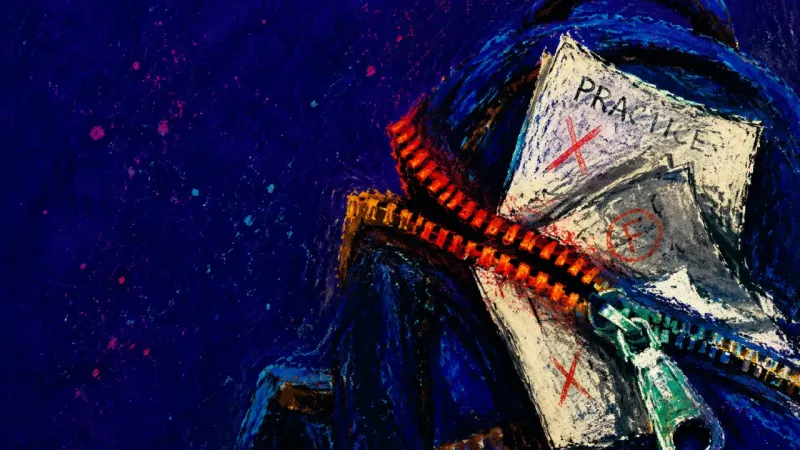
Jordan described the previous Tuesday at 8:40 p.m. The fluorescent fixture above their library desk had buzzed while an Instagram Story loaded on the warm screen in their palm: classmates gathered around a whiteboard beneath pendant lights, even though Jordan's request to join them was still unanswered. A marker squeaked against the glass nearby. Their stomach dropped, their shoulders folded forward, and they deleted a half-written invitation to another student before zipping their bag over three unfinished practice questions.
“Why do I keep giving up after being shut out of study groups?” Jordan asked. “I know one group isn't the whole course. But when it happens, asking anyone else feels like volunteering for the same humiliation.”
The discouragement had settled over them like a wet winter coat worn indoors: heavy across the shoulders, awkward to move in, and difficult to remove without drawing attention. Jordan wanted collaborative study and access to shared resources, but disappearing offered faster relief than risking another vague reply. By Sunday, study-group rejection had merged with the Sunday Scaries, and asking again felt harder than the exam preparation itself.
“What happened to you matters,” I said. “I am not going to use tarot to explain away the gatekeeping or tell you to chase people who were evasive. I want us to separate the door that actually closed from the doors your mind has already recorded as closed. Let's give this fog a map and see where your choices still belong to you.”

Choosing the Four-Layer Insight Ladder
I asked Jordan to take one unforced breath and hold the question in plain language. I shuffled slowly while the smell of coffee warmed the small room. The preparation was not a mystical performance; it was a transition from replaying the group chat to examining the pattern with some distance.
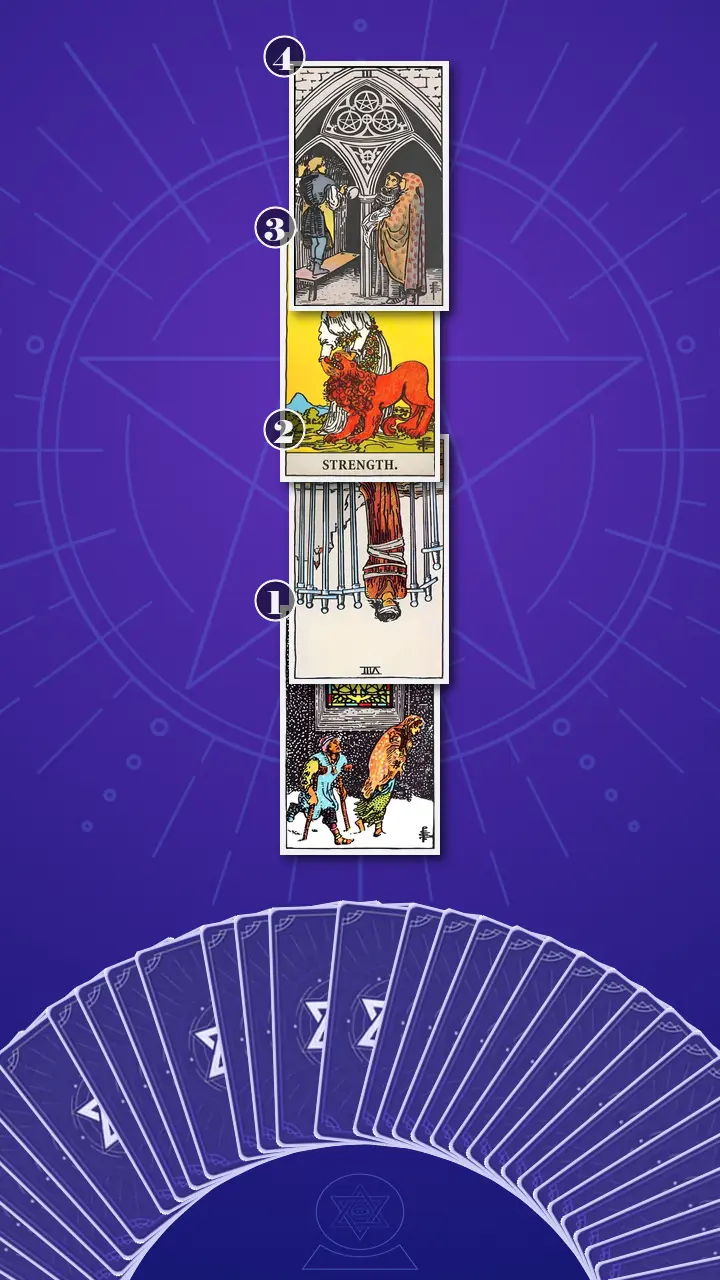
I chose the Four-Layer Insight Ladder, a four-card reflection spread arranged like a vertical library staircase. For anyone wondering how tarot works in a situation like this, I do not ask the cards to predict whether a classmate will say yes. I use them to distinguish an external event, the belief formed around that event, the inner resource that can interrupt the loop, and one grounded experiment that can produce new information.
This was the right tool because Jordan's question contained a repeated sequence: being shut out, withdrawing, losing study momentum, and taking that loss of momentum as further evidence that trying changes nothing. A larger Celtic Cross would have added layers we did not need, while a relationship spread would have kept the original gatekeepers at the centre of the story. Jordan needed the fewest sufficient positions, with card meanings read in context rather than as fixed predictions.
The bottom card would show the observable blockage after exclusion. The second would identify how gatekeeping had become a learned forecast about every future attempt. The third would reveal the quality capable of interrupting that forecast without minimising the hurt. The top card would translate the insight into a bounded form of academic collaboration that did not depend on admission to the original clique.
Outside the Lit Window
Position One: The Study Session Visible Through Glass
I turned over the card representing the observable current blockage: Jordan stopping their search for collaborative study and losing revision momentum after being excluded. It was the Five of Pentacles, upright.
Two figures walk through snow beneath an illuminated stained-glass window. Support is visibly present, yet it appears to exist on the other side of a barrier. In this position, the card showed Earth energy operating through scarcity and depletion. The exclusion was not imaginary, but the experience of being outside had begun to drain Jordan's access to every kind of study, including the solo work they had planned to complete.
I placed the card beside the scene Jordan had described. At 8:40 p.m., they could see classmates collaborating around a whiteboard while their own message remained unanswered. Like the figures beneath the glowing window, Jordan could see that academic help existed but could not imagine it being available to them. Their stomach sank, the chat closed, the second invitation disappeared, and three questions went home unanswered.
“What did you do in the ten minutes after seeing the photo?” I asked.
“Packed up. Muted the chat. Told myself I'd work better at home.”
“And did you?”
Jordan let out a short, bitter laugh. Their fingers tightened around the coffee cup before loosening again. “No. That's so accurate it's almost cruel. I wasn't just studying alone. I was watching the help happen without me.”
“That distinction is important,” I said. “The group was closed to you in that moment, and the unanswered message was real. We do not need to soften those facts. What we are examining is the next movement: protecting your dignity by leaving also removed the rest of your planned revision. One closed group is an event, not a census of the whole course.”
The card did not accuse Jordan of overlooking an easy rescue hidden behind the window. Some academic spaces are genuinely gatekept, and some supposedly open routes are poorly run. It simply showed the current cost of letting one visible exclusion determine where Jordan could look, what channels they could keep open, and whether they stayed long enough to finish the work already in front of them.
Position Two: The Message Marked Rejected Before It Was Sent
I turned over the card representing the learned belief sustaining the withdrawal: real gatekeeping had become the conclusion that further outreach could not change anything. It was the Eight of Swords, reversed.
The blindfold suggested incomplete information being treated as certainty. The surrounding swords resembled a course chat that felt socially sealed, but the bindings were loose and a gap remained visible. Reversed, the Air energy showed a blockage that had moved inward while also beginning to loosen. Jordan was no longer standing only in the aftermath of what classmates had done; they were carrying the previous answer into conversations that had not happened.
I described the modern version plainly. One group left Jordan's message unanswered. Jordan then muted the chat, deleted a request to a different classmate, and recorded the whole cohort as unavailable. I asked them to compare two sentences: “That group excluded me” and “This other person will exclude me.” The first described evidence. The second assigned an outcome to someone who had not received a message.
“I know I haven't asked anyone else,” Jordan said, staring at the gap between the swords, “but asking again already feels like repeating the same humiliation.”
“That makes protective sense,” I replied. “Your mind has built an algorithm from a painfully small but genuinely painful dataset. The exclusions are real inputs. The problem begins when the model predicts rejection for every classmate, tutor, office hour, peer-learning session, and open channel before any of them can provide their own data.”
I pointed to the loose bindings. “Think of a TTC station entrance marked closed. The sign can be completely real without proving that the entire station is inaccessible. The gap in this card is not a promise that another entrance will work. It is permission to stop listing an untested entrance as a confirmed failure.”
Withdrawal protects you from the next rejection by rejecting every next step first.
Jordan's jaw tightened. Their gaze drifted from the card to the rain tracking down my window, as though they were replaying the sequence of hope, silence, heat, delete, leave. Then a long breath escaped their chest, and their shoulders lowered by a fraction.
“So I don't have to convince myself the next person will say yes,” they said. “I only have to admit I don't actually know what that person will say.”
“Exactly. Curiosity is enough. Confidence is not the entry requirement.”
When Strength Rested Its Hands on the Lion
Position Three: Choosing While the Hurt Is Still Audible
The radiator clicked off, and the room became quiet enough for me to hear rainwater tapping the sill. I turned over the card representing the quality that could interrupt learned helplessness without denying the original exclusion. This was the pivotal card in the reading: Strength, upright.
The image is often mistaken for conquest, but the woman's hands rest calmly on the lion. She does not crush its instinct or pretend it is tame. In Jordan's reading, Strength held balanced, deliberate energy: steady self-respect, emotional courage, and compassionate persistence. It did not demand that Jordan become fearless, return to the original gatekeepers, or make themselves available for endless rejection.
I translated the image into Jordan's real life. Another whiteboard photo could still bring heat into their face and make their stomach drop. Strength would begin with both feet on the library floor and a private acknowledgment of the reaction. Jordan could then choose one message, give it a clear 30-minute limit, and decide in advance not to chase a nonresponse. Self-respect would shape both the attempt and the right to stop.
I brought us back to 8:40 p.m.: the fluorescent hum, the whiteboard photo, the unanswered message, the sinking stomach, and the second invitation suddenly impossible to send. Jordan had turned that next message into a final exam on whether they possessed a legitimate place in the course.
Being shut out can be real and painful without becoming a forecast for every door you have not tried.
I let the sentence remain between us for a moment.
You do not need to overpower rejection or obey it; guide the hurt with the same steady hands Strength places on the lion, then choose one next move.
Jordan's inhale stopped halfway in. Their fingers hovered above the rim of the cup, perfectly still, while their eyes lost focus as if the library scene had started playing again behind them. Their eyebrows drew together, and a flash of anger tightened their mouth. “But doesn't that mean I handled all of this wrong?” they asked, their voice low and sharper than before. “Like I let them ruin my studying?” I shook my head. “No. It means withdrawal protected you from immediate exposure when the sting was fresh. A protective response is not a moral failure. We are only noticing that it now charges too high a price.” Jordan looked back at Strength. Their eyes shone, their fist slowly opened against their thigh, and their shoulders sank as though a heavy bag had finally reached the floor. The release was followed by a brief, almost dizzy blankness. “Then I have choices again,” they said, the words unsteady. “Which is good. Also kind of terrifying.”
“Now, using this new perspective, think back: was there a moment last week when this insight could have made you feel different?” I asked.
Jordan remembered an official peer-learning announcement they had seen on the TTC. The session was not run by the classmates who excluded them, yet their thumb had frozen above the registration link before they closed it. “I had counted it as the same door,” they said. “It wasn't the same door. I just had the same feeling in front of it.”
This was the central shift from discouraged, pre-emptive withdrawal toward cautious, self-respecting engagement with learning. Jordan did not suddenly trust every group. They began trusting themselves to distinguish one route from another while hurt, embarrassment, and resentment were still present. The goal is not to become unbothered; it is to stay able to choose while bothered.
I then reached for a diagnostic lens I call Syllabus Deconstruction. I use it when a massive deadline has absorbed so much emotion that even opening the first page feels like a referendum on someone's entire future. I separate the mountain into mechanical units until today's task becomes almost boring: one page, three questions, one 30-minute block.
Here, Jordan's mind had bundled four demands into a single Send button: repair the exclusion, prove academic belonging, secure every missing resource, and prepare for the exam. No wonder their thumb froze. I deconstructed the social syllabus into four emotionless details: one new person, three named questions, 30 minutes, and a chosen exit. The message no longer had to solve belonging. It only had to ask whether one piece of work could be shared.
As I said it, I thought of twenty years of coffee cooling beside impossible-looking syllabi and elaborate comeback plans. Again and again, dread had lost some of its authority when a student could see the next mechanical unit. Strength was not asking Jordan to lift the whole semester. It was helping them keep one social wound from swallowing today's three questions.
The Plan Inside the Arch
Position Four: A Task, a Time, and an Exit
I turned over the card representing the grounded next step: one bounded form of academic collaboration that did not depend on acceptance by the original gatekeepers. It was the Three of Pentacles, upright.
Three people stand inside an architectural workspace, consulting a visible plan. Their roles are distinct, and the work between them is concrete. The Pentacles energy had returned in a more balanced form. The spread began with Jordan outside beneath a lit window; it now placed collaboration inside a structure with clear contributions, limits, and shared attention.
I translated the plan into a marked-up worksheet. After Thursday's lecture, Jordan could ask one classmate who had not been involved in the closed group, “Want to compare answers to questions 2, 4, and 6 for 30 minutes before next class? No worries if not.” The request named the shared object, the time boundary, the mutual contribution, and the exit. It asked for coordination, not undefined social admission.
Ask for a task, a time, and an exit, not a verdict on whether you belong.
“That feels less exposing,” Jordan said. They unlocked their phone and opened Notes, but their thumb still paused over the screen. “I can ask someone to compare three answers. I don't have to ask them to decide whether I'm study-group material.”
“Right,” I said. “And the other person keeps their freedom to decline, ignore the message, or suggest something different. You keep your freedom not to follow up. The card does not guarantee admission to any room. It shows how transparent collaboration can be built around one useful piece of work instead of an opaque clique's social rules.”
Jordan typed a person's name, then the numbers 2, 4, and 6. Their breathing remained shallow, but they did not delete the line. That was enough evidence for the moment. The Three of Pentacles was not asking for instant friendship or compulsory group study. It was showing the difference between chosen independent work and isolation organised by fear of another shutout.
One Locked Room Was Never the Whole Building
I read the four cards as one continuous piece of architecture. The Five of Pentacles showed what materially happened: Jordan was left outside a circle where resources and discussion were visibly moving. The reversed Eight of Swords showed the rule formed afterward: if one group shut them out, every untested route would probably do the same. Strength restored the capacity to choose without requiring emotional numbness. The Three of Pentacles returned the reading to Earth through one practical, observable exchange.
The cognitive blind spot was not that Jordan had imagined the gatekeeping. It was that pre-emptive withdrawal had started presenting itself as efficient independence. Muting Discord, leaving the library, and building an enormous solo revision system reduced immediate social exposure, but they also removed questions, feedback, open announcements, and actual practice. The strategy protected Jordan's dignity for one evening while quietly allowing the original group to influence the rest of the course.
The spread contained no Cups and no Wands. I did not read that as a personality deficiency. I read it as a useful reminder that the hurt had to be named deliberately and that fresh initiative would not appear automatically. The movement was specific: acknowledge the exclusion, separate the event from the forecast, hold the body's reaction without obeying it, and gather one new piece of evidence through a bounded action.
Before deciding on the practical next steps, I used my Study Environment Auditing lens. Jordan described a desk crowded with cold cups, six open databases, a phone displaying muted chats, and a Notion “academic comeback” dashboard more intricate than the practice set itself. None of those objects was a problem alone. Together, they consumed visual and psychological bandwidth while giving avoidance the appearance of preparation.
I kept the actionable advice small enough to begin and bounded enough to refuse. There would be no demand to contact the original group, no requirement to send more than one message, and no promise that the next response would be positive.
- The Desktop Reset and Strength Check I asked Jordan to use my Desktop Reset Ritual before the next invitation or revision block. At their desk or library seat, they would set a 15-minute timer, clear only the visible work surface, place one worksheet in the centre, and put the phone face down. Then they would set a 90-second timer and write three fragments in Notes: “What happened,” “What I feel,” and “What this response does not prove.” Before any outreach, they would choose a boundary such as one message with no follow-up. Tip: The reset ends when the timer ends. No colour-coding, new databases, or redesigning the semester. The minimum version is clearing space for one worksheet, noticing one body sensation, and writing one feeling word.
- The Seven-Minute Task-First Study Invite I asked Jordan to set a seven-minute timer and draft one request to a person or genuinely open academic channel that was not involved in the original shutout: “Want to compare answers to questions 2, 4, and 6 for 30 minutes after Thursday's lecture? No worries if not.” The draft had to contain one person or channel, one named task, one time limit, and one exit. Sending was optional; drafting counted. Tip: If 30 minutes in person feels too exposed, the minimum version is a ten-minute comparison of one answer by message or a three-heading shared document. Whatever the reply, record it as evidence from that contact only, never as a grade on overall likability or belonging.
“Let the next reply be one piece of evidence, not the final grade on your belonging,” I told Jordan. “Your self-respect applies to trying, pausing, declining to follow up, choosing another route, and deciding that today you only want to keep studying. The cards organise the options. You remain the person who chooses among them.”

Six Days Later, the Quiet Proof
Six days later, I received a short message from Jordan. They had completed the 15-minute desktop reset, drafted the invitation, and waited until after Thursday's lecture before deciding to send it. The classmate replied, “Sorry, I'm swamped this week.” Jordan's stomach still dipped. They closed the message, stood up for water, and returned to the note instead of turning that reply into the whole course's answer.
Under “What this response does not prove,” Jordan wrote, “It doesn't prove the official peer-learning session is closed.” They reopened the announcement they had ignored on the TTC and registered. Then they finished question 4 before bed. They had not solved academic belonging, joined an established clique, or transformed into an unbothered academic weapon. They had preserved their access to learning after hearing a no.
The old group's next whiteboard photo still made their stomach dip. Jordan muted the Story, not the course channel, and returned to question 6.
That was the micro-proof I cared about. The successful outcome was not a yes from a classmate. It was the difference between one decline and total disappearance. Jordan had moved from discouraged pre-emptive withdrawal toward cautious, self-respecting engagement while keeping the right to feel hurt and the right to choose their boundaries.
The Four-Layer Insight Ladder had not predicted which door would open. It had turned a blur into a sequence Jordan could inspect: exclusion, forecast, compassionate self-command, grounded experiment. Tarot offered the map, but Jordan supplied the judgment, the limits, and the movement. That is what finding clarity looked like here: not certainty about other people, but ownership of the next decision.
I know how quickly one unanswered message can make a stomach drop and a hand close the course chat. Leaving the whole building can feel safer than risking another room confirming the fear that there is no place for you. Yet noticing which door actually closed, and which doors have not answered at all, means the gatekeepers no longer control the entire floor plan.
If the next reply were allowed to be only one reply, what small study exchange, with a task, a time, and an exit, might you feel curious enough to imagine at one still-untested door?