Why Is the Portfolio Almost Finished?

Explore stalled portfolio projects, related tarot cards, and reading examples for work held back by approvals and shifting requirements.

Portfolio Completion Bottleneck
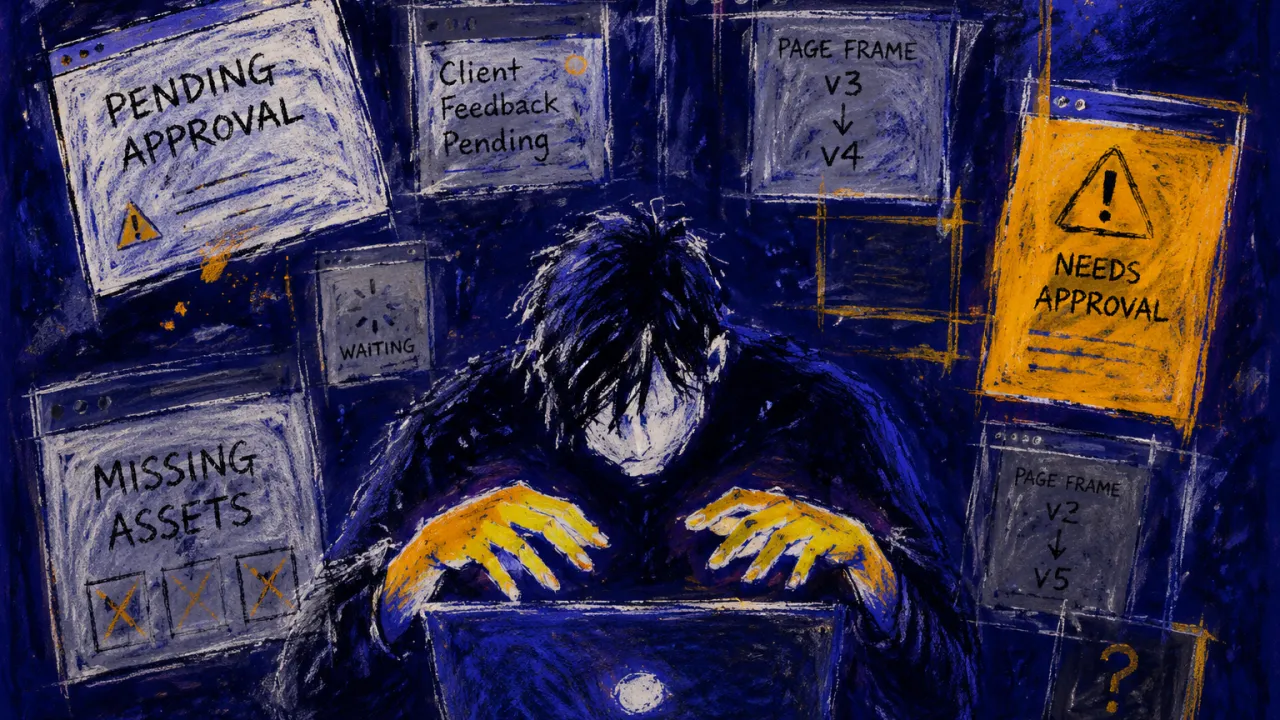
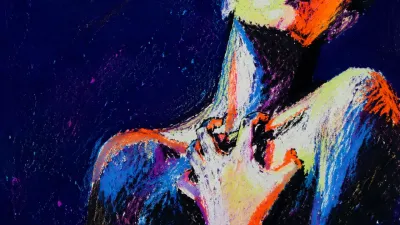
A solitary figure with lowered shoulders and hands above a laptop as shifting page frames encroach from every side.

What is this situation?

Portfolio Completion Bottleneck: you reach the final stretch with a portfolio full of strong work, but every project still depends on one more external condition before it can go live. After class or work, you open the portfolio site and move between project folders, feedback threads, application portals, and export settings. A mentor asks for a cleaner sequence; a collaborator still has to approve a credit line; a recruiter wants a live link; the platform rejects a file size or shifts the page layout; an old brief becomes the standard for the whole collection. You mark one project complete, then a new request arrives and sends it back into revision. The work is visible, the deadline is visible, and yet the final release waits because permissions, missing assets, conflicting edits, and unclear sign-off live in different places. By Friday, you are checking filenames, chasing replies, rebuilding pages, and keeping several almost-finished versions open at once, while the people who can clear the last step answer on their own schedule. The portfolio does not fail in one dramatic moment; it stays suspended in a queue of small holds that keep the next submission from moving, much like the Seven of Pentacles, where the figure pauses beside work that is fully visible but not yet ready to be gathered.

Why it's not you?

The blockage is in the process around the portfolio: unclear standards, delayed approvals, scattered files, and changing requests keep turning nearly finished work back into pending work. When the final step depends on several people, platforms, and permissions, the delay belongs to that setup, not to your ability to do the work.

Portfolio Completion Bottleneck in Tarot Cards

Portfolio Completion Bottleneck is the gap between work that is visible and work that can actually be released, with your shoulders tightening as you move between tabs, approvals, and exports. It is an environmental, structural dynamic: several outside requirements keep the final step suspended across different people and systems. The Tarot Cards below reflect that queue of pending decisions, missing pieces, and shifting final steps.

The Hanged Man
Upright
Suspended by one foot from a living wooden frame, the figure remains alert while ordinary forward movement is physically unavailable. The posture mirrors a portfolio whose content is largely ready but whose release waits on a credit line, reviewer response, live-link requirement, or platform clearance. The upright suspension allows you to see the process from another angle, but it does not pretend that perspective alone removes the hold. Your timing is constrained by a real dependency structure, and the stillness identifies where further personal effort would merely circulate inside someone else's waiting period.
The World
Reversed
The wreath, central figure, and four corner emblems remain fully populated when inverted, yet their enclosing cycle no longer offers a stable finish. The scene matches an academic portfolio whose learning and project work are present while administrative and collaborative loose ends prevent final submission. The reversed completion frame shows why more studying is not necessarily the missing ingredient. You have reached the educational endpoint in substance, but the surrounding system has not converted that achievement into an accepted, closed portfolio.
Two of Pentacles
Upright
Two pentacles circle through an infinity loop in the figure's hands while ships rise and fall on the waves behind him. The image mirrors a daily system in which you keep several almost-finished versions moving while platforms, reviewers, and missing assets change the conditions beneath them. The upright figure remains responsive, but his competence does not make the sea stable or allow either pentacle to leave the loop. You can keep the portfolio operational, yet completion stays conditional until the scattered handoffs are consolidated into a release process with a visible endpoint.
Three of Pentacles
Reversed
Beneath the three pentacles of the vaulted workspace, a maker and two plan-holding figures should be able to coordinate craft with institutional expectations, but the reversed scene unsettles that consultation. It mirrors your position when a mentor's sequence, a collaborator's credit, and a course or platform requirement remain distributed across separate conversations. The inverted structure keeps the work visible while weakening the mechanism that certifies it as complete. You are not missing the capacity to build the portfolio; the educational review system has failed to turn its separate inputs into one actionable sign-off path.
Six of Pentacles
Reversed
The scales, falling coins, and kneeling recipients turn upside down, destabilising the controlled flow of resources between the standing giver and those waiting below. That imbalance reflects your dependence on someone else for a credit approval, source file, recommendation, or permission that is small in scope but decisive for the portfolio launch. The reversed exchange makes the career bottleneck a question of access and authority rather than merit. You can own the work and still lack control over the resource that allows recruiters or clients to see it in a final, credible form.
Seven of Pentacles
Upright
The worker rests on his tool beside a cultivated vine carrying seven pentacles, studying results that are substantial but not yet harvested. The image reflects a school portfolio filled with completed projects while mentor feedback, assessment notes, or final assets remain outstanding. The upright pause recognises that evaluation is part of the learning cycle without treating indefinite delay as evidence that the work is weak. You are waiting at the boundary between production and academic recognition, where the remaining clock belongs partly to reviewers and institutional systems.
Eight of Pentacles
Reversed
At the inverted workbench, the craftsperson's active pentacle and the ordered row of finished pieces lose their clear progression from practice to completion. The scene mirrors a class portfolio where each supposedly final revision generates another correction because mentors, briefs, and technical settings keep changing the finish line. The reversed workshop distinguishes skill-building from process-driven repetition. You may be demonstrating the required craft again and again, while unstable criteria prevent the educational system from recognising when refinement has become a resubmission loop.
Two of Swords
Upright
A blindfolded figure holds two swords in a perfect cross while rocks interrupt the water behind her. The scene mirrors a portfolio caught between conflicting mentor notes, collaborator requests, and platform constraints when no common standard identifies which version can be treated as final. The upright balance preserves both options but also sustains the deadlock. You may have enough information to understand each request separately, yet the missing decision authority keeps the blades crossed and turns revision into a substitute for sign-off.
Three of Wands
Reversed
The figure between three wands watches ships moving across a distant expanse, but the reversed shoreline no longer offers a stable point of departure. That disrupted outward view mirrors your position when strong projects exist yet cannot travel into applications, pitches, or public circulation through a dependable live portfolio. The inverted scene locates the blockage between preparation and expansion. You can see the next professional horizon, but the route remains conditional on approvals and technical handoffs controlled elsewhere, making direction feel uncertain even when the intended destination is already clear.
Five of Wands
Upright
Five figures raise their wands at different angles in a crowded contest with no shared target. The scene resembles a portfolio review process where each stakeholder introduces a different sequence, credit rule, presentation standard, or last-minute edit, creating motion without convergence. The upright contest makes the conflict visible enough to examine rather than disguising it as personal indecision. You are navigating competing professional inputs, and the repeated revisions show what happens when the process lacks a recognised final decision-maker.
Eight of Wands
Reversed
Eight wands cross an otherwise open landscape in a single diagonal flight, but reversed they lose the clean arrival pattern that makes rapid movement useful. The image maps onto feedback threads, missing files, approval messages, and platform updates that are all moving yet fail to land in the order your portfolio release requires. The reversed motion describes delay through misalignment rather than total inactivity. You may receive rapid bursts of response, but each late or contradictory arrival can reopen a project and push the actual submission window further away.
Ten of Wands
Upright
Ten bundled wands fill the carrier's field of vision as he approaches a town that is close but not yet reached. The load resembles the accumulated release work you carry when each project requires another reminder, credit confirmation, file replacement, or platform fix. The upright movement shows that effort is still producing forward motion, but the arrangement makes one person transport every dependency at once. You are not facing an absence of strong work; you are absorbing coordination labour that the surrounding portfolio process has failed to distribute.

Portfolio Completion Bottleneck in Tarot Card Reading Insights

Others have brought this kind of portfolio bottleneck into readings, carrying delayed approvals, unfinished uploads, and shifting requirements with them. Here are the Tarot Reading Insights from those sessions.

Psychological contexts related to Portfolio Completion Bottleneck