Closing the Search Tabs and Reopening the Work That Still Mattered

The 10:45 p.m. Reinvention Spiral
If you are a late-twenties contractor in London who can turn one frustrating client call into a four-tab search for a new role, a new borough, a new course, and a new self, career pivot anxiety may be wearing a very productive-looking outfit.
Alex (name changed for privacy) joined our video reading from their east London flat at 10:45 on a Tuesday night. A half-finished design brief occupied the left side of their laptop; Rightmove, a contract board, an online course, and a new coworking space glowed on the right. The radiator ticked through my headphones, blue screen light sharpened the tired room, and Alex's palms moved across the warm laptop as they colour-coded a Notion page called “Next Chapter.”
“I keep getting a new beginning without getting anywhere new,” they told me. “The plan always feels right until it becomes a routine. Why do my fresh starts keep changing the setting, not my direction?”
I watched their fingers hop between tabs while their jaw stayed fixed. Their restless frustration felt like standing on a circular Tube line with a suitcase in each hand: every station name changed, but the same platform kept returning, followed by the same drop in their shoulders.
They had changed contracts, workspaces, systems, and plans. Each reset brought a clean rush of possibility, yet the same unfinished portfolio pieces, overloaded schedules, and unsent boundary messages followed. The contradiction was already visible: Alex wanted each fresh start to create direction, but the reset kept reproducing the same direction inside a more exciting setting.
“I am not going to tell you that leaving is wrong, or that staying automatically makes something right,” I said. “I want us to find the point where curiosity stops gathering information and starts protecting you from information. We are going to make a map of the fog, then you can decide what deserves your next step.”
Choosing the Switchback Map
I asked Alex to close the search tabs, place both feet on the floor, and take one unforced breath while holding the question in mind. I shuffled slowly, using the movement as a transition from possibility-scanning into focused observation, not as a performance of mystery.
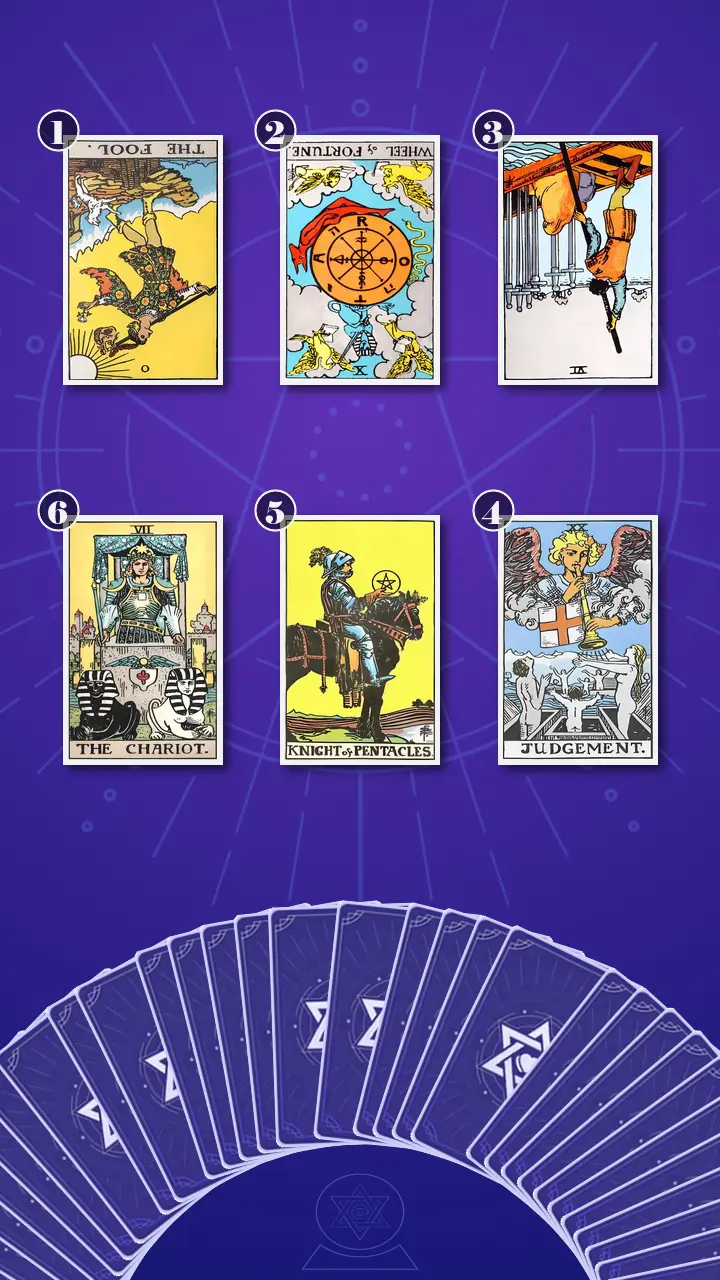
I chose the Transformation Path Grid · Context Edition, a six-card tarot spread designed to separate visible movement from actual direction. For anyone wondering how tarot works in a reading like this, I use the cards as a structured cognitive tool: each position isolates one part of the system so that a vague stuck feeling can become a sequence we can inspect. The cards do not issue a verdict or predict an unavoidable future.
A Past-Present-Future spread would have made Alex's problem look more linear than it was, while a Decision Cross would have implied that the answer lay in choosing between competing options. Even a Celtic Cross would have added more material than this focused question needed. Alex was not short of options. We needed to understand a recursive process.
I arranged the cards in a two-by-three grid shaped like a switchback path. The top row would show the observable fresh-start behaviour, the cycle that kept it turning, and the unresolved baggage travelling through every reset. Directly beneath that root, the lower row would reveal the recognition that could interrupt the loop, the practical 30-day commitment that could produce evidence, and the self-directed stance available after those two pieces were combined.
The layout mattered. It bent back beneath the original route, but at a deeper level, like revisiting the same scene after discovering what the first edit concealed.
Three Ways to Move Without Arriving
Position One: The Fool at the Edge of Another Launch
I turned the card representing the observable fresh-start behaviour and chaotic emotional energy through which external change was substituting for directional clarity. It was The Fool, reversed.
On the Rider-Waite-Smith card, the traveller stands near a cliff with a small bundle over one shoulder while a white dog rises beside them. Upright, the image can hold openness, trust, and the willingness to begin. Reversed here, the beginning energy was not absent. It was in excess and poorly integrated, producing launch momentum before Alex had decided what the launch was meant to serve.
I connected the image directly to the scene still glowing on their laptop. At 10:45 p.m., Alex had left a half-finished design brief open while building a polished “Next Chapter” around a new contract, course, coworking space, and borough. The new beginning supplied an immediate lift, but none of it had yet been connected to what the current attempt had revealed.
“The inner script sounds something like this,” I said. “I call it exploration, but if I am honest, I opened this path when the current one became ordinary.”
Alex gave a short laugh, then pressed their lips together. “That is so accurate it is almost cruel.”
“Then let us make sure the interpretation is kinder than the pattern has been,” I replied. “The Fool is not criticising your curiosity. Curiosity is one of your resources. The card is asking what happened in the ten minutes before the search began, and what your body was warning you about before the launch rush drowned it out.”
I also named the overcorrection risk. Alex did not need to ban every new idea or remain in an unsuitable contract to prove they could commit. The useful move was smaller: before opening another path, review the path already underfoot. Exploration could remain available without automatically becoming departure.
Position Two: The Wheel Inside the Product Funnel
I turned the card identifying how direction stagnation had become a self-reinforcing cycle despite frequent changes of setting. It was the Wheel of Fortune, reversed.
The central wheel was full of activity, with figures rising and descending around it while four winged figures remained steady in the corners. Reversed, the Wheel showed blocked learning inside repeated motion. Alex was experiencing change, but they had not yet occupied the observer's position from which several changes could be compared.
I mapped the pattern as if we were reviewing product analytics: trigger, reset, relief, friction, exit. A difficult client call triggered a contract search. A peer's relocation post triggered Rightmove. A tedious revision triggered a new course or productivity system. Each reset produced relief; ordinary repetition returned; irritation rose; then another exit plan appeared.
“You can change the app, desk, client, or postcode and still watch the same funnel convert discomfort into escape planning,” I said. “The details move, but the decision point stays put. Rotation is not the same as direction.”
Alex's hand stopped above the trackpad. Their eyes moved away from the camera and stayed unfocused for several seconds, as if three different launches were replaying on the same internal screen. Then they said, more quietly, “Why does this keep happening when every plan looked different?”
“Because the plans were different at the level of content,” I said. “The response to friction was the same at the level of process. That is not a character flaw. It is a repeatable mechanism, which means there is a point where a different response can be tested.”
The Wheel's energy was blocked by repetition without retrospective. I thought of editing timelines in my own studio: six dramatic cuts can make a sequence feel fast, but speed cannot repair a missing motivation. Alex's life did not need a slower film by default. It needed a clearer reason for each cut.
Position Three: The Boat With the Same Baggage
I turned the card revealing how novelty seeking and the Baggage Transfer Loop were carrying unresolved habits, assumptions, and boundaries into every new beginning. It was the Six of Swords, reversed.
Six swords stand inside the moving boat, travelling with the cloaked passengers while a ferryman steers towards a distant shore. The reversal showed a transition energy caught in blockage. The vessel could change location, but the mental load and operating rules remained aboard.
In Alex's life, those swords were concrete. They entered a new contract promising not to overcommit, then accepted another vague scope change. They postponed the same boundary conversation, allowed the same personal project to slide, and eventually browsed another role. The team had changed, but the old rules were already installed: say yes first, absorb the cost privately, delay the difficult message, then interpret overload as proof that the entire setting was wrong.
“The inner sentence here is painful because it is so plain,” I said. “I changed the room, but I brought the same yeses, delays, and escape route with me. A different room cannot unpack what you keep carrying.”
Alex inhaled and held it. Their fingers curled around their mug; their gaze dropped to the dark surface of the tea. When the breath finally left, their shoulders lowered, but the corners of their mouth tightened.
“The boundary message,” they said. “I have typed basically the same message in three different Slack workspaces and deleted it every time.”
I let that sit without turning it into a demand that they stay. “Leaving remains a valid choice when a situation is harmful, materially unsuitable, or repeatedly crosses a clear boundary. This card is asking a different question: before you change the setting, which habit, unfinished task, assumption, or unsent message would otherwise board the next boat with you?”
When Judgement Called Cut
Position Four: The Review That Was Not a Verdict
The radiator gave one sharp metallic knock and then fell quiet as I turned the card naming the recognition that could interrupt the transfer loop by converting repeated experience into honest, usable evidence. This was the catalyst of the spread: Judgement, upright.
The angel's trumpet sounded above figures rising with open arms. I read the upright energy as balanced awakening: honest self-appraisal, accountability without shame, and a willingness to respond to recurring evidence. Judgement was not asking Alex to prosecute their past selves. It was asking them to hear what several unfinished attempts had been saying together.
I invited Alex to picture opening three abandoned project folders side by side. In each one, the early discovery stage had felt expansive. In each one, the exit began shortly after feedback made revision slower and less clean than the original concept. Naming that repeated choice would acknowledge its cost without turning three projects into three separate verdicts on Alex's identity.
This was where I used a lens central to my practice, Macro-Narrative Arc Auditing. I asked whether Alex's current discomfort was a true dead end, a false climax created by escape-plan energy, or simply the messy middle of a transition montage. Every new launch had been edited like a season finale. Yet the evidence suggested that the apparent dead end often arrived at the same narrative beat: the moment when possibility had to become revision.
That reframed the beat through Turning Point Catalysis. The dull, exposing moment was not automatically proof that the direction had failed. It could be the inciting incident for a different act, the first moment when Alex stayed long enough to find out whether the work remained meaningful after it stopped flattering the fantasy.
Alex was still caught in the thought that there had to be a correct, exciting option somewhere. I could see the familiar sequence behind it: unfinished brief, glowing search tabs, tight jaw, then the relief of a colour-coded plan that looked enough like progress to postpone the harder review.
A clean slate can change the view, but only reviewed evidence and repeated choices can change the route.
Another clean slate is not the answer; an honest review followed by one repeatable commitment is, just as Judgement's trumpet calls the figures to rise and respond.
I stopped speaking. Alex's breath paused, and their fingertips remained suspended above the mug as though the next movement had been removed from the script. Their pupils widened slightly; then their gaze slipped past the screen, replaying something I could not see. A flush rose along their cheeks. Their jaw tightened before their shoulders could soften.
“But does that not mean I got all of it wrong?” they asked. The words arrived sharply, with anger protecting a more fragile question underneath. “All those moves, courses, new systems. Was I just avoiding my life?”
“No,” I said. “It means those choices produced evidence you were never taught to review. Accountability is not the same as self-condemnation. You were trying to restore a sense of agency. Now you can build agency from something sturdier than the launch rush.”
The grip around their mug loosened one finger at a time. Their eyes reddened but did not spill over. A long breath left their chest with a small, uneven sound, and their shoulders sank as if a heavy coat had slipped off. Relief appeared first, then a brief blankness. I recognised that second feeling: once the pattern was no longer mysterious, Alex could see the responsibility of choosing a response. Clarity had made the route lighter, but it had also put the pen back in their hand.
“Now, using that new perspective, think back to last week,” I said. “Was there a moment when this insight could have changed how the situation felt, even if it did not immediately change what you chose?”
Alex described a Thursday scope request. They had drafted a capacity boundary, deleted it, and opened a contract board before dinner. “I treated one difficult conversation like a verdict on the whole job,” they said. “I could have sent the message first and gathered evidence from the response.”
I named the crossing we had just made. This was not sudden certainty about a career. It was one step from restless reinvention and novelty-led escape planning towards grounded curiosity and evidence-based direction. The pattern had stopped being a private indictment and become something observable enough to test.
Position Five: The Knight Who Stayed for the Revision
I turned the card translating that recognition into a bounded 30-day commitment that could remain in place after novelty faded. It was the Knight of Pentacles, upright.
The Knight studied one pentacle while the dark horse stood still before cultivated fields. The card's earth energy was in balance: patient, methodical, and deliberately unglamorous. Stillness here was not stagnation. It was sustained attention long enough to produce reliable information.
For Alex, the modern version was one protected weekly session for an existing portfolio case study, using the laptop, desk, and software they already owned. After each session, they would record one piece of evidence. New jobs, courses, and coworking ideas could go into a parking-lot note, but the direction would not be reconsidered until the scheduled day-30 review.
“This Knight does not ask you to promise a year to an identity you have not tested,” I said. “It asks for one modest commitment with an end date. What existing project could you test for thirty days with one weekly action and one observable criterion?”
Alex opened their calendar, then hesitated. “I can already hear myself deciding that one session is too small to matter.”
“That voice is still looking for a montage,” I said. “Evidence is often made in scenes that would never appear in the trailer. Forty-five minutes is enough. Twenty minutes still counts on a low-capacity week.”
Their mouth lifted into a tired but genuine half-smile as they selected four Sunday afternoons. The action did not make them look exhilarated. It made them look present.
Position Six: The Chariot Chooses a Destination
I turned the final card, representing the integrated stance in which curiosity and commitment could coexist while settings changed without controlling the direction. It was The Chariot, upright.
The black and white sphinxes faced forward beneath the armoured charioteer, who held no visible reins. I read the upright energy as aligned will rather than domination. Alex did not need to eliminate either caution or curiosity. They needed one consciously chosen aim capable of coordinating both.
In practice, Alex would choose one criterion for the month, continue while excitement and doubt alternated, and treat new options as information rather than commands. On the review date, any course correction would be based on accumulated evidence, available capacity, and respected boundaries, not whichever urge happened to be loudest after a hard day.
“The Chariot is a navigation app with a selected destination,” I said. “Alternative routes can appear without every alert becoming a new destination. Your working sentence can be: I can want other options without letting tonight's urge choose the route.”
Alex looked at the four calendar blocks, then back at the card. Their shoulders did not lift with the bright electricity of another launch. Instead, their breathing became slower.
“So consistency does not have to mean I am trapped,” they said.
“No. A bounded commitment is not a life sentence. It protects a question long enough for lived evidence to answer it. You can keep your curiosity without letting it choose the route.”
The Director's Cut for the Next 30 Days
I drew the six cards together into one causal story. The Fool reversed showed the familiar launch rush, shaped by earlier attempts that had never been reviewed. The Wheel revealed how trigger, reset, relief, friction, and exit kept returning. The Six of Swords showed why the system travelled so well: overloaded scope, unfinished work, unspoken boundaries, and the belief that discipline should feel natural in the correct setting were packed into every move.
Judgement changed the plot by turning repetition into evidence. The Knight supplied the missing ground of sustained practice, and The Chariot showed what direction could look like once curiosity and commitment answered to one chosen criterion. The travel imagery had progressed from departure, to a burdened transition, to a vehicle organised around a driver.
I named Alex's cognitive blind spot plainly: the immediate energy restored by a fresh plan had been mistaken for evidence that the new option was aligned. At the same time, the return of boredom, revision, or interpersonal friction had been mistaken for evidence that the existing direction was wrong. Neither sensation could answer the whole question alone.
The shift was not from adventurous to rigid, or from leaving to staying at any cost. It was from asking a setting to manufacture clarity to gathering sustained evidence before resetting. Tarot had helped us make the pattern visible, but the cards could not select Alex's direction. That authority stayed with Alex.
Two Small Experiments, No Reinvention Announcement Required
- Run the 10-Minute Fresh-Start Exit Review Before opening a new role, course, workspace, or flat search this week, set a ten-minute timer at the desk where the urge appears. Place the last three resets in five columns: trigger, reset, immediate relief, returning friction, and exit. Circle the earliest repeated choice in neutral language, such as “I left when revision replaced possibility.” Keep it to one page. If a full review feels exposing, map one reset and complete only the trigger and repeated-choice lines. Stop when the timer ends; this is data collection, not a trial.
- Use the Director's Cut Reframe for a 30-Day Direction Test Draft an objective six-month logline in the first person: “Over the next six months, I am testing whether this kind of work remains meaningful when I am revising rather than launching.” Turn only the first thirty days into a testable scene: book four weekly sessions of up to forty-five minutes for the existing portfolio case study, use the tools already available, and record one fact for continuing, one fact for changing course, and one feeling that does not need to decide either way. Put all new-option links in a parking-lot note until the day-30 review. Use a twenty-minute minimum version on a low-capacity week. The test can end early for material harm, crossed boundaries, or genuinely new evidence; it is designed to interrupt impulsive replacement, not remove your right to leave.
I called this the Director's Cut because Alex was not being asked to erase previous scenes or pretend every choice had been secretly perfect. The exercise restored their authorial voice by separating the objective arc from the dramatic edit their nervous system produced after one difficult evening. The next act did not need a polished identity announcement. It needed one repeatable scene and a review date.
A Week Later: The Quiet Proof
One week later, I received a message from Alex at 4:52 on Sunday afternoon. They had reopened the portfolio case study at the same kitchen table where three archived folders had once made their chest tighten. Weak winter light lay across the scratched mug, the fridge hummed, and they completed forty-five minutes of revision without buying a template, changing desks, or announcing a pivot.
Halfway through, a new contract link appeared in a group chat. Alex opened it, felt the familiar quickening in their hands, and placed it in the parking-lot note. Then they returned to the revision. They did not finish the whole case study or discover a permanent career answer. They gathered one clean piece of evidence: repetition had felt uncomfortable, but the work still mattered once they were inside it.
That night, Alex slept through. Their first thought the next morning was, “What if this is wrong?” They told me they smiled, not because doubt had vanished, but because it no longer had admin permissions.
I saw that as the first honest proof of our Journey to Clarity. Alex had not been transformed by a prediction. They had used a tarot spread, an exit review, and one bounded commitment to reclaim the part of the process that no new flat, contract, course, or Notion dashboard could choose for them.
When the new-plan rush wears off and your shoulders grow heavy again, staying can feel as though it might expose the limits of who you can become, while leaving threatens to return the same unfinished question in a different room. Simply recognising that conflict means you are no longer trapped inside its automatic edit.
If your next move did not have to prove anything about who you are, what one small piece of evidence would you gather for your Director's Cut before changing the setting again?