Family-Conditioned Secrecy, in a Toronto Bedroom at 10:41 p.m.
If a “don’t tell Dad” text from your mom can instantly flip you into household-emotions-manager mode, you probably know the exact kind of dating secrecy this reading is about.
Jordan sat on the edge of their condo bed like it was a narrow ledge. The bedside lamp was turned down low, the TTC hum muffled through the window, and their phone felt warm—too warm—from the kind of scrolling that isn’t fun anymore.
They did the cleanup ritual with the same tight precision I’ve seen in people who are brilliant at keeping peace: archive the chat with the person they actually liked, flip iPhone notification previews off, check Instagram Story views “just in case.” Their shoulders stayed lifted, like getting caught was a physical event that could happen at any second.
“It’s not that I’m lying,” Jordan said, rubbing their thumb over the edge of the phone case. “I’m just editing.”
I watched their throat work as they swallowed—like their body was trying to push down a sentence before it could be heard. The feeling in the room was contracted, the way air tightens right before a storm breaks. And underneath the carefulness, I could hear the real wish: I want to date like an adult. I want to be seen. I just don’t want to be blamed for whatever my family feels.
Their anxious anticipation wasn’t abstract. It lived in a tight throat when questions got direct, a sinking stomach the moment family topics came up, and restless hands checking for “exposure risks.” It was like living with two browser tabs open at all times—one is your real life, one is the “family-safe” version—and you’re constantly making sure nobody clicks the wrong tab.
“I’m not here to push you into oversharing,” I told them. “And I’m definitely not here to shame you for surviving a system that trained you to manage emotions. Let’s use the cards to draw a map—so we can find clarity without turning your life into a confession booth.”

Choosing the Compass: The Transformation Path Grid (6)
I asked Jordan to take one slow breath—not like a mystical ritual, more like a nervous-system handoff. Then I shuffled while they held the question in mind: Mom’s “don’t tell Dad” text—why do I hide things when dating?
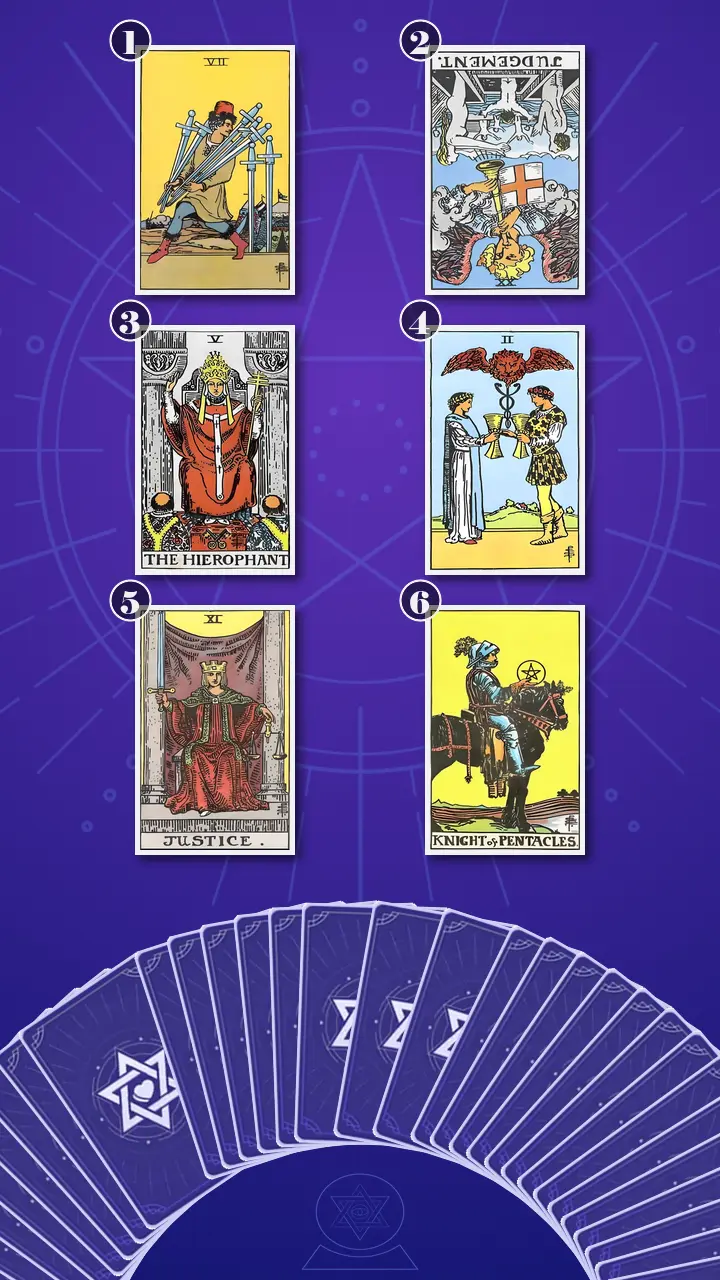
“Today I’m using something called the Transformation Path Grid (6) · Context Edition,” I said, laying six cards in a 2x3 grid. “It’s a 6 card tarot spread for boundaries and honesty—especially when the real issue isn’t picking between two options, but interrupting a loop you learned a long time ago.”
For you reading this: this spread works because it separates what you can see (the stealth-mode behaviors), what’s actually blocking you (the inner reaction that turns visibility into danger), and where it was learned (the family script). Then it converts insight into practical, self-empowering next steps instead of a prediction about your love life.
I pointed to the grid like it was a staircase. “Top row is now: your current pattern and the immediate blockage. Middle row is why it formed: the inherited rule and the thing that’s inviting change. Bottom row is the fix: the clearest shift to practice, and then the grounded way you make it sustainable.”
Reading the Map: Stealth Mode, the Inner Courtroom, and the Old Rulebook
Position 1 — The visible dating pattern: the concrete ways you hide, edit, and manage information.
“Now we’re turning over the card that represents the visible dating pattern: the concrete ways you hide, edit, and manage information,” I said.
The Seven of Swords, upright.
I didn’t have to reach for poetic symbolism—this card is basically the screenshot of stealth mode. I tapped the figure looking over their shoulder. “This is the energy of ‘get out before anyone notices.’ Not evil. Strategic. Self-protective. It’s a learned skill.”
And the modern-life translation landed perfectly: It’s 11:30 PM after a date and you do the full cleanup routine: archive the chat thread, clear notifications, double-check your Instagram Story views, and rehearse a family-safe version of your night. You’re not even trying to be deceptive—you’re trying to reduce the chance of follow-up questions that could turn into household drama.
“That’s me,” Jordan said—and then they gave a small, bitter laugh that surprised even them. “God. That’s… it’s too accurate. It’s like you’re describing my hands.”
I nodded. “It’s not that you’re lying—you’re living like you might get audited.”
Energy-wise, the Seven of Swords is excess Air: over-strategizing, over-editing, scanning for threat. It gives short-term relief—no confrontation today—but it costs you self-trust and intimacy over time.
Jordan’s fingers hovered above their phone, as if they were about to archive a conversation in real life. Their jaw tightened, then loosened a fraction, like their body recognized itself on the table.
Position 2 — What blocks openness: the internal reaction that turns visibility into danger.
“Now we’re turning over the card that represents what blocks openness: the internal reaction that turns visibility into danger,” I said.
Judgement, reversed.
This is where the temperature changed. Judgement is supposed to be about awakening—being called into a new chapter. Reversed, it can turn into the fear of being evaluated: a life lived under an invisible spotlight.
I used the clearest modern-life scenario because it’s exactly how this feels in the body: A parent asks, casually, “So… anyone you’re seeing?” and your nervous system reacts like the question is a legal proceeding. You start building a defense: what you’ll say, what you won’t say, what will be used against you later. Instead of choosing your level of privacy, you default to self-censorship because being seen feels like getting judged.
“This is the inner courtroom,” I said gently. “It’s not a conversation, it’s a cross-exam.”
I watched Jordan’s throat tighten like a drawstring. Their stomach visibly pulled in. Their fingers hovered over an imaginary screen—freeze, assess, prepare. “Sharing” becomes “testifying.” And in that state, your brain does what it was trained to do: minimize risk.
Jordan took a sharp inhale—quick and high in the chest—then went still. Their eyes unfocused for a second like they were replaying dozens of family check-ins. “Oh wow,” they whispered. “I literally… I prep an alibi. I open my calendar to make something sound normal.”
I let the silence do its work. Then I said the phrase I’ve seen untie people in real time: “Being seen is not the same as being sentenced.”
In energy terms, Judgement reversed is a blockage: the fire of self-recognition turned inward until it becomes self-surveillance. You don’t move toward openness because your body believes openness equals punishment.
Position 3 — Where it was learned: the family rule or conditioning behind “don’t tell Dad.”
“Now we’re turning over the card that represents where it was learned: the family rule or conditioning behind ‘don’t tell Dad’,” I said.
The Hierophant, upright.
Jordan exhaled before I even spoke, like their body had been waiting for this card to show its face.
Here’s the modern-life translation in plain language: You hear your mom’s “don’t tell Dad” and it instantly activates an inherited rulebook: keep the peace, keep things respectable, don’t give anyone ammunition. Even though you live independently and pay your own rent, you still unconsciously treat family approval like the final boss of your dating life.
“This card is the rulebook,” I said. “Not your values—your inherited values. The automatic ‘approved way.’”
This is where my work as a perfumer always slips in, because families don’t just pass down opinions. They pass down atmospheres.
“Can I try something?” I asked. “When you imagine your parents’ home—what does it smell like?”
Jordan blinked, caught off guard. “Uh. My dad’s… strong aftershave. Like… sharp. And my mom’s kitchen always smells clean. Lemon cleaner, even before guests.”
That was enough for my Family Energy Diagnosis to click into place. “Sharp, judge-y masculinity on one side. ‘Keep it clean, keep it presentable’ on the other. No wonder your nervous system learned: hide anything that could ‘mess up the air.’ The secrecy isn’t random—it’s how you learned to keep the household climate stable.”
The Hierophant energy here is structure. It’s not inherently bad. But when you’re still obeying it on autopilot, it becomes a cage disguised as manners.
Jordan nodded slowly. “I don’t even agree with all of it. But I react like I do.”
Position 4 — What invites change: the value, relationship need, or desire that makes secrecy feel too costly.
“Now we’re turning over the card that represents what invites change: the value, relationship need, or desire that makes secrecy feel too costly,” I said.
Two of Cups, upright.
This card always feels like someone turning toward you with both hands visible. Mutuality. Eye contact. No trapdoors.
I anchored it in the real-life scene the card was already describing: You’re with someone who feels genuinely mutual—easy texts, real eye contact, the kind of connection that makes you want to be straightforward. And suddenly your stealth habits feel heavier: not posting, not naming it, not telling the truth. The relationship isn’t asking you to overshare—it's just revealing that secrecy creates distance where you actually want closeness.
Jordan’s expression softened in a way that made their face look younger and more tired at the same time. “There’s someone,” they admitted. “And they’re… kind. It’s easy. And then I hear myself say ‘it’s complicated’ and I hate that I do that.”
I mirrored it back, because this is the turning point: “You want closeness, but you keep building trapdoors in your own story.”
The Two of Cups is balance—Water entering a too-Air spread. It’s the emotional reason to stop hiding: real connection wants to be met, not managed.
When Justice Spoke: Clean Truth, Not Confession
Position 5 — The most helpful shift to practice now: how to replace secrecy with truthful boundaries.
“Now we’re turning over the card that represents the most helpful shift to practice now: how to replace secrecy with truthful boundaries,” I said. And I slowed down on purpose. “This is the bridge card.”
The room went quiet in that specific way it does when someone stops performing and starts listening. Even the city noise felt farther away.
Justice, upright.
I pointed to the scales. “This isn’t ‘tell everything.’ It’s ‘tell what’s true and stop negotiating your reality through fear.’ The sword isn’t aggression—it’s clean boundary.”
And I gave the modern-life scenario exactly as the card demanded: Instead of hiding evidence, you choose a clean, value-aligned line and stick to it: “Yes, I’m dating someone. I’m keeping it private for now.” You don’t over-explain, you don’t argue your case, and you don’t manage anyone’s reaction. You decide what’s true, what’s private, and what’s none of anyone’s business.
Jordan’s eyes flicked to their phone, then away, like they were resisting the reflex to edit even this moment.
Setup: I named what I could see in them—the exact moment they’d described earlier. After a date, sitting on the edge of the bed, phone warm in their hand, archiving chats and flipping notifications off, already rehearsing “just grabbed dinner with friends” for the next family check-in. They were trapped in the belief that the only safe truth was no truth.
Delivery:
Stop treating love like contraband and start choosing clean truth—let Justice’s scales decide what’s shared and the sword protect what isn’t.
I let it hang there for a beat, the way a scent lingers after you walk past someone on the street.
Reinforcement: Jordan’s reaction came in layers—exactly the kind of three-part chain I look for when something lands beyond intellect. First, a micro-freeze: their breath paused, and their fingers stopped moving like someone had hit a temporary “Do Not Disturb” on their nervous system. Second, cognition seeping in: their gaze drifted, unfocused, as if they were replaying every “don’t tell Dad” message and realizing it had trained their whole body to treat dating like evidence. Third, the release: a long exhale that sounded almost like laughter, but gentler, and their shoulders finally dropped from their ears.
“But… if I do that,” they said, voice rougher than before, “won’t my mom think I’m being disrespectful? Like I’m… shutting her out?” There was a flash of anger too—not at her, at the whole setup. “Why do I have to be the one managing this?”
“You don’t,” I said, and my tone went calm and precise. “This is the difference between secrecy and boundaries. Privacy is a choice. Secrecy is a reflex. Justice is you choosing, on purpose, what you share and what you don’t. And—this matters—you’re not here to ‘come clean’ for someone else’s comfort—you’re here to choose a truth you can stand behind, and a boundary you can keep.”
This is where my second signature skill matters most: Conflict Transformation System. “A boundary isn’t an argument,” I told them. “It’s a lane marker. You’re not asking your family to agree. You’re letting them have their feelings without handing them the steering wheel.”
I offered a two-line script—clean language, no courtroom fuel:
1) “Yes, I’m dating someone.”
2) “I’m keeping it private for now, and I’ll share more when I’m ready.”
Then I asked the question that turns insight into memory: “Now, with this perspective—think back to last week. Was there a moment when a simple family question made your body lock up? If you’d had that sentence ready, how would it have changed the feeling in your chest?”
Jordan stared at the scales on the card like they were reading a new set of rules. “Sunday,” they said quietly. “My mom asked what I did, and I… I panicked and overtalked. If I’d had that… I think I would’ve felt… solid.”
“That solidity,” I said, “is the first step of your emotional transformation: from hyper-vigilant self-editing to calm honesty with chosen boundaries. Not perfect bravery. Just a coherent life you can live inside.”
Position 6 — How to integrate: the sustainable next-step habit that builds self-trust over time.
“Now we’re turning over the card that represents how to integrate: the sustainable next-step habit that builds self-trust over time,” I said.
Knight of Pentacles, upright.
This card is the antidote to the fantasy of one dramatic reveal that fixes everything. The Knight says: small, repeatable, steady.
I used the modern-life scenario that makes the whole thing feel doable: You build a repeatable practice: one boundary sentence, used consistently. When family asks again next week, you don’t reinvent the story or scramble to keep it straight—you say the same calm truth. Over time, the consistency teaches your body that you can be honest without it becoming chaos.
Energy-wise, this is Earth—not fast, not flashy. Reliable. The Knight of Pentacles doesn’t negotiate with your adrenaline. It retrains it.
Jordan nodded, slower now. Their hands weren’t fidgeting as hard. “So it’s not like… ‘tell them everything.’ It’s… choose one line and keep it.”
“Exactly,” I said. “You’re building a stable credit history with yourself.”
The One-Sentence “Clean Truth” Plan (Plus a Scent Anchor You Can Actually Use)
I looked at the full grid and told it back as one story: the Seven of Swords showed how Jordan learned to survive through stealth-mode dating—editing, omitting, hiding, deleting. Judgement reversed revealed the choke point: an inner courtroom where normal questions feel like interrogation. The Hierophant explained the origin—an inherited rulebook built around keeping the household atmosphere “acceptable.” The Two of Cups brought the reason for change: real mutual connection can’t thrive inside a secret operation. And Justice—paired with the Knight of Pentacles—offered the repair: honest boundaries and selective disclosure you choose on purpose, practiced steadily until your body believes you.
The cognitive blind spot was clear: Jordan kept assuming that more explanation would prevent judgement. But more explanation just keeps you in cross-exam mode—performing innocence instead of living your life. The transformation direction is cleaner: shift from managing other people’s reactions with secrecy to practicing honest boundaries and selective disclosure that you choose on purpose.
Then I gave Jordan actionable advice—small steps, not a personality transplant. I also brought in my perfumer’s toolset, because atmosphere matters: if your body learned “danger” in certain conversations, you can give it a new cue for “I’m safe, I’m grounded, I’m not on trial.”
- Write your Clean Truth sentence (10 minutes in Notes)Open Notes and write the family question you dread most (“So what did you do this weekend?”). Then write one sentence that’s true and contained: “I’m dating someone. I’m keeping it private for now, and I’ll share more when I’m ready.” Underline the boundary part.If your chest tightens, shorten it: “I’m dating someone. I’m keeping it private.” Practice once out loud while brushing your teeth—low stakes, repeatable.
- Choose one off-limits topic (and don’t negotiate it)Pick one line you will not cross into details on: “I’m not getting into details about my dating life.” Use it once, then change the subject—no defense, no debate.Boundary rule: don’t set a boundary and argue it in the same conversation. Let the silence be the sword.
- Add a scent-based “not on trial” anchor (30 seconds)Before you reply to family texts, use one calming scent cue—one drop of lavender on your wrist, or a bergamot hand cream. Smell it once while you read the message, then answer with your pre-chosen line.You’re using scent for nervous-system regulation, not to support a secret double life. If you share space with others, go light—citrus (like sweet orange) is great for shared space without feeling heavy.
I added one more relationship-saving stitch, drawn from Intergenerational Communication Decoding: “If you’re seeing someone,” I told Jordan, “offer them a contained truth too—so they don’t mistake your caution for lack of care.” Something like: “Family dynamics make me cautious, but I’m working on being more straightforward.”

A Week Later: The Quiet Proof of Steadier Self-Trust
A few days later, I got a message from Jordan. It wasn’t a dramatic victory speech. It was one line, the kind that tells me someone actually practiced.
“My mom asked what I did this weekend,” they wrote. “I said: ‘I’m dating someone. I’m keeping it private for now.’ Then I stopped. I didn’t add the whole backstory. My hands were shaking a little, but… I didn’t disappear.”
They added, almost as an afterthought: “Also I put a little citrus hand cream by my keys like you said. It sounds silly, but it helped me not spiral.”
I read that and thought: this is what a Journey to Clarity usually looks like. Not certainty. Ownership. A clean sentence you can live inside—repeated until your nervous system learns that honesty doesn’t have to mean chaos.
When you want to be loved out loud but your body still braces like you’ll lose belonging the second you’re fully seen, secrecy starts to feel less like privacy and more like disappearing in your own life.
If you didn’t have to manage anyone’s reaction today, what’s one clean, contained truth you’d be willing to live by this week—just for you?
This story is adapted from psychological research, written so that those in a similar struggle can see their own pattern in it — and find their next step clearly.These insights are not a substitute for professional psychological, medical, legal, or financial advice.
Learn more about our Journey to Clarity.
How did this insight land for you?
🫂 This Resonates Deeply
🌀 Living This Story
✨ Now I See Clearly
🌱 Seeing New Possibilities
🧰 Useful Framework
🔮 The Confirmation I Needed
💪 Feeling Empowered
🚀 Ready for My Next Step
Author Profile
 AI
AI“As a perfumer for fifteen years, I’ve learned to perceive human boundaries through the delicate metaphor of scent. Relationships need the right amount of space to breathe, and I've seen too many kind souls exhaust themselves trying to please everyone. I’m here with warmth and understanding—not to teach you to be guarded, but to help you gently clear the air and rediscover the comforting, safe boundaries that are rightfully yours.”
In this Family Tarot Reading :
Core Expertise
- Enmeshment & Permeability Diagnosis: Using scent diffusion as a metaphor to identify suffocating families where personal boundaries are virtually non-existent.
- Atmospheric Toxicity Auditing: Detecting passive-aggressive tension and unstated resentment quietly polluting the family emotional climate.
Service Features
- The Quarantine Zone Protocol: Establishing an impenetrable psychological 'airlock' to prevent family toxicity from bleeding into your independent adult life.
Also specializes in :
Explore Related Patterns:
Boundary DiscernmentJordan’s clean sentence changes the whole structure of the dating secrecy loop: “Yes, I’m dating someone. I’m keeping it private for now.” It names reality without handing over details, and it protects privacy without needing a cover story. Boundary Discernment fits because the central task is not radical confession. The task is learning the difference between a chosen boundary and a fear-based omission. Secrecy reacts to imagined punishment; privacy decides, calmly and deliberately, what belongs to you. This pattern turns the old family rulebook into an adult decision point. You are not asking your family to approve of every part of your dating life, and you are not making your relationship a public performance. You are practicing the skill of telling enough truth to stay coherent while keeping enough privacy to stay self-owned.
Defensive OverexplainingJordan’s reaction to a simple family question shows the pattern in real time: the body locks up, the mind starts building a defense, and the calendar becomes a prop for making ordinary dating sound acceptable. Even before anyone argues, Jordan is already preparing evidence. Defensive Overexplaining works as a protective strategy because it creates the illusion of control. If you can give enough context, make the story sound normal enough, or fill every silence before it becomes suspicious, maybe judgement will not land. But the cost is that you stay inside the courtroom frame, performing innocence instead of deciding what is actually private. This pattern explains why hiding and overtalking can come from the same root. Both are attempts to manage evaluation. The repair is not to explain better; it is to stop treating every question as cross-examination and use a clean, contained truth that does not invite a trial.
ParentificationMom’s “don’t tell Dad” text instantly puts Jordan back into the role of household-emotions-manager. The dating secrecy is not only about a current crush or a current date; it is tied to a family system where information has to be managed so one person’s reaction does not destabilize the whole room. That role trains a specific defensive posture: anticipate the emotional weather, prevent conflict before it breaks, and take responsibility for what other people might feel. In adulthood, the same mechanism gets transferred onto dating. Instead of asking, “What do I want to share?” your body asks, “What version of this will keep everyone stable?” Parentification fits because Jordan is carrying an adult-sized emotional management task inside ordinary family communication. The pattern turns dating privacy into emotional labor: you are not just keeping something to yourself, you are trying to protect the household from its own reactions. Seeing that distinction gives you a way out of the role without shaming the survival skill that formed it.
Secure VisibilityThe person Jordan likes is described as kind, easy to text, and genuinely mutual, which makes the old stealth habits feel heavier. The relationship is not demanding total exposure; it is revealing the cost of living as if being seen always leads to punishment. Secure Visibility fits because the desired shift is not from hiding everything to broadcasting everything. It is the steadier ability to be visible on purpose, with a chosen level of disclosure. You can let a real connection exist without turning it into family evidence or a public confession. The key reframe is that being seen is not the same as being sentenced. When that belief starts to loosen, visibility becomes something you can regulate rather than something you must avoid. That is how honesty becomes livable: not dramatic, not performative, but clean enough that you no longer disappear from your own dating life.
Visibility AvoidanceJordan’s cleanup ritual after romantic contact is the clearest behavioral anchor: archiving the chat, turning off notification previews, checking Story views, and preparing a family-safe version of the night. Those actions are not random secrecy; they are a threat-management sequence built around the belief that being visibly involved with someone could trigger judgement, interrogation, or emotional fallout at home. The deeper mechanism is that visibility has been coded as exposure. A casual family question becomes an inner courtroom, so your nervous system starts defending before anyone has formally accused you of anything. That is why privacy does not feel like a calm adult choice in this story; it feels like a cover operation designed to keep you from being seen too clearly. Visibility Avoidance fits because the pattern is not simply “hiding.” It is the learned reflex of reducing your observable self whenever intimacy, dating, or family attention overlap. The shift is not forced disclosure; it is learning that you can choose what to reveal without treating your real life like evidence against you.
Explore Related Struggles:
Approval-Safety FusionJordan lives independently and pays their own rent, but family approval still operates like the final checkpoint of their dating life. A private romantic choice does not feel fully theirs until it has been measured against the possibility of family judgement. Approval-Safety Fusion describes that internal equation. The issue is not ordinary concern about what family thinks; it is the learned belief that safety depends on staying acceptable to the family atmosphere. When approval and safety collapse into the same thing, honesty starts to feel like stepping out without protection. You can reclaim choice only after seeing that approval is not the same as safety. Jordan’s clean boundary sentence matters because it begins to separate adult self-trust from the old reflex of waiting for emotional permission.
Emotional Secrecy SpiralJordan keeps returning to the same cleanup ritual after dating: archive the chat, hide previews, check who saw what, and prepare a version of the night that can pass through family scrutiny. The behavior is not framed as random dishonesty; it is a practiced way of lowering the risk that a private romantic life becomes household drama. That is what makes Emotional Secrecy Spiral the core structure rather than a simple privacy preference. Each hidden notification buys a moment of relief, but it also teaches the body that openness is something to survive, not something to choose. The more Jordan edits, the more disclosure starts to feel like a future crisis. You can feel the bind in the way secrecy protects the present while quietly shrinking the future. The person Jordan likes becomes easier to hide than to name, and the adult self they want to inhabit keeps getting pushed behind a family-safe version of the story.
Inherited Vigilance LoadJordan’s body reacts before the situation has fully arrived. A text from Mom, a question about the weekend, or the possibility of a dating detail being noticed is enough to lift their shoulders and send their hands back to the phone for another exposure check. Inherited Vigilance Load fits because the scanning is not limited to one awkward conversation. It is a family-trained alert system carried into an independent condo, where dating information is still treated as something that could disturb the household climate. The old rule is not just remembered; it is physically rehearsed. You can see how exhausting that becomes. Instead of asking, “What do I actually want to share?” Jordan’s system asks, “What might set someone off?” The struggle is the weight of living as if family emotional weather still has to be managed from inside every romantic choice.
Inner Tribunal LockA casual family question lands in Jordan’s body like a cross-examination. Their throat tightens, their stomach pulls in, and their mind starts building a defense before anyone has actually accused them of anything. Inner Tribunal Lock names the structure underneath that reaction. The problem is not only that Jordan hides dating details; it is that being visible has been reorganized into being evaluated. Sharing becomes testifying, and ordinary personal information starts to feel like evidence that could be used later. You are watching someone try to live a private adult life while an internal courtroom keeps asking for proof of innocence. Until that courtroom is recognized as a learned structure rather than an objective threat, every dating update will feel heavier than the truth itself.
Masked Self-DivisionJordan is described as living with two browser tabs open: one for the life they are actually living, and one for the version that will not trigger family questions. That split shows up in the phone, in the rehearsed explanations, and in the small bodily contractions that happen whenever the wrong tab might be seen. Masked Self-Division captures the cost of keeping both versions active. Jordan is not simply withholding one detail; they are maintaining parallel selves, one that can desire and connect, and one that has been edited for family safety. The split allows survival in the moment while making wholeness feel risky. You can still choose privacy without disappearing inside a managed version of yourself. The struggle becomes visible when the family-safe persona starts taking up so much space that the real dating life has to move in silence around it.
Privacy-Consent SplitJordan’s repair does not require turning their dating life into a confession booth. The clearest shift is a contained sentence: “I’m dating someone. I’m keeping it private for now.” That line holds truth and limit in the same breath. Privacy-Consent Split is the struggle of separating chosen privacy from reflexive concealment. Jordan has been acting as if family discomfort automatically creates a right to more information, or as if withholding details means they must be doing something wrong. The new boundary challenges both assumptions. You can keep parts of your life private without treating love like contraband. The work is learning that other people’s curiosity, worry, or judgement does not automatically become consent to access every detail of your romantic life.
Truth-Connection SplitJordan’s connection with someone kind makes the old stealth habits harder to ignore. The relationship is not demanding a public announcement, but its mutuality exposes the gap between being privately attached and being able to stand behind that attachment. Truth-Connection Split names the friction between closeness and concealment. Jordan wants the ease of a real bond, but the inherited secrecy system keeps turning truth into a liability. The result is a relationship that wants to be met while Jordan keeps managing it like a risk file. You can see why “it’s complicated” hurts when the actual connection feels simple. The struggle is not about oversharing; it is about finding enough clean truth for intimacy to breathe without handing family reactions control over the relationship.
Visibility-Connection SplitJordan wants to date like an adult and be seen, yet the moment dating becomes visible, their system starts preparing for fallout. The person they actually like is present enough to matter, but not safe enough to be named without editing. Visibility-Connection Split is the tension between wanting love to exist out loud and fearing that visibility will cost belonging somewhere else. The connection asks for recognition; the family script teaches that recognition may invite blame, judgement, or emotional cleanup work. You can feel the dating life getting caught between intimacy and concealment. Jordan is not choosing distance because the connection lacks meaning; distance appears because being seen has been wired to feel like a relational risk.
Explore Related Emotions:
Boundary GuiltWhen Jordan imagines saying, “I'm dating someone. I'm keeping it private for now,” the first fear is that their mom will hear it as disrespect or exclusion. Even a clean boundary immediately gets translated into how someone else might feel about being kept out. That reflex turns privacy into a moral problem. You are trying to choose a contained truth, but the old household role pulls you back toward managing every reaction before it arrives. Boundary Guilt belongs here because the pressure is not just to tell or not tell. It is the heavy feeling that having a personal edge might make you unkind, disloyal, or responsible for someone else's discomfort.
Conditional Belonging FearThe story closes on the line about wanting to be loved out loud while the body braces like belonging could disappear the second you are fully seen. That is the deepest condition under the secrecy: visibility feels tied to the risk of losing your place. Jordan is independent, paying their own rent and building an adult dating life, yet family approval still operates like a gate in the background. You can want connection and still shrink from the moment connection becomes visible to the people who taught you what counts as acceptable. Conditional Belonging Fear fits because the hidden question is not only “Will they judge me?” It is “Will I still belong if I stop managing the version of me they prefer?”
Hypervigilant AnxietyJordan archives the chat, turns notification previews off, checks Instagram Story views, and keeps their shoulders lifted as if getting caught could happen at any second. The dating life is not simply private; it is monitored like evidence, with the phone becoming a heat source for risk scanning. That constant exposure-checking teaches the body to treat ordinary connection as a possible breach. You are not just deciding what to share; you are running a background audit of who might see what, who might ask, and what story needs to be ready. Hypervigilant Anxiety fits because the main sensation is not one clean fear but a whole-body readiness for discovery. The tight throat, sinking stomach, and restless hands show a mind trying to prevent household fallout before anyone has even asked the next question.
Rulebook ShameMom's “don't tell Dad” text activates an inherited rulebook: keep the peace, keep things presentable, don't give anyone ammunition. Jordan does not fully agree with those values, but their body still reacts as if breaking them would contaminate the room. The sharp aftershave and lemon-clean kitchen make the family atmosphere feel like something that must be kept spotless. Dating becomes a detail that could “mess up the air,” so the self gets edited before anyone has even objected. Rulebook Shame captures the sting of measuring your adult life against standards you did not consciously choose. The shame is not about dating itself; it is the old embarrassment of being visible outside the approved script.
Verdict DreadA casual “So… anyone you're seeing?” lands in Jordan's body like a legal proceeding. Their throat tightens, their stomach pulls in, and they start preparing what can be said, what must be omitted, and what could be used later. The relationship question becomes a courtroom because visibility has been paired with evaluation. You are not only protecting privacy; you are bracing for the moment your real life gets put on trial by someone else's reaction. Verdict Dread names that specific inner weather: the fear that being seen will not lead to understanding, but to a sentence. It explains why honesty feels less like expression and more like testimony.
Guarded LongingJordan says they want to date like an adult, to be seen, and not be blamed for whatever their family feels. The wish is clear, but it has to move through a body that swallows sentences before they can be heard. The kind person they are seeing makes that wish harder to ignore. Easy texts and real eye contact create a pull toward straightforwardness, while the old stealth habits keep installing trapdoors in the story. Guarded Longing names the ache of wanting closeness with the brakes still on. You are not detached; you are reaching for intimacy through a protective layer built from earlier household weather.
Mutuality HungerWhen Jordan talks about the person they like, their face softens and they admit the connection is kind, easy, and real. The secrecy starts feeling heavier precisely because the relationship offers something more mutual than management. That matters because the body can tell the difference between a bond that requires performance and a bond that invites presence. You want the relief of meeting someone with both hands visible, without turning every detail into a containment strategy. Mutuality Hunger fits the upright pull in the story: the desire for a relationship where care can be direct, reciprocal, and not constantly filtered through family-safe edits.
Truth ReliefA week later, Jordan answers their mom with one contained sentence: “I'm dating someone. I'm keeping it private for now.” Their hands shake a little, but they stop adding the whole backstory and they do not disappear. The relief comes from the sentence being true and bounded at the same time. You do not have to confess everything to stop hiding, and you do not have to erase yourself to keep privacy intact. Truth Relief names the exhale that arrives when honesty becomes clean instead of chaotic. The body may still brace, but it gets evidence that a real statement can stand without turning into a trial.
Cautious Self-TrustJordan's shift is not a dramatic reveal; it is one repeatable line, used once, then practiced again. The citrus hand cream by the keys and the steady boundary sentence give the body a small routine it can return to instead of scrambling. That steadiness matters because self-trust is being rebuilt through repetition, not intensity. You learn that you can stay present with a family question, keep the boundary, and survive the discomfort without rushing back into edits. Cautious Self-Trust fits because the new confidence is still tender. It is not total certainty; it is the quiet proof that you can act from your own chosen truth even while your hands are still shaking.
Explore Related Contexts:
Conditional Family BelongingJordan lives independently and pays their own rent, yet family approval still operates like the final boss of their dating life. The inherited rulebook is explicit: keep the peace, keep things respectable, and do not give anyone ammunition. That turns adult dating visibility into a test of whether the family-safe version can stay intact. Conditional Family Belonging captures the social bargain underneath the secrecy. You are treated, implicitly or explicitly, as safer to belong when your choices remain acceptable, edited, and non-disruptive. The cost is that the real version of your life has to wait outside the room while the presentable version answers questions. This context explains why a casual 'So, anyone you're seeing?' can feel so loaded. The question is not just about dating; it activates the old equation between being seen and risking disapproval. The way back to agency starts with noticing that belonging built on constant editing is not the same as chosen closeness.
Family EnmeshmentJordan is sitting in their own Toronto condo bedroom, but the family rules are still in the room. A message from Mom can reorganize the whole dating scene: what Dad can know, what Jordan has to hide, what version of the weekend can safely be reported, and how much emotional fallout must be prevented. Family Enmeshment is the external boundary blur between adult autonomy and family emotional management. You can be materially independent and still have your choices pulled back into a household approval loop. The issue is not whether you love your family; the issue is that the family system keeps claiming editorial access to parts of your life that now belong to you. That is why the secrecy feels automatic. The physical boundary exists, but the social boundary has not fully caught up. Seeing the enmeshment gives you a cleaner map: dating privacy is not rebellion, and adult separation is not rejection.
Parentified Adult Child RoleJordan does not just react to the text as a private dating problem. They flip into household-emotions-manager mode, scanning for what Dad might know, what Mom might expect, and how much explanation will prevent the next wave of family tension. The question 'why do I have to be the one managing this?' is the clearest social clue in the story. Parentified Adult Child Role names the external job assignment hiding underneath the dating secrecy. You have been positioned as the person who keeps the emotional climate from becoming disruptive, even when the subject is your own adult life. That role makes normal dating disclosure feel like extra labor because every detail has to be measured against someone else's reaction. In this context, hiding is not a random dating habit. It is a role performance learned in a family system where peacekeeping became your responsibility. Once that role is visible, the work is not to confess more; it is to stop accepting responsibility for reactions that do not belong to you.
Family Privacy NegotiationJordan eventually answers their mom with one contained line: 'I'm dating someone. I'm keeping it private for now.' They stop there instead of adding a backstory, defending the choice, or turning the conversation into a trial. The shift is small, but the social structure changes immediately. Family Privacy Negotiation is the constructive outer stage where disclosure becomes intentional. You are no longer disappearing the truth to manage the family, and you are not handing over unlimited access either. The boundary defines what is true, what is private, and what does not need to be debated. This context is important because it gives the secrecy loop an external replacement. A repeatable sentence lets you stay visible without becoming available for interrogation. Over time, that kind of consistency can make privacy feel like adult ownership rather than emergency damage control.
Relationship Privacy NegotiationJordan has someone in their life who feels kind, mutual, and easy, but the connection has to pass through a secrecy filter before it can exist in the open. They hide the chat, avoid naming the relationship, do not post, and then hear themselves say 'it's complicated' even when the connection itself is not the complicated part. Relationship Privacy Negotiation names the external pressure on the romantic bond. You are trying to protect the relationship from family exposure while also trying not to make the other person feel hidden. That creates a narrow lane where privacy can easily slide into distance. The useful distinction is not between telling everyone and telling no one. It is between chosen privacy and reflexive concealment. This context matters because the relationship is asking for enough truth to feel real, while your family conditioning keeps pushing the whole thing into stealth mode.