Known Without Being Exposed?

A clear look at wanting closeness without exposure, with related tarot cards and tarot reading insights from similar readings.

Privacy-consent Split
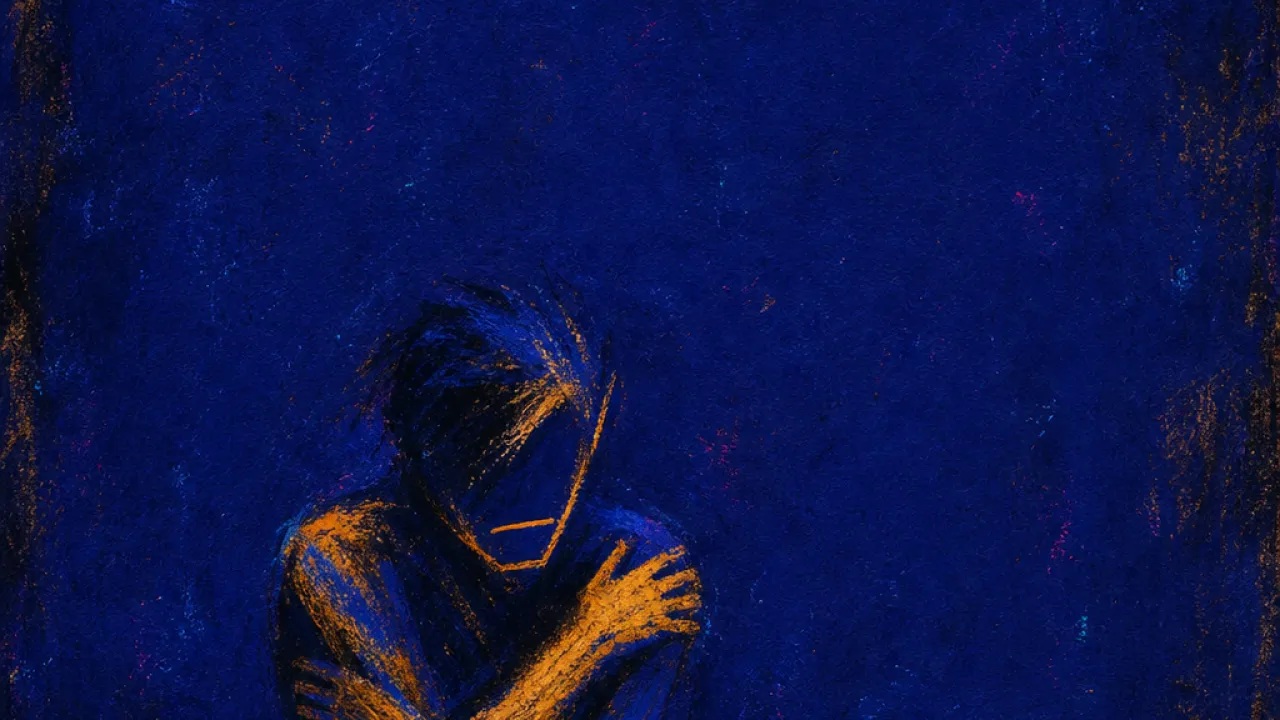
A figure seated before dark water with crossed arms over the chest, blue shadows split by a sharp amber line

What does this feel like?

Privacy-Consent Split — you feel it when someone asks a simple question and your body reacts before your mouth does, a tiny pause, a locked jaw, a thumb hovering over the screen because the answer is not dangerous, exactly, but it is yours. You want to be close to people; you do not want to live behind glass, watching connection happen from a distance. But the moment someone reaches too quickly for your inner world, your whole system tightens, as if a door inside you has been pushed before you had time to decide whether it should open. You can share a playlist, a joke, a photo from your day, a carefully edited version of what happened, and still feel the line running underneath it: this part is not for public handling. Online, you crop the screenshot twice, delete the caption, rewrite the message until it sounds casual, then wonder whether being this careful means you are impossible to know. In relationships, you may want someone to ask, but not pry; to notice, but not inspect; to care, but not claim access as proof of love. The hardest part is that both sides are honest. One side wants to be seen in a way that feels warm and human. The other side is standing guard over the parts of you that have to remain chosen, not extracted. So you move through the world half-open, half-locked, giving enough to stay connected and withholding enough to stay intact, until even ordinary intimacy starts to feel like a negotiation you never agreed to sign, much like the figure on the Two of Swords, seated before the water with arms crossed over the heart, holding two blades between the body and everything waiting to come closer.

What's pulling at you?

You're not stuck because you dislike closeness; you're stuck because closeness can start to feel like losing control over what belongs to you. One part of you wants to be known without performing, while another part needs every opening to be chosen, timed, and reversible. The split happens when connection asks for access faster than your body can say yes.

How It Shows Up?

  • You get a message that says, "Can I ask you something?" and your stomach drops before you even know the question. Your hand goes still around the phone, your jaw locks, and you start drafting three possible replies that sound calm without giving anything away. You are allowed to answer at the pace your body can handle.
  • You're sitting with a friend or partner and they ask why you've been quiet, gently, maybe even kindly, but the room suddenly feels too bright. Your throat tightens, your shoulders pull inward, and you can feel yourself choosing between telling the edited version or saying "I'm fine" and keeping the door closed. It is acceptable to need a smaller opening before a larger one.
  • At work or school, someone asks you to explain your availability, your plans, or why you made a choice, and the question lands like a request for more of you than the task requires. Your chest feels tense, your breath gets shallow, and you give a clean answer while silently counting what you did not say. You can keep a boundary without turning the moment into a debate.
  • In a group chat or social setting, everyone is sharing quickly, screenshots, locations, messy details, weekend plans, and you feel the pressure to match the level of openness. Your smile stays in place, but your fingers feel cold and your attention narrows to what will sound normal without giving away too much. You do not have to make your life more visible just to stay included.
  • Late at night, you open a post draft, type something honest, then delete it, rewrite it, delete it again, and stare at the blank box until the screen dims. There is a Two of Swords feeling in the crossed stillness of it, the mind holding two blades at once: wanting to be reached and wanting the bridge to stay up. Leaving the draft unfinished can be a complete choice for tonight.

Privacy-consent Split in Tarot Cards

Privacy-Consent Split lives in the moment when closeness is wanted, but access still has to be chosen. You can feel it in the locked jaw, the thumb hovering over a message, and the chest tightening when a question comes too close. From an existential view, the structural framework here is about staying connected without letting your private self be handled on someone else's terms. The Tarot Cards below make that shape visible without explaining it away.

The High Priestess
Upright
The High Priestess holds her partly concealed scroll between contrasting pillars, with a veil preserving depth behind the visible threshold. Knowledge exists in layers, and her authority comes from governing their passage rather than making all layers equally public. Upright, the card models privacy as a cognitive category distinct from fear, deception, or isolation. You may have inherited a binary rule that healthy connection requires full transparency or that safety requires total closure. The image names a more differentiated system in which visibility can be specific, revocable, and context-bound, allowing personal growth to occur through stronger consent architecture rather than forced openness.
The Lovers
Reversed
Two unclothed figures stand visibly apart beneath an angel, while their lines of sight do not meet in a simple mutual exchange. Exposure is present, but physical visibility alone does not establish aligned intention or shared terms. Reversed, the scene carries the friction of vulnerability occurring without a mutually understood consent structure. You may disclose because openness is culturally coded as love, then realize that being visible did not mean you freely chose the audience, depth, timing, or later use of what was shared. The reversed card locates the romantic split between apparent transparency and actual agreement, showing why exposure can coexist with profound uncertainty about access.
Temperance
Upright
The angel sustains a precise flow between two vessels while standing across water and earth, preserving difference inside connection. Neither element has to disappear for integration to occur. Upright, the card offers a structural alternative to the binary belief that a person must be fully exposed or completely unreachable. You may be trying to build a consent system in which disclosure has levels, audiences, durations, and stopping points. The image names that cognitive development as calibrated permeability: privacy remains intact enough to protect authorship, while connection receives enough movement to stay real.
The Devil
Upright
Two unclothed figures stand chained to the Devil's pedestal, their exposure visible beneath a structure that controls the terms of attachment. The chains are loose enough to preserve ambiguity, yet the bond is organized around a power centre above them. Upright, the card shows the intensified endpoint of Privacy-Consent Split: closeness has begun to treat access as ownership. You may feel that refusing a password, explanation, location, history, or emotional disclosure will be framed as evidence that the relationship is false. The image does not declare every difficult intimacy coercive; it isolates the structural warning sign that consent is no longer functioning freely when connection is made conditional on surrendering privacy.
Four of Pentacles
Upright
The figure secures a pentacle at every level of his body, placing ownership over thought, feeling, movement, and ground. The protective arrangement is coherent, but it consumes his entire posture and leaves no unused capacity. Upright, the card turns privacy management into a visible form of cognitive and emotional load. You may mentally catalogue what each person knows, rehearse safe answers, and revisit disclosures after they happen to determine whether too much escaped. The image names the internal cost of making containment continuous: privacy remains intact, but the monitoring required to maintain it can occupy the very inner world being protected.
Two of Swords
Upright
The figure's blindfold blocks visual certainty while her crossed arms keep both blades pressed into an exact defensive arrangement. The body therefore acts before new information can establish whether the approach is benign, intrusive, or simply mistimed. Upright, the card makes the inner pause visible without reducing it to indecision alone. You may replay ordinary questions, edit imagined answers, or judge yourself for needing privacy when no obvious danger exists. The image locates that psychological cache between an automatic guarding response and a conscious wish for connection, allowing both signals to be examined without treating either as the whole truth.
Queen of Swords
Upright
The Queen holds her sword upright while reaching outward with an open hand, keeping relationship and separation legible in the same frame. The blade does not erase the invitation; it specifies the conditions under which approach can continue. Upright, the card embodies differentiated connection within a system that may prefer automatic access. You may remain loving, responsive, and involved with family while refusing questions or information-sharing practices that treat your private life as communal property. The image names the structural challenge of making a boundary visible without letting the family recode it as hostility, disloyalty, or withdrawal.
Seven of Wands
Upright
The figure grips one wand across his torso while six others press upward from below, forcing him to protect his position on unstable ground. The body stays engaged with the confrontation but does not surrender the line. Upright, the image reflects a workplace boundary repeatedly tested by requests that exceed the role's legitimate needs. You may answer project questions while resisting demands to explain your health, family, identity, schedule, or future in personal terms. The card witnesses how professional consent can erode through accumulation: no single question appears decisive, but repeated pressure makes privacy feel like a position that must constantly be defended.

Privacy-consent Split in Tarot Card Reading Insights

Privacy-Consent Split often enters readings as the question of how much to reveal, when, and to whom. These readings turn from the cards toward moments where privacy, closeness, and consent all sit in the same room. Tarot Reading Insights for this pattern appear below.

Three Messages After One Clear No—And the Ten-Second Pause That Held

Three Messages After One Clear No—And the Ten-Second Pause That Held

Topic:Friendship Tarot Reading

Struggle:Boundary Collapse

Context:Friendship Boundary Creep

Mom Used the Spare Key: From Feeling Twelve to an Ask-First Rule

Mom Used the Spare Key: From Feeling Twelve to an Ask-First Rule

Topic:Family Tarot Reading

Struggle:Inherited Role Lock

Context:Family Privacy Negotiation

Share Locations? Reframing a Trust Test as a Consent Conversation

Share Locations? Reframing a Trust Test as a Consent Conversation

Topic:Love Tarot Reading

Struggle:Internal Authority Collapse

Context:Always On Availability

Frozen Smiles After Body Comments—and One Clear Boundary Sentence

Frozen Smiles After Body Comments—and One Clear Boundary Sentence

Topic:Family Tarot Reading

Struggle:Inherited Role Lock

Context:Family Script Pressure

Moving the Toothbrush, Then Naming What Shared Space Means

Moving the Toothbrush, Then Naming What Shared Space Means

Topic:Choice Tarot Reading

Struggle:Boundary Ambiguity Lock

Context:Chemistry to Commitment Test

From Panic at 'I'm Outside' to a Clearer Yes, No, or Not Now

From Panic at 'I'm Outside' to a Clearer Yes, No, or Not Now

Topic:Friendship Tarot Reading

Struggle:Autonomy Guilt Bind

Context:Friendship Boundary Creep

Dinner Going Cold, Chat Tab Open—and the Moment You Set New Terms

Dinner Going Cold, Chat Tab Open—and the Moment You Set New Terms

Topic:Family Tarot Reading

Struggle:Vulnerability Without Containment

Context:Family Boundary Backlash

The Draft Text That Kept Getting Deleted—And the Two-Sentence Rule

The Draft Text That Kept Getting Deleted—And the Two-Sentence Rule

Topic:Family Tarot Reading

Struggle:Autonomy Guilt Bind

Context:Relationship Privacy Negotiation

Hovering Over 'Keeping It Low-Key'—And Choosing Truth With Scope

Hovering Over 'Keeping It Low-Key'—And Choosing Truth With Scope

Topic:Family Tarot Reading

Struggle:Permission Paralysis

Context:Direct Communication Trial

Sunday-Night Rent Spiral—And the Two Sentences That Set Terms

Sunday-Night Rent Spiral—And the Two Sentences That Set Terms

Topic:Family Tarot Reading

Struggle:Autonomy Guilt Bind

Context:Family Infantilization

Leaving the Group Chat Courtroom: Setting a No-Jury, 1:1 Rule

Leaving the Group Chat Courtroom: Setting a No-Jury, 1:1 Rule

Topic:Family Tarot Reading

Struggle:Inner Tribunal Lock

Context:Family Boundary Backlash

The 'Don't Tell Dad' Text - and the Boundary That Replaced Stealth Mode

The 'Don't Tell Dad' Text - and the Boundary That Replaced Stealth Mode

Topic:Family Tarot Reading

Struggle:Emotional Secrecy Spiral

Context:Parentified Adult Child Role

Psychological Struggles Related to Privacy-consent Split