Why Is Your Past Public Again?

See how resurfaced posts, photos, and messages shape this situation, which tarot cards reflect it, and how it appears in readings.

Digital Memory Exposure
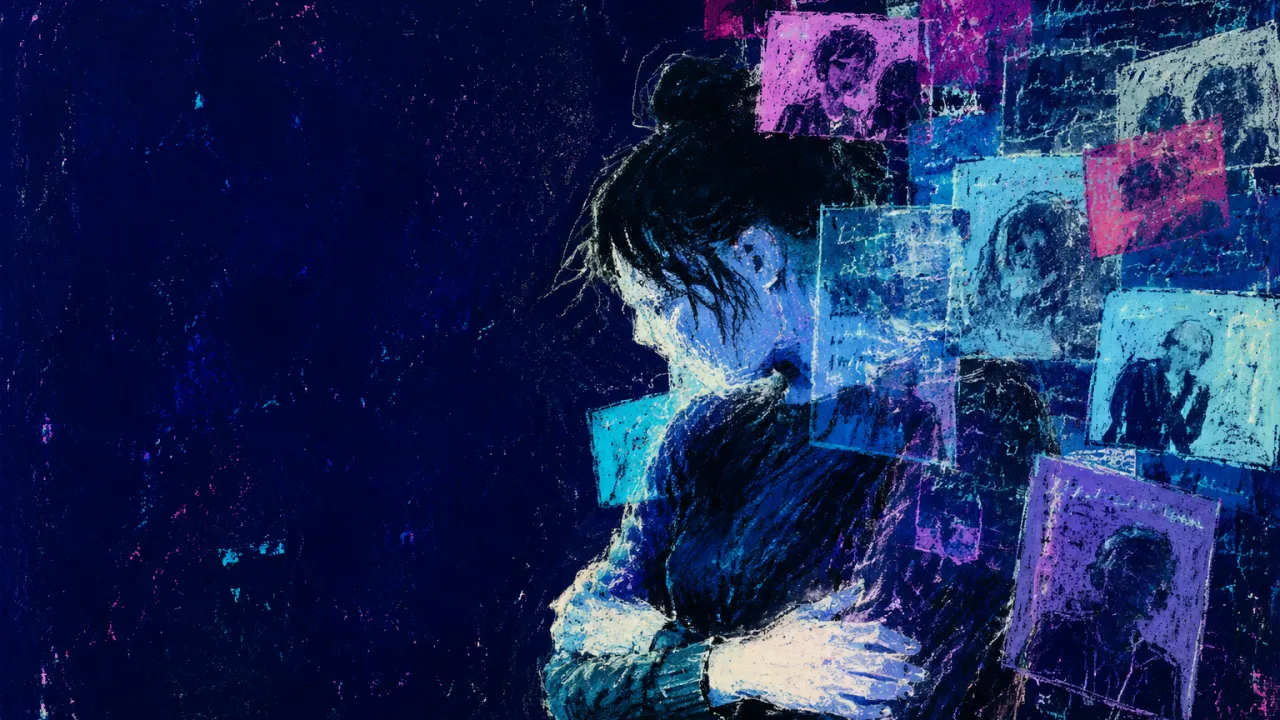
A figure folds both arms across the torso as translucent photo and message panels overlap behind in cyan and indigo.

What is this situation?

Digital Memory Exposure: you unlock your phone in the morning and an automated memory feature places an old photo, post, or message at the top of the screen before you have decided whether you want to see it. Later, a friend forwards a screenshot from years ago, a tagged image reappears in a group chat, or someone in your current life finds a public profile you had stopped thinking about. The material arrives without the time, audience, or circumstances that originally surrounded it, so a joke, relationship, opinion, or version of your style is read as if it belongs to today. Platforms keep the route open through search results, shared albums, tags, reposts, backups, and recommendation feeds; other people can save or circulate what you can no longer edit. The power gap becomes practical: you can archive a post, remove a tag, tighten a setting, or explain the date, but you cannot control every copy, every viewer, or the moment it returns. A routine notification can make your stomach drop, and ordinary scrolling turns into checking old accounts, searching your name, and wondering what else remains visible. The exposure is not always a single public reveal; often it is the repeated interruption of the present by material that the digital environment refuses to leave in the past, much like the Judgement card, where figures rise into open view as a trumpet sounds above them.

Why it's not you?

The problem is not that you failed to erase every earlier version of yourself. Platforms are designed to preserve, resurface, and cross-link material, while screenshots, tags, and shared archives let other people reopen it outside the context in which it was made. The loss of control belongs to that system of access and recirculation, not to a personal failure to manage your past perfectly.

Digital Memory Exposure in Tarot Cards

Digital Memory Exposure takes shape when platforms, searches, tags, or other people's archives pull older material into a current relationship or setting. The drop in your stomach when a notification reveals what has resurfaced is tied to an environmental and structural dynamic: platforms can preserve and recirculate more than you can fully control. The Tarot Cards below reflect the visible contours of that exposure: older material returning, context falling away, and access sitting outside your control.

Wheel of Fortune
Reversed
The great wheel turns above figures who rise, fall, and cling to its rim, while the fixed ground offers no personal timing control. Reversed, it captures an algorithmic return that repeats at arbitrary moments: an old artifact cycles back through memories, search, backups, or recommendations after you thought the present had moved on. The motion belongs to the platform and its linked audiences, not to a deliberate choice to revisit the past. You can respond at the point of contact, but you cannot set every recurrence or close every route through which the material may return.
Justice
Reversed
The seated figure holds a raised sword and balances scales in a formal judgment scene, but the reversal exposes how incomplete the hearing is. An old screenshot is weighed without its date, audience, or original circumstances, so a current group can convert context collapse into a verdict about who you are now. The uneven structure is practical. Other people can preserve and circulate the record, while your explanation competes with copies you cannot amend. You can add the missing context, but you cannot make every viewer enter the original situation before forming an opinion.
The Moon
Upright
The moon hangs between two towers while a dog, a wolf, and a crayfish face the uncertain path from different edges of the water. The partial light mirrors a digital exposure in which you can see one resurfaced artifact but not every saved copy, search result, viewer, or future route. The scene gives shape to the ambiguity that drives checking behavior: the unknown audience fills the gaps around the known screenshot. You can name what is visible and what remains unverified, without treating the platform's incomplete map as a complete account of your social standing.
Judgement
Upright
The trumpet above the rising figures makes identity revision a public summons rather than a private rewrite. When an old profile or post reappears, the archive places a previous version of you beside the current one and forces the question of which evidence a platform is using to define continuity. The scene supports integration without surrendering the present to the archive. Your development is larger than a resurfaced fragment, while the system's open recall reveals where your current self-concept is still being measured against stale public material.
Six of Cups
Upright
The child offering a flower-filled cup to another, with the old town behind them, turns memory into a social handoff. A photo, post, or message from an earlier chapter can be presented to today's friends as though the past and present share one audience. The gentle exchange also shows the missing consent: warmth, nostalgia, or an inside joke does not restore the original setting. You can explain the moment, but another person's decision to forward or tag the artifact decides when the archive re-enters the room.
Two of Swords
Upright
The blindfolded figure holds two crossed swords across a quiet shoreline, keeping the decision suspended. A memory feature or tagged image makes the first move before you can choose whether to open, archive, explain, or leave the material untouched. The scene frames the choice as constrained rather than indecisive. You still have local actions, but the platform has already selected the moment of contact and forced a response to an artifact you did not ask to review.
Six of Swords
Reversed
A ferryman moves a boat of six swords across the water toward a distant shore, but the passengers carry the old blades with them. Reversed, the passage describes a growth process interrupted by digital baggage: an archived profile, saved screenshot, or tagged image crosses into a new chapter after your lived identity has changed. The blocked transition exposes a gap between personal development and infrastructure. You can revise your practices and self-understanding, yet a platform may keep presenting earlier evidence as if growth should be visible in every surviving copy.
Seven of Swords
Upright
The figure carries swords away from the camp while looking back, making the transfer of a record visible. A screenshot, backup, or repost can leave the original owner's control even when the source is archived, deleted, or forgotten. The two swords left behind sharpen the structural point: cleanup is partial because copies remain elsewhere. You are negotiating with a distributed archive whose circulation can look deliberate to others even when the exposure began as an automated resurfacing.
Eight of Swords
Upright
The blindfolded figure stands bound inside a ring of swords, with a town visible beyond the enclosure. The image fits a digital audience problem in which the available actions are real but narrow: you can untag, archive, tighten settings, or explain a date, while the wider field of saved copies and viewers remains inaccessible. The restraint is structural rather than proof that you failed to manage your past. The platform and its social routes define the enclosure, turning an ordinary notification into a present-tense identity problem that reaches beyond the single screen you can edit.
Nine of Swords
Upright
A seated figure bends over a bed while nine swords line the wall behind them, turning a private room into a replay chamber. After an old notification or screenshot appears, the past can occupy the morning through name searches, account checks, and repeated attempts to predict who else may have seen it. The swords show the cost of an external exposure once it enters the inner cache, but they do not turn the platform event into a personal defect. You can separate the artifact's circulation from the mental replay it provokes, so the old fragment is not allowed to stand in for the whole present.
Page of Swords
Reversed
The raised sword, watchful sideways gaze, and wind-blown stance catch information in motion before it has a stable frame. Reversed, the messenger's alertness becomes careless circulation: a friend forwards an old screenshot, a tag revives it, and the fragment reaches a new audience faster than context can travel. The scene reveals why a privacy setting cannot govern every copy. You can address the visible post, but the network's spectators and re-senders keep the route open, turning observation and sharing into a practical power over your public history.
Eight of Wands
Upright
Eight wands cut through an open sky with no figure able to slow or redirect them. Their speed mirrors the notification, forwarded screenshot, or group-chat tag that reaches you before you have decided whether the material belongs in today's social field. The clear flight makes timing the pressure point. You can add context after arrival, but the first impression is already moving through a network whose pace outruns your ability to curate every audience.

Digital Memory Exposure in Tarot Card Reading Insights

Digital Memory Exposure also enters readings when someone brings in an old post, tagged photo, or archived message that has resurfaced inside a current connection. The Tarot Reading Insights below show how others have brought this kind of unwanted digital return to the cards.
Psychological Contexts Related to Digital Memory Exposure