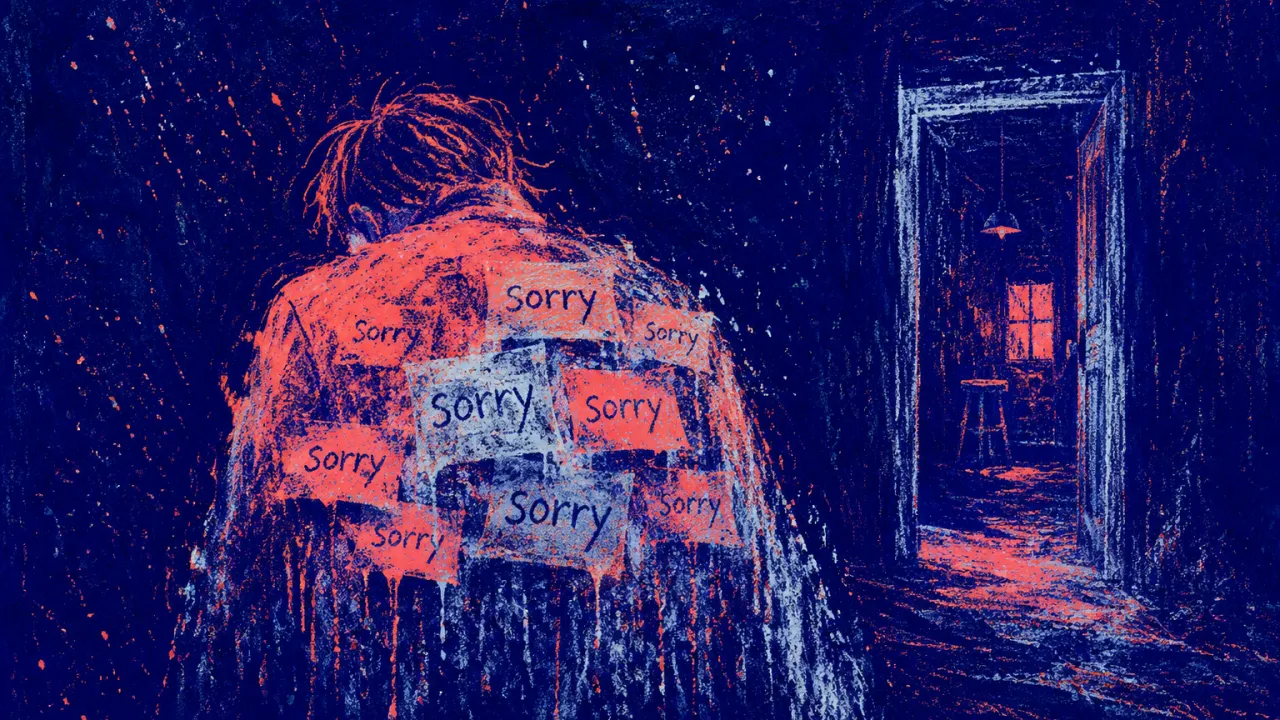
A clear look at repeated apologies without changed behavior, related tarot cards, and insights from other readings.
Apology Without Repair
What is this situation?
Apology Without Repair is the cycle where someone breaks an agreement, dismisses your concern, or repeats a behavior they promised to stop, then offers an apology that changes nothing around you. It may begin in a kitchen after another broken plan, over text after hours of silence, or in a meeting after your work is brushed aside: you name what happened, they say they are sorry, and the conversation closes before any next step is agreed. The words can sound polished and specific, but the days afterward return to the old arrangement. They expect the same access to your time, the same flexibility, and the same benefit of the doubt; if you raise the issue again, “I already apologized” is used to make your unfinished concern look like the new problem. You are left tracking what was promised, explaining the impact again, and proposing the changes they have not made, while they decide when the subject has been discussed enough. Soon your shoulders brace when their name appears on your phone, and your stomach tightens before ordinary plans because the apology has become a pause between repeats rather than a shift in what happens. By the next apology, the words arrive on schedule while the disruption remains where it fell, much like the Five of Cups, where three spilled cups stay on the ground before a cloaked figure.
Why it's not you?
An apology is not repair when the same behavior, access, and expectations remain unchanged. Being asked to treat words as closure while the cycle repeats places the unfinished work outside you: the person who caused the disruption has not followed acknowledgment with action.
Apology Without Repair in Tarot Cards
Apology Without Repair is the repeat cycle in which “sorry” ends the conversation but does not change what happens next. The shoulder bracing that returns with each notification comes from an environmental, structural dynamic: one person regains normal access while the other is left carrying the unfinished repair. The cards do not decide whether an apology should be accepted; they reflect the visible shape of acknowledgment without follow-through. These Tarot Cards mirror the contours of that recurring situation.
The Magician's raised wand, lowered hand, and fully stocked table ordinarily connect language and intention to material output; in reversal, that channel is obstructed even though every tool remains on display. This closely mirrors a socially polished apology that performs awareness before an audience while leaving access, expectations, and group arrangements unchanged. You can use the gap between the visible gesture and the untouched environment as the relevant evidence. The structural question is not whether the apology sounded skilled, but whether the person converted that performance into a changed role, a restored resource, or a different pattern the group can actually observe.
The Wheel, its ascending and descending figures, and the sphinx at its summit are all overturned in reversal, turning movement into a return through familiar positions. The apology functions like one marked point on that wheel: tension rises, words arrive, access is restored, and the unchanged behavior comes around again. You can read the repetition as timing data rather than as a series of isolated mistakes. The reversed cycle reveals that waiting only has value when the intervals between apologies contain observable repair; without that evidence, elapsed time is simply carrying the same arrangement into another round.
Justice sits between pillars with scales in one hand and a sword in the other; reversed, the family tribunal can preserve its authority while failing to balance impact or apply a new rule. A relative apologizes, but the same entitlement to your time, information, labor, or emotional availability survives the conversation. You may be told that continuing to name the pattern is unfair because an apology has already been issued. The inverted scales expose the structural contradiction: family peace is being measured by whether you stop discussing the disruption, not by whether the arrangement that produced it has changed.
Death's armored rider moves past a fallen authority toward the sun between two towers; in reversal, the passage is obstructed and the old order remains difficult to release. An apology without repair produces that stalled transition: the relationship or work arrangement is verbally declared renewed while its governing behavior stays unchanged. You can locate the directional problem in the resistance to structural change, not in your inability to appreciate remorse. The reversed rider clarifies why a future cannot be built from repeated declarations alone when every practical route still leads back into the previous arrangement.
The World places a central figure inside a completed wreath, framed by four stable witnesses; in reversal, the architecture of completion is present but cannot fully close. This is the exact cognitive trap created when an apology is labelled closure even though the impact, agreement, and future procedure remain unresolved. You can reconstruct the meaning of completion around integration rather than wording. The reversed wreath reveals that an apology becomes part of repair only when acknowledgment, changed behavior, and a usable new arrangement connect into one completed system.
Three cups lie spilled before the cloaked figure, while a bridge toward shelter and two intact cups remains behind. Within a family, the apology can become a ritual of regret that acknowledges the latest rupture but never reorganizes access, care work, privacy, or the inherited role that made the rupture predictable. You can hold the family bond and the unresolved spill in the same frame without pretending they cancel each other out. The remaining cups show that connection may persist, while the bridge establishes that renewed closeness is a process requiring changed participation rather than a status automatically restored by kinship.
The Knight's carefully presented cup and composed horse create a socially attractive offer, but in reversal the gesture is no longer supported by a reliable journey. Inside a circle or community, a charismatic apology can restore the speaker's image while the people affected receive no changed norm, redistributed influence, or protection from recurrence. You can distinguish social reassurance from social repair by following what happens after attention leaves the apology. The reversed cup reveals why an audience may reward style immediately, while the slower evidence of accountability remains absent from the group's operating structure.
Three people stand beneath the pentacles of a shared building, with one holding the plan that should coordinate expertise and execution; in reversal, the collaborative structure cannot reliably hold. A workplace apology without a revised owner, process, or shared definition of completion leaves the same coordination failure embedded in the next project. You can distinguish a pleasant reset from operational repair by examining whether the team has built anything different together. The reversed architecture shows that agreement in the meeting is not enough when roles remain vague, feedback stays dismissible, and the next handoff reproduces the same failure.
The central figure holds both the scales and the coins, controlling the standard of fairness as well as the resources being distributed; reversed, that hierarchy becomes a mechanism for unequal repair. A family member can decide that their apology settles the matter while you continue providing care, availability, explanations, or logistical cleanup under the same inherited expectations. You can identify the imbalance without reducing the family relationship to a transaction. The inverted scene names who currently controls access to recognition and who contributes the material labor, making it clear when family reconciliation is being funded almost entirely from your side.
The blindfolded figure holds two crossed swords before a rocky shoreline, maintaining a temporary balance by preventing either path from opening. Another apology can create this exact decision structure: accepting it as closure preserves access without evidence of change, while stepping back may carry relational or professional costs that have not yet been fully named. You can make the choice more legible by separating the apology's wording from the options it actually creates. The crossed swords show that the stalemate persists when both continuation and withdrawal are evaluated through pressure to be forgiving rather than through observable repair conditions.
The figure carries five swords away from the camp while leaving two behind, looking back as though tracking what has been noticed and what can still be avoided. In a workplace apology cycle, acknowledgment can function as that strategic partial removal: enough of the issue is addressed to exit the conversation, while responsibility for process change, restored credit, or prevention is left behind. You can audit the missing pieces without needing to prove what the speaker privately intended. The unattended swords make the structural evasion visible in the outcome: the apology handled reputation and conversational pressure, but the unresolved work remained in your environment.
The bandaged figure grips one wand while eight more form a guarded wall behind him, making prior impact visible in his posture before anything new has happened. Repeated apologies without repair create the same psychological cache: your body prepares for another canceled plan, dismissive message, or broken agreement because the external pattern has supplied reasons to anticipate recurrence. You do not have to interpret that bracing as proof that you are unreasonable or incapable of moving on. The standing figure shows vigilance as accumulated pattern recognition, while the ordered wands make it possible to separate what happened repeatedly from the self-criticism attached to noticing it.
The figure carries all ten wands toward the town with his view obstructed and his body bent under a load that has not been shared. This resembles the daily aftermath of a non-repairing apology: you reschedule the plan, remember the promise, prepare the next conversation, and build the practical solution while the person responsible returns to ordinary access. You can audit the routine by identifying which tasks exist only because acknowledgment never became follow-through. The visible destination shows that daily life can continue, but the overloaded route reveals the real cost of continuing under an arrangement where repair labor has silently migrated onto you.
No cards available for this filter.
Apology Without Repair in Tarot Card Reading Insights
When someone says sorry, returns to normal, and repeats the same behavior, others have brought that unfinished cycle into their readings too. The Tarot Reading Insights below show what surfaced in readings centered on apology without follow-through.