Leading While Still on Trial

See how provisional authority shapes your work, which tarot cards mirror it, and what related reading insights have surfaced.

Leadership Role Fit Trial
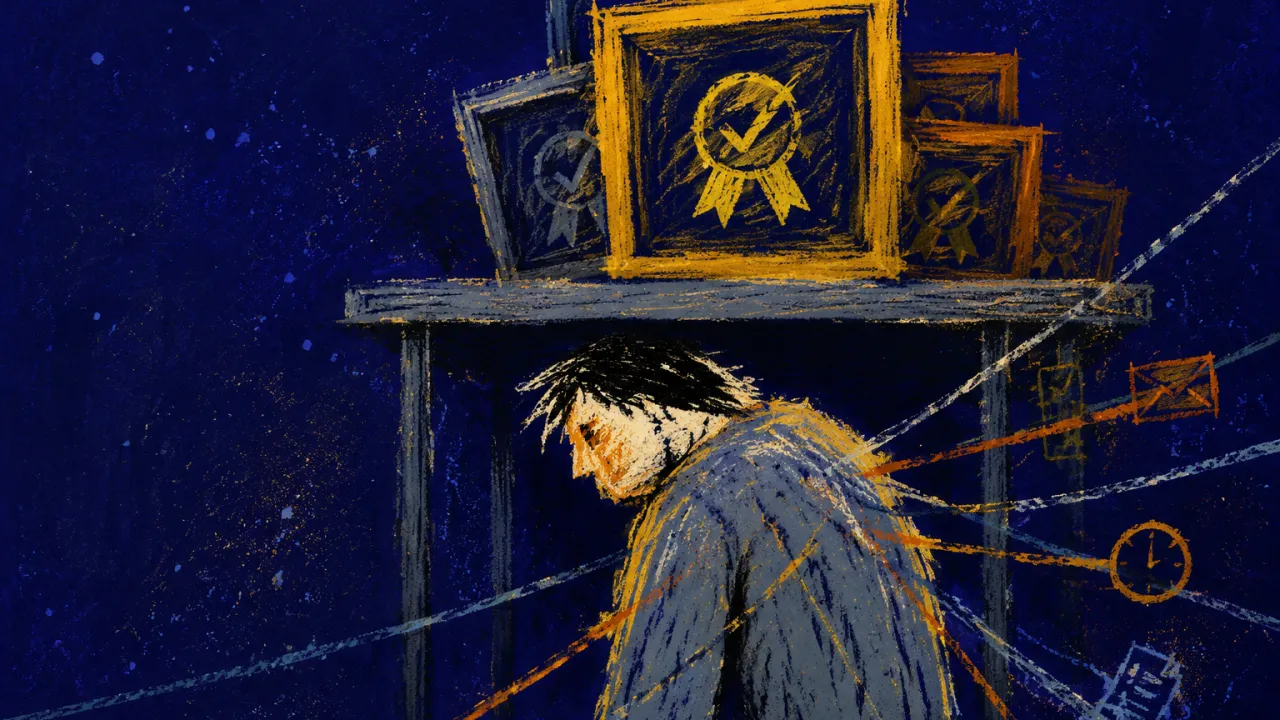
A solitary figure with lowered shoulders beneath stacked approval frames as work lines converge across a bent back.

What is this situation?

Leadership Role Fit Trial is the period when you are placed in a manager, team lead, or acting-head position while senior leaders decide whether you should keep it. It often begins with a meeting where the opportunity sounds like recognition, but the terms remain provisional: you are introduced as the lead, given targets to meet, and told that your performance will be reviewed after a set number of weeks or months. Your calendar fills with one-to-ones, planning sessions, escalations, and status updates, while former peers adjust to reporting to you and senior managers continue to monitor your calls. You may be asked to take ownership, then find that hiring, budgets, priorities, or difficult personnel decisions still require approval from above. A missed target is attached to your leadership, but the authority needed to prevent it may remain elsewhere. Feedback arrives in fragments: one week you are expected to be decisive, the next you are questioned for not consulting enough; one stakeholder wants faster delivery, while another asks why the team is moving without further sign-off. Routine Slack messages, meeting invitations, and requests for updates begin to carry the weight of evaluation, and your shoulders rise before conversations that once felt ordinary. By the end of the day, you have handled the team's workload and also documented how you handled it, turning the role itself into an extended audition. You stand visibly above the workflow but remain exposed to challenges from several directions, much like the figure in the Seven of Wands, alone on raised ground with one staff held across the body as six others rise toward the position from below.

Why it's not you?

The difficulty is built into a setup that assigns visible responsibility before it grants stable authority or fixed criteria. When senior leaders can revise the standard and overrule your decisions while still measuring your performance, that unevenness belongs to the trial design, not to your competence. The demand to prove the role from inside those limits is created by the workplace.

Leadership Role Fit Trial in Tarot Cards

Leadership Role Fit Trial places you in charge of a team while your authority to lead it remains conditional. When each message, meeting, or check-in can become another evaluation point, your shoulders stay raised long after the workday ends. This is an environmental and structural dynamic: responsibility moves toward you while final decision-making power remains above you. The Tarot Cards below mirror the visible contours of provisional authority, shifting standards, and leadership under scrutiny.

The Emperor
Reversed
The stone throne, armour, and sceptre invert while the symbols of office remain plainly visible. The reversed structure resembles your acting title: the organisation displays you as the person in command, yet hiring, budget, priority, and personnel powers do not travel securely with the role. The throne still identifies a formal leadership position, but its inverted foundation blocks stable command from becoming available to its occupant. You are therefore navigating more than a personal confidence test; you are working inside an authority design where decisions can be reassigned upward while their consequences continue to be assigned downward.
Justice
Reversed
The seated judge's scales, upright sword, and squared pillars turn upside down in the reversed image, leaving the instruments of measurement present but structurally misaligned. That inversion mirrors a trial where you are held to leadership outcomes while approval rights remain above you and the standard changes between decisiveness, consultation, speed, and sign-off. The blocked quality lies in the review system rather than in an absence of effort from the person being reviewed. You can recognise that contradictory feedback and accountability without authority prevent the scorecard from functioning as a neutral measure, which limits how much of the verdict can reasonably be treated as evidence about your leadership fit.
Judgement
Upright
The trumpet sounds above opened coffins as the figures rise together toward a highly visible call. The scene mirrors the fixed review point at the end of your acting-lead period, when weeks or months of decisions, team outcomes, and documented behaviour are gathered into an organisational judgment about whether the role continues. The call is audible and the figures can respond, giving the upright image the quality of a real transition point rather than endless provisionality. You can recognise the review as a distinct institutional event that should be interpreted against the full conditions of the trial, including the authority provided, the constraints retained above, and the criteria communicated over time.
Two of Pentacles
Upright
Two coins move through an infinity-shaped loop while ships rise and fall on rough water behind the juggler. The image mirrors your daily requirement to run the team and simultaneously produce evidence that you are running it correctly, all while priorities, approvals, meetings, and stakeholder expectations continue to move. The loop remains intact in the upright scene, showing functional adaptation rather than effortless balance. You may keep the operational system moving, but the constant switching between leadership, delivery, escalation handling, and self-documentation still consumes bandwidth that the eventual review must not mistake for poor organisation.
Three of Pentacles
Upright
Under the stone arch, a craftsperson stands on a bench while two other figures examine the work beside a visible plan. The arrangement resembles an organisational audition: you perform from an exposed position while people with institutional standing compare the result with expectations that may not be fully owned by you. The plan, finished carving, and face-to-face review remain accessible in the upright scene, so observable work can still be distinguished from vague impressions. You are not reduced to every contradictory comment; the trial also contains meetings, decisions, team outcomes, and written records that reveal what was delivered under the authority actually provided.
Six of Pentacles
Reversed
The coin-giver, suspended scales, and kneeling recipients invert, turning a visible distribution system into an unstable flow controlled from one side. That reversed hierarchy mirrors senior leaders asking you to own team outcomes while continuing to release or withhold headcount, budget, approvals, and practical support. The blocked resource channel explains why nominal leadership does not automatically create operational agency. You may be visible as the team lead, but the trial remains shaped by people above you deciding which inputs become available and then evaluating what you produced with the resulting allocation.
Seven of Pentacles
Upright
A worker pauses beside a vine holding seven pentacles, leaning on a tool while inspecting what sustained labour has produced. The image mirrors the middle or end of your provisional leadership period, when accumulated meetings, decisions, team results, and documentation are waiting to be assessed rather than generating immediate confirmation. The crop is visible but not yet converted into a final return, giving the upright scene a deliberate review rhythm. You can distinguish the time genuinely required to observe leadership from an organisation indefinitely postponing the promised decision, especially when the trial already contains measurable work and a stated review horizon.
Eight of Swords
Upright
Bound and blindfolded inside a loose ring of swords, the central figure occupies open ground but cannot move through it normally. The image mirrors your formal visibility as a manager alongside practical restrictions created by approval chains, monitored calls, limited budget control, and decisions that can be overruled from above. The sword enclosure is incomplete and the distant structure remains visible, so the upright scene distinguishes real constraints from total powerlessness. You can identify which parts of the leadership role are genuinely delegated, which remain fenced by senior sign-off, and which outcomes are being attributed to you despite lying beyond that boundary.
Nine of Swords
Upright
Nine swords hang over a person sitting upright in bed with both hands covering the face. The workday's instruments appear to have entered the resting space, mirroring how Slack messages, meeting invitations, status requests, and replayed decisions can retain the weight of evaluation after the formal working day ends. The figure is awake and physically upright, so the image gives visible form to a pressure that might otherwise be mislabelled as private overreaction. You can understand the repeated mental review as residue from an extended workplace audition in which ordinary interactions carry uncertain consequences for status, income, and professional identity.
Five of Wands
Upright
Five figures raise crossing staffs without a shared target, creating visible motion but no settled line of command. The scene mirrors a leadership trial where one stakeholder demands speed, another insists on consultation, former peers contest priorities, and senior leaders retain the ability to redirect your calls. Each figure still holds a staff, so the upright image makes the distribution of competing agendas observable. You are not simply failing to create alignment in a vacuum; you are being evaluated inside a workplace where several people can exert influence without sharing one decision rule or one definition of successful leadership.
Six of Wands
Reversed
The wreath-crowned rider, elevated staff, and public procession turn downward above the watching crowd. The reversed display resembles a promotion announced before it is secured: you are introduced as the lead and made publicly accountable, but the recognition remains conditional on a later verdict. The crowd and ceremonial symbols do not disappear, which means workplace visibility persists even while status becomes unstable. You carry the social exposure of leadership without receiving settled organisational endorsement, allowing every update, missed target, or challenged decision to feel like a referendum on whether the title will be withdrawn.
Seven of Wands
Upright
Raised above six converging staffs, the lone figure braces one wand across the body while defending a highly visible position. The height mirrors your provisional manager title, while the pressure coming from below and outside mirrors escalations, peer resistance, and senior scrutiny arriving before your authority is secure. The staff remains firmly in the figure's hands and the higher ground remains defensible, giving the upright image a path through the trial rather than depicting automatic defeat. You can separate the leadership decisions genuinely within your control from challenges created by withheld permissions, making the workplace structure more visible than the shifting personal verdict attached to it.
Ten of Wands
Upright
Ten staffs fill the carrier's field of view as one person transports the entire bundle toward the town. The compressed load mirrors a leadership trial in which you absorb the team's delivery work, escalations, planning, emotional coordination, and the extra requirement to document how each responsibility was handled. The destination remains visible and the bundle is still moving, so the upright scene makes effort and output concrete rather than treating overload as an invisible personal weakness. You can see how the trial concentrates responsibilities into one role and then risks using that concentration as evidence about your individual capacity.

Leadership Role Fit Trial in Tarot Card Reading Insights

Others facing provisional authority, shifting criteria, and public scrutiny have brought this leadership trial into their readings. The Tarot Reading Insights below collect what surfaced in those sessions.
Psychological Contexts Related to Leadership Role Fit Trial