Why Does Money Feel Exposed?

Explore the money pressure loop, related tarot cards, and tarot reading insights from sessions shaped by visible financial strain.

Money Shame Spiral
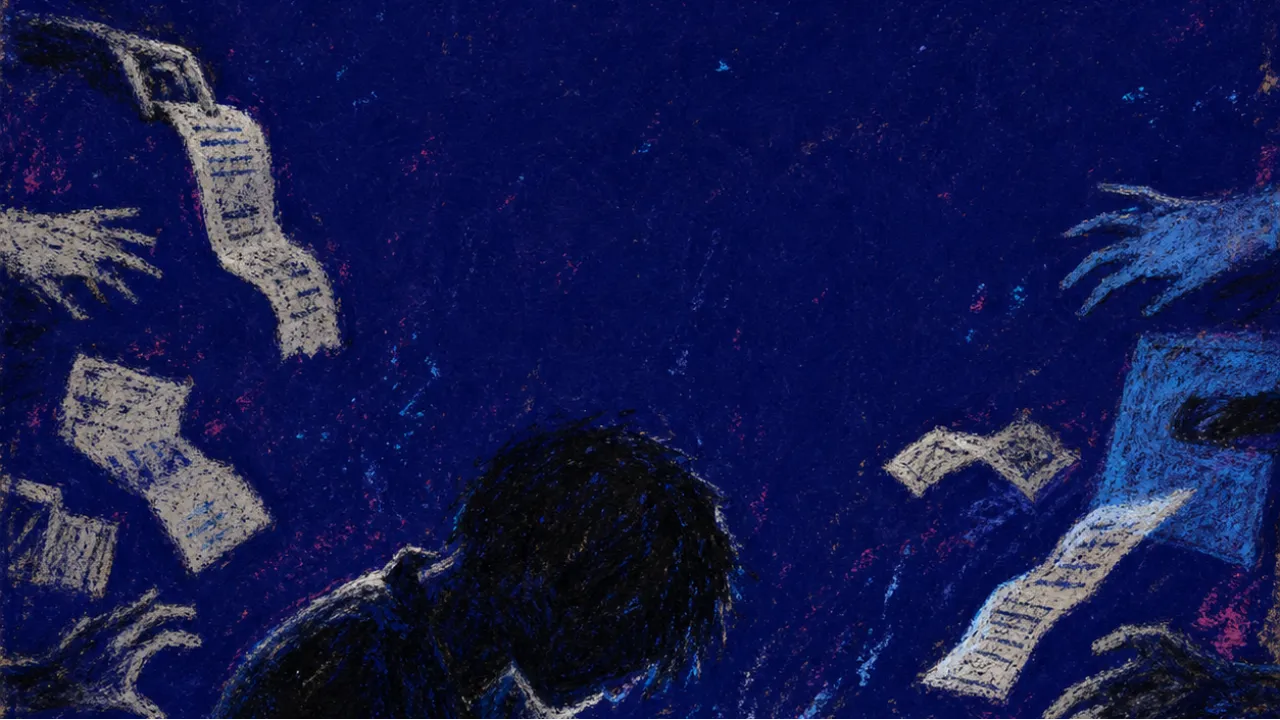
A hunched figure holds a glowing phone as receipts, bills, and waiting hands press inward from every side

What is this situation?

Money Shame Spiral — you open your banking app in the grocery aisle, on the bus, or in bed after midnight, and the number on the screen immediately changes the way the room feels. Maybe a payment posted earlier than expected, maybe rent cleared, maybe a subscription you forgot about hit at the worst possible time; either way, the day shrinks around a balance you now have to manage in public and in private. You start doing mental math while a cashier waits, while friends suggest dinner, while your phone lights up with a bill reminder, while someone in the group chat casually says, “It’s only thirty bucks.” The pressure is not just the money itself; it is the way every small choice becomes visible, explainable, and somehow embarrassing. You rehearse excuses for why you cannot go out, delay opening emails from lenders or utilities, move money between accounts like you are trying to keep a table from tipping over, and feel your stomach drop when a card takes one second too long to approve. The people around you may not mean harm, but the world keeps asking you to look relaxed while costs climb, wages lag, fees stack, and every app turns your private limits into a notification. Over time, the situation trains you to treat ordinary spending as exposure: a coffee, a rideshare, a birthday gift, a missed payment, a declined tap. By the end of the week, you are not just budgeting; you are editing your presence, shrinking your plans, and trying to pass as okay in spaces priced for someone with more room to breathe, much like the figures on the Five of Pentacles, moving through the cold beside a lit window that makes shelter visible without making it feel reachable.

Why it's not you?

The problem is not that you are careless, weak, or bad with life. This spiral is built by external pressure: rising costs, uneven income, fees, social comparison, and systems that make every shortfall feel public. When money becomes a constant test you are expected to pass silently, the situation itself is doing the damage.

Money Shame Spiral in Tarot Cards

Money Shame Spiral is not just about a number on a screen; it is the repeated contact between tight money, public comparison, app alerts, and moments where you have to perform being fine. The stomach drop when a payment notification lands or a card hesitates at checkout is part of the record this situation leaves on the body. This is an environmental, structural dynamic shaped by costs, access, timing, and social visibility, not a private failure of character. The Tarot Cards below reflect the outline of that pressure without turning it into a verdict.

The Hermit
Reversed
The solitary figure stands apart with a lantern, a staff, and no visible companion on the mountain path. Reversed, the physical separation reflects what happens when each friendship invitation carries an affordability test that you feel unable to explain. Declining dinner, delaying replies, or offering a vague excuse can preserve privacy once, but repetition may remove you from the support network you were trying not to burden. The reversed Hermit names the difference between choosing time alone and being pushed out of friendship routines by unspoken price thresholds.
The Devil
Upright
The two figures wear chains beneath a structure that makes material control appear larger and more authoritative than either of them. In a money shame spiral, the same hierarchy forms when a low balance stops being information about present resources and becomes a verdict about adulthood, discipline, or future potential. The visibly loose collars reveal that the identity claim is not identical to the financial fact. The card names the cognitive binding between net worth and self-worth, making room to examine which beliefs came from real cash-flow limits and which were installed by comparison culture, financial content, or punitive social scripts.
The Tower
Upright
Lightning strikes a crowned tower without warning, throwing the crown free as fire erupts and figures lose their footing. A payment clearing early, a surprise fee, or a forgotten renewal can create the same abrupt break in timing, turning a barely balanced week into immediate financial triage. The collapse exposes the fragility of a schedule built without enough margin to absorb institutional timing changes. The card locates the shock in the interaction between a sudden event and an already narrow buffer, rather than presenting the resulting disruption as evidence that you failed to manage ordinary life.
Two of Pentacles
Reversed
The infinity-shaped band cycles between two pentacles while ships move unevenly across rising waves. Reversed, the cycle shows paydays, rent dates, card holds, and automatic charges falling out of phase, so money may technically be coming but not when a particular obligation requires it. The broken rhythm reveals why a modest timing shift can produce a disproportionate week of transfers, declined plans, and public payment anxiety. It locates the bottleneck in cash-flow sequencing rather than treating every shortfall as evidence of uncontrolled spending.
Four of Pentacles
Upright
A seated figure presses one pentacle to his chest, balances another above his head, and pins two beneath his feet while the city remains at a distance. Holding the resources so tightly restricts movement, attention, and contact, mirroring a daily life in which every dollar must be guarded and even necessary spending feels like loss of control. The coins remain physically present, so the image also preserves the protective function of a hard limit. It reveals the threshold where deliberate resource protection becomes a scarcity lock-in that blocks food, transport, maintenance, or connection even when a specific expense has already been accounted for.
Five of Pentacles
Upright
The figures' bowed posture, the driving snow, and the illuminated pentacles overhead concentrate attention on exposure, hardship, and resources that feel out of reach. Internally, the same composition appears when one low balance fills the entire mental field and turns every previous purchase into apparent evidence of inadequacy. The window remains lit and the figures remain together, so the image does not equate present scarcity with total abandonment. It reveals how shame edits out visible context, including rising costs, inadequate wages, and possible support, while leaving the private self to carry responsibility for the whole system.
Six of Pentacles
Reversed
A standing figure controls the coins while two kneeling figures wait beneath a set of scales. Reversed, the distribution becomes a visible hierarchy of who has room to give, who must ask, and whose participation depends on terms set by someone with greater financial capacity. In a social circle, casual spending can reproduce that hierarchy without anyone naming it: one person says the cost is trivial while another must calculate whether accepting, declining, or requesting accommodation will expose their position. The scales reveal that the friction concerns unequal capacity and social power, not simply different attitudes toward money.
Seven of Pentacles
Reversed
A worker leans on a tool and studies a crop heavy with pentacles, pausing to assess what sustained effort has actually produced. Reversed, the crop does not convert into enough usable return at the required pace, mirroring work that consumes time and energy while wages still fail to stretch across rent, food, and rising costs. You may respond by auditing every personal purchase because the employment system presents effort as something that should automatically produce security. The stalled harvest exposes the real mismatch between labour invested and financial margin received, relocating scrutiny from individual spending morality to the return structure of the job.
Queen of Pentacles
Reversed
The Queen sits in a cultivated landscape and cradles a pentacle inside a carefully maintained domestic setting. Reversed, that resource container becomes unstable: rent can clear and leave groceries exposed, or one household cost can consume the money intended to support the rest of the week. The image centres the labour of keeping food, shelter, transport, and physical comfort functioning from a finite pool. It reveals that difficulty sustaining the household is not evidence that you lack care or competence when the available resource is structurally too small or too unpredictable for the needs placed upon it.
Seven of Swords
Upright
A figure carries five swords away while looking back toward a distant camp, leaving two swords planted behind. The guarded posture mirrors the impression management required when you rehearse excuses, hide why you cannot join a plan, or try to pass as financially relaxed in a group priced for more disposable income. The scene makes concealment visible without turning it into a moral defect. It separates legitimate financial privacy from the exhausting social labour of maintaining a false appearance, revealing how much attention is diverted from connection toward controlling what other people might infer about your balance.
Eight of Swords
Upright
The blindfold, bindings, and surrounding swords create a physical picture of attention captured by threat while a gap remains in the enclosure. A banking app can produce the same internal narrowing, making the balance feel like the only relevant fact in the room and every future transaction feel pre-condemned. The image holds two realities at once: the financial boundary is concrete, and shame adds an extra layer of restriction by blocking sight of context, sequence, and remaining choices. That distinction reveals why the spiral can continue internally even after the immediate purchase or notification has passed.
Nine of Swords
Upright
Nine swords hang above a bed while a seated figure covers their face in the dark, turning the private hours after midnight into a chamber of repetitive thought. The scene directly mirrors opening a banking app in bed and mentally replaying rent, groceries, subscriptions, and every purchase that now appears questionable. The swords are mounted behind the figure rather than physically entering the body, preserving the difference between financial facts and the judgments accumulated around them. The image reveals how unresolved bills remain in psychological cache overnight, making tomorrow's ordinary spending feel compromised before the day begins.

Money Shame Spiral in Tarot Card Reading Insights

Money Shame Spiral often follows people into readings when the bank app, the group chat, and the next bill all feel like they are speaking at once. Other people have brought this same money pressure into the cards, looking for a clearer view of what is happening around them. Tarot Reading Insights from sessions with this kind of financial pressure are gathered below.