Why Is Your Ex Everywhere?

Map the feed-driven breakup loop, the tarot cards that mirror it, and readings where this pressure shows up.

Post-breakup Social Media Triangulation
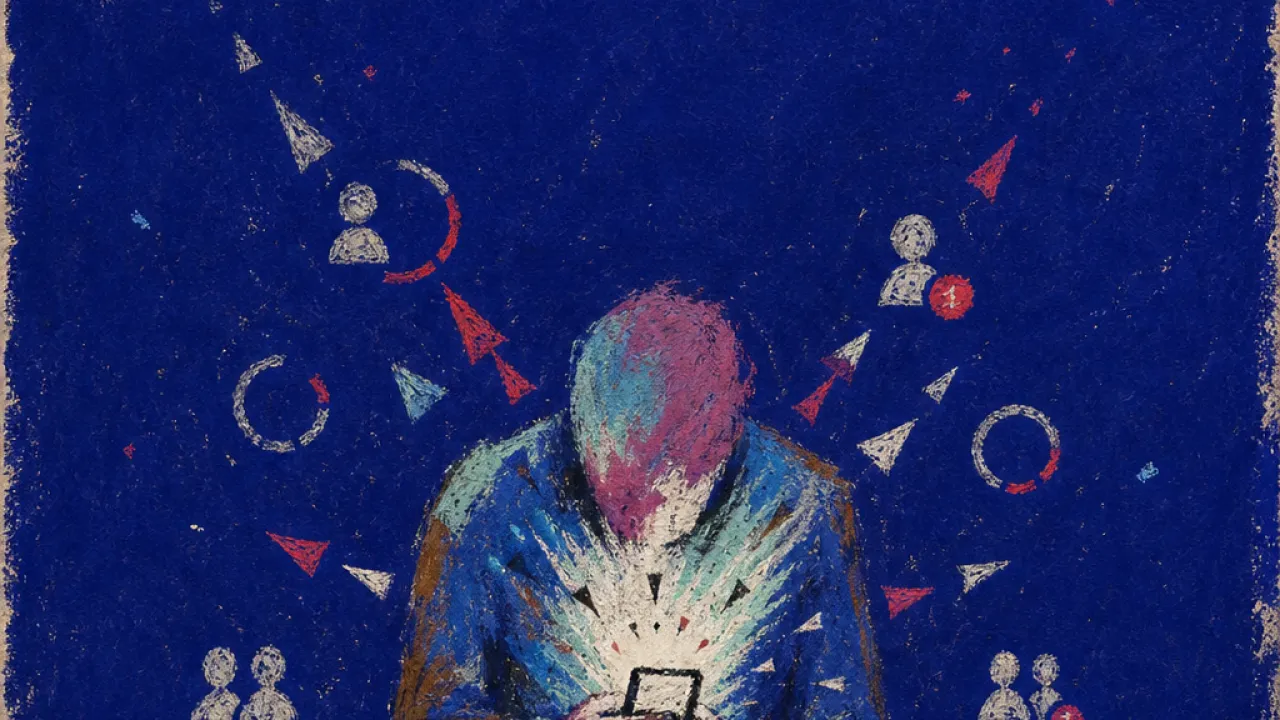
A solitary figure with shoulders drawn over a glowing phone, tagged silhouettes pressing inward from three sides

What is this situation?

Post-Breakup Social Media Triangulation — you break up, delete the old chat from the top of your phone, and still find the relationship showing up every time you open Instagram, TikTok, Snapchat, or whatever app you use when you're half-asleep. At first it's small: your ex watches your story but doesn't text, likes a mutual friend's photo where they know you'll see it, posts a song lyric at 1 AM, or puts a new person in the edge of a frame without naming them. Then the audience gets pulled in. Mutuals comment with inside jokes, someone sends you a screenshot "just so you know," and the feed keeps arranging your ex, the possible new person, and your own name in the same room without anyone having to speak to you directly. The power sits in the public-private overlap: every post is deniable, every view count is visible, every vague caption can be brushed off as nothing, but the pattern keeps landing on your screen. You start moving through the day around it: checking who saw what, muting and unmuting, zooming into backgrounds, wondering whether a soft launch is aimed at you or just happening near you. The breakup is no longer one conversation; it's a set of signals, timestamps, tags, and mutual reactions that keep reopening the scene from the outside. By night, your thumb is tired from scrolling and your chest has learned the drop that comes before a story loads, much like the Three of Swords, where a heart hangs exposed while three blades enter from different directions under a grey raincloud.

Why it's not you?

The issue isn't that you're too online or failing to move on; the setup keeps placing your breakup inside a public feed where every signal can be seen and denied. Views, vague posts, mutual comments, screenshots, and soft launches are not private closure; they're external prompts that keep pulling the scene back onto your screen. It has a shape: a breakup staged through an audience instead of left to direct contact.

Post-breakup Social Media Triangulation in Tarot Cards

That chest drop before a story loads in Post-Breakup Social Media Triangulation is tied to the way the feed keeps placing your ex, a possible new person, and mutual reactions in front of you. This is an environmental and structural dynamic: the apps, visibility loops, and shared audience keep the breakup active even when direct contact is absent. The cards below are not instructions to block, reply, or stay silent; they reflect the shape of the public-private pressure. Here are the Tarot Cards that often mirror this kind of situation.

The Devil
Upright
The chained pair remain facing the horned figure above them, with the pedestal concentrating attention upward and the loose neck loops remaining plainly visible. The structure mirrors the internal bargain created by social-media triangulation: one more check promises relief from uncertainty but usually supplies another ambiguous cue that renews the need to check. You may criticize yourself for returning to the feed even though the loop is reinforced by variable rewards, visible metrics, and unsolicited updates from mutuals. The image names the mechanism without moralizing it; the checking impulse is being maintained by a system that alternates absence, suspense, and sudden relational exposure.
The Moon
Upright
The moon hangs over a path that disappears between two towers, while a dog and a wolf respond differently to the same light and a creature emerges from dark water. The image shows how one external cue can activate several incompatible interpretations when the source supplies visibility but withholds context. You may replay a caption, timestamp, background detail, or story view long after closing the app because the mind keeps trying to complete an intentionally incomplete scene. The card locates the inner friction at the border between observable facts and projected meaning, creating room to audit which details were actually shown and which conclusions the platform invited you to build.
Judgement
Upright
An angel sounds a trumpet above figures rising together from open coffins, turning a private return into a public summons. The scene mirrors a breakup repeatedly reactivated by notifications, screenshots, anniversary-like timestamps, and new posts that arrive just as the relationship appears to be receding. You may experience each alert as a possible turning point because the timing makes old material feel newly urgent. The card separates genuine relational timing from platform-generated recall: a loud reappearance can reopen the scene without creating a new conversation, a new agreement, or a shared moment of accountability.
Three of Cups
Reversed
Three figures stand shoulder to shoulder with raised cups, forming a compact support circle around a shared event. Reversed, the same circle becomes porous to oversharing, gossip, and divided loyalty, especially when friends treat screenshots or updates as proof of care. You may need support from mutual friends while also experiencing those friends as the route through which the ex keeps returning to your screen. The card makes that friendship contradiction visible: the support network is real, but its information habits can keep reopening the breakup and quietly assign friends the role of messenger, witness, or judge.
Two of Swords
Upright
A blindfolded figure holds two crossed swords before a rocky sea, while a narrow crescent moon hangs above the stalled scene. The posture captures a choice made under deliberately incomplete information: mute or keep watching, leave the shared group or remain visible, ask directly or refuse another round of deniable signaling. You are not choosing between one clearly safe option and one clearly harmful option; each route carries a social cost because mutuals and platform visibility keep the options connected. The crossed blades expose the real bottleneck as an impossible demand for certainty before setting an access boundary, even though the feed cannot supply that certainty.
Three of Swords
Upright
A red heart hangs fully exposed beneath a grey raincloud as three blades enter from separate angles. The image gives the situation its exact relational geometry: the original breakup is joined by an ex's indirect signal and a mutual audience that carries, comments on, or screenshots the signal. You are not only encountering private heartbreak; you are seeing it repeatedly placed in a public interface where view counts and reactions make the exposure measurable. The three blades clarify why one vague post can land with disproportionate force: it reaches the existing wound through several social channels at once while leaving no single speaker accountable for the impact.
Five of Swords
Upright
One figure gathers swords with a fixed smile while two others walk away beneath jagged clouds, leaving dropped blades across the exposed ground. The scene presents a social field organized around visible advantage and public defeat, matching breakup posts or mutual comments that turn recovery, desirability, and group loyalty into comparative performance. You may feel required to appear unaffected, post a stronger counter-image, or monitor who seems to be winning the breakup because the audience makes status measurable. The card reveals the hidden cost of that contest: even the person who controls the visible narrative remains inside a damaged social field where attention has replaced resolution.
Seven of Swords
Upright
A figure removes five swords from a camp, glancing back toward the people and tents while two swords remain conspicuously behind. The scene maps a backchannel social strategy: content moves through mutuals and public feeds while enough of the message remains unstated for every participant to deny coordination. You can be pulled into a group-level exchange without receiving a direct message because the network carries implication more efficiently than accountability. The card names the structural asymmetry: other people control when fragments reach you, while you are expected to respond socially to information whose source and purpose remain obscured.
Page of Swords
Reversed
A young figure watches the surrounding landscape with a sword ready, while moving clouds, trees, and birds make the whole scene feel alert to incoming information. Reversed, the watcher becomes a friend who reports every view, like, caption, and possible soft launch without checking whether the information is useful or wanted. You can become dependent on the same friends whose updates prevent the breakup from settling because they occupy both support and surveillance roles. The image reveals the friendship power dynamic beneath the reporting: whoever controls the flow of updates can also control when your attention is returned to the ex.

Post-breakup Social Media Triangulation in Tarot Card Reading Insights

When Post-Breakup Social Media Triangulation keeps pulling the breakup back onto your screen, people bring the posts, screenshots, tags, and mutual reactions into readings. The pieces below shift from card patterns into reading moments where this public-private pressure appears. Tarot Reading Insights from related sessions.

Psychological Contexts Related to Post-breakup Social Media Triangulation