When Work Friendships Cross Lines

Explore a blurred coworker friendship, related tarot cards, and tarot reading insights for redrawing boundaries at work.

Work Friendship Boundary Reset
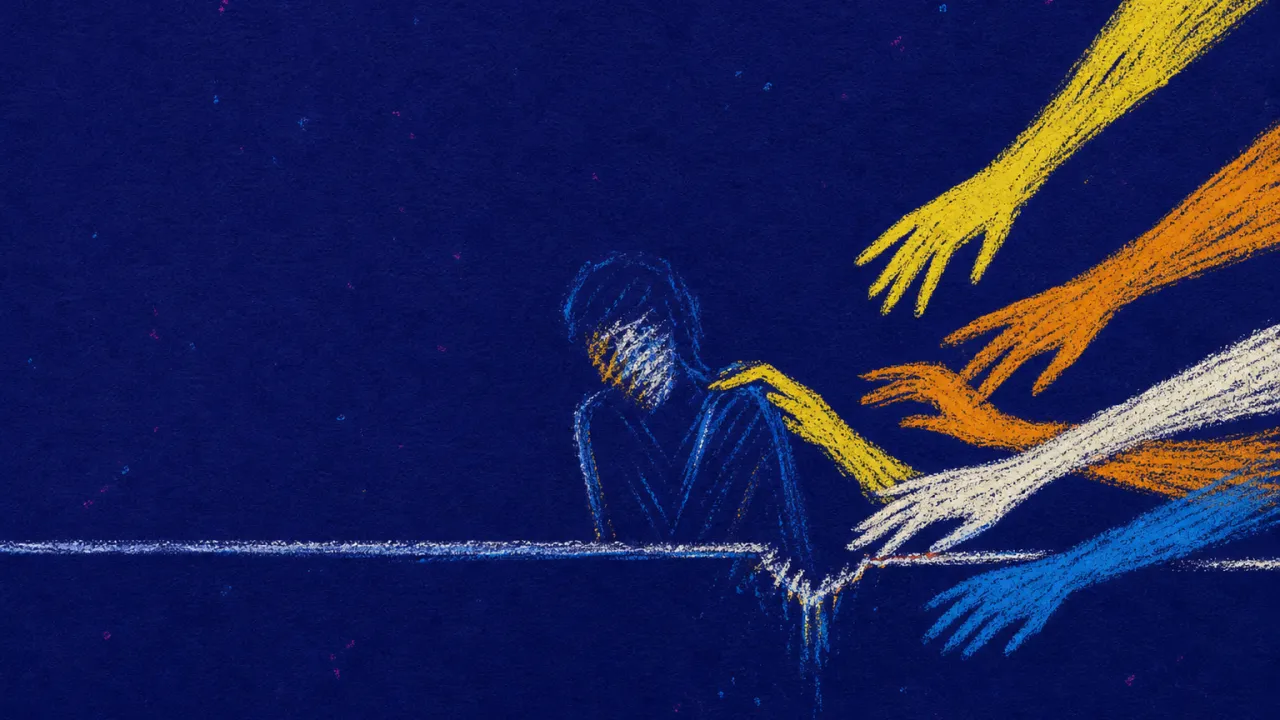
A solitary figure at a desk with shoulders drawn inward as reaching hands and message threads press across a redrawn line

What is this situation?

Work Friendship Boundary Reset — you start noticing it in the small moments: the coworker who used to be your lunch person now expects instant replies to late-night messages, private venting spills into your calendar, and every shared joke seems to come with an unspoken request for loyalty. At first, it looked like closeness made work easier; there was someone to sit with in meetings, someone to decode the group chat, someone who understood exactly why that one manager's tone landed badly. Then the friendship starts leaning on your workday from the side. They ask you to cover for them, pull you into gossip before a team call, read silence as rejection, or act hurt when you say you cannot talk right now because you are on a deadline. The office keeps treating both of you as a pair, so your no becomes visible: fewer casual check-ins, a colder Slack reply, a lunch invite that suddenly does not include you, a joke about you being "corporate now." You are not just setting one boundary; you are trying to redraw the line in a place where shared desks, shared managers, shared projects, and shared social circles keep pushing the line back toward you. By the end of the day, your shoulders are tight from measuring every tone, every pause, every message you leave unanswered, much like the figure on the Two of Swords, sitting still with crossed blades held in front of the body because the next move has to protect the line that keeps getting tested.

Why it's not you?

This is not you being cold, dramatic, or bad at friendship. A workplace that turns closeness into access, favors, silence, or loyalty tests creates pressure that would make any boundary feel awkward. The strain belongs to the setup: friendship is being asked to carry work politics, and that is heavier than one person can quietly manage.

Work Friendship Boundary Reset in Tarot Cards

In a Work Friendship Boundary Reset, the tightness in your shoulders when another after-hours message lands is part of the situation, not a private flaw. What looks like one awkward friendship shift is often an environmental and structural dynamic inside the workplace: access, favors, gossip, and loyalty get tangled with the job itself. The cards below do not tell you to be nicer, colder, closer, or more distant; they reflect the pressure points created when a personal bond has to be redrawn inside a professional space. Here are the Tarot Cards that tend to mirror this kind of boundary reset.

Justice
Upright
The seated figure holds balanced scales in one hand and an upright sword in the other, framed by two firm pillars. The scales separate mutual care from unequal access, while the sword cuts through the assumption that friendship should override deadlines, confidentiality, workload ownership, or ordinary workplace accountability. You have usable criteria even when neither option feels socially comfortable. Justice locates the decision in consistent standards rather than in whichever person feels most hurt in the moment: what would count as reasonable availability, fair collaboration, and appropriate privacy if the coworker were not a close friend? That structure makes the boundary legible as role clarity rather than personal punishment.
The Devil
Reversed
Two figures stand loosely chained to the Devil's pedestal, with the bond visible enough to look fixed even though the collars are not sealed tightly around their necks. Reversed, attention shifts toward the slack in those chains: the workplace friendship has linked closeness with availability, favors, secrecy, and loyalty, but those terms are maintained by an agreement that can be recognized rather than an unchangeable fact. You are revising a belief system, not merely reducing contact. The deeper reset separates care from compulsory access and cooperation from personal allegiance, exposing how fear of gossip, exclusion, or professional awkwardness has helped keep the arrangement in place. The release is cognitive and structural: the friendship may remain, but its old contract no longer has to define what a good colleague or loyal friend must provide.
Two of Cups
Reversed
Two figures face one another and exchange cups beneath a winged emblem, presenting connection as a mutual encounter between distinct people. Reversed, the exchange no longer rests on shared terms: one person may understand friendship as ongoing consent to access, while the other is trying to preserve connection through narrower, more sustainable boundaries. You are not necessarily withdrawing all care from the friendship. The obstruction lies in a mismatch over what the bond authorizes inside the workplace, including response time, private disclosure, favors, and visible loyalty. The inverted meeting reveals why the reset feels personal even when its purpose is practical: the definition of reciprocity itself is being renegotiated.
Three of Cups
Reversed
Three figures lift their cups within a shared social space, with each person's participation reinforcing the others. Reversed, the friendship circle can turn into a channel for gossip, triangulation, or conditional inclusion, especially when a work friend recruits mutual colleagues to validate hurt feelings about a boundary. You are then managing more than a one-to-one friendship. Lunch routines, inside jokes, and group chats can become mechanisms through which the old role is enforced or your distance is publicly interpreted. The inverted gathering reveals why private repair is difficult: the friendship has acquired an audience whose reactions can keep pushing the boundary back toward you.
Two of Pentacles
Reversed
The juggler holds two pentacles inside an infinity loop while ships pitch on rough water behind him. Reversed, that continuous motion becomes a daily system that cannot regain balance: deadlines, after-hours messages, emotional debriefs, and requests for cover are all being treated as if they belong in the same queue. You are not simply struggling to multitask. A coworker friendship has acquired unscheduled access to the time and attention needed for work and recovery, so every delayed reply can feel like both a social decision and an operational risk. The unstable juggling scene makes the structural problem visible: the routine cannot settle until friendship expectations and actual work obligations stop competing under one false level of urgency.
Three of Pentacles
Reversed
An artisan stands on a bench while two collaborators hold the plans inside a shared building. Reversed, the architecture remains but coordination loses its common standard: personal hurt, private expectations, or unresolved gossip can begin shaping feedback, handoffs, meeting behavior, and who is expected to repair the work. You still have to build something with a person whose friendship access is being renegotiated. That makes the professional problem more specific than ordinary interpersonal tension: the relationship reset can contaminate project roles unless collaboration is returned to visible agreements, deliverables, and ownership. The inverted scene locates the blockage in the teamwork structure, not in your refusal to remain continuously available.
Six of Pentacles
Reversed
A giver measures coins above two kneeling figures while holding scales, making support visible but also placing control over distribution in one set of hands. Reversed, the work friendship can become a ledger in which emotional support, introductions, shift coverage, or insider information are remembered as debts that entitle the giver to future access. You may experience the boundary as difficult because the friendship contains real history and real help, not because the resulting claim is fair. The inverted exchange distinguishes gratitude from permanent obligation. Within the friendship, reciprocity can only be mutual when either person remains able to decline a request without being demoted, shamed, or socially charged interest.
Two of Swords
Upright
The blindfold, crossed swords, and still body create a protective enclosure while uneven water and rocks remain behind the seated figure. Internally, that posture mirrors the mental pause before replying to a coworker friend, when every possible tone is checked for whether it will sound cold, invite more access, or create fallout at the next meeting. You are carrying an unresolved external collision inside your attention. The upright stillness offers containment, but the blades also show the cost of keeping every signal suspended indefinitely. The scene names the psychological cache accurately: friendship, work, safety, and belonging have been compressed into each small message, making ordinary communication feel like a consequential decision.
Five of Swords
Upright
A foreground figure keeps the swords while two people retreat toward the water, leaving the relationship organized around possession, humiliation, and aftermath. In a work friendship, the same win-lose structure appears when one person answers a boundary with silent treatment, gossip, selective disclosure, or an attempt to make mutual colleagues choose sides. You may be invited to defend yourself until the original limit disappears beneath the argument. The upright scene makes that diversion visible: the conflict is no longer only about response times or favors, but about whether one friend can impose a social cost until the other resumes the old role. Naming the contest preserves the possibility of evaluating the friendship by its conflict process, not only by its earlier closeness.
Queen of Swords
Upright
The Queen's sword rises in a clean vertical line while her free hand remains open toward the space before her. The image holds two truths without collapsing either one: a relationship can retain recognition and dignity while access to time, attention, privacy, and professional cover becomes more precisely defined. You are updating the mental model that previously equated warmth with permeability and firmness with rejection. The upright Queen makes a more developed structure available: communication can be direct without becoming cruel, and compassion does not require indefinite negotiation of the same limit. That distinction turns the reset into a durable change in how friendship and role boundaries are understood, not just a temporary response to one difficult coworker.
Seven of Wands
Upright
A lone figure stands on raised ground and braces one wand against six rising from below. The elevated position gives him a defensible line, but the number of incoming wands shows how one workplace boundary can be tested through multiple channels: direct messages, meeting jokes, favors, gossip invitations, and questions from mutual colleagues. You are not facing six unrelated problems. The pressure is a coordinated consequence of one changed expectation about access, and the upright stance shows that the position remains supportable even when it requires active maintenance. In career terms, the resource is a clear professional ground from which the same limit can be applied across messages, projects, and social contact.
Nine of Wands
Upright
The wounded guard watches from behind a row of wands, holding the final staff as though another challenge could arrive at any moment. Internally, the image captures how repeated coworker boundary tests remain active after the interaction ends: the mind rehearses the next request, lunch encounter, Slack message, or joke before any of them occur. You have learned that small openings can be treated as restoration of the old arrangement, so vigilance is serving an understandable protective function. The upright card also makes its cost visible: a boundary that requires constant anticipation occupies emotional bandwidth even when nobody is currently speaking. The pattern can therefore be seen as an external access problem that has become an internal monitoring job.
Ten of Wands
Upright
The bent figure carries ten wands in a bundle so dense that it blocks his view of the town ahead. The burden is physically concentrated in one person's arms, closely mirroring a work friendship in which someone else's venting, unfinished tasks, social reassurance, and requests for cover accumulate beside your own workload. You may still be moving through the workday, but movement does not prove that the load is appropriately assigned. The visible destination preserves a usable path: the boundary reset can be understood as an audit of which responsibilities are genuinely yours and which arrived through closeness rather than role. The strain belongs to the transferred load, not to a personal failure to carry it gracefully.

Work Friendship Boundary Reset in Tarot Card Reading Insights

When a Work Friendship Boundary Reset starts changing the tone of the office, other people bring that same blurred mix of texts, favors, loyalty tests, and awkward distance into readings. These readings show how the question can move from one coworker bond into the wider shape of the workday. Tarot Reading Insights from sessions where this boundary shift became the main thing on the table.

Psychological Contexts Related to Work Friendship Boundary Reset