When Home Becomes a Deadline

A grounded look at the home sale threshold, related tarot cards, and tarot reading insights around memory, logistics, and next steps.

Childhood Home Sale Crossroads
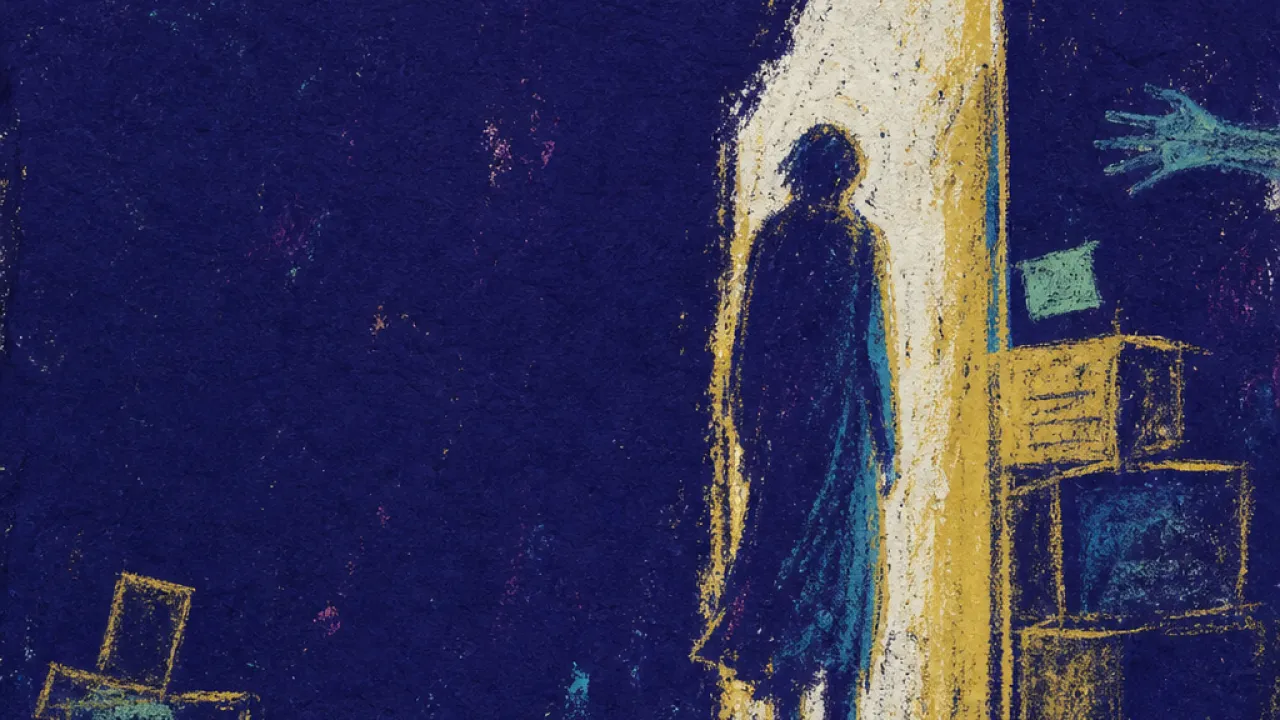
A solitary figure in a half-emptied doorway as hands, boxes, and listing papers press familiar rooms toward an exit

What is this situation?

Childhood Home Sale Crossroads — you arrive at the house and it no longer behaves like the place you remember. The front door still sticks in the same spot, the hallway still has the same awkward light, but now there are moving boxes against the wall, an estate agent's card on the counter, and people speaking in practical sentences about valuations, viewings, repairs, offers, storage, and dates. Someone has already started clearing a cupboard you thought would stay untouched; someone else is asking whether you want the old photos, the chipped mug, the posters from your room, the furniture that will not fit anywhere you live now. The home is being translated into square footage, market timing, mortgage numbers, and buyer feedback, while you are expected to answer quickly about things that carry years of your life inside them. Family members may be calm, rushed, relieved, impatient, or sentimental in completely different ways, and every group chat message seems to turn memory into a task: pick up your things, approve the listing photos, decide what can be donated, say goodbye before the keys change hands. The pressure does not come from one person alone; it comes from the sale itself, from the calendar, from the fact that a private map of your childhood is being opened to strangers and then closed for good. You stand between what the house used to hold and what the sale now requires, much like the figure on the Two of Wands, one hand on a globe and one foot still inside the old walls, looking out toward a horizon that has already started asking for an answer.

Why it's not you?

The problem is not that you are being dramatic or too attached; the situation itself is built to make private memory collide with public transaction. A childhood home sale turns rooms, objects, and timing into decisions other people can schedule, price, and move through. That pressure has a shape outside of you: keys changing hands, deadlines closing in, and a place that once held you being prepared for someone else's life.

Childhood Home Sale Crossroads in Tarot Cards

Childhood Home Sale Crossroads is not just about packing boxes; it is a place being turned into a transaction while people around you move by the speed of listings, offers, and closing dates. The tight chest you feel while a stranger steps through your old room belongs to an environmental, structural dynamic where memory, money, timing, and family logistics all press into the same space. The cards below do not decide what you should do with the house or the past. These Tarot Cards reflect the shape of standing at that threshold while the ground behind you is being cleared out.

Wheel of Fortune
Upright
A large wheel turns among figures that rise, fall, and hold different positions around the same cycle, while the four corner figures remain outside its immediate motion. The image mirrors a property sale shaped by market conditions, mortgage rates, buyer demand, family availability, seasonal timing, and closing chains that no individual participant fully controls. You can distinguish the external cycle from the decisions that remain yours. The moving wheel makes the sale time-sensitive without making every deadline unquestionable, and the stable corner figures reveal the value of fixed criteria when market momentum and family urgency begin defining the entire pace.
Justice
Upright
The scales weigh competing claims while the upright sword introduces a clear line of consequence. In a childhood home sale, valuation, legal ownership, repair costs, sale terms, distribution of possessions, and closing dates create an external decision framework that does not automatically account for emotional investment or unequal family labour. You have access to criteria that can separate a workable agreement from pressure disguised as inevitability. The scales do not erase memory; they reveal which factors are being counted, which are missing, and whether the people carrying the consequences have corresponding information and decision authority.
Death
Upright
A white horse advances past a fallen authority figure while people of different ranks meet the same movement, and sunlight appears between two distant towers. The scene reflects the sale's irreversible threshold: family members may occupy different roles and react differently, but the transfer of keys ends everyone's previous form of access to the childhood home. You can recognise the closing date as a structural ending without treating it as the destruction of everything the house held. The advancing horse makes postponement finite, while the illuminated passage beyond the towers reveals that continuity remains available in another form once ownership, storage, and return are no longer organised by the old address.
Judgement
Upright
Figures rise from open containers in response to a trumpet, bringing an earlier state into full view for collective recognition. The image resembles the sale's forced archive review, when boxes, photographs, school objects, inherited stories, and old family roles emerge from cupboards and bedrooms because the property can no longer store them invisibly. You have an opportunity to distinguish inherited identity from the parts of the past you consciously recognise as current. The open containers make review possible, and the shared summons reveals that the house sale is not asking whether childhood happened; it is exposing which meanings, roles, and objects will continue to organise your life after the building stops doing that work.
Five of Cups
Upright
A cloaked figure faces three spilled cups while two cups remain upright, and a bridge still crosses toward a distant building. The scene gives the loss a concrete shape without making it total: the sale removes future access to rooms, routines, and stored possibilities, while selected objects, relationships, memories, and routes into the next phase remain available. You can allow attention to register what is ending without letting the transaction define the whole childhood as lost. The standing cups and bridge do not cancel the spill; they reveal the resources that become visible once grief is distinguished from the practical pressure to clear the house quickly and perform readiness for everyone else.
Six of Cups
Upright
Flower-filled cups, two children, and an enclosed old courtyard make memory tangible through place, scale, and exchange. Returning to the childhood home during a sale can similarly collapse time: an adult body moves through rooms that still cue earlier routines, identities, family expectations, and sensory details. You have access to memory without needing to treat every remembered version of the house as a current instruction. The offered cup reveals what can be consciously received from the past, while the separate cups make room for memories to remain distinct rather than becoming one demand to preserve the entire property or every object inside it.
Seven of Cups
Upright
Seven cups float before a silhouetted figure, each holding a different object, promise, risk, or projection. The display resembles a cupboard, bedroom, or attic translated into a series of emotionally unequal options, where photographs, furniture, school objects, decorative items, and family artefacts all compete for limited storage and decision time. You can see that option abundance is not the same as usable choice. The cups make the field visible, but their clouds reveal why every object can momentarily appear to carry the whole childhood home; the practical decision becomes clearer when symbolic meaning is separated from physical volume and immediate deadline pressure.
Eight of Cups
Upright
Eight cups remain carefully arranged in the foreground while a cloaked figure walks toward a mountain pass under the moon. The cups have not become worthless; they are being left because the available path now leads beyond the structure they formed, mirroring a childhood home that still carries emotional value even as ownership and access move elsewhere. You can frame departure as a directional act rather than a verdict against the life held inside the house. The open path makes movement possible, while the unbroken cups preserve the fact that leaving a meaningful place and valuing it are compatible realities.
Ten of Cups
Reversed
A couple, two children, a rainbow of cups, and a home across the landscape compose a complete image of shared domestic belonging. Reversed, that picture can no longer hold every family member in the same emotional position; relief, grief, impatience, financial realism, and nostalgia pull against the assumption that the home means one thing to everyone. You can identify the mismatch without turning it into proof that the family bond was false. The inverted domestic image reveals that consensus about the house is unavailable, so the family process cannot rely on a single approved emotional script for how quickly people should clear, celebrate, mourn, or move on.
Two of Pentacles
Upright
An infinity loop binds two coins in constant motion while ships rise and fall on rough water behind the juggler. That moving balance resembles a sale in which valuation calls, viewing dates, repair decisions, work commitments, collection trips, and storage deadlines remain individually manageable but unstable when they all compete for the same calendar. You are dealing with a dynamic allocation problem rather than evidence that you should effortlessly keep every part of life level. The coins remain in hand, so practical coordination is still available, but the waves make visible why a childhood home sale cannot be absorbed into an ordinary week without changing priorities, capacity, or ownership of tasks.
Three of Pentacles
Upright
Three people stand inside a stone building, consulting one another beneath visible architectural work while one participant holds the plan. The scene maps closely onto the coordination required among family members, an estate agent, tradespeople, movers, cleaners, or solicitors when a private home must be prepared for inspection and transfer. You have access to a collaborative process, but the building cannot be managed through assumed roles or scattered messages alone. The visible plan reveals the structural difference between helping with the sale and becoming its unofficial project manager: expertise, approval authority, deadlines, and task ownership need to remain legible within the shared process.
Seven of Pentacles
Upright
A worker leans on a tool and studies pentacles growing on a cultivated vine, with value visibly present but not yet harvested. The pause resembles waiting for valuations, viewing feedback, repairs to translate into price, or an offer that adequately reflects the material asset after years of family investment. You have a legitimate evaluation point between rushing the transaction and waiting indefinitely for a perfect return. The developed crop makes clear that the property already carries accumulated value, while the worker's pause reveals the wider question of what additional time might realistically produce and what continued delay costs the family in maintenance, labour, and suspended closure.
Ten of Pentacles
Reversed
An elder, younger adults, a child, dogs, an archway, and ten coins occupy a scene of intergenerational property and established continuity. With that structure reversed, the shared enclosure no longer guarantees a stable route between generations; the home is being detached from its role as family infrastructure and translated into an asset that can be valued, divided, and transferred. You may be confronting the loss of a practical family anchor as well as a sentimental place. The disrupted archway reveals why the sale can alter assumptions about future gatherings, emergency return, stored belongings, inheritance, and who controls the family's material legacy, even when selling remains financially or logistically necessary.
Two of Swords
Reversed
The blindfold, crossed blades, and rocky waterline form a sealed decision posture in which neither route can be inspected comfortably. Under reversed pressure, the protective pause no longer preserves choice; incoming dates, cleared cupboards, listing activity, and other people's decisions begin narrowing the field before you have established what matters. You may experience the sale as a demand to decide without enough time, information, or emotional distance. The blocked posture reveals that delay is not neutral once the transaction is moving, while the exposed shoreline clarifies why a decision process needs more than urgency: it needs visible options, decision rights, and an honest account of what cannot be preserved.
Six of Swords
Upright
A small boat carries two passengers, six upright swords, and a ferryman from turbulent water toward a quieter shore. Nothing meaningful has been left weightlessly behind; the swords travel with the passengers, just as objects, family narratives, practical obligations, and the knowledge of losing future access accompany departure from a childhood home. You have a viable route away from the old address without needing the transition to feel clean or emotionally complete. The boat's limited space also exposes a real constraint: not everything contained by the house can travel in physical form, so the next direction depends on distinguishing what is transportable from what must change form.
Two of Wands
Upright
A globe rests in one hand while the figure stands between a wand anchored to the old wall and another wand available for movement. The image turns the sale into a genuine choice architecture: one set of decisions protects continuity with the house, while another allocates space, money, and attention toward a life already developing elsewhere. You are not choosing between caring and not caring. The open horizon reveals that decisions about keepsakes, visits, listing approval, or participation in the sale are decisions about the form attachment will take after ownership changes, and the wall behind the figure confirms that the past remains real even when it cannot remain fully intact.
Four of Wands
Reversed
Four staffs frame a garlanded threshold while people gather near a substantial home in the background. Reversed, the threshold no longer supports an uncomplicated return or celebration; the building is passing out of the family's control, and rituals once anchored there may not have an obvious future location. You may be losing a gathering structure rather than only a piece of real estate. The inverted garland reveals why a farewell, final meal, last photograph, or room-by-room acknowledgement can become contested or rushed when the sale process provides a closing date but no shared ritual for ending the home's family role.
Eight of Wands
Upright
Eight staffs move together across an open sky with no visible obstruction between their current position and the ground ahead. The concentrated motion reflects the stage when viewing requests, offer updates, family messages, collection dates, document approvals, and closing arrangements begin arriving faster than they can be processed separately. You are encountering a genuinely accelerated phase rather than an ordinary background task. The clear flight path shows that the transaction can progress efficiently, but its speed also reveals why response windows should not be confused with unlimited access to your attention or automatic consent to every decision bundled into the momentum.
Ten of Wands
Upright
A figure bent under ten bundled staffs carries the entire load toward a settlement that is close enough to see but difficult to reach. The compressed bundle mirrors the packing, repairs, donation runs, storage arrangements, listing preparation, and family follow-ups that can accumulate around a childhood home sale, especially when separate responsibilities are silently handed to one reliable person. You can recognise that the path to completion is open while the present distribution of labour remains unsustainable. The visible destination separates the finite sale process from the role you may have inherited inside it: the house can be cleared without treating your capacity as an unlimited family resource.

Childhood Home Sale Crossroads in Tarot Card Reading Insights

When Childhood Home Sale Crossroads shows up in a reading, it often enters through details like boxes in the hallway, family group chats, buyer visits, and the strange feeling of watching a private place become public. Other people have brought this kind of threshold into readings when the sale made old rooms, roles, and decisions impossible to ignore. Tarot Reading Insights from sessions where home, memory, and next steps are all on the table.
Psychological Contexts Related to Childhood Home Sale Crossroads