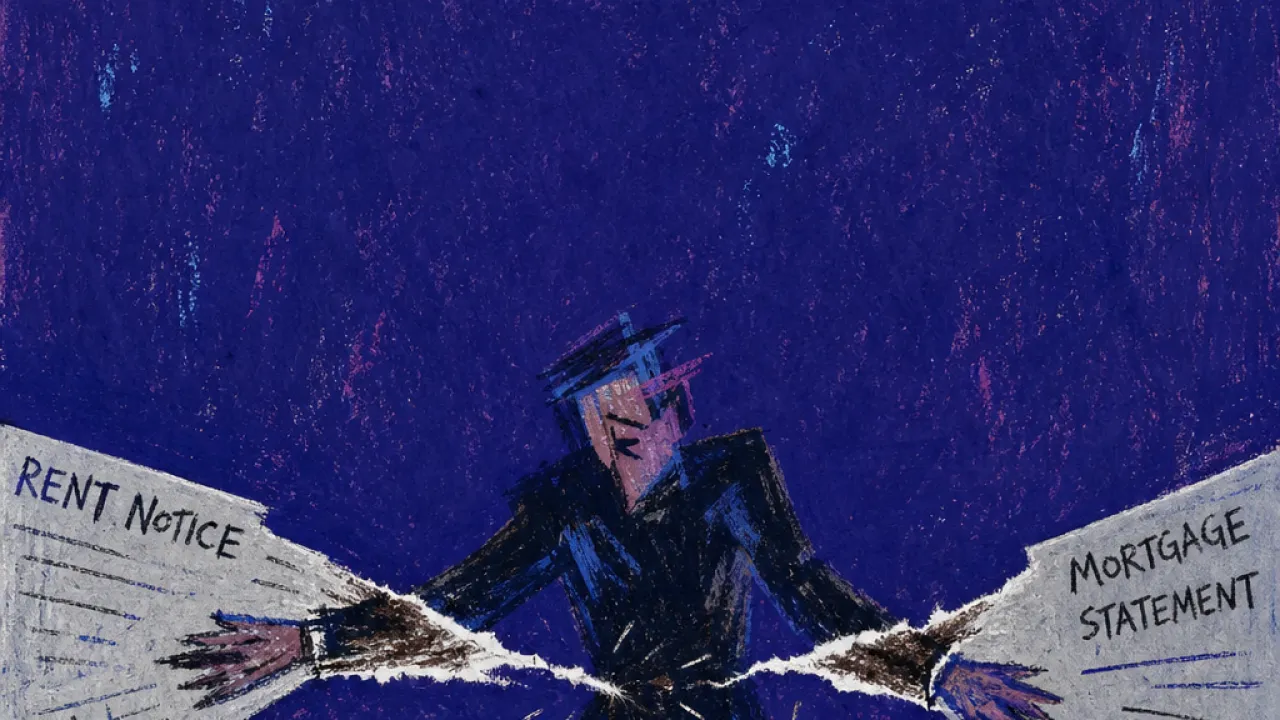
A grounded look at housing decision pressure, related tarot cards, and reading insights around choosing whether to buy or rent.
Buy Vs Rent Crossroads
What is this situation?
Buy vs Rent Crossroads — you first feel it when a lease renewal lands in your inbox with a higher number than last year, or when another property listing disappears before you have time to decide whether it was even possible. You open mortgage calculators, compare rent increases, check interest rates, scroll through listings, and watch every option come with a cost that changes shape the longer you look at it. A landlord wants an answer by Friday; a lender wants documents before they can give you a clearer number; friends are split between “just get on the ladder” and “don’t trap yourself”; every article seems to argue the opposite of the one you read five minutes ago. The pressure is not just about a roof over your head — it is about deposits, commute times, repairs, flexibility, moving costs, job uncertainty, and the quiet fear of making a choice that locks you into the wrong version of your future. You may be doing all the responsible things, but the market keeps moving while you are still trying to work out what “responsible” even means. The decision follows you from your laptop to your phone to casual conversations, turning home into a spreadsheet before it ever becomes a place, much like the figure on the Two of Pentacles, trying to keep two heavy options in motion while waves rise behind him.
Why it's not you?
The pressure here is not a personal failure to decide quickly enough; it comes from a housing market built around moving targets, unclear costs, and competing timelines. Rent hikes, deposit thresholds, interest rates, limited listings, and outside advice create a decision field that is unstable before you even enter it. The weight belongs to the setup, not to some flaw in how you think.
Buy Vs Rent Crossroads in Tarot Cards
Buy vs Rent Crossroads is the pressure point where lease renewals, property listings, lender emails, and advice from every direction keep forcing the same decision back onto your desk. The tightness in your chest when the numbers stop being abstract is a signal of an environmental, structural dynamic shaped by housing costs, loan rules, rent hikes, and unstable timelines. The cards below do not decide for you; they reflect the shape of the decision field around you. Here are the Tarot Cards that tend to mirror this kind of crossroads.
A robed authority sits between formal pillars before two followers, with crossed keys and an established institutional order structuring the scene. The hierarchy resembles the social script that treats homeownership as responsible adulthood, reinforced by peers, family narratives, lenders, media, and the language of getting on the ladder. The convention is fully visible, which makes it available for examination rather than automatic obedience. You can distinguish useful shared knowledge about housing from status pressure that assumes one residential path fits every income, career, location, and life stage, preserving access to advice without surrendering the decision criteria.
A large wheel fills the sky, with one figure climbing, another descending, and a sphinx poised above it. The rotating structure mirrors housing conditions in which mortgage rates, rents, inventory, and buyer competition shift relative to one another, changing what looks affordable without asking permission from your planning cycle. The wheel makes movement visible but does not require you to predict its perfect stopping point. You can separate market exposure from personal readiness, locating a decision window where income, deposit, likely length of stay, and available properties are sufficiently aligned even if the broader cycle remains unsettled.
A seated figure holds balanced scales in one hand and an upright sword in the other between two formal pillars. The scales mirror a like-for-like comparison of rent, mortgage payments, deposits, fees, repairs, commute costs, and flexibility, while the sword evokes the binding terms inside leases and loan documents. The scales remain usable and the sword is clearly visible, so the choice can be examined through evidence and contractual consequences. You can compare total obligations over the same time horizon and identify which risks are transferred to a landlord, lender, or owner, making the decision more legible without pretending every future cost can be known.
Two figures stand loosely chained to a dark pedestal beneath an imposing horned figure, with material constraint made physically visible. The scene reflects the fear that a mortgage could chain you to debt, repairs, and one location while continued renting could bind you to increases, landlord decisions, and repeated displacement. The chains are loose enough to be inspected, so the image does not reduce either housing route to permanent captivity. You can name the exact lock-in mechanisms attached to each option, including exit fees, loan length, liquidity loss, lease terms, and relocation costs, then distinguish a bounded commitment from a commitment whose price depends on ignoring your need for movement.
A narrow path runs between two towers under a moon that illuminates the landscape without turning night into daylight. A dog and a wolf react from opposite sides while something rises from the water, echoing the mix of familiar costs, uncertain risks, and new expenses that surface during a housing search. The path remains visible even though the whole route cannot be seen at once. You can separate disclosed figures from estimates, estimate ranges for repairs or rate changes, and mark what remains unknowable, allowing uncertainty to become part of the comparison rather than a reason to believe that one more article will produce total certainty.
A silhouetted figure faces seven cups floating in a cloud, each presenting a different object, promise, or warning. The display resembles a property search filled with calculators, listings, neighbourhood trade-offs, rate scenarios, rent projections, and advice that make every option appear consequential in a different way. The options are visible, which creates the possibility of sorting them instead of treating them as equally actionable. You can separate real housing paths supported by current income, deposit, timing, and location needs from speculative futures that are attractive mainly because an article, listing, or peer gave them emotional weight.
A figure keeps two pentacles moving while ships rise and fall on waves behind him. The moving coins capture a lease deadline and a possible purchase being evaluated while rent, mortgage rates, lender responses, and property availability change on different schedules. The rhythm is active rather than frozen, showing that timing can be managed through defined decision windows. You can identify which date truly requires commitment, which numbers need refreshing before that date, and which market movements are merely noise, keeping the housing decision responsive without forcing constant recalculation.
A seated figure holds one pentacle against his chest, pins two beneath his feet, and balances another on his head while the city sits at a distance. The posture mirrors a household protecting a deposit or emergency fund so tightly that money, movement, and access to urban life become entangled. The coins are present and controlled, so the scene contains a real resource base rather than an empty promise of security. You can examine whether buying would put too much cash beyond reach, or whether continuing to rent would consume the savings you are trying to protect, without assuming that the most restrictive option is automatically the safest.
A standing merchant holds scales while distributing coins to two kneeling figures. The unequal positions resemble a housing decision shaped by landlords, lenders, deposit thresholds, credit assessments, and affordability rules that determine which options become materially available before personal preference can act. The scales and coins show that resources can move, but only through visible conditions and gatekeepers. You can distinguish the housing option you prefer from the financing or tenancy access currently being offered, making approval terms, cash requirements, and power asymmetry explicit parts of the choice.
A worker leans on his tool and studies seven pentacles growing on a vine, pausing between invested effort and an unfinished harvest. The scene resembles watching a house deposit grow while rent continues leaving the account, then questioning whether more waiting will improve buying power or simply move the goalposts again. The pentacles are already present, so the pause can assess actual progress rather than an abstract future. You can compare how another rental period might affect savings, borrowing capacity, rate exposure, and life plans, turning waiting into a defined investment interval instead of an indefinite postponement.
Ten pentacles spread across an archway where an older figure, a family, animals, and a substantial estate occupy the same settled scene. The image concentrates the cultural promise attached to buying: a durable home, accumulated assets, continuity, and a form of security that outlasts the present lease cycle. The archway is open, but the card also makes the scale of the system visible. You can test whether the long-term structure behind ownership is genuinely available through your deposit, income stability, maintenance capacity, and likely time in the property, rather than treating the image of permanence as proof that buying is automatically the better direction.
A blindfolded figure crosses two swords while sitting before a dark sea broken by rocks beneath a crescent moon. The blocked sight mirrors a housing decision in which the lender's final number, future rent increases, repair costs, and job stability cannot all be known before an answer is required. The swords are held in a deliberate balance, preserving a pause in which incomplete information can be named rather than disguised as certainty. You can distinguish facts still obtainable from risks that no calculator can remove, then decide what level of uncertainty each housing option asks you to carry.
A blindfolded, loosely bound figure stands inside a partial enclosure of swords, with wet ground underfoot and a fortress in the distance. The enclosure mirrors a housing market where deposit requirements, rent hikes, income tests, interest rates, and limited listings make both renting and buying appear blocked. The swords do not form a sealed wall, and the bindings leave room for movement. You can identify which constraints are fixed eligibility rules, which belong to a specific property or lender, and which have been generalised across the entire market, revealing whether any narrower path remains workable without denying the real limits around it.
A figure holds the world between two wands while standing on a high wall above a broad landscape. One wand is secured to the building and one remains available to hold, turning the scene into a concrete contrast between fixed residence and retained freedom of movement. The horizon offers room to compare the futures attached to both options. You can ask which choice supports the territory you may need to cross next, including job changes, commute shifts, household plans, and neighbourhood access, rather than reducing the decision to this month's rent versus mortgage payment.
Eight wands travel diagonally through open air above a river and settled landscape, with no visible barrier slowing their approach. The speed mirrors lease-renewal notices, viewing slots, lender requests, rate holds, and property listings arriving in rapid succession and demanding responses on compressed timelines. The wands also move in one coherent direction, making sequencing possible inside the rush. You can identify which message starts a binding clock and which only creates urgency, preserving a usable response window without allowing listing velocity to decide the housing commitment for you.
A figure bends beneath ten bundled wands while carrying them towards a visible town. The load resembles the combined weight of rent increases, mortgage paperwork, deposit saving, viewings, repairs, insurance, commuting, and moving logistics when every housing option adds another responsibility. The town remains within reach, which makes the burden measurable rather than endless. You can use the scene to separate unavoidable housing work from costs and obligations that would overload your existing routine, making practical capacity part of the decision instead of treating it as an afterthought.
No cards available for this filter.
Buy Vs Rent Crossroads in Tarot Card Reading Insights
When Buy vs Rent Crossroads turns into late-night spreadsheets and looping property alerts, other people have brought the same housing decision pressure into readings. The shift here is from the cards themselves to what came up when this question entered the room. Tarot Reading Insights from sessions around this kind of crossroads.